Witch symbols are the visual shorthand of witchcraft: a small set of marks, most of them older than the word "witch," that stand for the forces a practitioner works with. The pentacle stands for the four elements held in balance by spirit. The triple moon stands for the Goddess in her three phases. The witch's knot stands for protection. A witch draws them on candles, wears them, carves them into tools, paints them on altar tiles, and traces them in the air, and the symbol does the same job every time: it says, without words, what the work is for. This page explains 40 of them, sorted by where they come from, with the meaning, the history, and the ones that have been claimed by hate groups and need a second look before you wear them.
If you want the practice behind the symbols first, What Is Witchcraft? is the place to start, and protection symbols and sigils covers the protective ones in more depth than this page does.
What Witch Symbols Are and How Witches Use Them
A witch symbol is a mark that carries a meaning the practitioner has agreed to, and the agreement is what gives it power. Nothing about five lines in a star is magical on its own; the pentacle works because two thousand years of people have used it to mean protection, wholeness, and the elements, and because the witch drawing it knows that. This is why the same shape can mean different things in different traditions, and why a symbol you invent yourself, a sigil, can work as well as an ancient one once you have charged it with a meaning.
Witches use symbols in four main ways:
- On the body, as jewelry or tattoos, where the symbol acts as a standing intention or a protective charm.
- On the altar, as an altar tile, a cloth, or a drawn circle, where it marks the space as sacred and sets the theme of the work.
- On tools and materials, carved into a candle, drawn on a spell paper, scratched into the wax of a jar seal, or traced over water and salt.
- In the air, drawn with a finger, a wand, or an athame to open or close a circle, bless an object, or send an intention.
The altar tile guide covers the altar use, and the candle dressing guide covers carving a symbol into wax.
The Most Important Witch Symbols at a Glance
These twelve are the ones you will meet first and most often. Each has a fuller entry below.
| Symbol | What it means | Where it comes from |
|---|---|---|
| Pentacle | The four elements and spirit in balance, protection, the witch's emblem. | Ancient Mesopotamia and Greece; adopted by Wicca in the 1950s. |
| Triple moon | The Goddess as maiden, mother, and crone; the cycle of life. | Modern Wicca, drawing on Robert Graves. |
| Horned God | The God of the wild, the hunt, and the dying and returning year. | Modern Wicca, drawing on Cernunnos and Pan. |
| Triquetra | Three-in-one: land, sea, and sky; maiden, mother, crone; body, mind, spirit. | Celtic and early Christian art. |
| Witch's knot | Protection, binding, and the four directions woven into one unbroken line. | Medieval European folk magic. |
| Elemental triangles | Earth, air, fire, and water. | Alchemy. |
| Hecate's wheel | The three-faced goddess of crossroads, witchcraft, and the moon. | Hellenic magic, revived by modern witches. |
| Ankh | Life, and the breath of life. | Ancient Egypt. |
| Eye of Horus | Protection, restoration, and wholeness. | Ancient Egypt. |
| Triskelion | Motion, the three realms, and cycles. | Neolithic and Celtic Europe. |
| Sigil | A symbol you design yourself for one specific intention. | Medieval grimoires, reshaped by chaos magic. |
| Seal of Solomon | Command over spirits, protection, and the union of opposites. | Medieval Jewish, Islamic, and Christian magic. |
Wiccan Symbols
Wicca is the largest modern witchcraft religion, and most of the symbols people call "Wiccan symbols" belong to it. What Is Wicca? explains the religion; these are its marks.
Pentacle and Pentagram
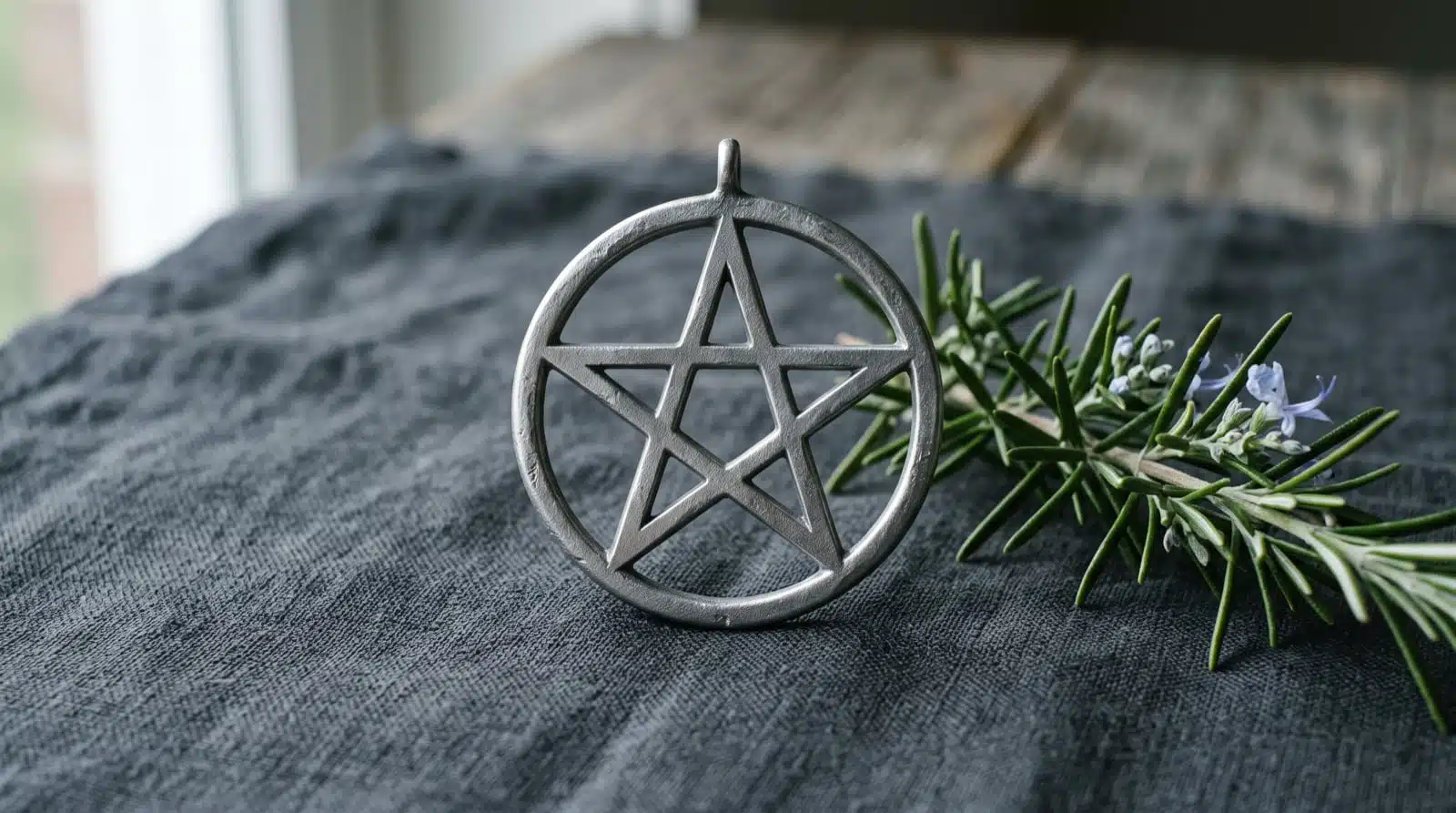
The pentacle is a five-pointed star inside a circle, and it is the single most recognized symbol of witchcraft. The five points stand for earth, air, fire, water, and spirit, with spirit at the top, and the circle holds them in balance and marks the boundary of the sacred. A pentagram is the star without the circle, and a pentacle is the star inside one, or any disc that carries a magical design. The shape is ancient: it appears on Mesopotamian pottery from around 3000 BCE, the Pythagoreans used it as a sign of health, and medieval Christians read its five points as the five wounds of Christ. Wicca adopted it in the 1950s, and today an upright pentacle is the standard emblem on altars, jewelry, and the US Department of Veterans Affairs' list of approved headstone symbols.
The pentagram is not a symbol of evil, and an inverted one is not automatically Satanic. In some Wiccan traditions the point-down pentagram marks a second-degree initiate; the Church of Satan's Sigil of Baphomet, covered below, uses it differently. Our pentagram vs. pentacle guide covers the difference in full, and pentacle items are the most common way witches carry it.
Triple Moon
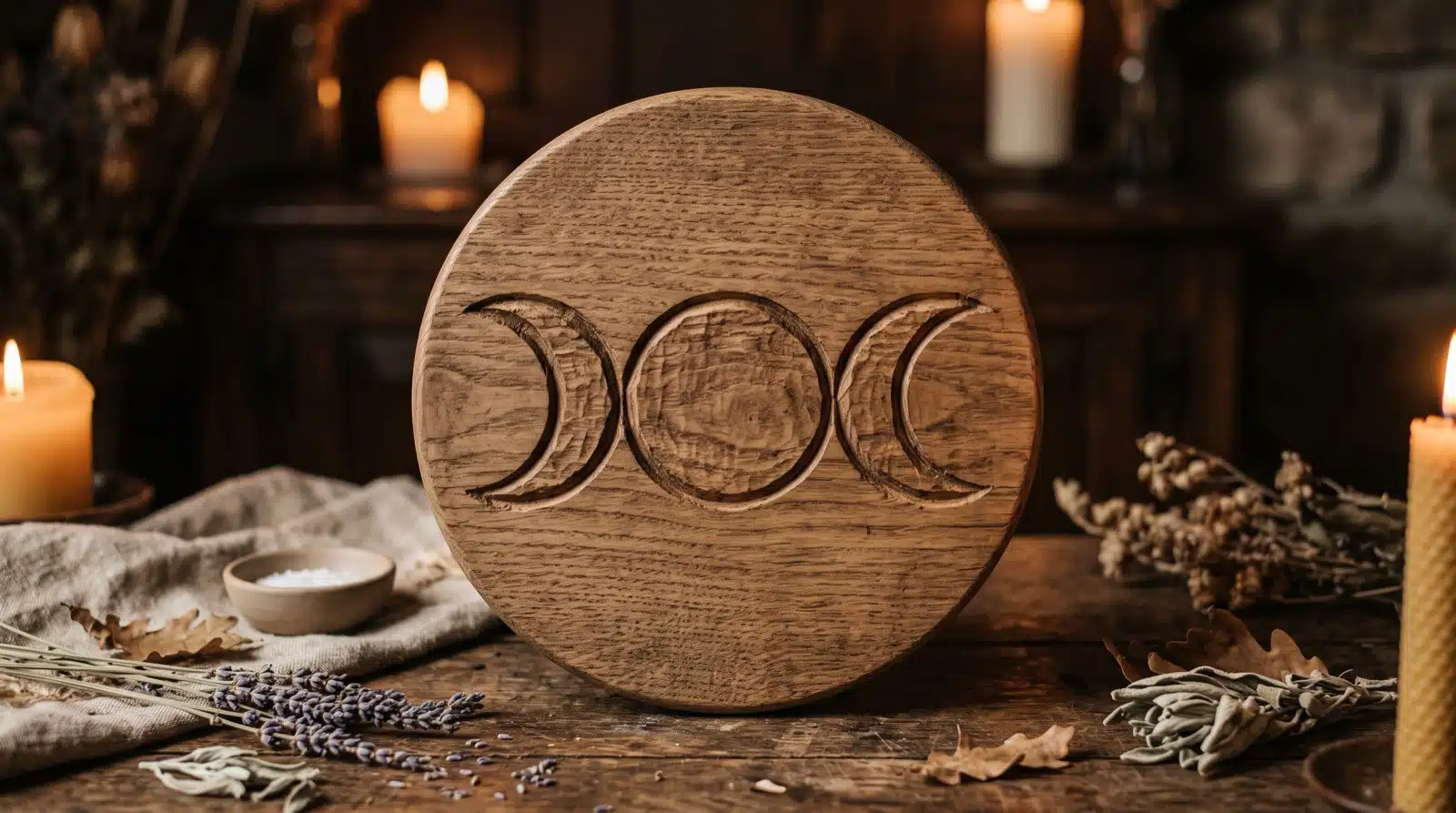
The triple moon is a waxing crescent, a full moon, and a waning crescent side by side, and it stands for the Triple Goddess: the maiden of beginnings, the mother of fullness, and the crone of wisdom and endings. It is the most common Goddess symbol in Wicca and the mark you will see on the front of a Book of Shadows, a chalice, or a headpiece worn by a high priestess. The maiden-mother-crone idea in its modern form comes from Robert Graves' 1948 book The White Goddess and from the Wiccan traditions that took it up, though triple goddesses such as Hecate and the Morrígan are ancient. Witches use the triple moon to align work with the phases of the moon, to honor the Goddess, and to mark the stages of a life. A moon goddess amulet is the usual way to wear it.
Horned God
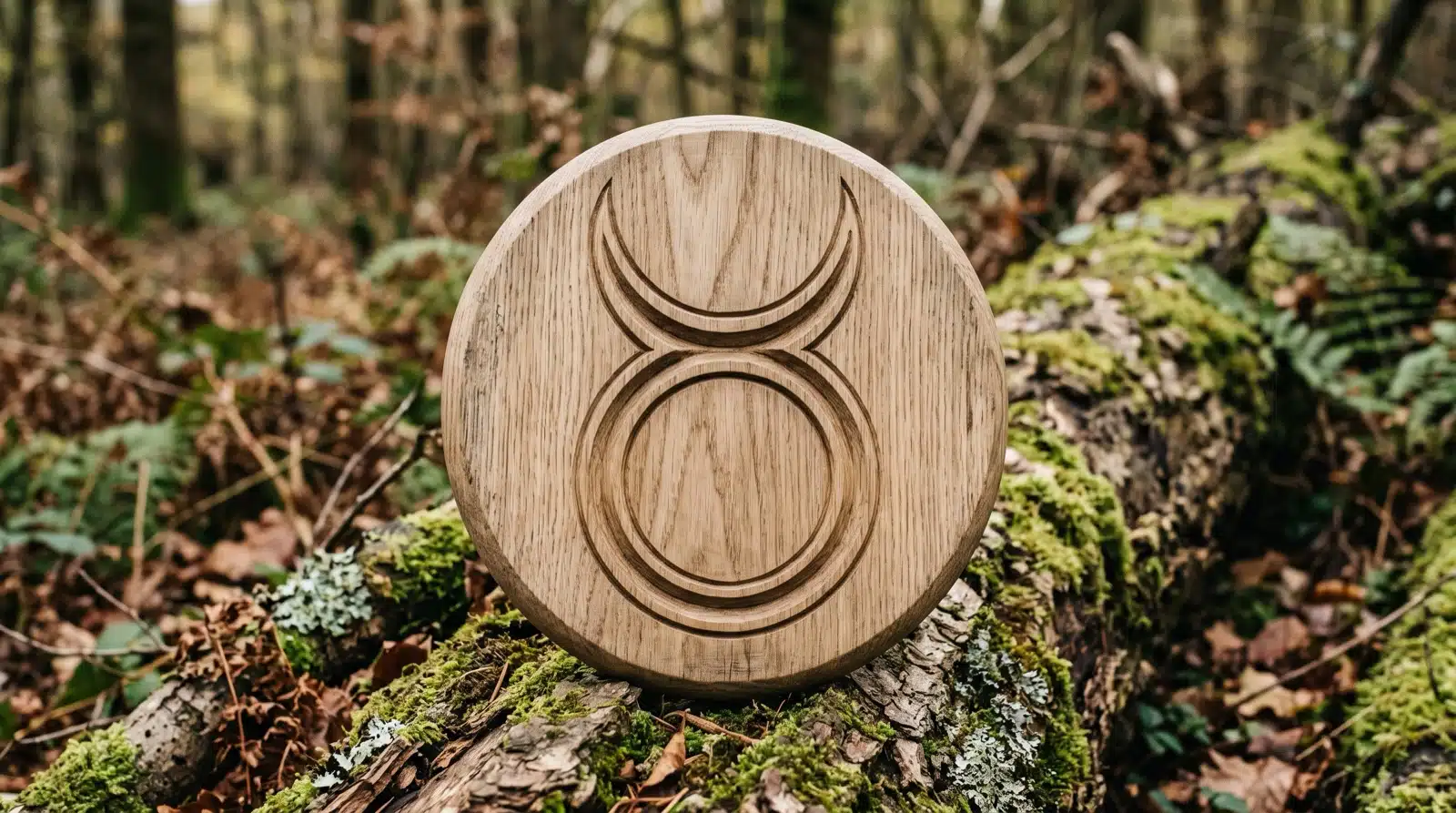
The Horned God symbol is a circle with a crescent moon resting on top of it, so that the crescent's points look like horns, and it stands for the Horned God of Wicca: the god of the wild, the hunt, animals, and the year that dies at Samhain and returns at Yule. He is the partner of the Triple Goddess, and his symbol sits next to hers on many altars. The figure draws on the Celtic Cernunnos, the Greek Pan, and the antlered figures painted on cave walls, and he has nothing to do with the Christian devil, though the resemblance was used against witches for centuries.
The Elements: Elemental Symbols
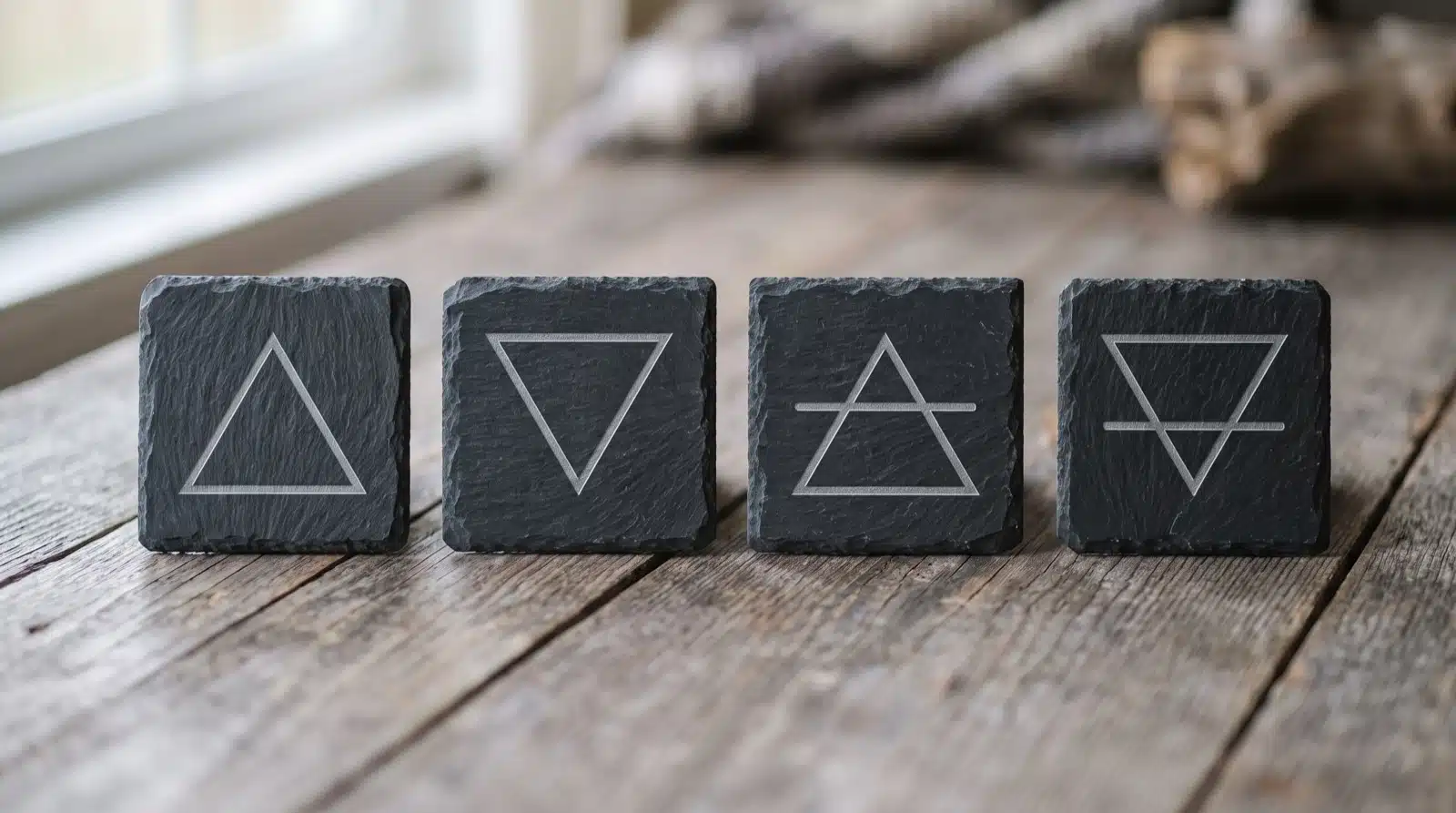
The four classical elements each have a symbol, and together they are the framework underneath most Western witchcraft. The alchemical symbols are the ones witches use: fire is an upright triangle, water is a downward triangle, air is an upright triangle with a horizontal line through it, and earth is a downward triangle with a line through it. Spirit, the fifth element, is usually a circle or a spiral. Witches place these at the four quarters of a ritual circle, carve them on candles by element, and use them to balance a spell that leans too hard in one direction. The elemental witch, covered in our types of witches guide, builds a whole practice on them.
Spiral Goddess
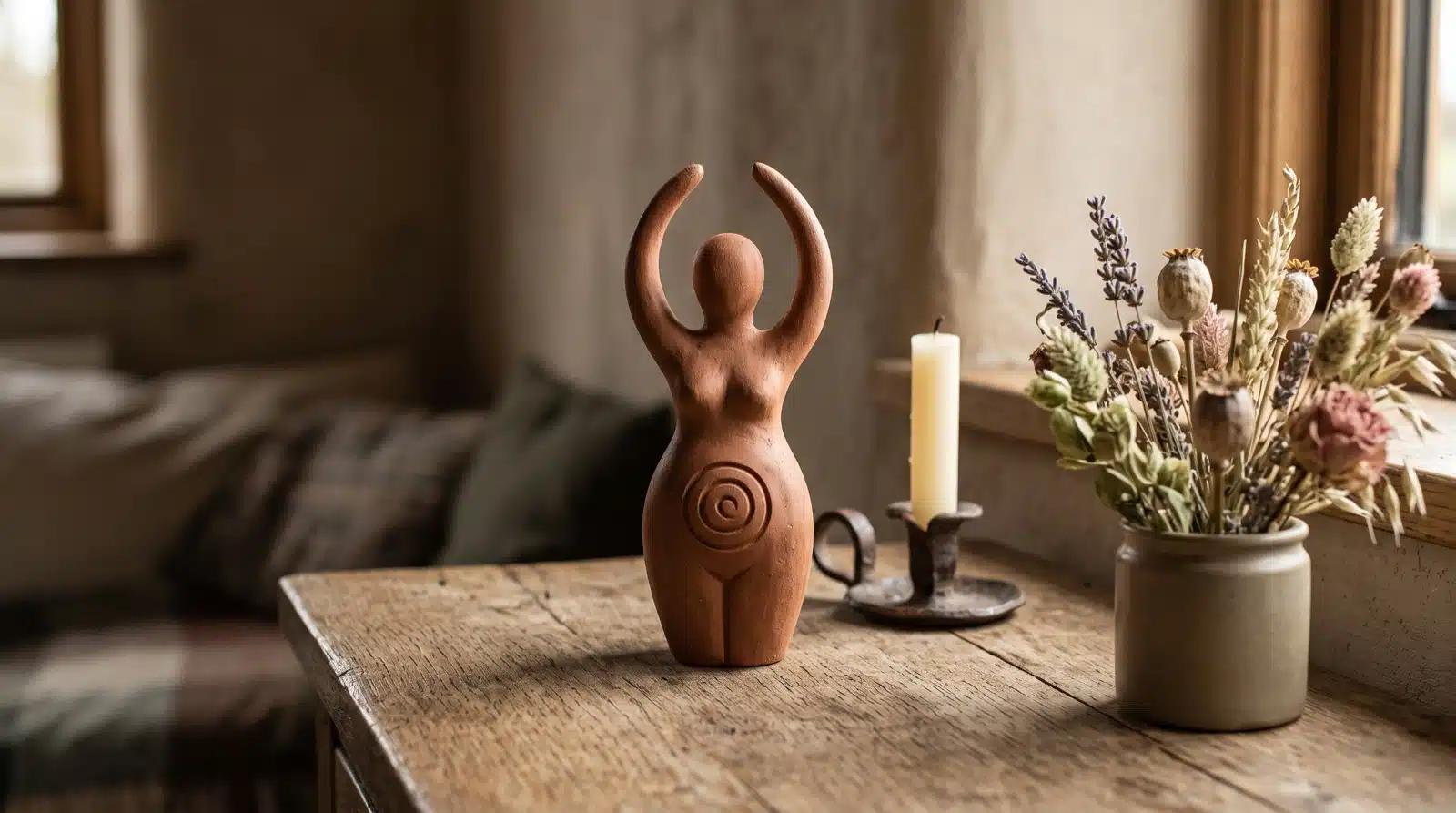
The spiral goddess is a stylized female figure with her arms raised and a spiral over her belly, and she stands for the Goddess as the source of life, the turning of the seasons, and the womb of the world. She is a modern image, popular in the Goddess movement since the 1970s, but the spiral itself is one of the oldest marks humans have made, carved at Newgrange in Ireland around 3200 BCE. Witches use her on altar statues and pendants as a symbol of the divine feminine and of growth that circles back on itself.
Wheel of the Year

The Wheel of the Year is a circle divided into eight spokes, one for each sabbat, and it stands for the whole turning year: Yule, Imbolc, Ostara, Beltane, Litha, Lammas, Mabon, and Samhain. The Wheel of the Year as a single eight-spoked calendar was assembled by Wiccans and Druids in the 1950s and 1960s from older Celtic and Germanic festivals. Witches hang it on the wall, draw it in a Book of Shadows, and use it to plan a year of work; our guide to Yule is one spoke of it.
Witch's Knot

The witch's knot, also called the witch knot or the magic knot, is four pointed loops woven from a single unbroken line, often with a circle in the middle, and it stands for protection, binding, and the four directions held together as one. It is the most-searched witch symbol after the pentacle, and one of the least well documented: it appears in medieval European folk magic as a protective mark carved over doors and on the beams of barns, where its unbroken line was believed to trap or confuse harmful spirits, and as a "knot" in the older sense of a spell tied into cord. The four-looped form has become the modern standard. Witches use it as a protection charm, a mark on the threshold, and a symbol of a spell bound tight; it is also the most popular witch symbol for a tattoo. Our protection symbols page covers knot magic in the household-marks section.
Hecate's Wheel
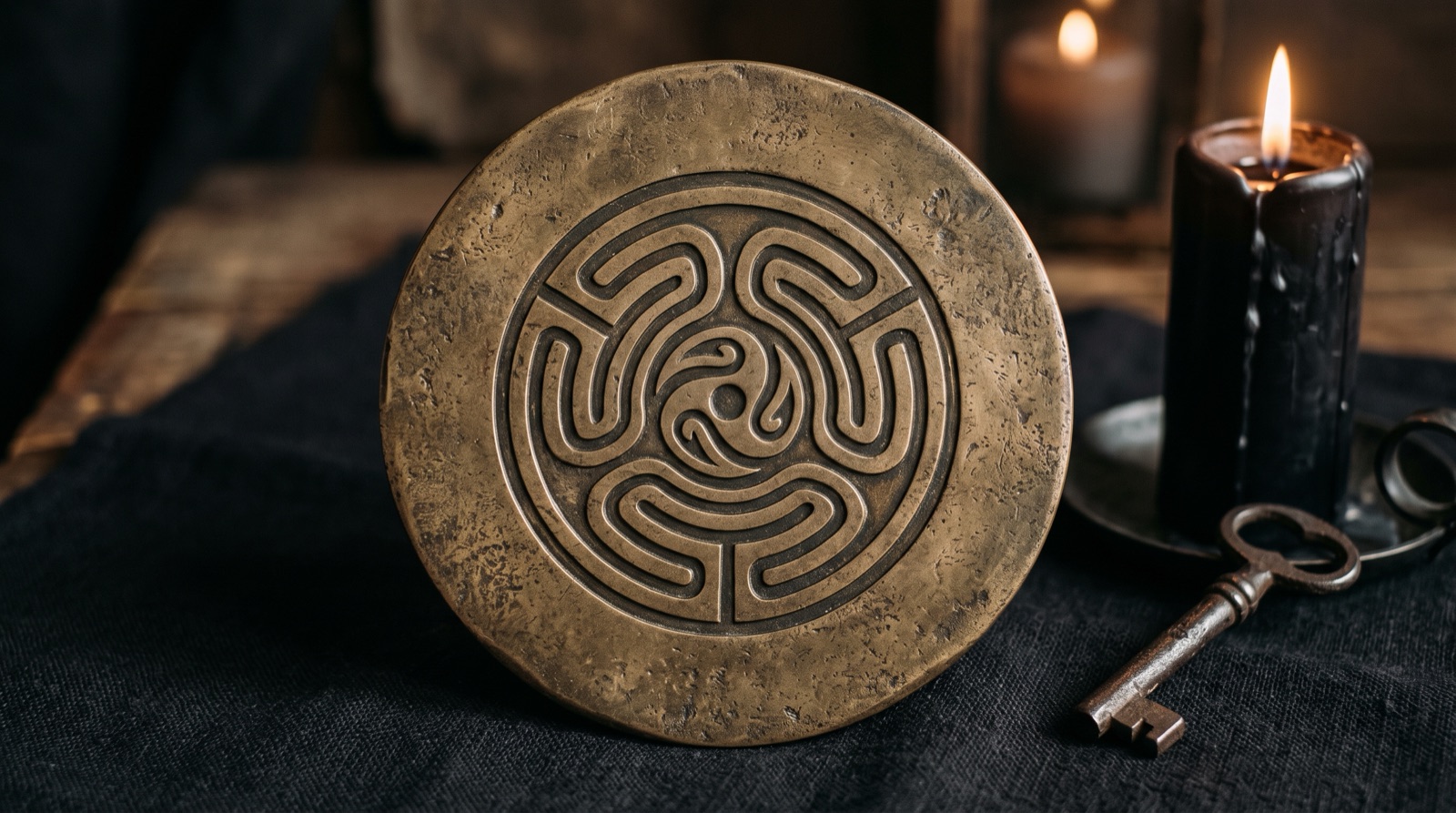
Hecate's wheel, also called the strophalos, is a circle enclosing a three-sided labyrinth or a triple spiral around a central point, and it stands for Hecate, the Greek goddess of crossroads, witchcraft, the moon, and the boundaries between worlds. The design comes from the Chaldean Oracles of the second century, where the strophalos was a spinning device used to call the goddess, and the modern emblem was revived by Hellenic and Wiccan practitioners in the twentieth century. Witches devoted to Hecate wear it, place it on her altar, and use it for crossroads work, protection at thresholds, and anything to do with the dark of the moon.
Celtic and Norse Pagan Symbols
"Pagan symbols" in searches usually means the Celtic and Norse ones, and they are the most popular for jewelry and tattoos. Several of them come with a warning, covered in its own section below, because hate groups have adopted them.
Triquetra
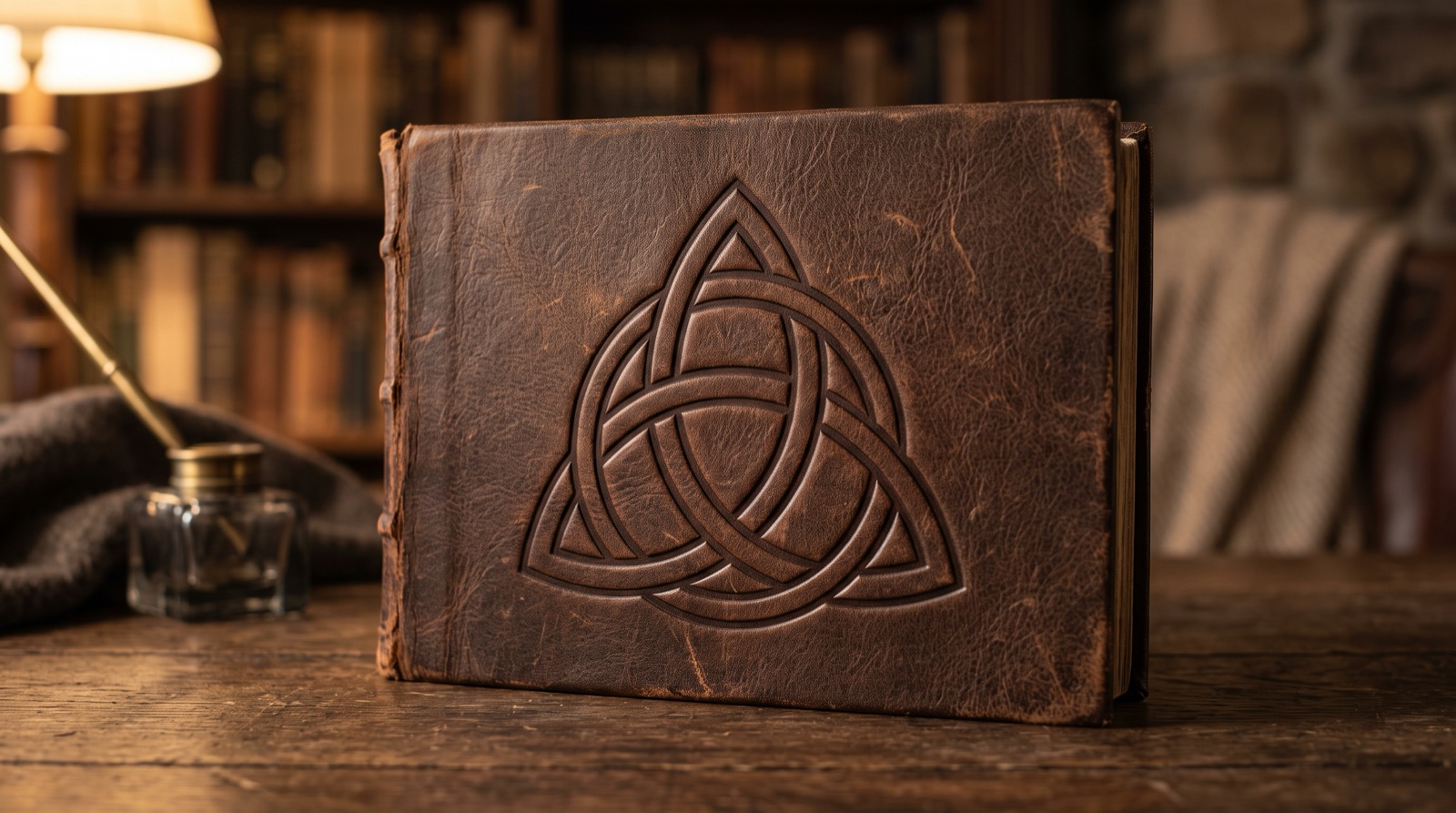
The triquetra, or trinity knot, is three interlaced arcs woven from one unbroken line, sometimes with a circle through them, and it stands for any three-in-one: land, sea, and sky; maiden, mother, and crone; past, present, and future; body, mind, and spirit. The triquetra appears in Celtic and Germanic art from the seventh century onward and was used by Christians for the Trinity, which is why it appears in old churches as often as on witches' tools. Modern witches use it for the Triple Goddess and for protection, since an unbroken line has no place for harm to get in. It is the most common design on a Book of Shadows cover.
Triskelion
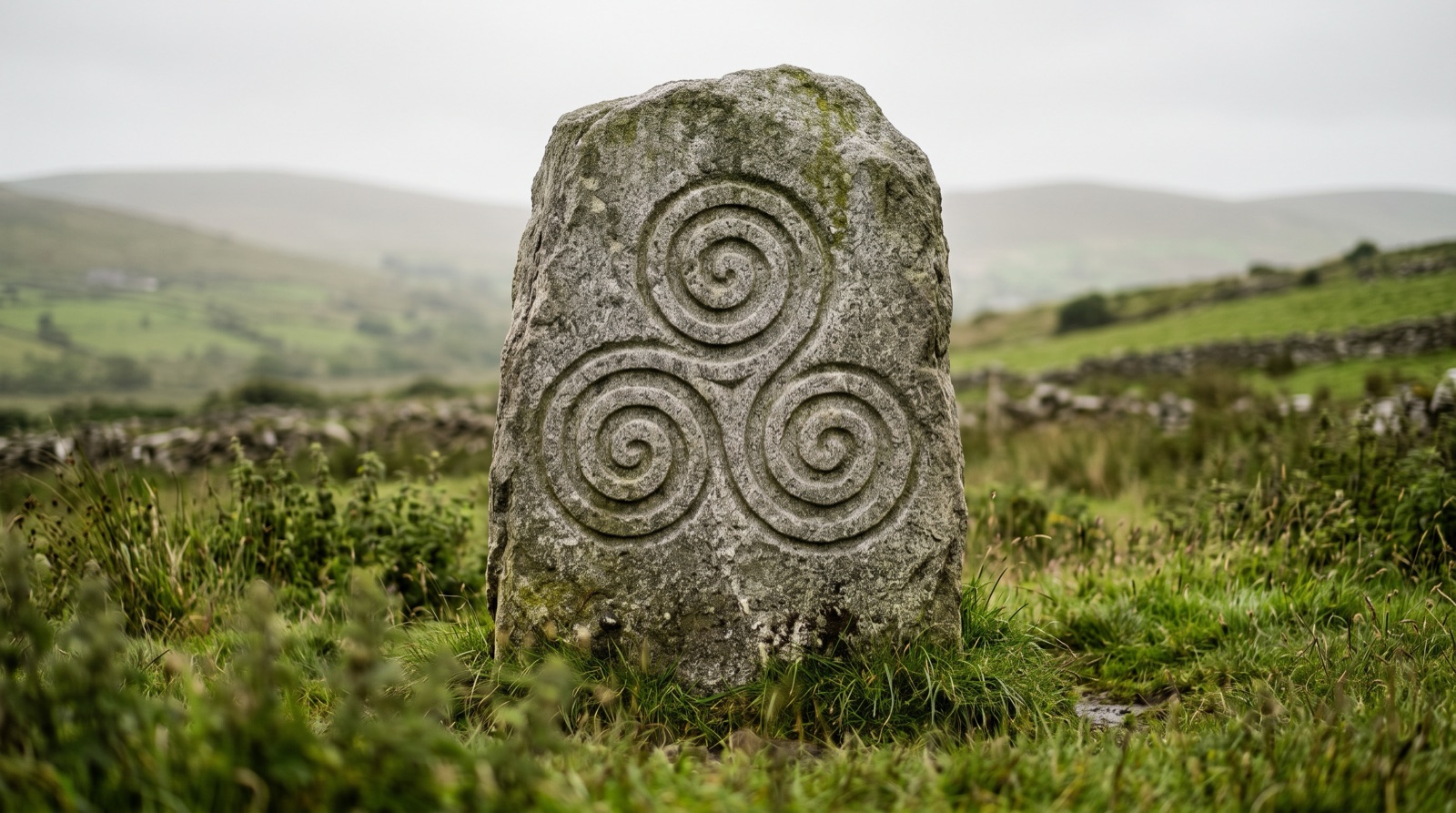
The triskelion, or triskele, is three spirals or three bent legs turning out from a single center, and it stands for motion, cycles, and the three realms of Celtic cosmology: land, sea, and sky. The triskelion is carved at Newgrange, older than the pyramids, and it appears on Celtic metalwork, Sicilian and Manx flags, and Breton emblems. Witches use it for progress, for balance among three forces, and as a Celtic alternative to the triple moon.
Celtic Knot and Tree of Life
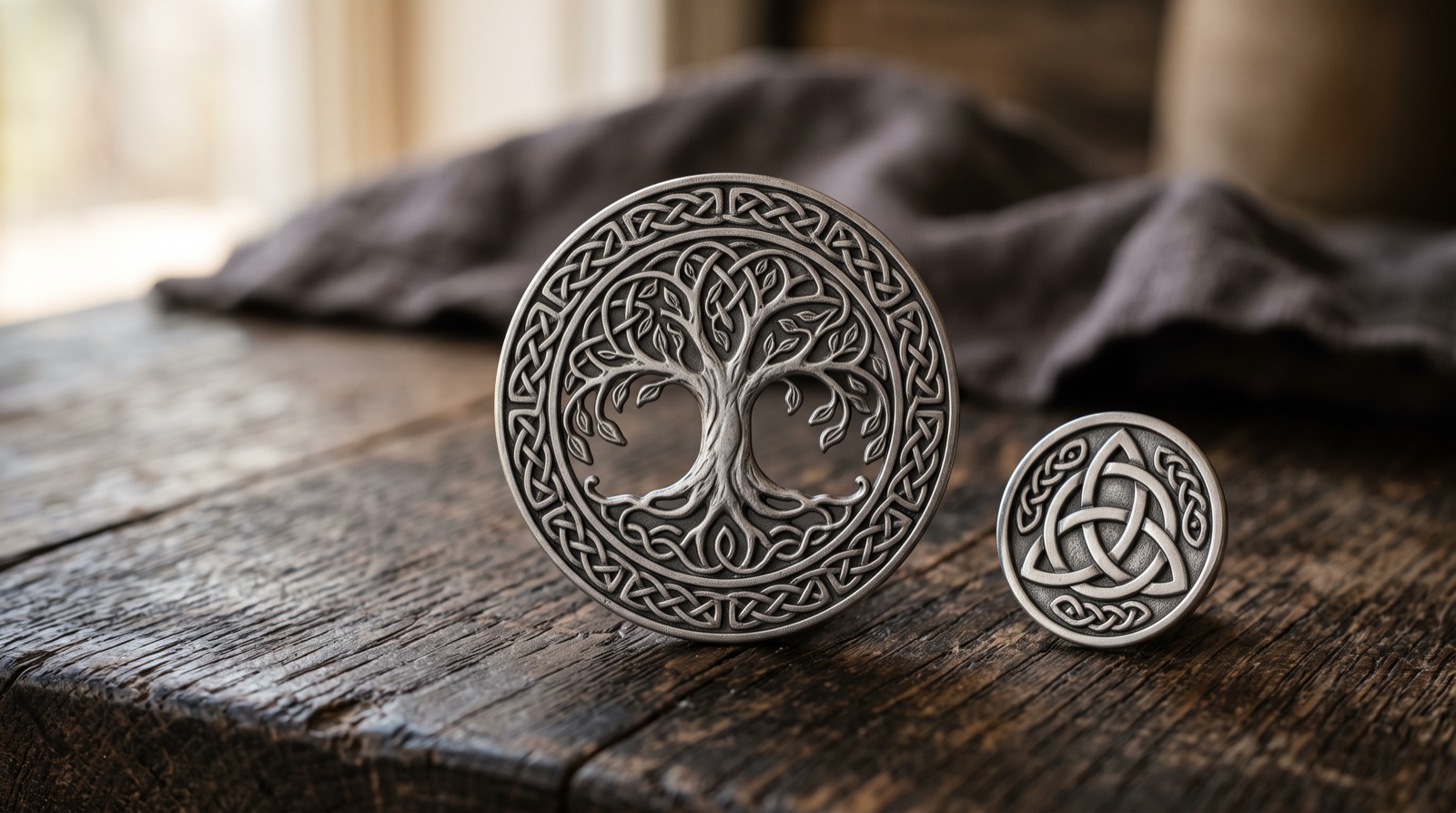
Celtic knots are endless interlaced lines with no beginning and no end, and they stand for eternity, continuity, and protection. The Celtic knot tradition comes from the illuminated manuscripts and stone crosses of Ireland and Britain in the seventh to tenth centuries. The Celtic tree of life, a tree whose roots and branches curve around to meet each other, stands for the connection between the underworld, the earth, and the sky, and for the sacred tree at the center of every Celtic settlement. Witches use knotwork on the boundary of a ritual space and the tree of life for grounding and ancestor work.
Awen
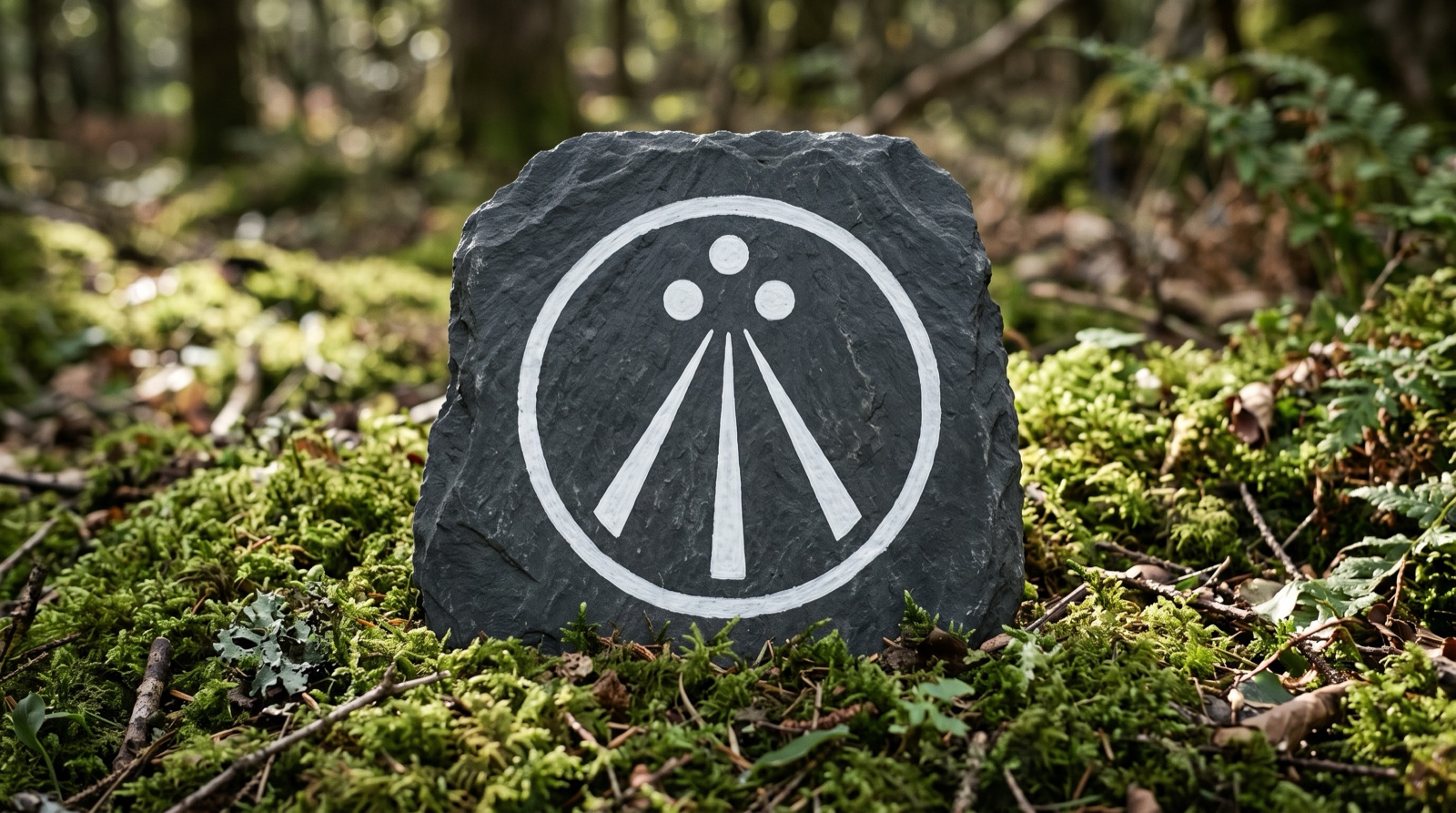
The awen is three rays of light fanning out from three dots, often inside a circle, and it stands for inspiration, the flow of poetic and spiritual insight, and the balance of opposites with a middle path between them. Awen is a Welsh word for inspiration, and the symbol was designed by Iolo Morganwg in the eighteenth century for the Druid revival. Modern Druids and Celtic witches use it for creative work and divination.
Brigid's Cross
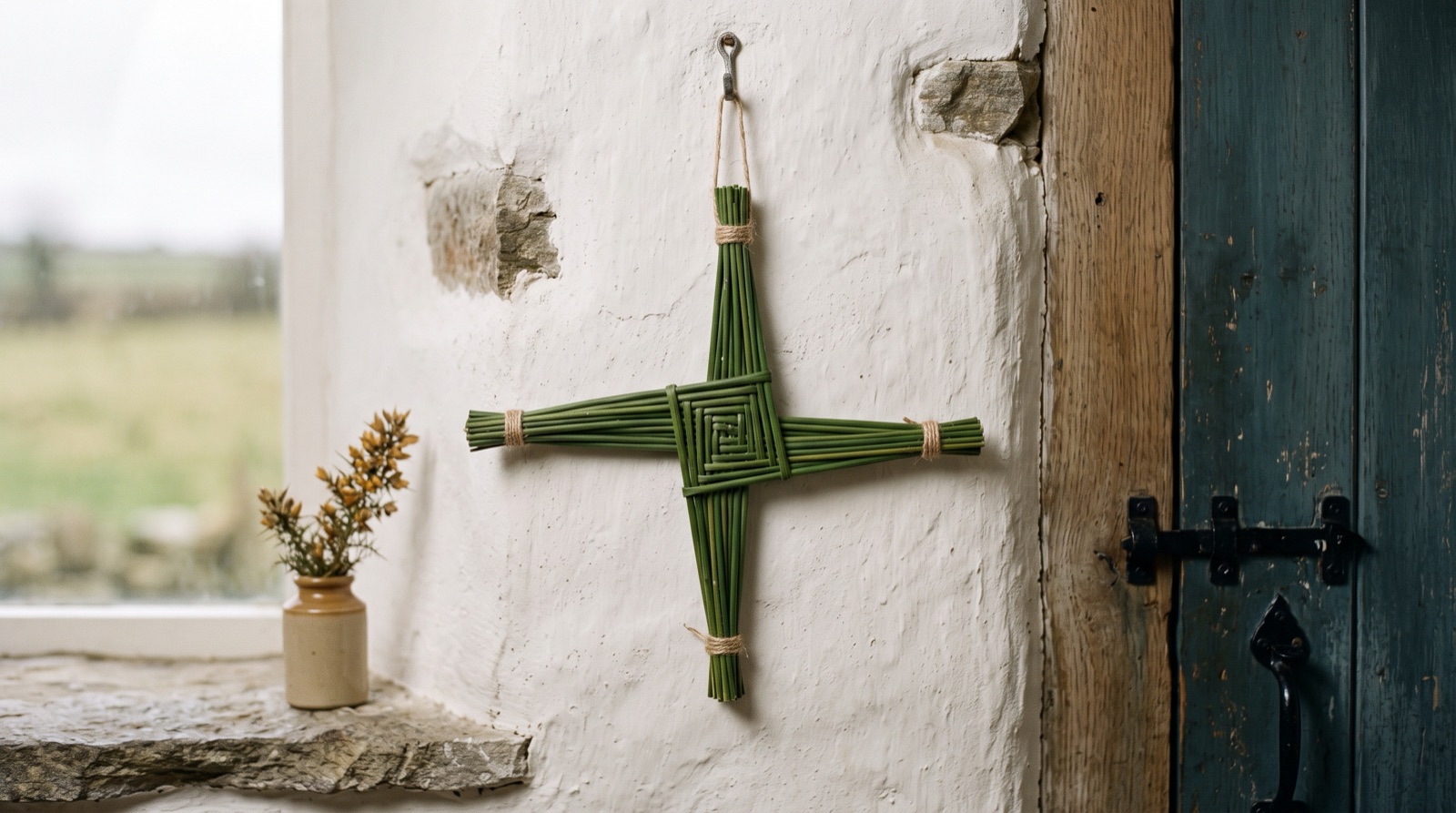
Brigid's cross is a four-armed cross woven from rushes with a square in the center, and it stands for protection of the home, especially from fire, and for the goddess and saint Brigid. Traditionally made on Imbolc, the first of February, and hung over the door, the Brigid's cross is one of the few pagan symbols that stayed in continuous household use through the Christian centuries. Witches weave a new one each Imbolc and burn the old.
Solar Cross and Sun Wheel
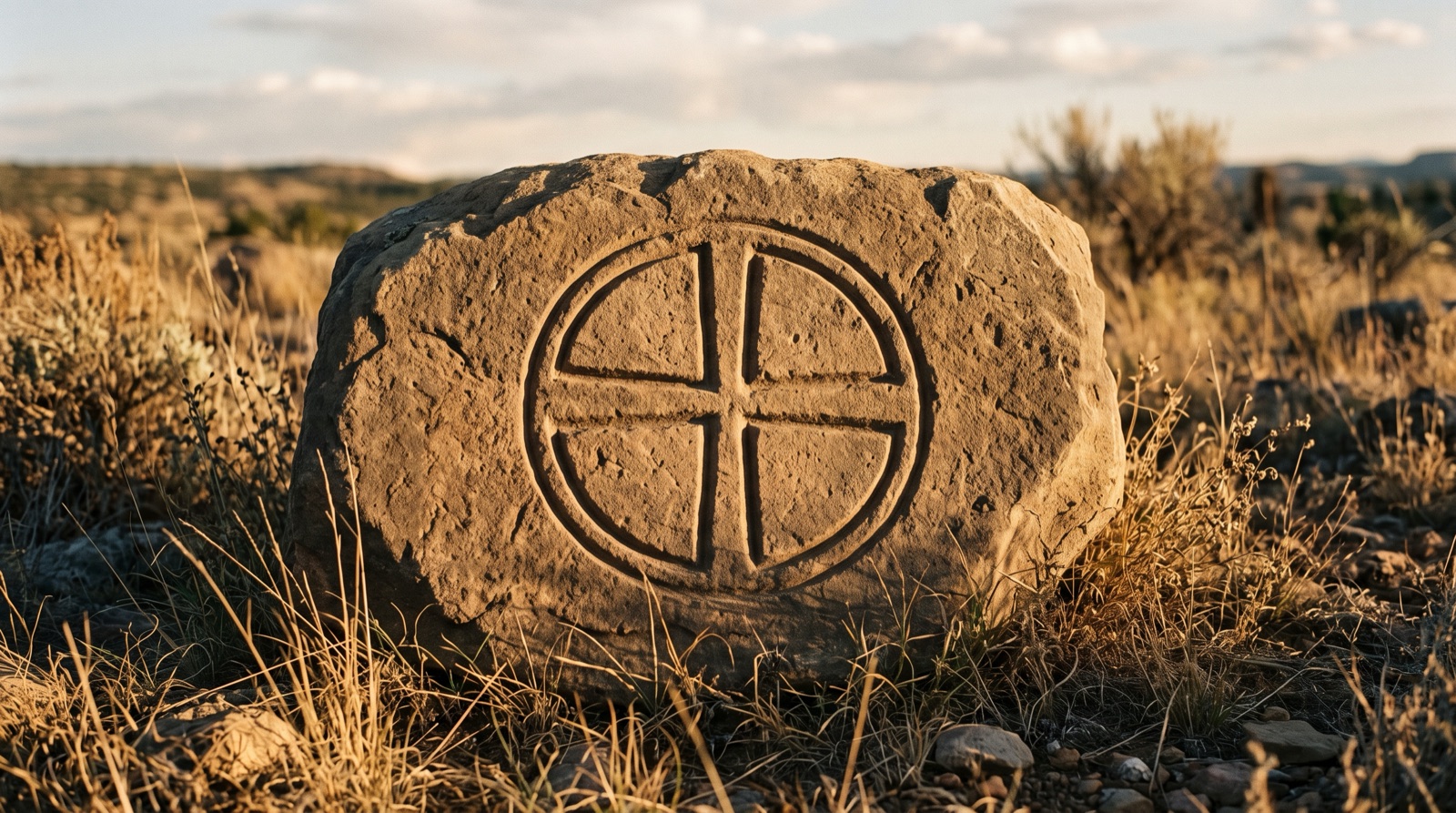
The solar cross is an equal-armed cross inside a circle, and it stands for the sun, the four seasons, the four directions, and the year turning around a still center. The sun cross is one of the oldest symbols in Europe, found on Bronze Age rock carvings, and it is the ancestor of the Celtic cross and of the eight-spoked Wheel of the Year. Witches use it for solar work, for Litha and Yule, and to mark the four quarters. The Black Sun, a twelve-spoked wheel that looks similar at a glance, is a Nazi design and is covered in the warning section below.
Mjölnir, Valknut, and the Norse Symbols

Mjölnir, Thor's hammer, is a T-shaped hammer worn as a pendant, and it stands for protection, strength, and blessing. Viking Age people wore it as a counterpart to the Christian cross, and Heathens and Norse witches wear it today. The Valknut, three interlocked triangles, appears on Viking Age memorial stones next to Odin and stands for the dead, the afterlife, and Odin's power to bind and loose. The Vegvísir, the "Viking compass" of eight staves radiating from a center, and the Helm of Awe, eight tridents from a center, both come from Icelandic manuscripts of the seventeenth to nineteenth centuries rather than the Viking Age, and stand for finding the way and for protection in a fight. Witches use all four for strength and protection, and the hammer is the one to wear if you want a Norse symbol without a second meaning.
Runes
Runes are the letters of the old Germanic alphabets, and each one is also a symbol: Algiz for protection, Fehu for wealth, Berkano for growth, Sowilo for the sun. The Elder Futhark of twenty-four runes is the set witches use for divination, for carving on tools, and for bind runes that combine several into one design. Our protection runes hub covers each protective rune in depth, including the three that hate groups have adopted.
Egyptian, Mediterranean, and Middle Eastern Symbols
These are the oldest symbols on the page, and most of them were protective charms long before anyone called their users witches.
Ankh
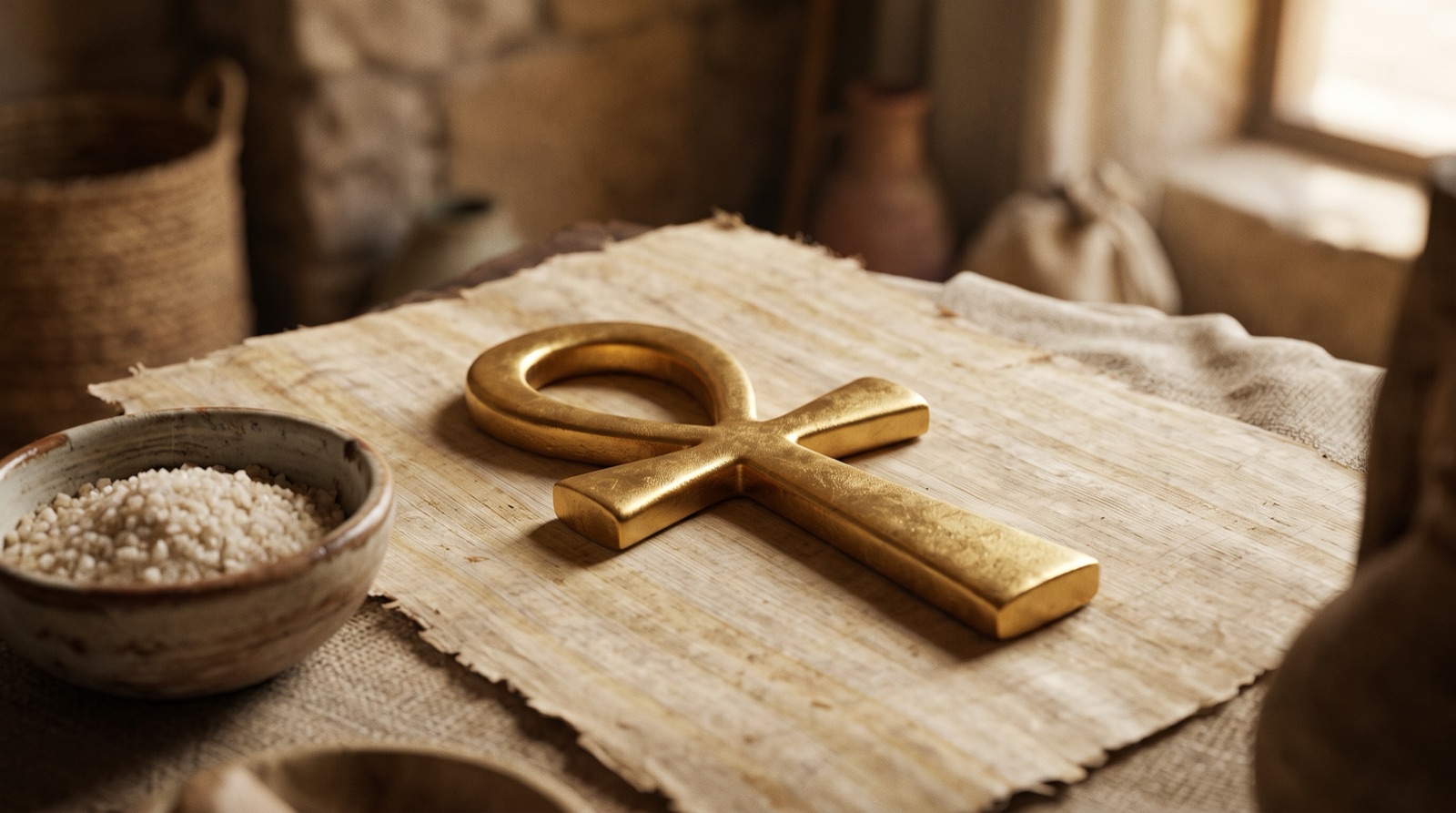
The ankh is a cross with a loop at the top, and it stands for life: the breath of life, eternal life, and the power to give it. The ankh is the Egyptian hieroglyph for "life," and gods in temple art hold it to the pharaoh's lips. It was adopted by Coptic Christians as a cross and by modern witches, Kemetic pagans, and the 1960s counterculture as a symbol of vitality and immortality. Witches use it in vitality work, on the altar for life force, and as a pendant.
Eye of Horus and Eye of Ra
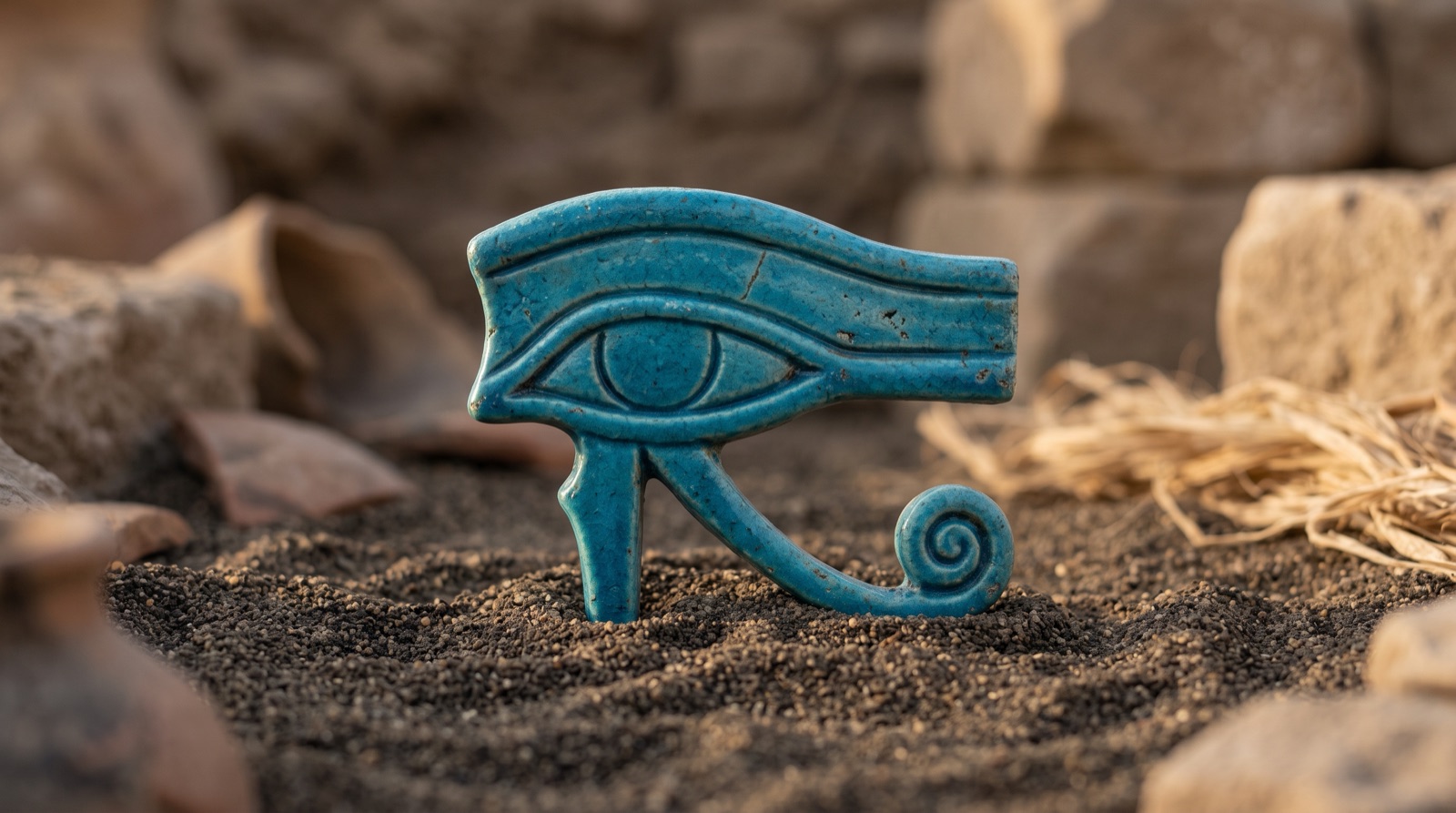
The Eye of Horus is a stylized human eye with a falcon's cheek markings, and it stands for protection, restoration, and wholeness, because in the myth Horus lost the eye in battle with Set and Thoth restored it. The Eye of Horus was the most common protective amulet in ancient Egypt, painted on boats and coffins and worn by the living. The Eye of Ra, usually drawn as the right eye, is the sun god's fierce, punishing power. Witches use the Eye of Horus for protection and restoration and the Eye of Ra for defense and banishing.
Scarab
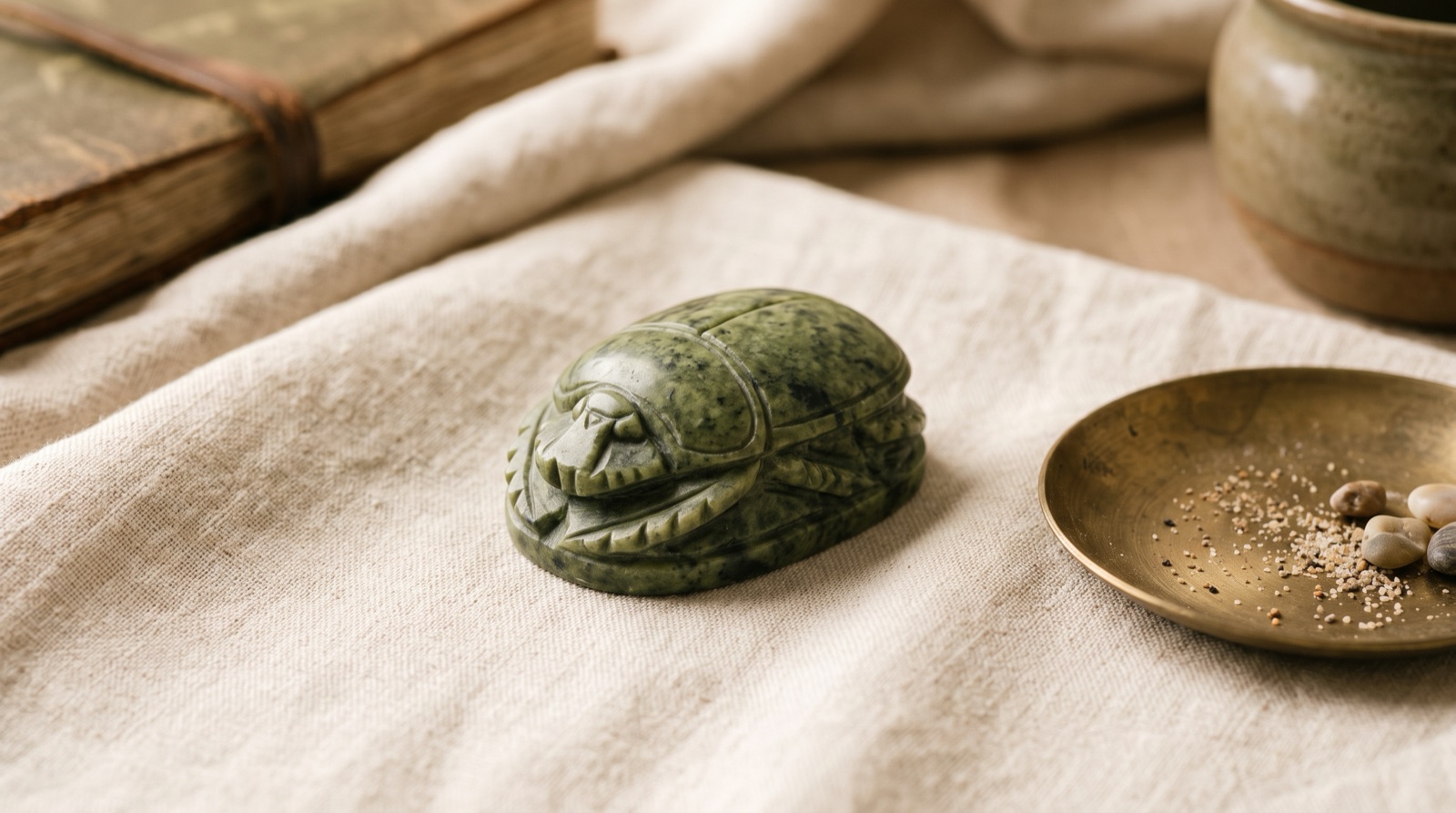
The scarab is a dung beetle, and it stands for rebirth, transformation, and the sun's return each morning, because the Egyptians saw the beetle rolling its ball as the god Khepri rolling the sun across the sky. Scarab amulets were placed over the heart of the dead and worn by the living for luck. Witches use it for new beginnings and for work that has to survive a hard transition.
Evil Eye and Hamsa
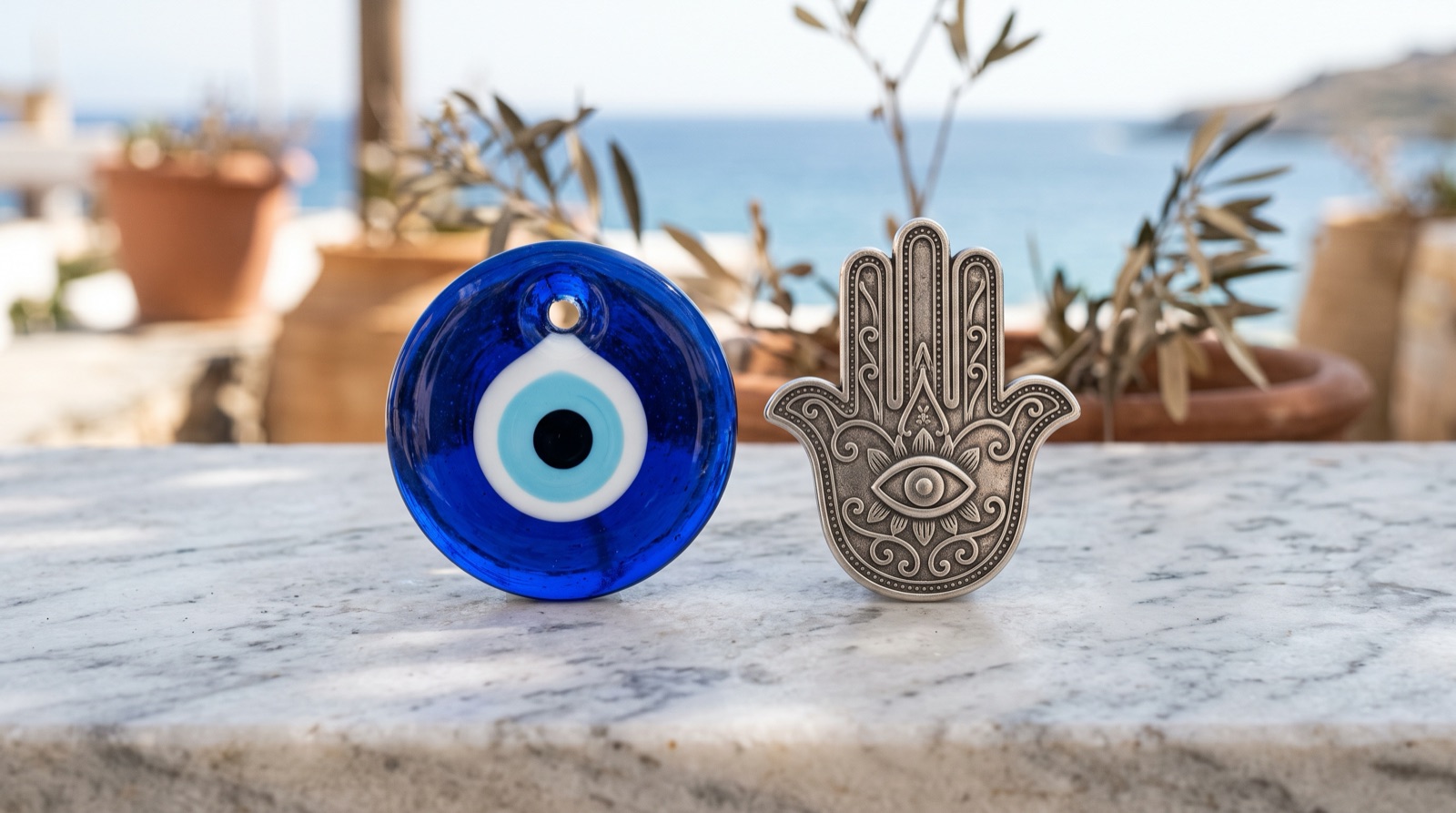
The evil eye charm, the nazar, is concentric circles of dark blue, light blue, white, and black in the shape of an eye, and it stands for protection against the envious glance that is believed, across the Mediterranean and Middle East, to bring harm. The hamsa, an open hand with an eye in the palm, does the same job and is shared by Jewish, Muslim, and Christian communities as the Hand of Miriam, Fatima, or Mary. Both are among the oldest protective symbols still in daily use, and both are open practices any witch can adopt. Our evil eye protection and hamsa collections carry the traditional forms.
Seal of Solomon and Hexagram
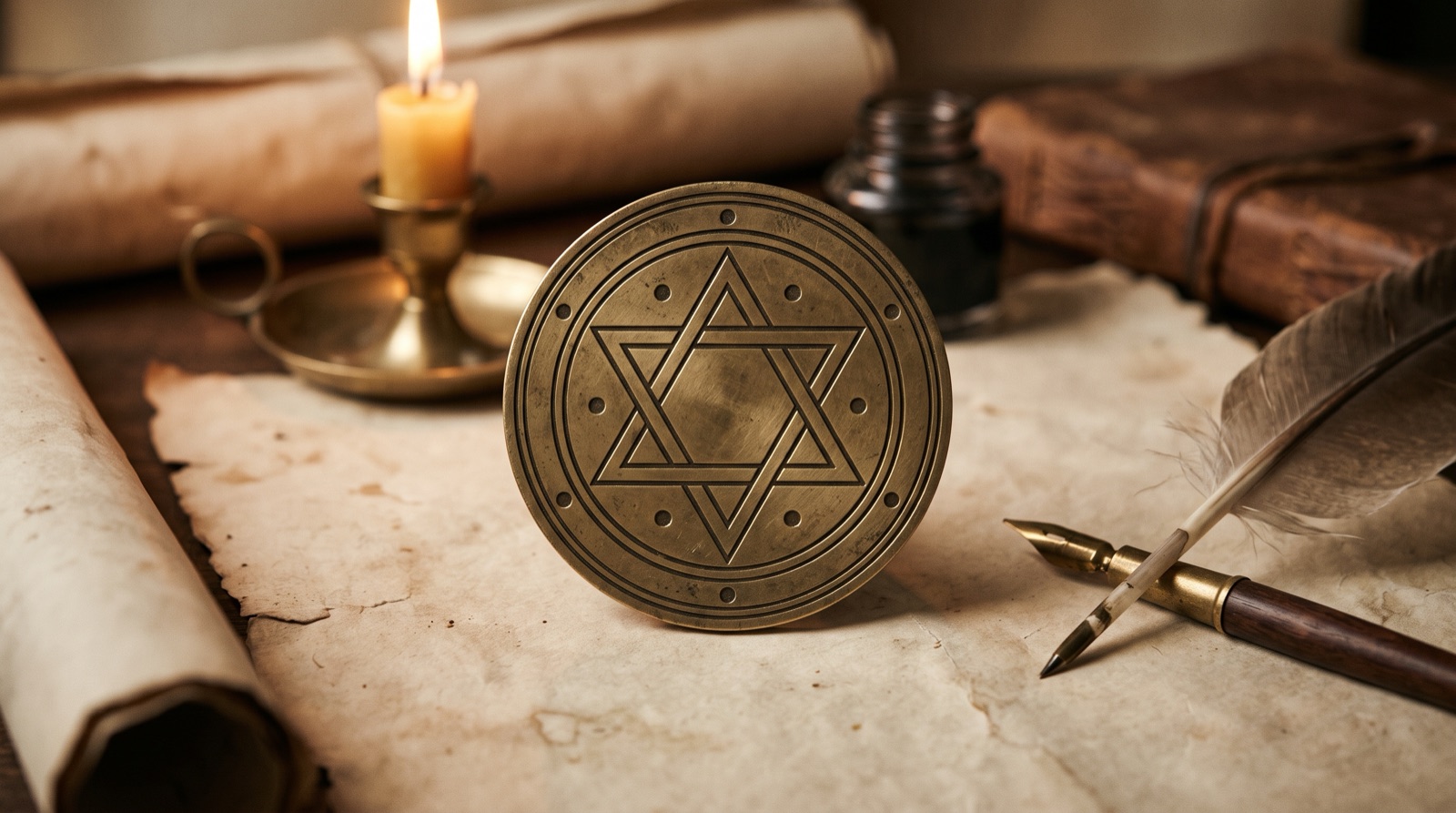
The Seal of Solomon is a six-pointed star, two interlocking triangles, often inside a circle and often with added letters or symbols, and it stands for the union of opposites (fire and water, above and below), for protection, and for command over spirits. In legend it was the design on the signet ring with which King Solomon bound demons to build the Temple, and from the Middle Ages onward it appeared in Jewish, Islamic, and Christian magic and on the seals of the grimoires attributed to him. The plain hexagram is also the Star of David, the emblem of Judaism, and the two should not be confused: the Seal is the version with a circle, letters, or symbols added, and it belongs to ceremonial magic. Witches who work with grimoire magic use it for protection, for binding, and for conjuration; most others meet it as a pendant.
Ouroboros
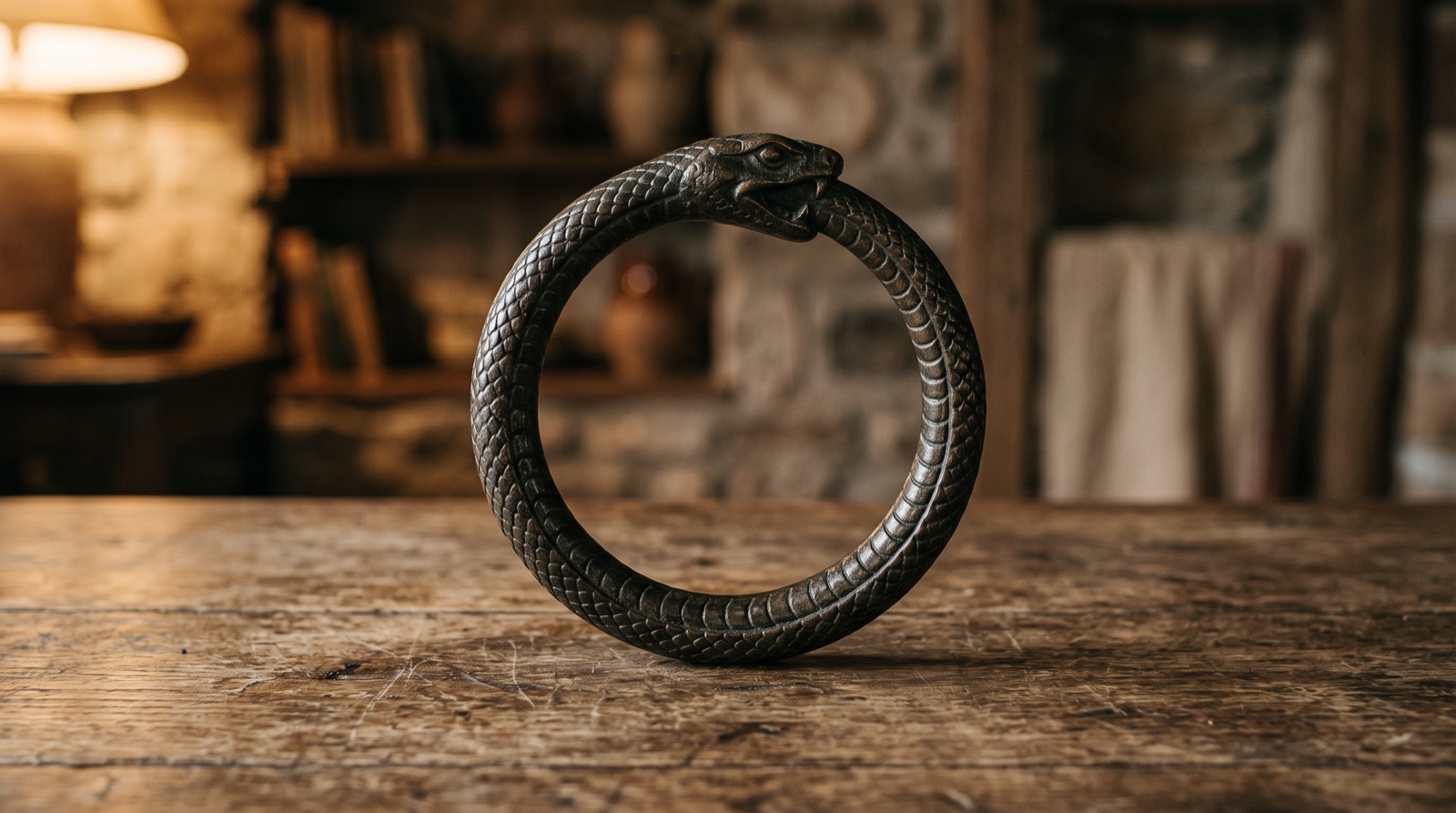
The ouroboros is a serpent or dragon eating its own tail, and it stands for eternity, the cycle of death and rebirth, and the unity of all things. The ouroboros appears first in Egyptian funerary texts around 1300 BCE, passed into Greek alchemy, and became the alchemists' emblem of the Great Work. Witches use it for cycles, for shadow work, and for spells about endings that are also beginnings.
Labyrinth
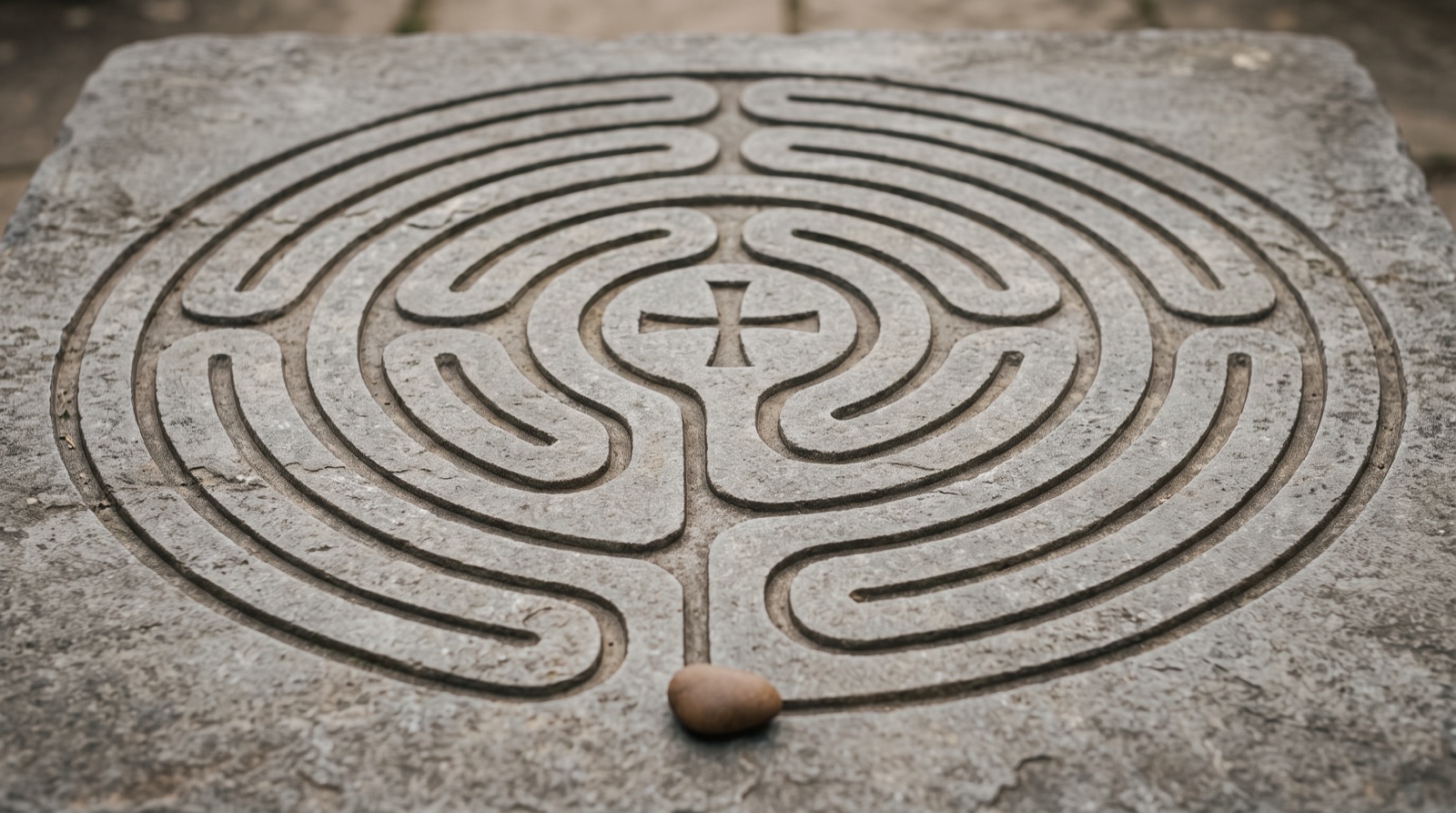
The labyrinth is a single winding path that leads to a center and back out, with no dead ends, and it stands for the inward journey, protection, and the passage through death to rebirth. The labyrinth of Crete gave it its name, and the seven-circuit "classical" form is carved on rock faces and coins from Spain to India. Witches walk finger labyrinths for meditation, draw them for protection, and use them for trance work.
Occult and Ceremonial Magic Symbols
"Occult symbols" and "magic symbols" mostly means the marks of ceremonial magic, alchemy, and the nineteenth- and twentieth-century magical orders. Witches borrow from them freely, and a few of them are misread as witch symbols when they are not.
Sigils

A sigil is a symbol designed for one specific intention, and its meaning is whatever you built into it. The word comes from the Latin for "seal," and the sigils of the medieval grimoires were the signatures of spirits; the modern method, in which you write your intention, strike out the repeated letters, and combine the rest into a single design, comes from the artist Austin Osman Spare and was spread by chaos magic in the 1970s and 1980s. Sigils are the most personal witch symbols and the most popular today, because anyone can make one in ten minutes and nobody else knows what it means. Our protection page has a step-by-step how to make a sigil section.
Unicursal Hexagram
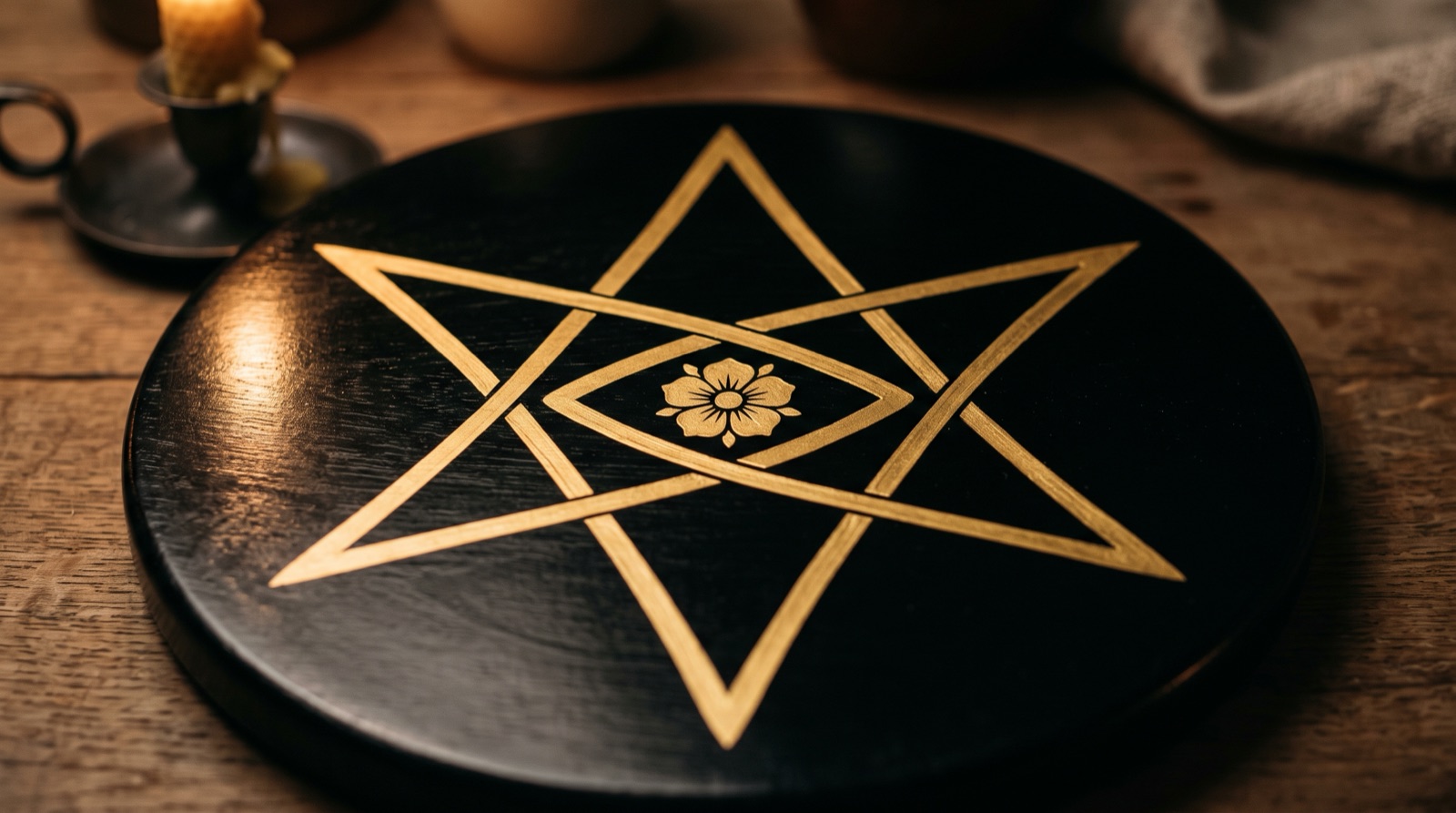
The unicursal hexagram is a six-pointed star drawn in one continuous line, with a small five-petaled flower in the center in its best-known form, and it stands for the union of the macrocosm and microcosm, the divine and the human, drawn without lifting the pen. The unicursal hexagram was adopted by Aleister Crowley as the emblem of Thelema, and most people meet it through his work or through the television show Supernatural. Thelemites use it in ritual; witches who use it are usually working in a Crowley-influenced ceremonial style.
Alchemical, Planetary, and Zodiac Symbols
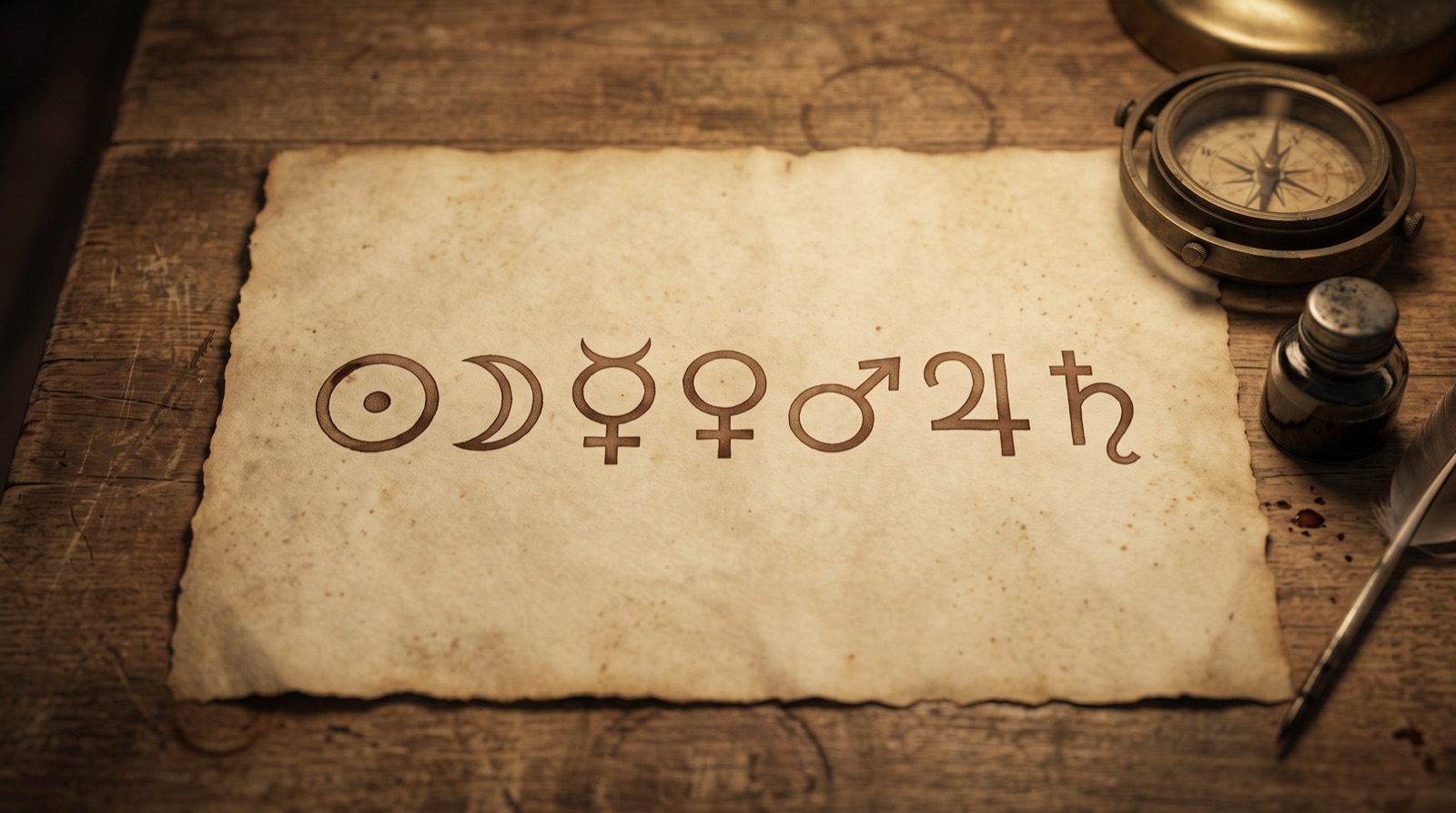
Alchemy gave witchcraft its element triangles and a whole alphabet of marks for substances and processes, and astrology gave it the planetary symbols: the circle with a dot for the sun, the crescent for the moon, the mirror of Venus, the shield and spear of Mars, and the rest. Witches use planetary symbols to time work by planetary day and hour, to dress candles for a planet's influence, and to build talismans; the cosmic witch of our types guide is the specialist. The twelve astrological symbols of the zodiac are used the same way for birth-chart and seasonal work.
Sigil of Baphomet and the Inverted Pentagram
The Sigil of Baphomet is an inverted pentagram with a goat's head drawn inside it and Hebrew letters spelling Leviathan around the circle, and it is the registered emblem of the Church of Satan, not a witch symbol. The Sigil of Baphomet was adapted in the 1960s from a design in a nineteenth-century French occult book, and Baphomet himself is a figure drawn by Éliphas Lévi in 1856 as a symbol of balanced opposites. Modern Satanism is a separate movement from witchcraft, with different beliefs and mostly atheist members, and the two get confused mainly because of the pentagram. As noted above, a plain inverted pentagram has its own Wiccan use as a second-degree sign. Most witches leave the goat-head version alone, because it announces a religion they do not belong to.
Rose Cross, Monas Hieroglyphica, and the Order Emblems
The Rose Cross, a rose at the center of a cross, is the emblem of the Rosicrucians and of the Hermetic Order of the Golden Dawn, and it stands for the unfolding of the soul on the cross of matter. The Monas Hieroglyphica, a glyph designed by John Dee in 1564, combines the symbols of the moon, sun, elements, and Aries into one figure meant to contain all of astrology and alchemy. The eight-arrowed Symbol of Chaos, invented by the novelist Michael Moorcock and adopted by chaos magicians, stands for all possibilities at once. These are order emblems rather than everyday witch symbols, and you will see them on the covers of the books those orders produced.
Theban Alphabet and the Magic Circle

The Theban alphabet, also called the witches' alphabet, is a substitution cipher for the Latin alphabet first printed in 1518 and adopted by Gardnerian Wicca for writing in a Book of Shadows. It is used to keep spells private and to slow the writing down so the intention has time to settle. The magic circle itself, a ring drawn on the floor with symbols at the quarters, is the master symbol of ceremonial magic and of Wicca; how to cast a circle covers it. The Sator square, a five-word Latin palindrome that reads the same in every direction, was scratched on walls from Pompeii onward as a charm against fire and illness.
Folk and Household Symbols
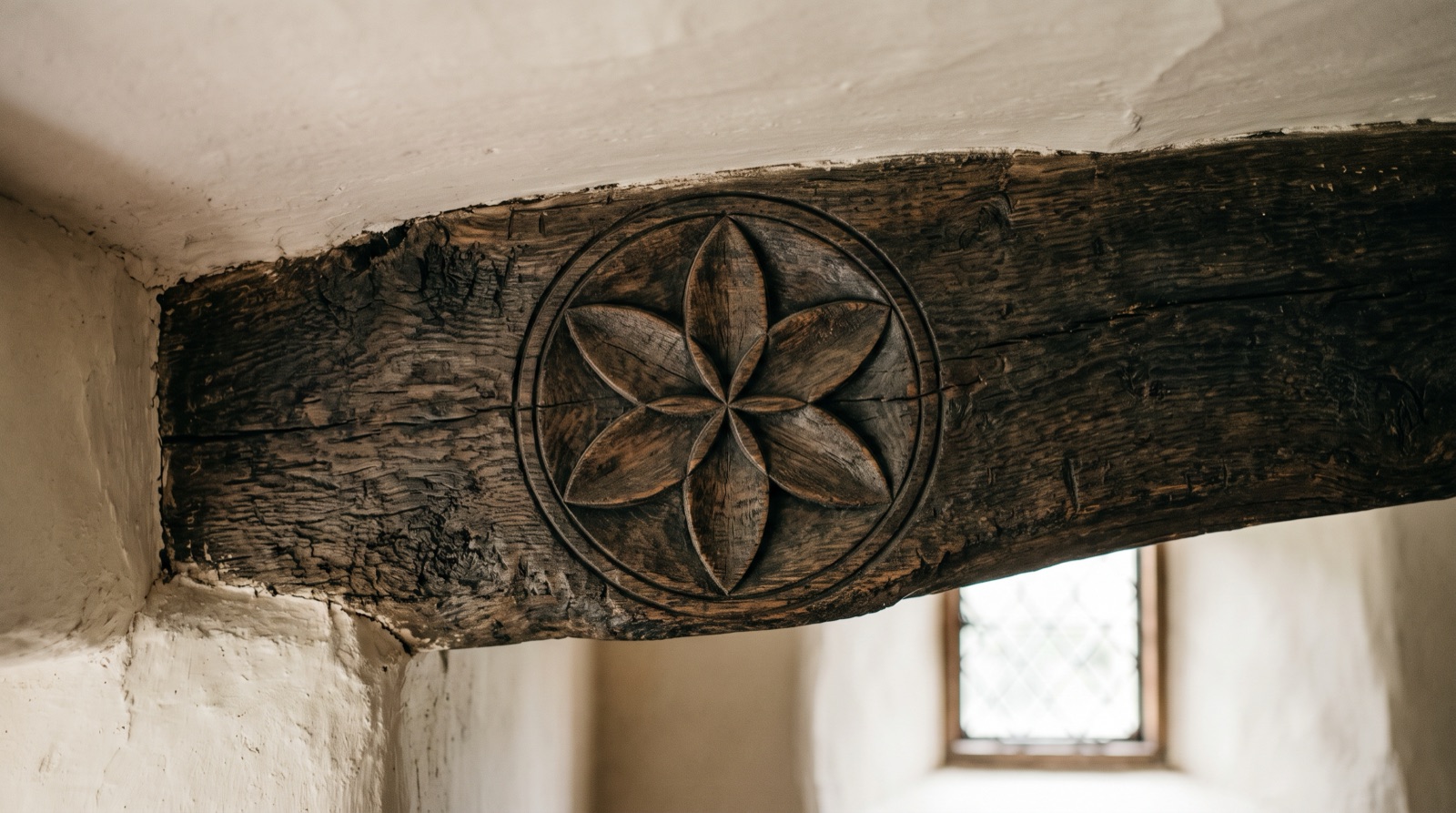
These are the marks ordinary people made to protect a house, a barn, or a child, and they are witchcraft in the oldest sense. Our protection symbols page covers household protection marks in more depth.
- Hexafoil, or daisy wheel. A six-petaled flower drawn with a compass, carved on beams, doors, and fonts across Britain and Europe from the Middle Ages to the nineteenth century as an apotropaic mark to trap evil in its endless lines.
- Hex signs. The painted stars and rosettes on Pennsylvania Dutch barns, whose origins are debated between decoration and protection; modern folk witches use them for both.
- Witch bottle. A bottle filled with pins, nails, hair, and urine, buried under a threshold to catch a curse; witch bottles have been dug up from seventeenth-century English houses, and modern witches still make them.
- Witch's ladder. A cord with feathers or knots tied into it, one knot per intention; the witch's ladder is the physical form of knot magic.
- Cimaruta. An Italian silver charm shaped like a sprig of rue hung with a moon, a key, a hand, and other small symbols; the cimaruta is one of the few surviving pieces of pre-modern Italian witch jewelry.
- Besom. The witch's broom, which is a tool and a symbol at once: it stands for sweeping out the old, for the union of the masculine handle and feminine brush, and for the hearth. The besom hung by the door is a protective sign.
Objects That Became Symbols of Witchcraft
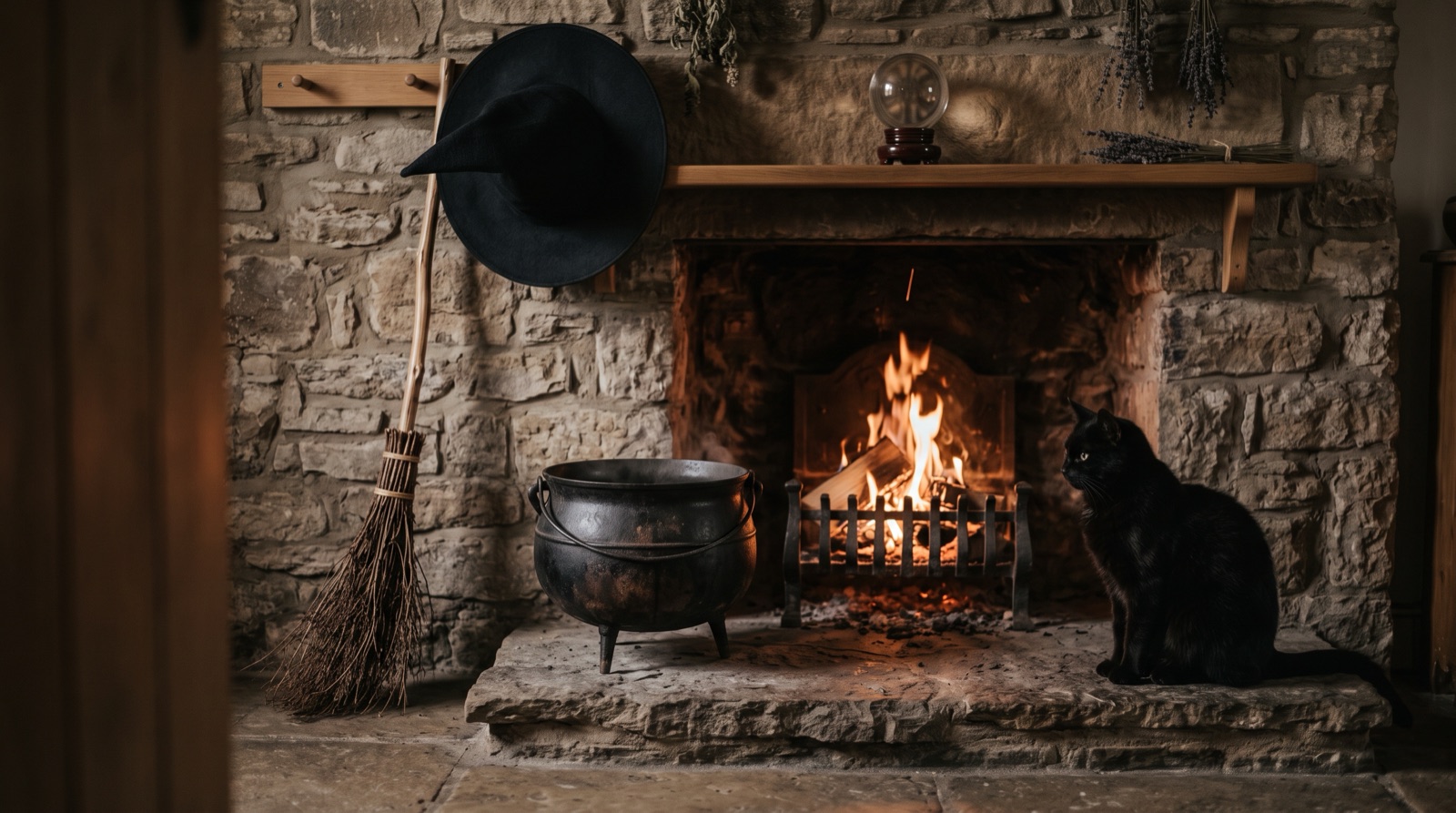
When someone asks "what is the symbol of witchcraft," the answer among witches is the pentacle, but the answer in popular culture is a set of objects: the cauldron, the broom, the pointed hat, the black cat, the crystal ball, the wand, and the full moon. Each of these was a real tool or a real piece of folklore before it was a Halloween decoration. The cauldron was the cooking pot of every household and the Celtic vessel of rebirth; the broom was the besom above; the crystal ball was the scrying tool; the black cat was a familiar in the trial records and a lucky animal in most of Europe; and the pointed hat may descend from the conical headdresses of medieval alewives or the hats forced on accused heretics. Witches use these images with some affection now, because the culture handed them over and they turned out to be useful.
Witch Symbols to Be Careful With
A few of the symbols on this page have been adopted by neo-Nazi and white supremacist groups, and wearing one without knowing that can send a message you do not intend. This is not a reason to abandon them; it is a reason to know what you are wearing, and to choose the form and context that make your meaning clear. The Anti-Defamation League keeps the reference list, and these are the entries that overlap with witch symbols:
- Othala rune (the "O" rune, a diamond with two legs). Used by the Nazi SS and by modern white nationalists, especially with serifs or "wings" on the legs. Our Othala page covers the history; the ADL entry is the reference.
- Algiz rune (the "Z" rune, a line with two branches). Used as the "life rune" by the Nazis and by hate groups since; its inverted form is the "death rune." See the ADL entry and our Algiz page.
- Sowilo rune (the "S" rune, a lightning bolt). Doubled, it is the SS insignia. Our Sowilo page explains how to carry it without that reading.
- Black Sun (a twelve-spoked sun wheel). Designed for the SS castle at Wewelsburg and used by neo-Nazis since; it is not the same as the four-armed solar cross, but the two are close enough that the ADL entry is worth reading before you wear any sun wheel.
- Swastika. An ancient sun and luck symbol across Asia and Europe, and still sacred in Hinduism, Buddhism, and Jainism, but in the West it is the Nazi emblem and should not be used in Western pagan practice.
- Valknut. Adopted by some white supremacists as a Norse identity marker; the ADL notes that most people wearing it are not, so context matters.
- Celtic cross. The plain Irish high cross is fine; the simplified equal-armed cross in a circle, with no ornament, is a common white supremacist symbol and the ADL lists it.
The upright pentacle, the triple moon, the triquetra, the ankh, the hamsa, and the witch's knot have no such history and are safe to wear anywhere.
How to Use Witch Symbols in Your Practice
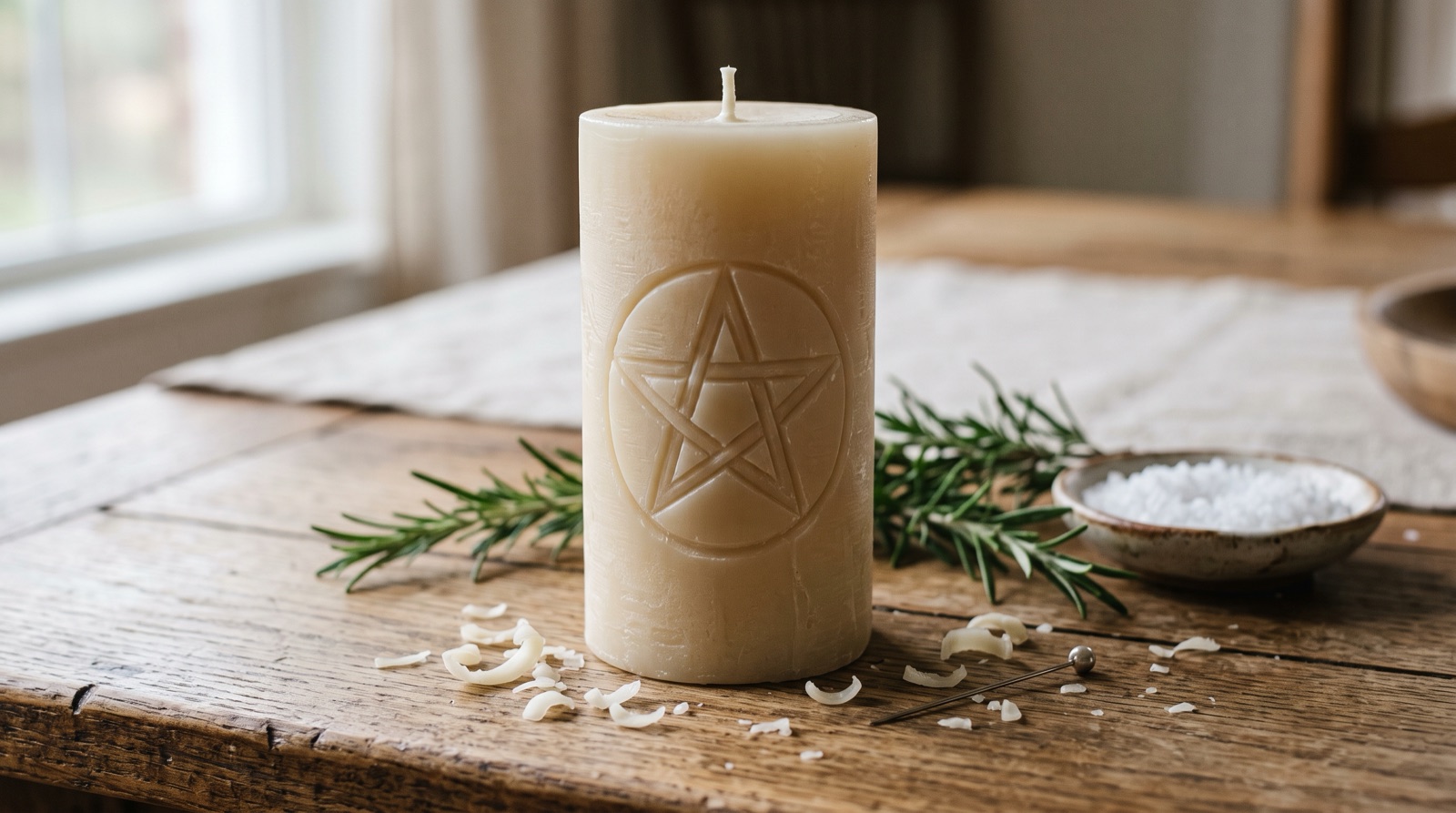
Pick the symbol that matches the work, put it where the work is, and tell it what it is for. That is the whole method, and the details are these:
- Match the symbol to the intention. Protection wants the pentacle, the witch's knot, or the Eye of Horus. Growth and the Goddess want the triple moon or the spiral. Cycles and endings want the ouroboros or the triskelion. Something nobody else should read wants a sigil.
- Put it on the material. Carve it into a candle with a pin, draw it on spell paper, paint it on a jar lid, set an altar tile under the work, or trace it over a bowl of water or salt with your finger.
- Charge it. Hold or touch the symbol, say what it is for in one plain sentence, and picture the work done. Some witches leave it under the full moon or pass it through incense smoke; the sentence is the part that matters.
- Use it consistently. A symbol gets stronger for you the more often you use it for the same thing. Pick a small set and keep to it rather than collecting forty.
- Wear it if you want it standing. A pendant or a ring turns a one-time intention into a constant one, and it is the reason amulets and talismans have been the most common magical objects in every culture on this page.

Free Spell Journal Page
Keep a record of every working on one page: the kind of spell, the moon phase and sign, your intention, what you used, what you did and said, and the signs that followed. A follow-up section has you check back later and mark whether it worked. Enter your email and we'll send you the fillable PDF.
Prefer not to sign up? Download it free from the shop.
How to Choose a Witch Symbol for Yourself
Choose the symbol that describes your practice, not the one that looks best on a shelf. A green witch has more use for the spiral and the tree of life than for the Seal of Solomon; a Hecate devotee wants the wheel; a Heathen wants the hammer; most Wiccans want the pentacle and the triple moon. If you are still working out what your practice is, our types of witches guide and its self-test will get you there, and the symbol will follow.
For a tattoo, three checks: read the careful-with section above, make sure the design is the form you mean (upright, not inverted; four-armed, not twelve-spoked; ornamented, not plain), and avoid closed-tradition marks such as veves unless you are an initiate, since those are best learned from practitioners within the tradition rather than borrowed.
Witch Symbols FAQ
What is the symbol of witchcraft?
The pentacle, a five-pointed star inside a circle, is the symbol witches themselves use for witchcraft. Its five points stand for earth, air, fire, water, and spirit, and the circle holds them in balance. In popular culture the symbols of witchcraft are the cauldron, the broom, the pointed hat, and the black cat.
What are some witchy symbols?
The most common are the pentacle, the triple moon, the Horned God, the triquetra, the witch's knot, the four elemental triangles, Hecate's wheel, the ankh, the Eye of Horus, the triskelion, the ouroboros, and personal sigils. Each stands for a force the witch works with: protection, the Goddess, the elements, cycles, or a single intention.
What are the Wiccan symbols?
The core Wiccan symbols are the pentacle (the elements and spirit), the triple moon (the Goddess), the Horned God symbol (the God), the four elemental triangles, the Wheel of the Year, and the spiral goddess. Wiccans also use the triquetra, the athame and chalice, and the Theban alphabet for writing in a Book of Shadows.
What does the pentacle mean?
The pentacle means the four elements and spirit held in balance inside the circle of the sacred, and by extension protection and wholeness. It is a five-pointed star inside a circle; the star alone is a pentagram. The shape is over 5,000 years old and was adopted as the emblem of Wicca in the 1950s.
Is the pentagram evil?
No. The pentagram has meant health, protection, the five wounds of Christ, and the five elements over its long history, and an upright pentacle is the recognized emblem of a religion. An inverted pentagram marks a second-degree initiate in some Wiccan traditions; only the Church of Satan's goat-head version, the Sigil of Baphomet, is specifically Satanic.
What is the triple moon symbol?
The triple moon is a waxing crescent, a full moon, and a waning crescent side by side, and it stands for the Triple Goddess as maiden, mother, and crone. It is the most common Goddess symbol in Wicca, worn by high priestesses and placed on the front of a Book of Shadows.
What is a witch's knot?
A witch's knot is four pointed loops woven from a single unbroken line, often around a central circle, and it stands for protection, binding, and the four directions held as one. It comes from medieval European folk magic, where it was carved over doors to confuse harmful spirits, and it is the most popular witch symbol for tattoos and jewelry after the pentacle.
What are the elemental symbols?
Fire is an upright triangle, water is a downward triangle, air is an upright triangle with a horizontal line through it, and earth is a downward triangle with a line through it. They come from alchemy, and witches place them at the four quarters of a circle and carve them on candles by element.
What is Hecate's wheel?
Hecate's wheel, or strophalos, is a circle enclosing a three-sided labyrinth or triple spiral around a central point. It stands for Hecate, the Greek goddess of crossroads, witchcraft, and the moon, and comes from the Chaldean Oracles of the second century, where the strophalos was a spinning device used to call her.
What is a sigil?
A sigil is a symbol you design for one specific intention, usually by writing the intention out, removing repeated letters, and combining what is left into a single design. The word means "seal," and the modern method comes from Austin Osman Spare and chaos magic. Its power comes from the meaning you charge it with.
What are 10 spiritual symbols and their meanings?
Ten that cross traditions: the pentacle (elements in balance), the triple moon (the Goddess), the triquetra (three-in-one), the ankh (life), the Eye of Horus (protection and restoration), the hamsa (protection from the evil eye), the tree of life (connection of all worlds), the spiral (growth and cycles), the ouroboros (eternity), and the lotus (rising pure from mud, in Hindu and Buddhist practice).
How do I know if I have a witch's mark?
You do not have one, because there is no such thing. The "witch's mark" was a mole, birthmark, scar, or extra nipple that witch-hunters in the sixteenth and seventeenth centuries claimed was the devil's brand, and pricking it was used as evidence at trials. Everyone has moles. If a modern witch talks about a witch's mark, she usually means a symbol she has chosen to wear as her own sign, which is a different and much happier thing.
The pentacle also names a tarot suit; our guide to tarot card meanings explains all 78 cards, Pentacles included.
Many witches copy the symbols they use into a grimoire or Book of Shadows, with a note on what each means to them. Our guides to both explain how.