The Seal of Solomon is the legendary signet ring of King Solomon, said to give him the power to command demons and spirits. Over the centuries it came to be drawn as a six-pointed star or a five-pointed star, usually inside a circle, and the six-pointed version later became the Star of David.
If you're looking for the woodland plant called Solomon's seal (Polygonatum), that's a different subject. This page is about the symbol.
What Is the Seal of Solomon?
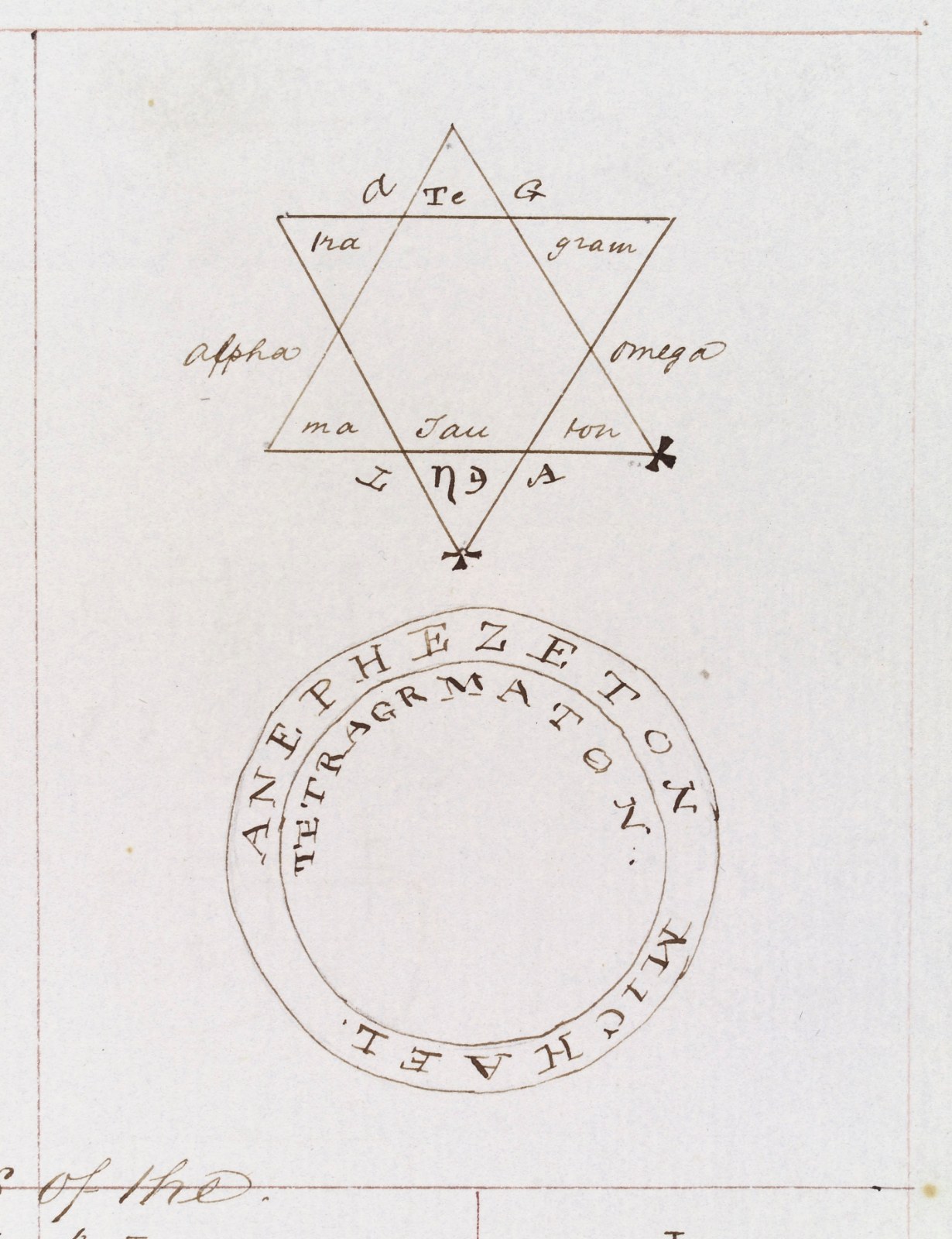
The Seal of Solomon is a symbol based on a legendary ring that belonged to King Solomon of Israel. In Hebrew it is Ḥotam Shlomo, and in Arabic it is Khātam Sulaymān. The legend grew in three traditions side by side: Jewish mysticism, Islamic mysticism, and Western occultism.
The seal is usually drawn as a hexagram (two interlocking triangles) or a pentagram (a five-pointed star), often inside a circle and often with letters or divine names written around it. Because Solomon was famous for his wisdom, the seal became a popular amulet and talisman, and it shows up throughout medieval and Renaissance magic, occultism, and alchemy.
What Does the Seal of Solomon Mean?
The Seal of Solomon stands for power over spirits, for wisdom, and for protection.
- Power over spirits. In Jewish legend, the ring let Solomon command shedim (demons) and, in Islamic tellings, jinn. Some versions add that it let him speak with animals.
- Wisdom. Solomon is the model of the wise king, so his seal became a sign of wisdom. It appears for that reason all through the 17th-century decoration of the Sacromonte Abbey in Granada, Spain.
- Protection. People carved the seal over doors and windows and on graves to keep harm away. During the Ottoman period in Palestine, it was etched in stone above doorways and on Muslim tombs, with examples in houses in Saris and on graves in Jaffa.
Where Does the Legend of Solomon's Ring Come From?
The legend of a ring that commands demons is at least 2,000 years old, but it was attached to Solomon gradually, and the star shape came much later.
Josephus, 1st century. The Jewish historian Josephus describes Solomon's skill at driving out demons. He also tells of a man named Eleazar who drove out a demon in front of the emperor Vespasian, using a ring and a method credited to Solomon.
The Talmud. The best-known story is in the Talmud, Tractate Gittin 68. Solomon needed to build the Temple without iron tools, so he needed the shamir, a legendary creature that could cut stone. Only Ashmedai (Asmodeus), the king of demons, knew where to find it. Solomon sent his general Benayahu with a chain and a signet ring, both engraved with the name of God, and Benayahu used them to capture the demon. Later, Solomon handed the ring to Ashmedai, who swallowed it, flung Solomon far from Jerusalem, and took his place on the throne until the ruse was found out. As Chabad.org points out, the Talmud says the ring was engraved with God's name and says nothing about a star. The 16th-century rabbi known as the Maharal of Prague read the whole story as an allegory: the ring stood for Solomon's intellect and dignity, and he lost his power over the demons when he gave them up.
The Testament of Solomon. This Greek text tells how Solomon bound demons with a ring to build the Temple. Scholars date it anywhere from the 1st century to the Middle Ages, and neither Jews nor Christians count it as scripture.
Medieval Middle Eastern tales. Later writers added more detail. The ring was engraved by God and sent down from heaven, and it was made of brass and iron: brass to seal commands to good spirits and iron to seal commands to evil ones. In one version, a demon steals the ring and rules in Solomon's place for 40 days, then throws it into the sea. A fish swallows it, a fisherman catches the fish, and the ring finds its way back to Solomon, who takes back his throne.
Is the Seal of Solomon the Same as the Star of David?
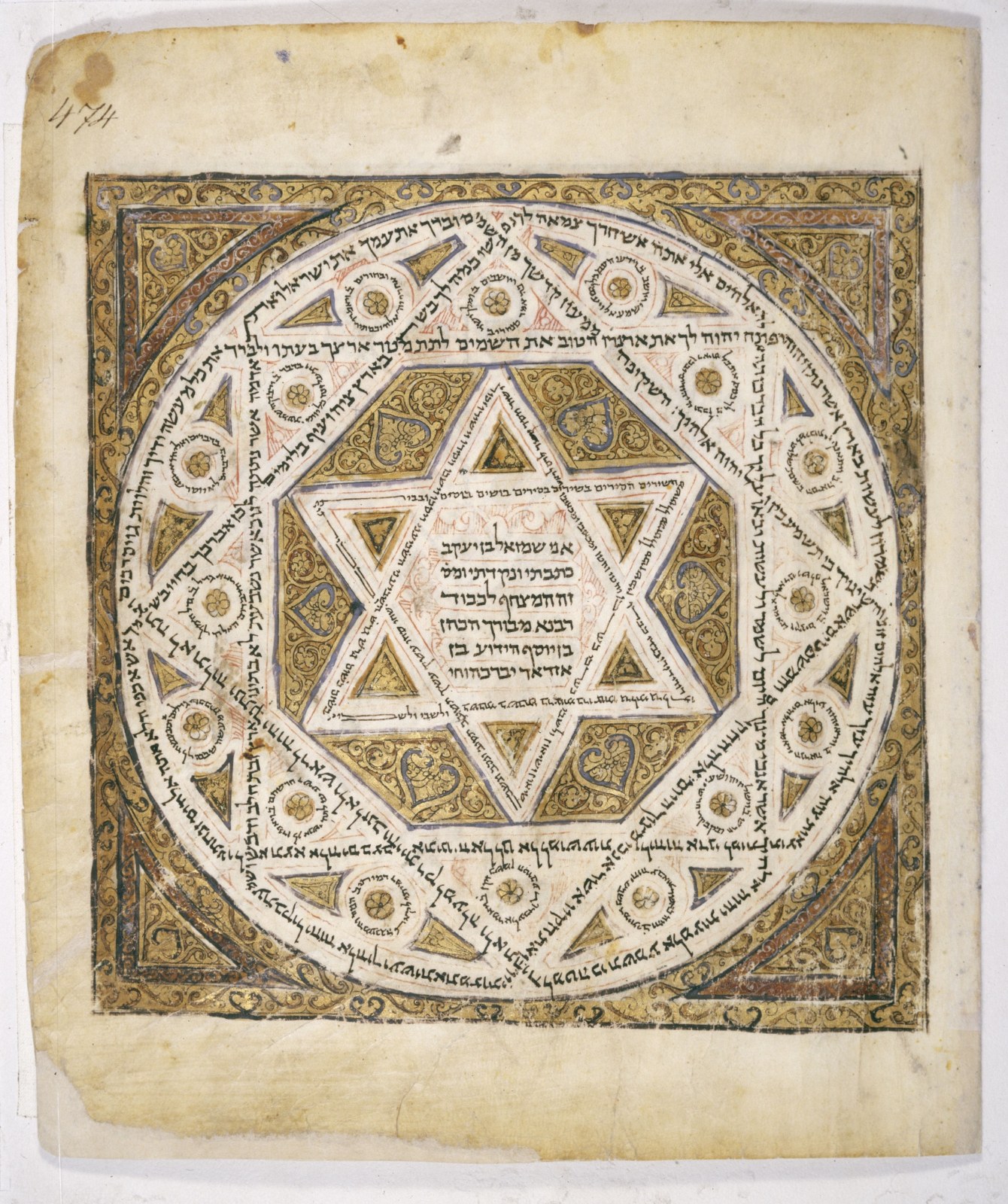
The Seal of Solomon and the Star of David are related but not the same. The Seal is the older magical symbol, and the Star of David grew out of it to become the emblem of Judaism.
The six-pointed star itself is old in Jewish use. The Leningrad Codex, a Hebrew Bible manuscript from 1008–1009 CE, has a full-page hexagram woven from tiny Hebrew writing. Early books of practical Kabbalah, such as Sefer Raziel, prescribed the hexagram for amulets without naming it. Later Kabbalists sometimes called it the Seal of Solomon, and the scholar Gershom Scholem noted that the names "Seal of Solomon" and "Shield of David" were long used for both the six- and five-pointed stars. Over the generations the six-pointed star became the Magen David, the Star of David, and a symbol of the Jewish people. In Jewish usage the name "Seal of Solomon" faded, and today it is used mostly in magical and non-Jewish settings.
Flags show the shared history:
- Prague, 1354. Charles IV, King of Bohemia, gave the city's Jews a red flag showing both David's shield and Solomon's seal.
- Morocco, 1915. The star on Morocco's flag originally represented the Seal of Solomon. Today it is also read as the five pillars of Islam.
- Israel, 1948. The Star of David, which grew out of 14th-century drawings of the Seal of Solomon, became the center of the Israeli flag.
The easiest way to tell them apart is by what's added. A plain six-pointed star is the Star of David. The magical Seal of Solomon usually sits inside a circle and carries letters, divine names, or other signs.
Why Is the Seal Drawn as Both a Hexagram and a Pentagram?
The seal has two shapes because it came into magic by two routes. Most scholars trace the six-pointed version to medieval Arab tradition, which passed it into the Kabbalah of medieval Spain. The five-pointed version comes from Western Renaissance magic, which drew on both Arab and Jewish occult writing. The English writer W. Kennett (1660–1728), for example, describes a "pentangle of Solomon" with the power to drive out demons.
Our guide to the pentagram and the pentacle covers the five-pointed star's other meanings.
The Seal of Solomon in Islam
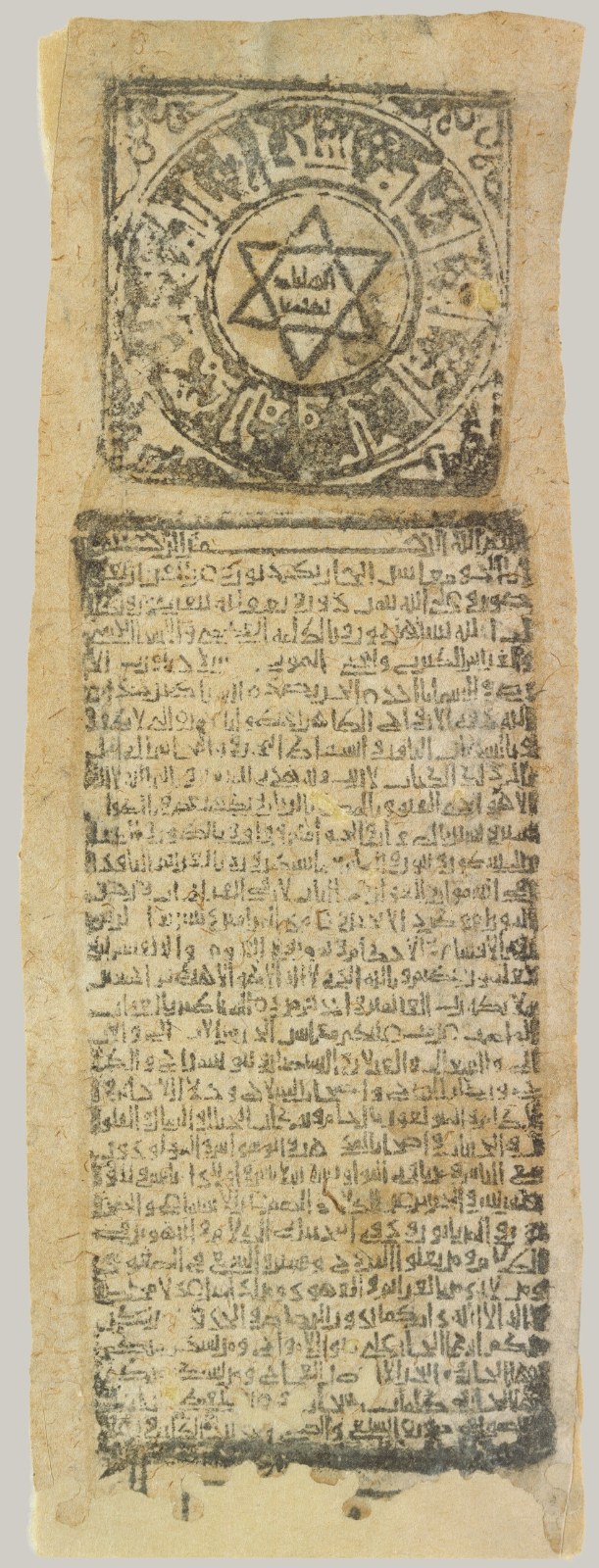
In Islam, Solomon is the prophet Sulaymān, and his ring is Khātam Sulaymān. Islamic tradition credits Sulaymān with authority over the jinn, and his seal carried that meaning into everyday life as a protective sign. It was carved over doors and on tombstones in Ottoman Palestine. It appears between the twin blades of a zulfiqar sword on the flag of the 16th-century Ottoman admiral Hayreddin Barbarossa. In Islamic eschatology, some believe the Beast of the Earth will appear near the Last Day carrying the Seal of Solomon.
The seal's connection to rulers reached Ethiopia too. In 1874 the Ethiopian royal house, which claimed descent from Solomon, founded an Order of Solomon's Seal.
The Seals of Solomon in the Grimoires
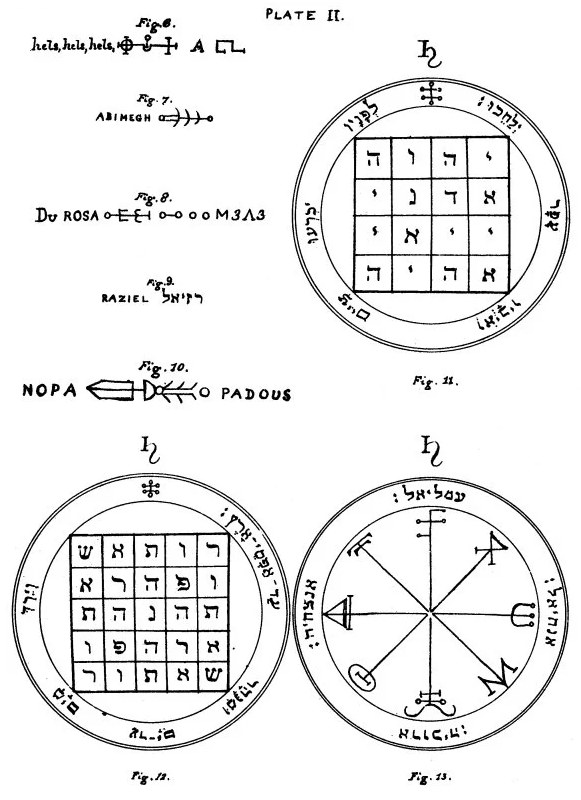
In Western ceremonial magic, Solomon's name is attached to some of the most famous grimoires, and they contain many more seals than one.
The Key of Solomon (Clavicula Salomonis) is a grimoire written in Renaissance Italy, probably in the 14th or 15th century, and falsely credited to Solomon. It is full of pentacles: circular seals drawn for specific purposes. S. L. MacGregor Mathers published an English edition in 1889.
The Lesser Key of Solomon (Lemegeton) was compiled in the mid-17th century from older material. Its first book, the Ars Goetia, lists 72 demons, each with its own seal, which a magician draws to call and control that spirit.
These books are why "seals of Solomon" often refers to whole sets of magical designs, not only the star. Our guide to grimoires covers them in more depth.
How Is the Seal of Solomon Used Today?
Today the Seal of Solomon is used mainly as a protective symbol.
- In ceremonial magic, the seal is drawn on parchment, engraved on a disc, or worn during a ritual as protection while working with spirits.
- In modern witchcraft and occult practice, many people wear it as a protection amulet, the same way they might wear a pentacle. It also suits wisdom and study work, because of Solomon's reputation.
- In home protection, it can hang over a door or sit on an altar, following the old custom of carving it over doorways.
A plain six-pointed star is the Star of David, a living symbol of the Jewish people. Many practitioners keep the magical seal visually distinct, with its circle and letters, so the two aren't confused.
If you'd like to wear or carry the seal, we carry a Solomon's Seal Amulet and a Solomon's Magic Discovery Amulet. Donna Rose's Magical Seals, Signs & Signatures collects seals for many purposes. For more protective signs, see our guides to protection symbols and witch symbols, or design your own with our sigil maker.
Seal of Solomon FAQ
Does the Bible mention the Seal of Solomon?
No. The Bible tells of Solomon's wisdom, but the ring that commands demons comes from later sources: Josephus, the Talmud, the Testament of Solomon, and medieval tales.
How many demons did Solomon seal?
The Ars Goetia, the first book of the 17th-century Lesser Key of Solomon, lists 72 demons, each with its own seal. Older stories name only a few, most famously Ashmedai (Asmodeus).
Is the Seal of Solomon the same as the Star of David?
Not exactly. The Star of David grew out of drawings of the Seal of Solomon and became the symbol of Judaism. The magical seal usually adds a circle, letters, or divine names to the star.
What was the Seal of Solomon ring made of?
In medieval Middle Eastern tales, it was made of brass and iron: brass to seal commands to good spirits and iron to seal commands to evil ones. The Talmud says only that it was engraved with the name of God.
Is Solomon's seal a plant?
Yes, a woodland plant in the genus Polygonatum is called Solomon's seal. It shares the name but is a separate subject from the symbol.
Is the Seal of Solomon evil?
No. In Jewish, Islamic, and Christian settings it stands for wisdom and protection. Its use in summoning spirits comes from the grimoires, where it protects the magician.
Sources
- Seal of Solomon, Wikipedia
- What Is the Seal of Solomon?, Motteleh Schusterman, Chabad.org
- Key of Solomon, Wikipedia
- The Lesser Key of Solomon, Wikipedia
- Testament of Solomon, Wikipedia