Witchcraft is the practice of using ritual, focused intention, and natural materials, candles, herbs, stones, water, the phases of the moon, to influence yourself, your life, and, practitioners hold, the world around you. That is the whole definition. A witch is a person who does this on purpose and calls it what it is. Witchcraft is not a religion, though some religions are built around it; it is not devil worship, though people were executed for four centuries on that accusation; and it is not fantasy, though the fantasy version is what most people picture first.
This page is the plain version: what the word means and where it comes from, what a witch is, the difference between witchcraft and Wicca, the main kinds of witchcraft, what the history actually was, what the practice looks like in an ordinary week, and how to start if you want to.
- Witchcraft Meaning and Definition
- What Is a Witch?
- Where the Word Comes From
- Witchcraft vs. Wicca
- How Witchcraft Works
- Types of Witchcraft
- A Short History of Witchcraft
- What Witchcraft Looks Like Today
- Examples of Witchcraft
- How to Start
- Witchcraft FAQ
Witchcraft Meaning and Definition
Witchcraft means the deliberate use of ritual and intention, usually with physical materials, to bring about change. Every dictionary definition of witchcraft circles the same three ideas: the practice of magic, the use of spells, and a person, the witch, who is believed to have that ability. Which of those three you emphasize depends on the century you are standing in.
Historically, the word was an accusation. In medieval and early modern Europe, "witchcraft" meant harmful magic done in secret, usually by someone the community already disliked, and the definition was written by prosecutors. Anthropologists still use the word that way when they describe the beliefs of cultures where witchcraft is feared rather than practiced.
Today, in most of the English-speaking world, the word is a self-description. Modern witchcraft means a practice that people choose, learn from books and teachers, and do at kitchen tables and bedroom altars: lighting a candle for a job interview, brewing a tea for calm, making a charm for the front door, reading tarot on a Sunday night. It overlaps almost completely with what earlier centuries called folk magic, cunning craft, and household religion. The people doing it now simply took the old accusation and wore it.
So the working definition for this page, and for the rest of this site, is the modern one: witchcraft is a practice of intention made physical. You want something, you decide what it is, and you do a thing with your hands, on purpose, to move toward it.
What Is a Witch?
A witch is a person who practices witchcraft, and in modern use it is a word people choose for themselves rather than one applied to them. The word itself comes from Old English wicce (feminine) and wicca (masculine), which meant a sorcerer or diviner, and it has been used for men and women for as long as it has existed. "Warlock" is not the male form of witch; it comes from an Old English word for oath-breaker, and most male witches will tell you so if you use it.
What a witch is not: a member of a specific religion (witches belong to many religions and to none), a person with inborn powers (the practice is learned), a devil-worshipper (the devil is a figure in Christian theology and most witches do not hold that theology), or a stock character with a hat. Our page on whether witches are real covers the numbers and what a real witch looks like; the short version is a nurse with a candle on her dresser, a man who dries herbs for his door, a teenager with a jar of moon water on the sill.
Common modifiers you will see, each of which describes a focus rather than a rank: a green witch works mostly with plants; a kitchen witch works through cooking and the home; a hedge witch works with trance, spirits, and the boundary between worlds; a sea witch with tides and shells; a cosmic witch with astrology; an eclectic witch borrows from several traditions; a solitary witch practices alone; a hereditary witch learned from family. None of these are official categories, and most witches are two or three of them at once. Our guide to the types of witches goes through each in turn.
Where the Word Comes From
The word witch is English, over a thousand years old, and was an insult for most of that time. Wicce appears in Old English law codes and sermons from around the ninth century, always for someone who was believed to do magic and usually as something to be punished. Through the Middle Ages it kept that shape. The people who actually did the village magic, healing, finding lost things, breaking curses, were called cunning folk, wise women, and charmers, and they would have been insulted to be called witches, because a witch was the person who did harm.
The modern flip happened in the twentieth century. In 1921 the Egyptologist Margaret Murray argued that the people killed in the witch trials had been members of a surviving pagan fertility religion, the witch-cult hypothesis. Historians have since dismantled the theory; the trials killed neighbors, not a secret church. But the idea that "witch" could mean a keeper of an old nature religion was out, and in the 1950s Gerald Gardner built Wicca on it, calling his religion "the Craft of the Wise" and its members witches. From there the word spread to everyone who practiced folk magic and wanted a name for it. Fifty years later, "witch" is on bookstore signs.
That is why the word carries two meanings at once, and why your grandmother and your niece can both be right about what it means.
Witchcraft vs. Wicca
Witchcraft is a practice and Wicca is a religion that has that practice at its center, so every Wiccan is a witch but most witches are not Wiccan. This is the single most common confusion in the subject, and it is worth being precise about it.
| Witchcraft | Wicca | |
|---|---|---|
| What it is | Witchcraft is a practice: spells, charms, divination, and ritual done with intention. | Wicca is a religion founded in England in the 1950s, with witchcraft as its main practice. |
| Deities | Witchcraft has no required gods; witches may be Christian, Pagan, atheist, or anything else. | Wicca usually honors a Goddess and a God, often as the Triple Goddess and the Horned God. |
| Calendar | Witchcraft has no fixed calendar, though most witches follow the moon. | Wicca keeps the eight sabbats of the Wheel of the Year and the full-moon esbats. |
| Ethics | Witchcraft has no single rule; each tradition and each witch decides. | Wicca follows the Rede, "an it harm none, do what ye will," and often the Threefold Law. |
| Membership | Anyone can practice witchcraft, alone, from a book, tonight. | Traditional Wicca requires initiation into a coven; eclectic and solitary Wicca does not. |
| Example | A Catholic grandmother in New Orleans who dresses candles for the saints is practicing witchcraft in everything but name. | A person who celebrates Samhain, casts a circle, and invokes the Goddess is practicing Wicca. |
Our pages on what Wicca is and the difference between witches and Wiccans go deeper on each side.
How Witchcraft Works
Witchcraft works by turning a want into an act: you name what you want, you do a ritual that stands for it, and you use materials that carry its meaning. Every spell in every tradition has those three parts, and the rest is style.
- Intention. The clear statement of what you are working for. "Protection for this house." "Courage on Thursday." "The money I am owed by the end of the month." Vague intentions produce vague spells; witchcraft is a practice of specificity.
- Ritual. The set of actions done with attention: lighting a candle, writing a petition and folding it toward you, tying knots in a cord while speaking, pouring water over a stone, casting a circle. The ritual is what makes the intention a thing you did instead of a thing you thought.
- Correspondences. The idea that materials carry meanings, and that like affects like. Green candles for money, rosemary for cleansing and memory, black salt for banishing, a full moon for charging, a Friday for love. This is sympathetic magic, the oldest principle in the craft, and the lists of correspondences in every witchcraft book are its dictionary.
What happens next depends on who you ask. What nobody disputes is that the person who did the spell has decided what they want, rehearsed it with their hands, and walks out of the room changed; that produces results in the ordinary way that intention produces results. What practitioners add is that the working also acts on the world, and what skeptics say is that this has never been measured. Our page on whether witchcraft is real gives both sides their full case. Every tradition agrees on the practical rule: a spell plus effort works; a spell instead of effort mostly does not.
Types of Witchcraft
Witchcraft comes in traditions, which are lineages with their own rules, and in styles, which are the labels modern witches use for what they focus on. The two get mixed up constantly, so here they are apart.
Traditions are bodies of practice with a history and, usually, a community:
- Wicca and its branches (Gardnerian, Alexandrian, Dianic, and dozens of eclectic forms), the largest modern tradition.
- Traditional witchcraft, a family of non-Wiccan paths such as Cochrane's Craft and the Feri Tradition, which draw on folk magic, spirit work, and the land rather than Gardner's rituals.
- Folk magic traditions that lived inside other religions and rarely used the word witch: Hoodoo among Black Americans, brujería and curanderismo across Latin America, Appalachian and Ozark folk healing, Pennsylvania Dutch powwow, Italian stregheria, and the English and Irish cunning craft. Several of these grew up under slavery or colonization and are best learned from practitioners within the tradition rather than from a page like this one.
- Ceremonial and chaos magic, which are cousins rather than witchcraft proper: ceremonial magic is the formal, grimoire-based practice that Wicca borrowed its circle and tools from, and chaos magic is the twentieth-century approach that treats belief itself as the tool.
Styles are what a witch focuses on, and a witch can hold several at once:
| Style | What It Focuses On |
|---|---|
| Green witch | A green witch works with plants: growing, drying, and using herbs, and reading the land. |
| Kitchen witch | A kitchen witch works through cooking, cleaning, and the home, so that the stove is the altar. |
| Hedge witch | A hedge witch works with trance, spirit journeys, and the boundary between the everyday and the otherworld. |
| Sea witch | A sea witch works with water, tides, shells, and weather. |
| Cosmic witch | A cosmic witch works with astrology, planetary hours, and the moon. |
| Eclectic witch | An eclectic witch draws from several traditions and builds a personal practice. |
| Solitary witch | A solitary witch practices alone rather than in a coven, whatever the style. |
| Hereditary witch | A hereditary witch learned the craft from family, which is rarer than the internet suggests. |
The color labels you see online, "red witch," "white witch," "black witch," are not traditions or styles; they are shorthand for the kind of work someone does (love, healing, baneful) and are used loosely enough that their definitions shift from one video to the next. A full guide to the types of witches, with how to tell which one you are, covers every kind in detail.
A Short History of Witchcraft
The history of witchcraft is mostly a history of people being accused of it, and only in the last century a history of people practicing it openly. The two threads need to be kept apart.
Before the trials, every culture had its magic-workers, and most of them were valued: healers, midwives, diviners, charm-makers, the people you went to when a cow sickened or a ring went missing. Europe called them cunning folk and wise women. The word witch, in that world, meant the harmful kind, the one who cursed the cow rather than cured it, and it was an accusation, not a job.
The witch trials, roughly 1450 to 1750, turned the accusation into an industry. The Malleus Maleficarum of 1486 gave inquisitors a manual: witches made pacts with the devil, flew to sabbaths, and murdered children. Across early modern Europe and its colonies an estimated 40,000 to 60,000 people were executed, most of them women, most of them poor, many of them the very healers the villages had relied on. The twenty deaths at Salem in 1692 were the American tail of it. None of the accused were practicing what this page describes; they were neighbors someone wanted gone.
The Bible passages that condemn "witchcraft" (Exodus 22:18, Deuteronomy 18:10, and a handful of others) were the legal basis for much of this, and they still shape how many Christians hear the word. The Hebrew and Greek terms behind those translations referred to poisoners, necromancers, and diviners-for-hire in their own contexts. Whether they apply to a modern practitioner with a candle and a jar of rosemary is a question for the reader's own tradition; this page only notes that the passages exist, that their translation is contested, and that many practicing witches are also Christians who have read them carefully.
The revival began when the trials ended and the folklorists arrived. Charles Godfrey Leland published Aradia in 1899, claiming to record a surviving Italian witch religion; Margaret Murray's 1921 witch-cult theory followed; and Gerald Gardner's Wicca in the 1950s turned the theory into a working religion. Doreen Valiente rewrote its liturgy, Raymond Buckland carried it to America, Starhawk joined it to feminism and ecology in 1979, and Scott Cunningham made it something you could do alone from a paperback in 1988. The internet finished the job. A practice that was a capital crime in 1650 is a bookstore section in 2026.
What Witchcraft Looks Like Today
Modern witchcraft looks like an ordinary life with a few deliberate rituals folded into it, and most of it would be invisible to a visitor. A working witch's week, roughly:
- An altar on a shelf or dresser: a candle, a few stones, a plant, a photo, a cup of water, tended when things are hard and dusted when they are not.
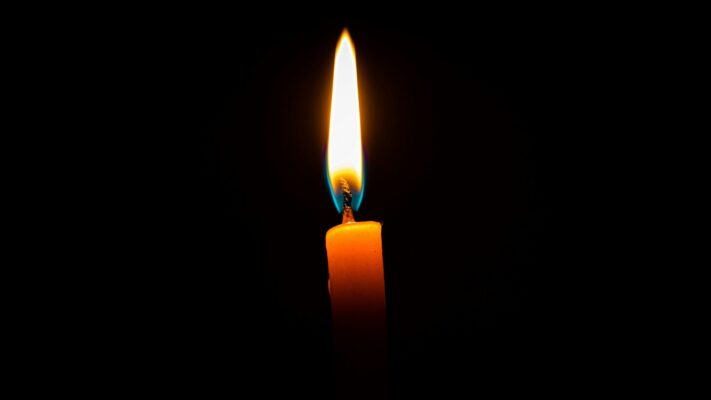
- Candle work. Choosing a color from the candle color meanings, carving a word into it, dressing it with oil, and lighting it with a spoken line. This is the most common spell in every modern tradition.
- Herbs and kitchen work. Teas, sachets, floor washes, a bay leaf written on and burned, a jar of black salt by the door.
- The moon. A jar of moon water on the sill at the full moon; intentions set at the new moon; the moon calendar checked before a working.
- Divination. Tarot, a pendulum, runes, or a scrying mirror, used to ask a question and read the answer.
- Cleansing and protection. Smoke, salt, and words at the thresholds; an egg cleanse after a hard week; a protection symbol over the door.
- The year. Sabbats for Wiccans and Pagans, or simply the seasons: Samhain for the dead, Yule for the returning light, Beltane for the fire.
- A journal. A Book of Shadows, a notes app, a notebook. Every witch who lasts keeps one.
What it does not look like: robes, cauldrons on fires, or anything that would frighten the neighbors. The cauldron is usually a cast-iron pot for burning bay leaves, and the robe is usually pajamas.
Examples of Witchcraft
The clearest way to understand witchcraft is to see three ordinary workings side by side, because the pattern is the same in each:
- A honey jar spell to sweeten a difficult coworker: their name written on paper, the paper in a jar of honey, a candle burned on the lid for a few minutes a day. Intention (a kinder relationship), ritual (the writing and the candle), correspondence (honey for sweetness).
- A protection working for a new apartment: a line of black salt across the threshold, a pentacle or a sprig of rosemary over the door, and a spoken line at each window. Intention (nothing unwelcome comes in), ritual (walking the boundary), correspondence (salt and iron for warding).
- A full moon cleansing of a tarot deck: the cards fanned on the sill under the moon overnight, then wrapped in a dark cloth. Intention (a clear deck), ritual (the setting out and the wrapping), correspondence (the full moon for clearing and charging).
None of these requires a belief you do not already hold. They require only that you do them on purpose and pay attention to the result.
How to Start
Start witchcraft with one small working, one notebook, and one book, and give it a month before you decide anything. Specifically:
- Do one thing this week. A candle lit with a sentence of intention is a complete spell. The candle dressing guide is the whole method.
- Keep a journal from the first night. Date, working, what you felt, what happened. After ten entries you will know more about your own practice than any page can tell you.
- Read one good book. Scott Cunningham's Wicca: A Guide for the Solitary Practitioner is the one most working witches started with, and it is about the practice as much as the religion; his The Truth About Witchcraft Today is the shorter answer to this page's question.
- Learn the words. The Wiccan glossary covers the hundred terms you will meet in the first year.
- Decide about community later. Most witches practice alone. If you want a group, our guide to what a coven is and the coven red flags list will keep you safe while you look.
- Follow the seven steps in our guide to how to become a witch when you are ready for more than one candle.
Witchcraft FAQ
What is witchcraft?
Witchcraft is the practice of using ritual, focused intention, and natural materials such as candles, herbs, stones, and the phases of the moon to influence yourself, your life, and, practitioners hold, the world around you. It is a practice rather than a religion, and it is found inside many religions and outside all of them.
What is the meaning of witchcraft?
The word has two meanings. Historically it meant harmful magic done in secret and was an accusation, the one people were executed for in the witch trials. Today it means a chosen practice of spells, charms, divination, and ritual, and the people who do it call themselves witches on purpose.
What is a witch?
A witch is a person who practices witchcraft. The word comes from Old English wicce and wicca and has always applied to men and women; "warlock" is not the male form. A modern witch is someone who lights candles with intention, works with herbs and the moon, and reads cards or stones, in any religion or none.
What is an example of witchcraft?
A honey jar spell is a clear example: a person's name written on paper, placed in a jar of honey, with a candle burned on the lid for a few minutes a day to sweeten a relationship. It has the three parts every spell has: an intention, a ritual, and materials whose meanings match the goal.
What is witchcraft and how does it work?
Witchcraft is intention made physical. You name what you want, do a ritual that stands for it, and use materials that carry its meaning. The ritual reliably changes the person doing it, which changes what they do next; whether it also acts on the world at a distance is something practitioners affirm from experience and no experiment has measured. Spells work alongside effort, not instead of it.
What is the difference between witchcraft and Wicca?
Witchcraft is a practice; Wicca is a religion founded in 1950s England with witchcraft at its center. Wicca has a Goddess and God, eight seasonal festivals, and the Rede as its ethic. All Wiccans practice witchcraft, but most witches are not Wiccan; they may be Christian, Pagan of another kind, or secular.
What are the types of witchcraft?
By tradition: Wicca and its branches, traditional (non-Wiccan) witchcraft, and folk-magic traditions such as Hoodoo, brujería, and the cunning craft. By style: green, kitchen, hedge, sea, cosmic, eclectic, solitary, and hereditary witches, which describe a focus rather than a rank. A witch can be several styles at once.
Is witchcraft a religion?
No. Witchcraft is a practice. Wicca and some other Pagan paths are religions that include witchcraft, which is why the words get confused, but witchcraft is also practiced inside Christianity (Hoodoo, curanderismo), and by people with no religion at all.
How does the Bible define witchcraft?
Passages such as Exodus 22:18 and Deuteronomy 18:10 condemn practices translated as "witchcraft" and "sorcery." The Hebrew and Greek words behind those translations referred to poisoners, necromancers, and diviners-for-hire. Whether they apply to a modern practitioner is a question each reader's tradition answers; the passages exist, and their translation is contested.
What kind of crime is witchcraft?
In most of the world today, none. Witchcraft was a capital crime in Europe and its colonies from roughly 1450 to 1750, and England's last Witchcraft Act was repealed in 1951. A few countries still prosecute it, and in parts of Africa, Papua New Guinea, and South Asia accusations of witchcraft still lead to violence against the accused, which is a human-rights problem rather than a magical one.
Where does the word witch come from?
From Old English wicce and wicca, sorcerer or diviner, recorded from about the ninth century. It was an insult for most of its history; the twentieth-century Pagan revival, beginning with Margaret Murray's theory and Gerald Gardner's Wicca, turned it into a name people choose.
Can anyone practice witchcraft?
Yes. No initiation is required to practice on your own, and most modern witches are self-taught from books and a journal. Some traditions and covens have initiations, and closed folk traditions are best learned from within their communities, but the basic practice of candle, intention, and attention is open to anyone tonight.
The symbols witches use, from the pentacle to the witch's knot, are covered in our guide to witch symbols and meanings.
Whatever kind of witch you turn out to be, the practice usually ends up in a book. Our guides to the grimoire and the Book of Shadows explain the difference and how to start one.