Scrying is the practice of gazing into a reflective or dark surface, most often a crystal ball, a black mirror, or a bowl of water, until your eyes relax and images, symbols, and impressions start to come. The word comes from the old English "descry," to catch sight of, and that is the whole method: you are not looking at the ball, you are looking through it, and what you catch sight of is the reading.
It is one of the oldest forms of divination on record and one of the cheapest to try. A bowl of water and a candle will do. This page covers what scrying is and where it comes from, what is actually happening in your eyes and mind when the pictures start, the different surfaces you can scry with, how to scry step by step, the specifics of the crystal ball, the black mirror, and the water bowl, how to make sense of what you see, what to do when nothing comes, and how to keep your tools.
- What Is Scrying?
- Where Scrying Comes From
- What Is Happening When You Scry
- Types of Scrying
- How to Scry, Step by Step
- How to Use a Crystal Ball
- How to Use a Scrying Mirror
- How to Use a Scrying Bowl
- What You Will See and How to Read It
- When Nothing Happens
- Care and Safety
- Scrying FAQ
What Is Scrying?
Scrying is a form of divination in which you gaze into a surface with a soft, unfocused stare and treat whatever appears there, clouds, colors, faces, scenes, or a sudden knowing, as the answer to your question. The surface can be a crystal ball, a black mirror, a bowl of water, a flame, smoke, or the sky. The scrying itself is the same in every case: a question, a soft gaze, a long patient wait, and then attention to what comes.
The old names sort scrying by surface. Gazing into a mirror or polished stone is catoptromancy; water is hydromancy; a bowl or basin specifically is lecanomancy; fire is pyromancy; and smoke is capnomancy. Nobody uses those words at the kitchen table. "Scrying" covers all of them, and crystal gazing is the name for the crystal ball version specifically.
What scrying is not: it is not a mirror that shows you the future like a television. It is closer to a guided daydream with a question attached. The images come from you, prompted by the surface, and the skill is in learning to let them come without steering, and then to read them honestly. Whether the source of those images is your own deep mind, a spirit, a guide, or the universe is something each tradition answers differently, and the method works the same whichever answer you hold.
Where Scrying Comes From
Scrying is at least as old as written history, and every large civilization has a version of it. The Pythia at Delphi gave oracles from a trance; Babylonian and Egyptian diviners read oil on water and the surface of basins; and Roman writers describe boys made to gaze into water and mirrors to see the future. In Mesoamerica, obsidian mirrors were tools of the Aztec god Tezcatlipoca, whose name means "smoking mirror," and priests used them to see into the other world.
Two names carry the practice into the modern West. Nostradamus wrote that he received his visions gazing into a bowl of water set on a brass tripod, by candlelight, at night, which is the exact setup you will use below. And in Elizabethan England the mathematician and royal astrologer John Dee worked for years with the scryer Edward Kelley, who gazed into a crystal and an obsidian mirror while Dee wrote down what he said. Dee's obsidian mirror is Aztec, brought to Europe after the conquest, and it sits in the British Museum today. It is the reason every black scrying mirror sold now is a small copy of a five-hundred-year-old Mexican original.
The crystal ball as the fortune-teller's tool is mostly a nineteenth-century image. Victorian spiritualists and the occult revival made "crystal gazing" a parlor practice with published manuals, and the traveling fortune-teller with a glass sphere became a stock figure by the early 1900s. Modern witchcraft inherited all of it, and treats the crystal ball, the black mirror, and the water bowl as three doors to the same room.
What Is Happening When You Scry
When you scry, three ordinary things happen in your eyes and mind, and knowing them makes you better at it rather than worse. Scrying uses the mind's own machinery for making pictures; the surface is there to switch that machinery on.
- Your vision fades at the edges. Hold a soft, unmoving gaze on a dim surface for a minute or two and the periphery starts to gray out and swim. That is Troxler's fading, a normal effect of the eye tuning out an unchanging image. The "dark clouds" that every scrying manual tells you to wait for are this. When they arrive, you are doing it right.
- Your mind fills a featureless field. A uniform, low-information visual field, a black mirror by candlelight is a good one, is what researchers call a Ganzfeld, and the brain responds to it by generating its own imagery, the way it does when you are falling asleep. The pictures, the faces, the moving scenes come from here.
- You recognize shapes in the noise. The habit of seeing faces and figures in clouds, wood grain, and shadows is pareidolia, and it is the reading part of scrying. What your mind chooses to see in the swirl is the message, in the same way that what you notice in a tarot card is the message. Reading the shapes in window frost works the same way.
None of this makes scrying "just" imagination, any more than a dream is "just" sleep. It means the surface is a tool for getting past the chattering top layer of the mind to whatever sits underneath, and different traditions name what sits underneath differently. Practically, it means two things: a dim, dark, featureless surface works better than a bright, busy one, and the images will feel half-seen and dreamlike, not like a film. If you expect crisp footage, you will decide it is not working when it is.
Types of Scrying
The three surfaces most witches use are the crystal ball, the black mirror, and the bowl of water, and the rest are variations on the same gaze. Here is what each is like to work with:
| Surface | What It Is | What It Is Like to Use |
|---|---|---|
| Crystal ball | A polished sphere of clear or smoky quartz, obsidian, or glass, usually on a stand. | The crystal ball is the classic tool, and its depth and inner flaws give the eye something to travel into. Clear glass and quartz are the most traditional; a black obsidian sphere is easier for beginners because it behaves like a curved black mirror. |
| Black mirror | A round or oval of black glass, or a polished disk of obsidian, usually on a stand. | The black mirror is the easiest surface to learn on, because it is dark, flat, and gives nothing back but your own faint reflection and the candle. Most people get their first images here. |
| Water bowl | A dark bowl filled with water, sometimes with a drop of ink or oil, by candle or moonlight. | The water bowl is the oldest method and costs nothing. The surface moves slightly with your breath, which some people find helps the images come and others find distracting. |
| Fire | A candle flame, a fireplace, or a bonfire. | Fire scrying is fast and vivid, and the images move, so it suits questions about change and action. It is hard to hold a soft gaze on a bright flame for long, so sessions are short. |
| Smoke | Incense smoke rising in still air, or the smoke off a snuffed candle. | Smoke scrying reads shapes as they form and dissolve, and it pairs naturally with an incense-heavy ritual. |
| Clouds and sky | Daytime clouds, or the night sky reflected in water. | Cloud scrying is the version children do without being taught, and it is a good way to practice reading shapes before you sit down with a mirror. |
| Ink or oil on water | A few drops of black ink or olive oil floated on a bowl of water. | Ink scrying gives moving, spreading shapes to read, which some people find easier than waiting for images to appear in a still surface. |
You do not need all of these. Start with one. Most people who stick with scrying end up with a black mirror for regular work and a crystal ball or bowl for special occasions.
How to Scry, Step by Step
Scrying takes a dark room, a single candle, a surface, a question, and about twenty minutes of patient gazing. Here is the method that works for every surface:
- Choose the question. One question, specific, written down. "What do I need to know about the job offer" is a question; "tell me about my life" is a fog. Scrying answers what is asked.
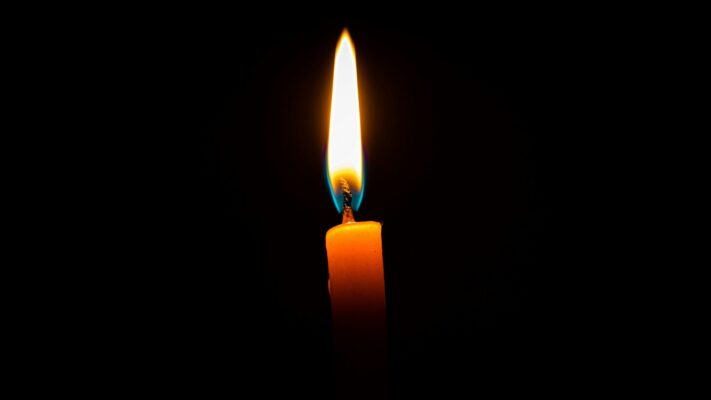
- Prepare the room. Night is best, or a room you can make dark. Turn off electric lights. Light one candle and set it behind you or to one side, never directly in front of the surface, so that the surface stays dark and the candle does not reflect in it. Our candle color guide covers why purple and white are the usual choices for divination.
- Prepare yourself. Sit comfortably with the surface at eye level or slightly below, about arm's length away. Three slow breaths. If you cast a circle for divination, cast it now; our circle casting guide has the short version. If you do not, a spoken line is enough: "I am here to see clearly. Show me what I need to know about [the question]."
- Soften the gaze. Look into the surface, not at it. Let your eyes unfocus as if you were looking at something a few feet behind the mirror or inside the ball. Blink normally. Do not stare hard; a hard stare waters the eyes and tenses the face, and tension blocks the images.
- Wait for the clouds. After one to three minutes the edges of your vision will dim and the surface will seem to mist, cloud, or fill with moving darkness. This is the threshold. Do not react to it, do not chase it, keep the gaze soft.
- Let the images come. Behind or inside the clouds, shapes, colors, faces, symbols, scenes, or a strong feeling will begin to arrive. Do not name them yet. Do not decide what they mean. Watch, the way you watch a dream, and let each one pass into the next.
- Ask follow-ups silently. If an image is unclear, hold the question "show me more" or "what does this mean" in your mind and keep gazing. The images often answer.
- Stop when the pictures stop. A session ends naturally when the surface goes flat and dull again, usually after ten to twenty minutes. If you are past twenty-five minutes, stop anyway; longer sessions bring headaches and nonsense, not more insight.
- Write everything down immediately. Before you stand up, before you speak, write every image, color, feeling, and word in the order it came, without interpretation. Scrying images fade as fast as dreams.
- Close and ground. Cover the surface with a cloth, thank whatever you thank, blow out or snuff the candle, and eat or drink something. Then, and only then, read your notes and start to interpret.
How to Use a Crystal Ball
To use a crystal ball for scrying, set it on a dark cloth at eye level with a candle behind you, soften your gaze into the center of the sphere, and wait for the clouding that comes before the images. The ball works the same as any other surface, with a few things of its own:
- Choose the size and material for your eyes, not for the look. A 50 mm (two-inch) sphere is enough to scry with and is the cheapest way to try; an 80 mm (three-inch) ball is the comfortable working size; anything over 100 mm is for a permanent altar and a large budget. Clear quartz and glass are traditional; a black obsidian sphere is easier for beginners because it behaves like a curved black mirror, and smoky quartz sits between the two. The shop's crystal balls run from 50 mm glass to 200 mm, most with a stand.
- Flaws help. A ball with a few inclusions, veils, or bubbles gives the eye something to travel into. A flawless sphere is beautiful and slightly harder to work.
- Kill the reflections. A clear ball reflects the whole room. Put it on a black cloth, set the candle behind you, and hang or drape something dark behind the ball so that what you see inside it is depth, not the window.
- Gaze into the center. Focus on a point inside the sphere, roughly at its middle, and let it blur. The clouding will start at the edges and move inward.
- Do not touch it while you scry. Handling the ball leaves fingerprints and warms the surface, which fogs it. Set it and leave it. Some traditions say never to let anyone else touch it at all.
- Cleanse it between sessions. Our guide to cleansing a crystal ball covers the methods; the short version is moonlight, a dry cloth, and a drop of moon water on the cloth, and never a soak for obsidian or any stone with cracks.
What you will see in a crystal ball follows a familiar sequence: the sphere seems to fill with mist or milky cloud; the cloud thins or parts; colors, shapes, or a scene appear in the space it leaves; and the scene fades back to cloud. Old crystal-gazing manuals gave meanings to the colors of the cloud, white for good news, black for bad, blue for calm, red for danger, and while those tables are guesswork, they are the same guesswork in every source, which makes them a fair starting point when a session gives you color and nothing else.
How to Use a Scrying Mirror
A scrying mirror is a black, non-reflective or barely reflective surface, usually a disk of polished obsidian or a piece of black-painted glass, and you use it by gazing into its darkness by candlelight until images come. It is the tool most experienced scryers recommend to a beginner, because the surface is flat, dark, and quiet, and it gives the eye almost nothing to distract it.
- Obsidian or glass. A polished obsidian mirror is the traditional form, volcanic glass with the same history as Dee's Aztec mirror, and it has a faint depth and glow that painted glass lacks. Painted glass is cheaper, larger, and just as usable. The shop's scrying mirrors are obsidian, from a two-inch disk to eight inches, most with a stand; the 8 cm mirror with stand is the usual first one.
- Angle it so you cannot see yourself. Tilt the mirror slightly upward or set it flat on the table and look down into it, so that your own face is not the main thing in it. A faint ghost of yourself is fine; a clear reflection pulls your focus to the surface.
- Candle behind or beside you. Never in front. The mirror should look like a well, not a mirror.
- Gaze into the black, not at the glass. Let your focus fall an inch or two behind the surface. Wait for the gray clouding at the edges.
- Keep it covered when not in use. A black cloth over the mirror is the universal rule. Half the reason is traditional (a scrying surface stays "closed" between sessions); the other half is that fingerprints, dust, and sunlight all make obsidian harder to read.
How to Make a Scrying Mirror
You can make a scrying mirror in an afternoon from a picture frame and a can of black paint. Here is the standard method:
- Buy a picture frame with real glass, round or oval if you can find one, 6 to 10 inches across. Take the glass out and wash and dry it.
- In a ventilated space, outdoors if possible, lay the glass on newspaper and spray one side with high-gloss black enamel spray paint. Three to four thin coats, ten minutes apart, are better than one thick one. Let it cure for a day.
- Put the glass back in the frame painted side down, so that you look at the black through the clear, unpainted side. The glass over the paint is what gives the depth.
- Cleanse it (smoke, a wipe with moon water on the unpainted side only, or a night in moonlight) and consecrate it the way you would any tool, then keep it covered.
A painted mirror works exactly as well as an obsidian one for scrying. The obsidian is for people who want the stone.
How to Use a Scrying Bowl
A scrying bowl is any dark bowl filled with water, and you use it the way Nostradamus did: by candlelight, at night, gazing into the water until the surface clouds and images come. It is the cheapest and oldest form of scrying, and it is the one to try tonight if you own no tools at all.
- The bowl. Black or very dark inside, so that the water reads as depth rather than as a bowl. A black ceramic or cast-iron bowl, a small cauldron, or one of the black stone scrying bowls made for the purpose. A white bowl does not work; the water looks like water.
- The water. Plain water is fine. Spring or moon water is nicer. Fill the bowl nearly to the brim so that the rim does not cast a shadow across the surface.
- Optional additions. A single drop of black ink, or a few drops of olive oil, floated on the surface gives you moving shapes to read instead of waiting for still images. A pinch of salt in the water is traditional for protection. A silver coin dropped in the bowl is an old touch for money questions.
- The light. One candle, behind you or to the side, or the moon through a window. Some people set the bowl outside under a full moon and scry in the moon's reflection, which is the most beautiful version and the coldest.
- The gaze. Look into the water, not at it, and let the reflection of the candle or moon blur. The surface will seem to darken and deepen. Breathe gently; your breath ripples the water, and a little ripple helps.
- Afterward. Pour the water onto the earth or into a plant. Do not pour a reading down the drain, and do not reuse the water.
What You Will See and How to Read It
You will see clouds first, then colors or shapes, then, on a good night, faces, symbols, or a scene, and you read them the way you read a dream: by what they mean to you, in the order they came, against the question you asked. There is no scrying dictionary worth owning. There are a few reliable rules:
- The first image is the answer; the rest is commentary. Scryers across traditions agree that what comes first, before the mind has time to editorialize, is the reading. Trust it over the elaborate scene that follows.
- Read by feeling before you read by symbol. A gray ship in the mirror that filled you with dread means something different from a gray ship that made you calm. Note the feeling of each image before you decide what the image "is."
- Symbols are personal. A dog means loyalty to one person and a bite to another. Use your own associations, and only then the shared ones (water for emotion, fire for change, a door for a choice, a road for a journey, a face for a person the question concerns).
- Movement matters. Images that approach are coming into your life; images that recede are leaving. Left is often read as past or inner, right as future or outer, but check that against your own sense of it.
- Colors carry a rough code. White and gold for good news and clarity; black and gray for delay, blockage, or the unknown; blue for calm and truth; red for energy, anger, or danger; green for growth and money; purple for spiritual matters. These are the old crystal-gazing tables and they are a starting point, not a verdict.
- A yes-or-no question gets a yes-or-no feel. Clouds that lift, brighten, or move toward you are read as yes; clouds that darken, sink, or move away are read as no. Many scryers keep a pendulum beside the mirror for exactly this and let the pendulum confirm. Dowsing rods answer the same way when you are on your feet, and our dowsing rods guide shows how to read them.
- Write first, interpret second. The notes you took in step nine are the reading. Interpretation done in the chair, mid-session, steers the next image. Interpretation done afterward, with tea, is honest.
- Keep a scrying journal. After ten sessions you will have your own symbol set and your own sense of what a "hit" looks like. That journal is worth more than any book on the subject, including the good ones like Scott Cunningham's Divination for Beginners, which has a solid chapter on scrying if you want a second voice.
When Nothing Happens
Nothing happening is the normal result of a first scrying session, and most people need three to ten sessions before the clouding comes reliably. Here is what usually gets in the way, and the fix for each:
- The room is too bright. Scrying needs near-dark. If you can read the print on this page by the light in the room, the room is too bright. One candle, behind you.
- The candle is reflected in the surface. Move it. The surface should show darkness, not a flame.
- You are staring instead of gazing. If your eyes sting or water, you are focusing hard. Blink, look away, and come back with your focus set a foot behind the surface.
- You stopped too soon. Three minutes feels like a long time to look at nothing. Give it ten before you decide.
- You are waiting for a movie. The images are faint, dreamlike, and half-seen. If a gray patch drifted across the mirror and you dismissed it, that was the start.
- You are too tired, too caffeinated, or too anxious. Scrying sits at the edge of the drowsy, unfocused state that comes just before sleep. Very tired means you fall asleep; wired means you cannot get near it. Aim for the evening, calm, not exhausted.
- The question is too big. Ask something small and specific for your first sessions, so that a small specific image can answer it.
- You are scared of what you might see. That is common and it is worth saying out loud. Cast a circle, keep a dish of black salt beside the mirror, ask only for what serves you, and remember that you can cover the surface and end the session at any moment. Nothing in a mirror can follow you out of it.
- You see nothing but feel a lot. That is a reading. Not everyone scries in pictures; some people get words, some get a sudden certainty, some get a body sensation. Write it down.
If ten honest sessions give you nothing at all, try a different surface. Some people never see a thing in a crystal ball and read a bowl of water on the first night.
Care and Safety
Keep every scrying surface covered, out of direct sunlight, and handled only by you, and treat a clear crystal ball as the fire hazard it genuinely is. The specifics:
- A clear crystal ball in sunlight starts fires. This is the one real danger in the whole practice. A clear glass or quartz sphere is a lens, and in direct sun it focuses the light to a point hot enough to scorch a table, ignite paper, curtains, or a wooden windowsill. It happens every year. Keep clear balls covered with a cloth, away from windows, and never on a sunny sill "to charge." Charge them in moonlight, which does not burn.
- Obsidian scratches and chips. Store an obsidian mirror or sphere in its own cloth bag, away from other stones and metal. Dust it with a soft dry cloth. Do not soak it; obsidian can have hidden cracks that water works into.
- Glass and quartz can be washed. Warm water, a drop of mild soap, dried fully with a lint-free cloth. No salt scrubs on a polished sphere; salt scratches.
- Cover between sessions. A black or dark cloth over the ball, the mirror, or the empty bowl. Tradition says a covered surface stays "closed" and holds no stray impressions; practically, it keeps dust and fingerprints off.
- Cleanse after heavy readings. Smoke, moonlight, a wipe with moon water, or a night on a bed of black salt. Our crystal ball cleansing guide applies to mirrors too.
- Do not scry every night. Once or twice a week is plenty. Daily scrying tends to produce exhausted eyes and a mind that starts seeing omens in the toaster.
- Ground afterward, every time. Food, water, feet on the floor, lights on. Scrying is a light trance and you want to come all the way back before you drive or make decisions.
- Children and pets. A crystal ball on a low stand is a heavy glass sphere that rolls. Keep it high and covered.
Scrying FAQ
What is scrying?
Scrying is a form of divination in which you gaze into a reflective or dark surface, such as a crystal ball, a black mirror, or a bowl of water, with a soft unfocused stare until images, symbols, or impressions come, and you read those as the answer to a question.
What does scrying mean?
Scrying comes from the old English word "descry," meaning to catch sight of or reveal. To scry is to look into a surface in order to see what is hidden, whether that is the future, the answer to a question, or something about yourself.
How do you scry?
Sit in a dark room with one candle behind you, set your surface at eye level, ask one specific question aloud, and gaze into the surface with soft, unfocused eyes. After a few minutes the edges of your vision will cloud; keep gazing, and let images and impressions come without naming them. Stop when the surface goes flat, write everything down at once, and interpret afterward.
What is a scrying mirror?
A scrying mirror is a black, barely reflective surface, usually a polished disk of obsidian or a piece of glass painted black on the back, used for gazing by candlelight. It is the easiest scrying tool to learn on because its darkness gives the eye nothing to focus on except what the mind supplies.
How do you use a scrying mirror?
Set the mirror at eye level or flat on a table, angle it so your own reflection is faint, put a candle behind or beside you so it does not reflect, and gaze into the black with your focus set an inch or two behind the surface. Wait for the clouding at the edges, then for the images. Cover the mirror with a black cloth when you finish.
How do you make a scrying mirror?
Take the glass out of a picture frame, spray one side with three or four thin coats of high-gloss black enamel paint in a ventilated space, let it cure for a day, and put it back in the frame painted side down. You gaze into the black through the clear glass. Cleanse and consecrate it like any tool and keep it covered.
What is a scrying bowl?
A scrying bowl is a dark bowl, black ceramic, cast iron, or black stone, filled with water and used for gazing by candlelight or moonlight. It is the oldest form of scrying and the one Nostradamus described. A drop of ink or oil on the water gives moving shapes to read.
How do you use a crystal ball?
Set the ball on a dark cloth at eye level with a candle behind you and a dark backdrop behind the ball, so that you see depth rather than the room reflected. Gaze into the center of the sphere with soft eyes and wait for it to seem to fill with mist; the images come in the space the mist leaves. Do not touch the ball during a session, and cleanse it between sessions.
What do you see when you scry?
Usually clouds or mist first, then colors, shapes, or drifting darkness, and then, on a good session, faces, symbols, or a short scene. The images are faint and dreamlike, not like a film. Some people get words, feelings, or a sudden certainty instead of pictures, and those count as readings too.
Is scrying dangerous?
Scrying is a light trance and is safe for most people if you keep sessions under twenty-five minutes, ground afterward with food and light, and stop if you feel unwell. The one real physical hazard is a clear crystal ball left in sunlight, which acts as a lens and can start a fire; keep it covered and away from windows.
Why can't I see anything when I scry?
The most common reasons are a room that is too bright, a candle reflected in the surface, a hard stare instead of a soft gaze, stopping before ten minutes, and expecting clear pictures when the images are faint. Most people need several sessions before the clouding comes reliably. If ten sessions give nothing, try a different surface.
What is the best surface for a beginner to scry with?
A black mirror, because it is dark, flat, and gives the eye nothing to hold onto. A black obsidian sphere is a close second. A bowl of water in a dark bowl costs nothing and works for many people on the first try. Clear crystal balls are traditional but harder, because they reflect the room.
Scrying and tarot pair well, one for images and one for structure; our guide to tarot card meanings explains all 78 cards.