The Eye of Horus, called the wedjat in ancient Egyptian, is a symbol of protection and of being made whole. It comes from the myth of the god Horus, whose eye was torn out in a fight with his uncle Set and then restored by the god Thoth. Egyptians wore the Eye of Horus as a protective amulet for more than 2,000 years, and many people still wear it today.
What Is the Eye of Horus?
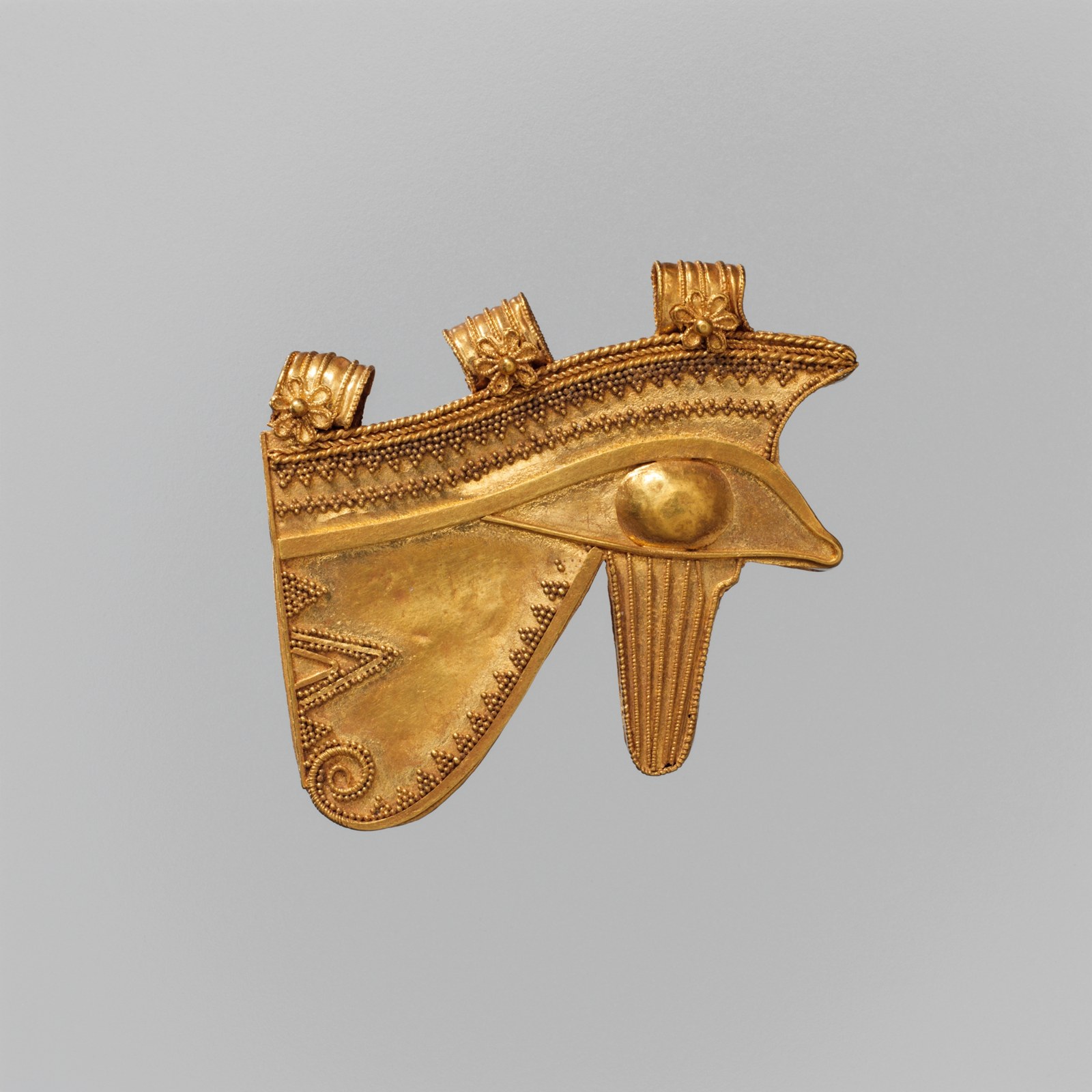
The Eye of Horus is a human eye drawn with the markings of a falcon. Horus was often shown as a falcon or a falcon-headed man, so his eye combines both: an eye with a long line of eye paint at its outer corner, plus a straight line that drops below the pupil and a curved line that ends in a spiral, like the markings under a falcon's eye. As the Metropolitan Museum of Art describes it, the symbol has "both human and falcon elements."
It also goes by the names wedjat, udjat, and wadjet eye. The Egyptian hieroglyph has its own Unicode character, 𓂀, so you'll sometimes see it in bios and posts.
The Myth of the Eye of Horus
The story behind the Eye of Horus is a story of loss and restoration. Horus was the son of Osiris and Isis. After Set killed Osiris, Horus fought Set for the throne of Egypt, and in that fight Set tore out Horus's eye, in some versions ripping it to pieces.
The god Thoth found the eye and restored it. In another version of the myth, the goddess Hathor restores it with gazelle milk. Horus then offered his restored eye to his father Osiris, and the gift brought Osiris back to life in the afterlife. That's why the eye is tied to both protection and renewal: it was lost, made whole again, and then given to give life.
What Does the Eye of Horus Mean?
The Eye of Horus means protection and wholeness. Its Egyptian name, wedjat, means "the one that is sound," as the Met translates it: whole and uninjured. Here's what the symbol stood for in Egypt:
- Protection. An Eye of Horus amulet was thought to protect the person who wore it, in life and after death.
- Being made whole. Because the eye was restored after it was torn apart, it stands for anything restored to its full state.
- Rebirth. The eye brought Osiris back to life, so it was a symbol of rebirth in the afterlife.
- Offering. The restored eye became the model for offerings to the Deities and the dead, so any offering could be called "the Eye of Horus."
Eye of Horus vs. Eye of Ra
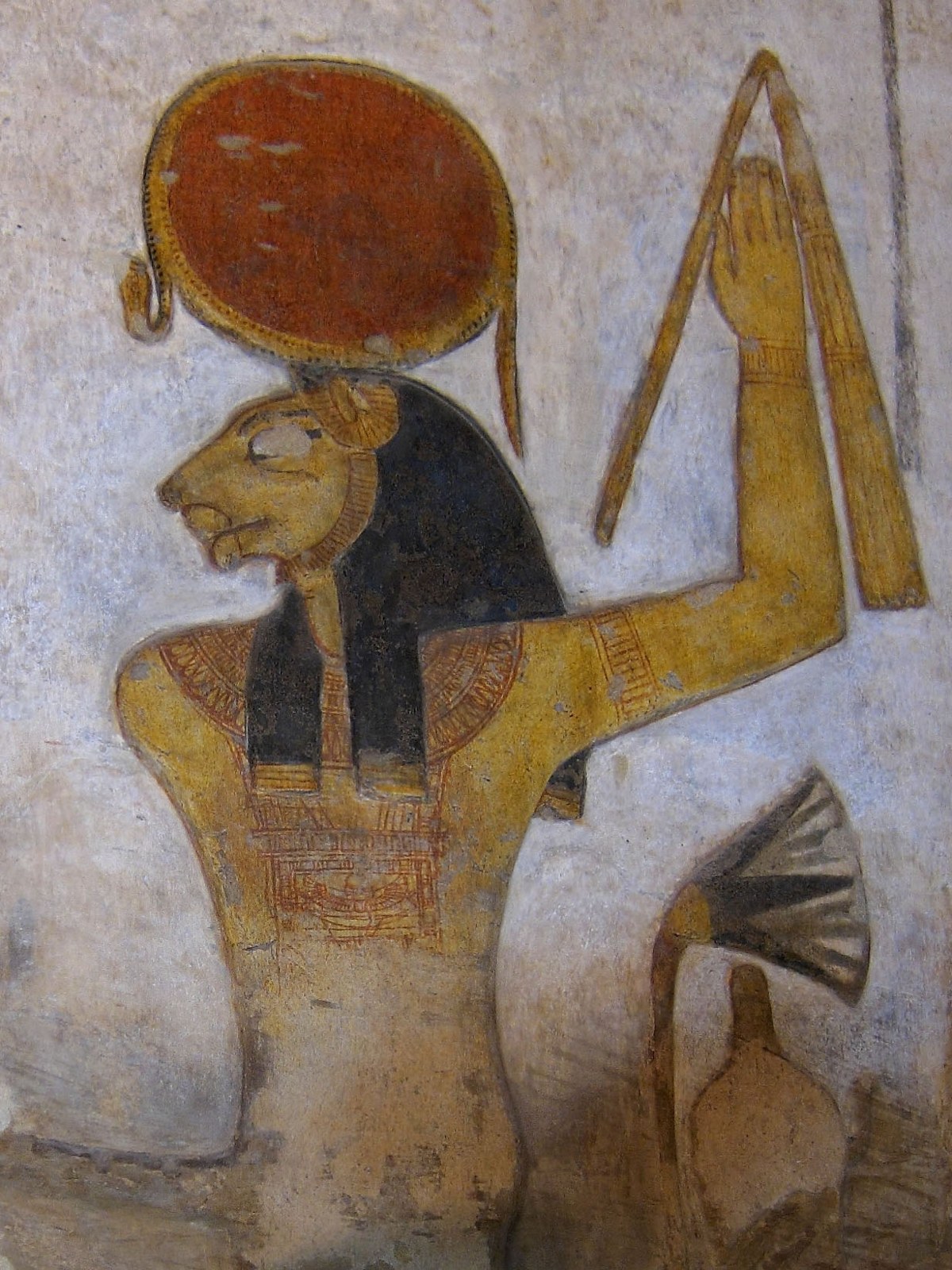
The Eye of Horus is usually the left eye, linked to the moon and to restoration. The Eye of Ra is usually the right eye, linked to the sun, and it's a fierce feminine force that acts as a goddess in its own right. Egyptian texts sometimes mix the two, so you'll see the same drawing used for both.
| Eye of Horus | Eye of Ra | |
|---|---|---|
| Which eye | Usually the left | Usually the right |
| Linked to | The moon | The sun |
| Belongs to | Horus, the falcon god | Ra, the sun god |
| Main meaning | Protection, restoration, being made whole | Ra's power, protection by force |
| Personified as | The eye itself | Goddesses including Hathor, Sekhmet, Bastet, Wadjet, and Mut |
| Key myth | Set tears out the eye, and Thoth restores it | Ra sends Sekhmet against rebellious humans, then stops her with red-dyed beer |
The Eye of Ra has two sides. As a lioness like Sekhmet or a rearing cobra like Wadjet, it destroys Ra's enemies. As a goddess like Hathor or Bastet, it's also a mother, daughter, and companion to Ra. In the myth called the Destruction of Mankind, Ra sends his Eye, as Sekhmet, to punish rebellious people, then stops her by tricking her into drinking beer dyed red to look like blood.
The Eye of Horus as an Amulet
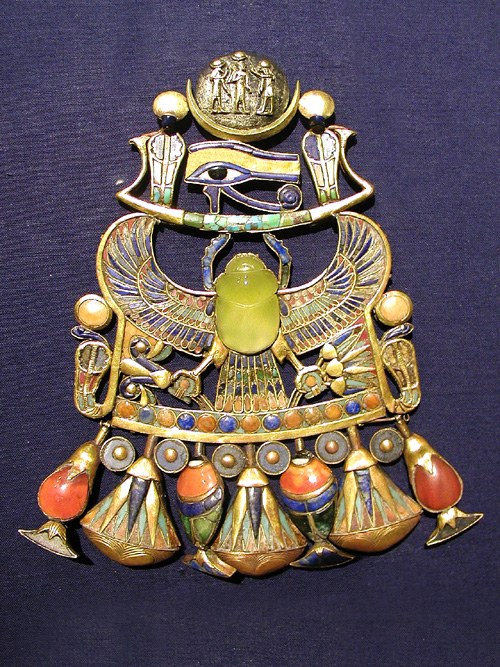
Eye of Horus amulets are among the most common ancient Egyptian amulets. They appear in the late Old Kingdom, around 2300 BC, and Egyptians kept making them until Roman times. They were made of blue-green faience, glass, gold, and lapis lazuli, and were worn by the living and placed with the dead.
Egyptians painted the eye in other places too:
- On coffins. Middle Kingdom coffins often had a pair of eyes painted on the side, possibly so the dead person could look out.
- On boats. Eyes were painted on the bows of boats, perhaps for protection and to help them find the way.
Those painted eyes may have a long afterlife. According to Wikipedia's Eye of Horus article, eye-patterned glass beads worn alongside wedjat amulets as early as the 1200s BC may be an ancestor of the blue nazar, the evil eye bead still hung in homes and cars today.
The Eye of Horus Fractions Theory
You may have read that each part of the Eye of Horus stood for a fraction, from one half to one sixty-fourth, used to measure grain. That idea comes from the Egyptologist Georg Möller in 1911, and it's still widely repeated. But in 2002 the historian Jim Ritter challenged it, pointing out that the fraction signs and the parts of the eye don't match as neatly as the theory claims. It's best treated as a disputed theory, not settled fact.
How to Use the Eye of Horus in Your Practice
Here are some common ways practitioners work with the Eye of Horus:
- Draw it at your threshold. Draw the eye over a door or window in chalk, oil, or salt water, and name what it keeps watch over.
- Wear it. An Eye of Horus pendant or charm works as a protection amulet, the way it did in Egypt.
- Add it to a petition or jar. Draw the eye on a petition paper or the lid of a protection jar. Our protection symbols guide covers other marks to pair it with.
- Use it for restoration work. Because the eye was made whole again, many practitioners use it on the altar when they're rebuilding something, such as a home, a friendship, or a routine.
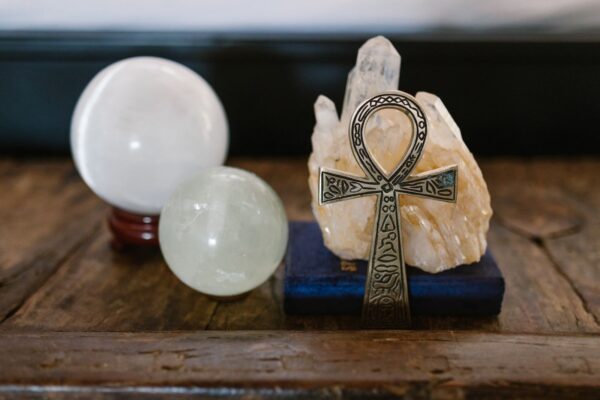
- Pair it with the ankh. Many people wear or draw the Eye of Horus together with the ankh, the Egyptian symbol of life.
If you're drawn to working with Horus or other Egyptian Deities, that work is best learned from practitioners within the tradition. Many people start with a book like Ancient Egyptian Magic by Eleanor L. Harris and Normandi Ellis, and some keep a Horus statue on the altar. For the Eye of Ra goddesses, we carry a Sekhmet statue and a petite Bastet statue.
Eye of Horus Tattoos
The Eye of Horus is one of the most popular Egyptian tattoos, because its meaning is easy to carry: protection, and coming through something whole. People choose it after coming through a hard time, to honor Egyptian or African heritage, or as a lifelong protective charm. Our witch symbols guide covers 40 more symbols.
Eye of Horus FAQ
Is the Eye of Horus good or evil?
The Eye of Horus is a protective symbol, not an evil one. The "evil" idea usually comes from confusing it with the Eye of Providence, the all-seeing eye in a triangle on the U.S. dollar bill. That's a separate symbol from Christian Renaissance art, where it stood for the Trinity, and it was added to the Great Seal in 1782.
Is it okay to wear the Eye of Horus?
Yes. People of many backgrounds wear the Eye of Horus as a protection charm. It helps to know its story and to treat it with respect as a sacred symbol of ancient Egypt.
Is the Eye of Horus the left or right eye?
The Eye of Horus is usually the left eye, linked to the moon, and the Eye of Ra is usually the right eye, linked to the sun. Egyptian texts don't always keep them apart, so both versions appear.
Is the Eye of Horus male or female?
Horus is a male god, so his eye belongs to a male Deity. The Eye of Ra is the one shown as female, personified by goddesses like Sekhmet and Hathor.
What is the Eye of Horus called in Egyptian?
It's called the wedjat, also spelled udjat, which means "the one that is sound," or whole.
Is the Eye of Horus the same as the evil eye?
No. The Eye of Horus is an Egyptian symbol of protection and wholeness, while the evil eye is a harmful glance that charms like the nazar protect against. They may be related, though: Egyptian eye beads are one possible ancestor of the nazar.
Sources
- Eye of Horus, Wikipedia
- Eye of Ra, Wikipedia
- Wedjat Eye Amulet (23.2.68), The Metropolitan Museum of Art
- Eye of Providence, Wikipedia