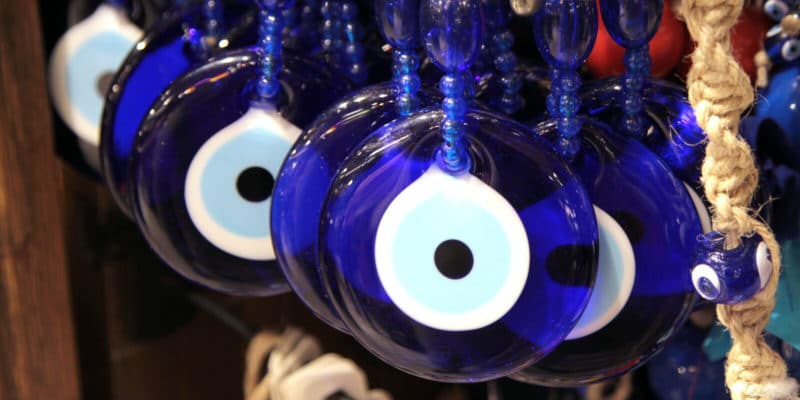
Nazar is the Turkish word for the evil eye: the harm that envy, or even too much admiration, is said to carry in a look. In English, "nazar" usually means the charm that guards against it, the blue glass eye bead that Turks call the nazar boncuğu, or "evil eye bead." Its bold blue eye is meant to catch a harmful look first and keep it away from you, your home, or your family.
What Is a Nazar?
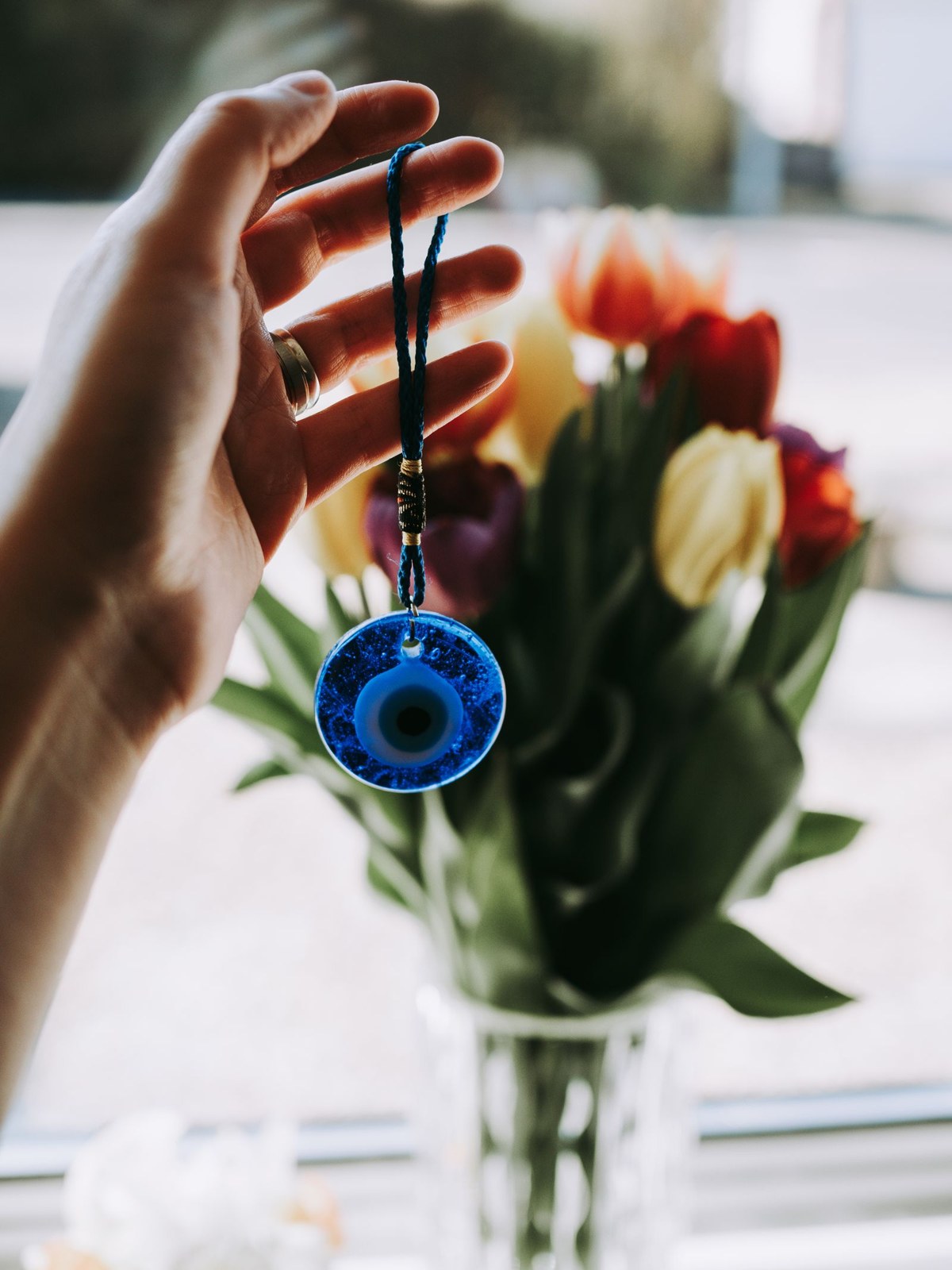
A nazar is a glass bead made of rings of color: dark blue on the outside, then white, then light blue, with a black center, so the bead looks like an eye staring back. Some have a thin yellow or gold edge. They're usually handmade, and they come as small beads for bracelets, as pendants, and as large glass discs to hang on a wall.
The charm has many names. In Turkey it's the nazar boncuğu. In Greece it's the máti, meaning "eye," and in Persian it's the cheshm nazar. Most English speakers simply call it a nazar, an evil eye bead, or the Turkish evil eye. It even has its own emoji, 🧿, added in 2018.
What Does the Nazar Mean?
"Nazar" names the curse itself in its home languages. The word comes from Arabic, where it means "sight" or "attention," and in Turkish it means the evil eye. Nazar değmek means to be touched, or affected, by the evil eye. After paying a compliment, many Turks add nazar değmesin, "may the evil eye not touch it," as a small blessing, as Turkish Fluent explains. In Hindi and Urdu, nazar lag gai means someone has been hit by the evil eye.
The evil eye is usually given without meaning to. It isn't a spell someone casts on purpose, but envy or admiration carried in a glance, and according to Wikipedia's evil eye article, amulets against it go back about 5,000 years. The nazar boncuğu answers that glance with an eye of its own. As the University of Kansas notes, the first glance is believed to be the most powerful, so the bead's striking look is meant to draw it away from you.
So the difference between the evil eye and the nazar depends on the language. In Turkish they're the same word, and the bead is the nazar boncuğu. In English, the evil eye is the harm, and "nazar" is the charm.
Why Is the Evil Eye Blue?
There are two common explanations, and both appear on the University of Kansas page about the bead:
- Blue as a shield. Many people believe the color blue itself guards against evil.
- Blue eyes and strangers. Light eyes are rare in the Middle East and the Mediterranean, so blue eyes often belonged to foreign visitors, and their admiring stares were thought to cast the evil eye without meaning to. A blue eye bead turns that same look back.
Where the Nazar Comes From
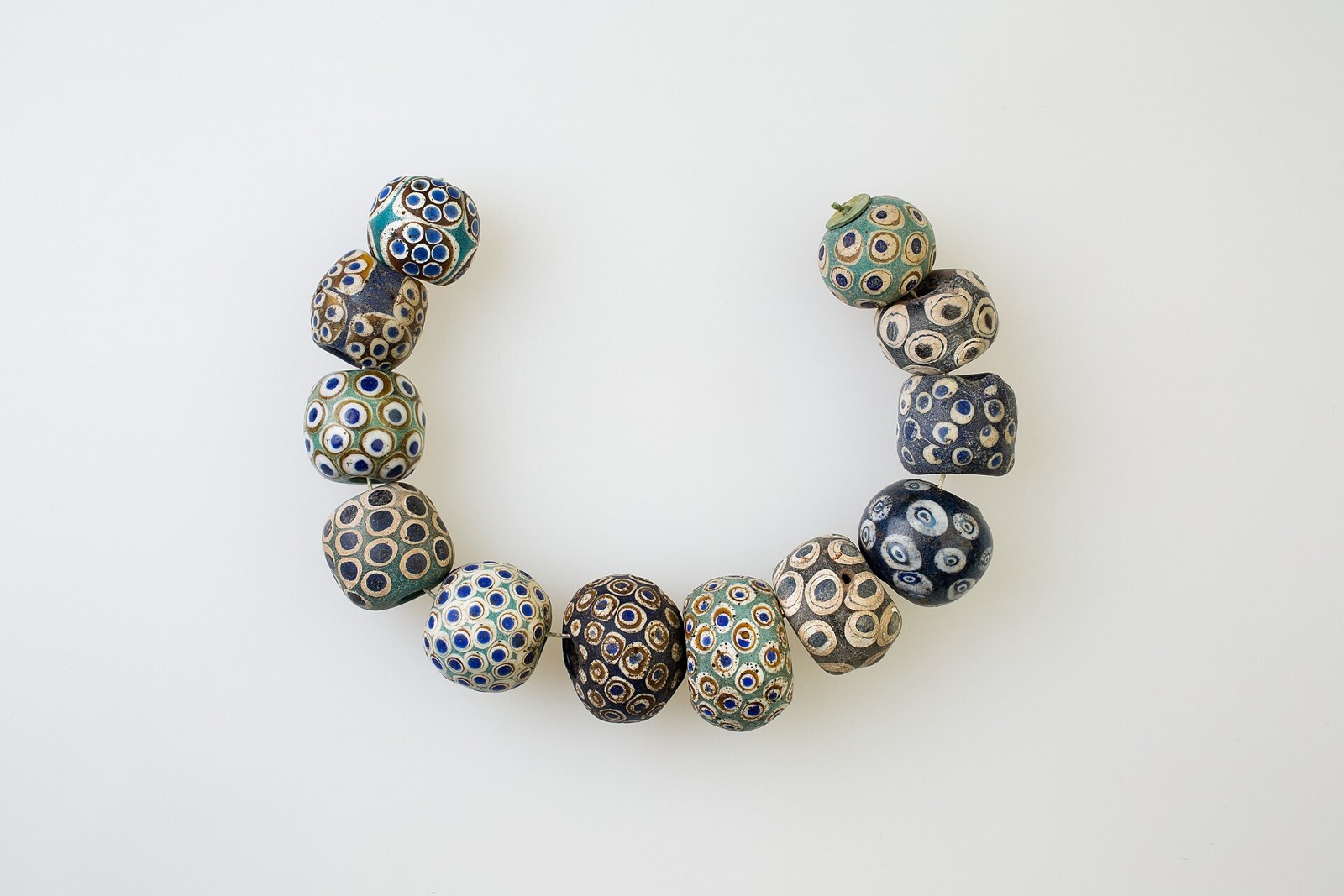
The nazar grew up alongside glassmaking around the Mediterranean. Glass eye beads are documented from about the 1500s BC, and they spread through Mesopotamia, Egypt, Phoenicia, Greece, Persia, and Rome, according to Wikipedia's article on the nazar. Egyptian eye beads worn beside Eye of Horus amulets may be some of its earliest relatives.
Traditional nazar beads are made from a mix of molten glass, iron, copper, water, and salt, ingredients that were themselves thought to shield against evil. Today the bead is most closely tied to Turkey, where it hangs in homes, shops, and cars, and it's also common in Greece, Iran, and across the Middle East and South Asia.
The Evil Eye Around the World
Belief in the evil eye stretches from the Mediterranean to South Asia and Latin America, and each culture has its own way of turning it aside:
- Italy. The malocchio is answered with the red Italian horn, or cornicello, and with the olive oil and water test that families use to check for it. Our guide to the Italian folk method walks through it.
- Greece. People wear the blue máti, and some spit three times, a custom also found in Jewish tradition.
- The Middle East and North Africa. The hamsa, a hand-shaped charm also called the Hand of Fatima or the Hand of Mary, is hung for protection. Many Muslims say mashallah, "God has willed it," when offering a compliment.
- Latin America. The evil eye is called mal de ojo, a belief that came from Spain. In Brazil, people keep rue against it.
- India. Red chilies are hung to ward it off.
How to Use a Nazar

Here are the most common ways people keep a nazar close:
- Hang one by your front door. A nazar at the entrance meets every look that comes into your home, and in Turkey they hang in homes and shops alike.
- Hang one in your car. A small nazar hung from the rearview mirror is a common choice. Our blue glass evil eye keychain works the same way on your keys.
- Wear one. A nazar bracelet, necklace, or anklet keeps the eye with you all day.
- Pin one near a new baby. Babies are seen as especially open to the evil eye, so Turkish parents pin a small nazar to a baby's clothing. Traditionally, people also avoid praising a newborn too much.
- Add one to your altar. Set a nazar on your altar or in a protection jar alongside other protection symbols.
- Replace a cracked nazar. If a nazar cracks or breaks, tradition says it has taken in a strong evil eye meant for you. Replace it as soon as you can.
You'll find nazar bracelets, keychains, wall hangings, and more in our Evil Eye Protection collection.
Evil Eye Bracelet Meaning
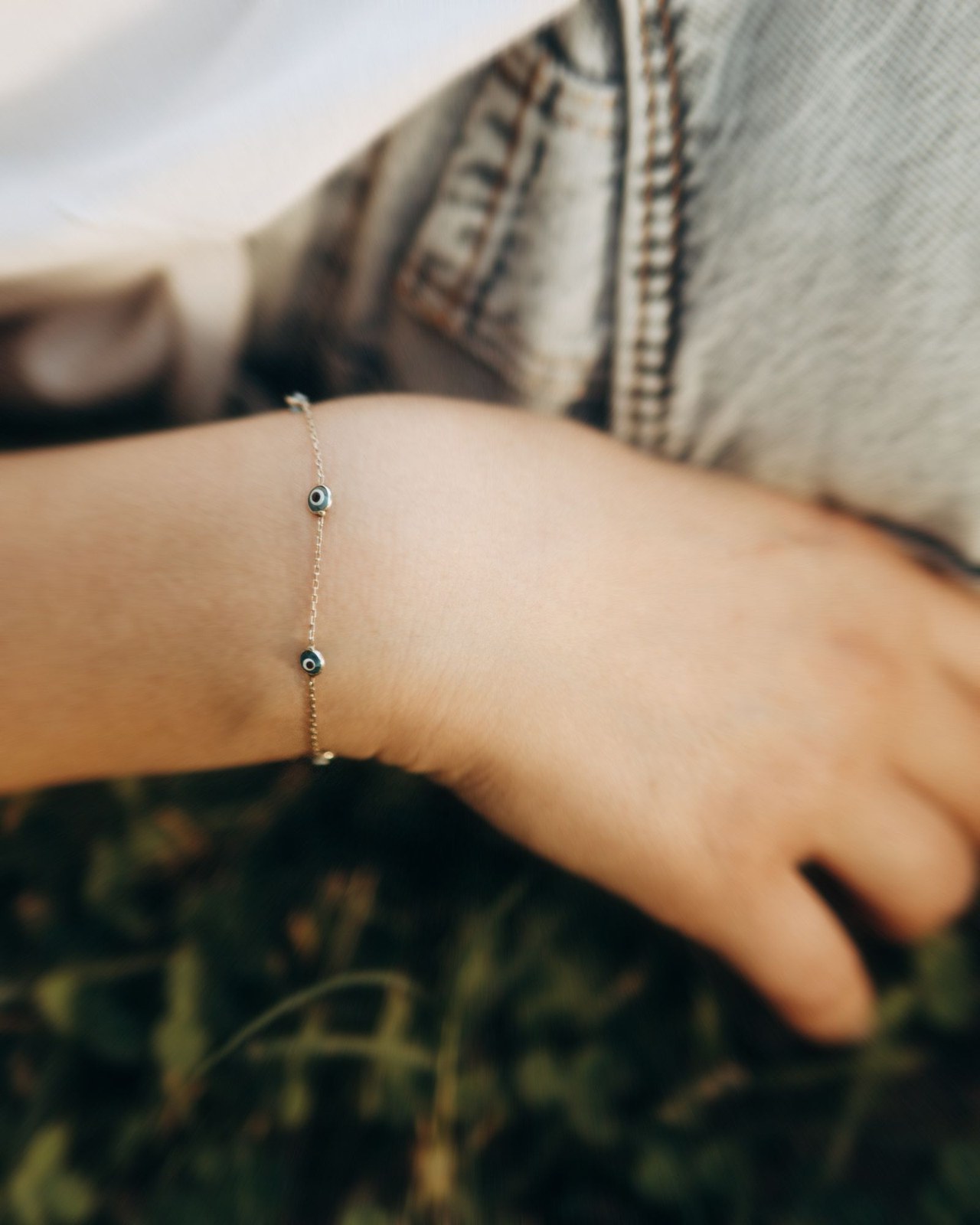
An evil eye bracelet is a nazar you wear, so the protective eye faces out wherever you go. People wear them every day, and parents often give them to children. Blue is the traditional color, matching the nazar boncuğu itself.
Our Evil Eye Bracelets collection includes the classic Blue Evil Eye Bracelet in 8mm beads, plus versions with clear quartz and a hamsa charm.
Nazar FAQ
What does nazar mean?
Nazar comes from the Arabic word for "sight" or "attention." In Turkish, Hindi, and Urdu it means the evil eye, the harm carried in an envious or admiring look. In English it usually means the blue eye bead that protects against it.
What's the difference between the evil eye and the nazar?
In Turkish they're the same word: nazar is the evil eye, and the protective bead is the nazar boncuğu, or "evil eye bead." In English, people usually call the curse the evil eye and the charm a nazar.
How do you know if you have nazar on you?
Traditions differ. In southern Italy, families use an olive oil and water test, which our Italian folk method guide explains. In Turkey, a nazar bead that cracks is taken as a sign it just stopped a strong evil eye.
What does it mean when a nazar breaks?
Tradition says a cracked or broken nazar has absorbed a strong evil eye meant for its owner. People replace it as soon as possible.
Can anyone wear a nazar?
Yes. The nazar is a folk charm worn by people of many faiths and backgrounds, and in Turkey parents often give them to children as jewelry. Wear it with an understanding of the belief behind it.
What does the 🧿 emoji mean?
The 🧿 emoji is the nazar amulet, added in 2018. People use it online to wish someone protection from the evil eye.
Sources
- Nazar (amulet), Wikipedia
- Evil eye, Wikipedia
- Nazar Boncuğu, Center for Russian, East European & Eurasian Studies, University of Kansas
- What Is Nazar in Turkish Culture?, Turkish Fluent