A protection symbol is a shape people have agreed, over a very long time, to treat as a guard: something worn, hung, carved, or drawn to keep harm away from a body, a home, or a family. Every tradition on earth has at least one. Some are older than writing, and some were made up in a witch's notebook last Tuesday, and both kinds work for the same reason: a symbol is a promise you keep looking at.
This page gives you the symbols that come up most, sorted by where they come from, so you know what you're wearing and whose it was first. At the end, there is a plain method for making a protection sigil that is yours alone.
What a Protection Symbol Is and How It Works
A protection symbol works by holding an intention in a shape you can see, wear, or touch, so that the intention stays present when your attention drifts. That is the whole mechanism, and it has been enough for several thousand years.
Some symbols carry centuries of shared meaning, and that shared weight is part of their strength. Everyone who has ever hung a nazar over a door adds to what a nazar means. Other symbols, like a sigil you make yourself, carry only your own charge, and that is a different kind of strength: nobody else can read it, so nobody else can argue with it.
A protection symbol is also not a substitute for real-world action. If someone is hurting you, the symbol is the layer you add on top of the phone call, the locked door, and the person you tell. Magic and mundane work in tandem. That has always been the rule.
Protection Symbols at a Glance
The table below lists every symbol on this page with its origin, what it is traditionally used against, and the most common way to carry it.
| Symbol | Tradition | Traditionally guards against | Most common use |
|---|---|---|---|
| Algiz rune ᛉ | Norse, Elder Futhark | Unseen harm, bad luck, attack | Worn, carved, drawn on doorways |
| Helm of Awe (Ægishjálmur) | Icelandic | Fear, enemies, being overpowered | Drawn or worn before conflict |
| Vegvísir | Icelandic | Getting lost, literally and otherwise | Worn or drawn for travel |
| Mjölnir (Thor's hammer) | Norse | Chaos, ill will, giants | Worn as a pendant |
| Bind rune for protection | Norse, modern | Whatever the runes chosen guard against | Drawn, carved, worn |
| Triquetra | Celtic and Norse knotwork | Harm to body, mind, and spirit | Worn, carved, drawn |
| Brigid's cross | Irish | Fire, illness, evil entering the home | Hung over the door, renewed at Imbolc |
| Celtic shield knot | Celtic | Attack, ill wishes | Drawn, carved, worn |
| Celtic cross | Celtic Christian | Harm in all areas | Worn, hung |
| Nazar (evil eye bead) | Turkish, Greek, Middle Eastern | The evil eye, envy | Worn, hung, pinned to a baby |
| Hamsa (Hand of Fatima) | Middle Eastern, Jewish, North African | The evil eye, harm of all kinds | Worn, hung at the door |
| Cornicello | Italian | The evil eye, bad luck | Worn on a chain |
| Cimaruta | Italian | Witchcraft against you, the evil eye | Worn, hung over a crib |
| Eye of Horus (wedjat) | Egyptian | Harm, illness, the dead disturbed | Worn, painted |
| Ankh ☥ | Egyptian | Death and decay | Worn |
| Scarab | Egyptian | Harm in life and after it | Worn, carried |
| Pentacle ⛤ | Witchcraft, Wicca | Negative energy of every kind | Worn, drawn on the altar |
| Triple moon | Wicca, modern paganism | Harm to the wearer, especially women | Worn |
| Hecate's wheel | Hellenic, modern paganism | Danger at crossroads and thresholds | Worn, drawn at the door |
| Witch's knot | European folk magic | Harm entering a house | Drawn or carved over the door |
| Hexafoil (daisy wheel) | English and European folk | Witchcraft, evil entering a building | Carved on beams, doors, hearths |
| Horseshoe | European folk | Bad luck, evil at the door | Nailed over the door |
| Solar cross | Pan-European | Harm from any direction | Drawn, worn |
| Cross ☩ | Christian | Evil, temptation, harm | Worn, hung |
| St. Benedict medal | Catholic | Evil, poison, temptation | Worn, buried at the corners of a property |
| Archangel Michael | Christian, Jewish | Evil, attack, spiritual danger | Prayer card, medal, candle |
| A protection sigil | Yours | Whatever you wrote it for | Drawn where you need it |
Norse and Viking Protection Symbols and Runes
The best-known Norse protection rune is Algiz ᛉ, and the best-known Norse protection symbols are the Helm of Awe, the Vegvísir, and Thor's hammer. Algiz is the one most people mean when they search for "protection rune," and it is the one to start with.
Algiz ᛉ. Algiz is the fifteenth rune of the Elder Futhark, and it looks like a Y with a stem: a vertical line with two branches rising from it. Its name means "elk," and the Anglo-Saxon rune poem describes it as a sedge that cuts anyone who grabs it, which is where the protective reading comes from: something that guards itself by being dangerous to touch. In modern rune work, Algiz is the rune of the raised hand and the warding sign. You can draw it on a doorframe with your finger, carve it into a white candle, trace it in the air over a bed, or wear it. Algiz pieces are in the shop.
Helm of Awe (Ægishjálmur). The Helm of Awe is eight Algiz-like arms radiating from a center point, each arm tipped with three cross-bars. It is Icelandic rather than Viking-age: the name appears in the Poetic Edda as a thing the dragon Fáfnir wore, but the drawn symbol comes from Icelandic magic books of the 1600s, where it was to be drawn on the forehead in spit or blood before facing an enemy so that they would lose their nerve. Today it is worn, tattooed, and drawn for courage and protection in confrontation. It is a symbol for going into something hard, not for hiding from it.
Vegvísir. The Vegvísir is a wayfinding stave with eight arms and different marks at the end of each. It is also Icelandic, first recorded in an 1860 manuscript, and the note beside it says that whoever carries it will not lose their way in storms or bad weather. It has become a general symbol for not getting lost, in weather or in life. It was not carried by Vikings, whatever the tattoo shop says, and it is still a good symbol.
Mjölnir. Thor's hammer was worn as a pendant in the Viking age, and we have the pendants to prove it. Thor was the god who stood between people and the chaos outside the wall, and his hammer on a cord meant that protection was with you. It is the one Norse symbol on this list with unbroken evidence of being worn for protection a thousand years ago.
Bind runes for protection. A bind rune is two or more runes drawn overlapping to make one figure, and a protection bind rune usually combines Algiz with a rune for the thing you're protecting: Othala ᛟ for home and family, Thurisaz ᚦ for a thorn-hedge against attack, Tiwaz ᛏ for the courage to stand. Draw the runes sharing a stem, keep the figure simple enough to draw from memory, and it is yours. The protection runes guide covers every protection rune, the bind rune method, and the history of the runes that hate groups have appropriated, and each rune has its own page in the Elder Futhark series.
Celtic and Irish Protection Symbols
The Celtic protection symbols people actually use are the triquetra, Brigid's cross, the shield knot, and the Celtic cross, and the oldest of these still in daily use is Brigid's cross, which Irish families still weave every February.
Triquetra. The triquetra is three interlocking arcs forming a single unbroken line, often with a circle threaded through. It appears in Celtic and Norse metalwork from the early Middle Ages, and the Church later took it up for the Trinity. Modern witches and pagans use it for any threefold thing: body, mind, and spirit; maiden, mother, and crone; land, sea, and sky. As a protection symbol, its strength is that the line never ends, so there is no gap for harm to enter.
Brigid's cross. A Brigid's cross is woven from rushes into a square-centered cross with four arms, and it is made on the eve of Imbolc, February 1st, the feast of Brigid, saint and goddess. It hangs over the door or in the kitchen for the year to keep fire, sickness, and evil out of the house, and the old one is burned or buried when the new one goes up. This is a living tradition in Ireland, not a revived one.
Shield knot. The shield knot is a square knot with four looped corners, drawn in one continuous line. It is found across Celtic, Norse, and even older cultures, and it is used exactly as the name says: drawn or worn as a shield against attack and ill wishes. It is one of the easiest protection symbols to draw yourself.
Celtic cross. The Celtic cross is a cross with a circle around the meeting of the arms. Older solar-cross meanings and Christian meanings sit inside it together, and it is worn for protection by people on both sides of that line.
Mediterranean and Middle Eastern Protection Symbols
The nazar and the hamsa are the two protection symbols people around the Mediterranean have worn for the longest, and both exist for the same job: turning away the evil eye.
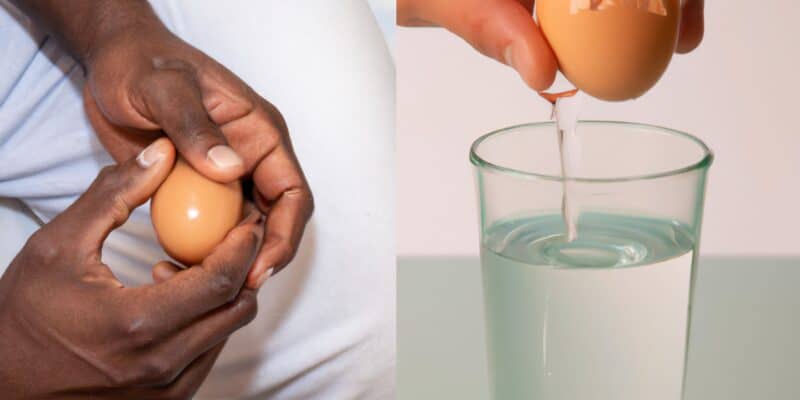
Nazar (the evil eye bead). The nazar is a blue glass eye, usually a dark blue ring around lighter blue, white, and a black center. It is Turkish and Greek by name and older than both; the belief that an envious glance can cause real harm runs through the whole Mediterranean and Middle East, and in Mexico it is mal de ojo, which the egg cleanse is for. The bead works as a decoy: it stares back so the glance lands on it instead of you. It is pinned on babies, hung in doorways and cars, and worn on the wrist. The shop carries the evil eye collection, from a blue bead bracelet to a hanging three-eye talisman for the door. Our guide to the nazar covers what the word means in Turkish and how to use one.
Hamsa (Hand of Fatima, Hand of Miriam). The hamsa is an open palm with the fingers together and, often, an eye in the center. The name comes from the Arabic for "five." Muslims call it the Hand of Fatima after the Prophet's daughter, Jews call it the Hand of Miriam after Moses's sister, and some Christians call it the Hand of Mary. It is one of the few symbols that genuinely belongs to several faiths at once, and it protects against everything, with the evil eye first among them. Hang it at the door or wear it. The shop's hamsa pieces include a pewter pocket hamsa for a wallet or a car.
Cornicello. The cornicello is the Italian horn: a small twisted horn, traditionally red coral or gold, worn on a chain. It guards against the evil eye and bad luck, and it is older than Christianity in Italy. If your grandfather wore one, that is why.
Cimaruta. The cimaruta is a silver charm shaped like a sprig of rue with small charms hanging from its branches: a hand, a key, a moon, a flower, a fish. It is from southern Italy, and it was hung over cribs to protect infants from witchcraft and the evil eye. Rue itself is a protection herb across the Mediterranean, and the Florida Water page covers the cleansing side of the same tradition.
Seal of Solomon. The Seal of Solomon is a six- or five-pointed star, usually inside a circle with letters or divine names, drawn after the legendary ring King Solomon used to command spirits. It was carved over doors and on graves across the Middle East to keep harm away. Our Seal of Solomon guide covers its history and how it differs from the Star of David.
Egyptian Protection Symbols
The Egyptian protection symbols still in use are the Eye of Horus, the ankh, and the scarab, and the Eye of Horus is one of the protection symbols Egyptians used most.
Eye of Horus (wedjat). The wedjat is a stylized human eye with a falcon's cheek marking curling below it. In the myth, Horus lost the eye fighting Set and it was restored whole, so the symbol means restoration, wholeness, and watchfulness. Egyptians painted it on the prows of boats, carved it on tombs, and wore it as an amulet for thousands of years. Worn today, it says two things at once: that you are watched over, and that what was broken can be made whole again. Our guide to the Eye of Horus covers its myth and the Eye of Ra.
Ankh ☥. The ankh is a cross with a loop at the top, and it means life. Deities hold it to the noses of kings in the wall carvings. As a protection symbol it guards the thing it names: it is worn against death, decay, and everything that drains life out of a person. Our guide to the ankh covers its history.
Scarab. The scarab beetle rolls the sun across the sky each morning in Egyptian thought, so it stands for rebirth and for coming safely through the dark. Scarab amulets were placed over the heart of the dead and worn by the living for the same reason: to come through.
Witch, Wiccan, and Pagan Protection Symbols
The witch's protection symbols are the pentacle, the triple moon, Hecate's wheel, the witch's knot, and the cast circle, and the pentacle is the one most witches wear every day.
Pentacle ⛤. A pentacle is a five-pointed star drawn in one unbroken line, inside a circle. The points stand for earth, air, fire, water, and spirit, and the circle binds them into one whole with no gap. It is the witch's signature and the witch's shield in the same shape. Wear it, draw it on the altar, trace it over a door with salt water, or carve it into a candle. The shop's pentacle collection runs from a pewter pocket pentagram to the Pentacle Protection jar candle, which is dressed with a protective herb blend.
Triple moon. The triple moon is a waxing crescent, a full circle, and a waning crescent side by side. It is the Goddess in three phases, and it is worn as her watchfulness over the wearer. It is a modern symbol, from the twentieth century, and it is no less a protection for that.
Hecate's wheel (strophalos). Hecate's wheel is a circle with a three-armed spiral or labyrinth inside it. Hecate is the Greek goddess of crossroads, thresholds, and the dark road, and her wheel is drawn or worn for protection at exactly those places: doors, changes, the middle of the night. Draw it at the threshold on the dark moon.
Witch's knot. The witch's knot is four loops in an endless line, drawn in a single stroke. Many witches draw or chalk it over a door to keep harm out, the same job the old witch marks did when they were carved at doors and windows. It is also drawn to bind: a knot holds. Our guide to the witches knot covers its history.
The circle. The oldest protection symbol of all is a circle drawn around the thing you're protecting. Every witch casts one before working. It doesn't need to be beautiful. It needs to be closed.
Folk and Household Protection Marks
The protection marks ordinary households used for centuries are the hexafoil, the horseshoe, and Brigid's cross, and the hexafoil is the one you can still find carved into old barns and church doorways across England.
Hexafoil (daisy wheel). A hexafoil is a six-petaled flower drawn with a compass inside a circle, made by swinging arcs from six points on the rim. From the 1500s into the 1800s, English builders and farmers scratched them onto door frames, hearths, window sills, and the beams over beds and animal stalls, wherever evil might come in. They were called witch marks, and they were put there to keep witches out, which makes it a funny one for a witch to draw. Draw it anyway. A shape that kept a whole country's barns safe for three hundred years has earned its place, and every witch I know is on the side of the barn.
Horseshoe. The horseshoe is nailed over the door, and it works for two reasons: iron, which folk tradition holds that spirits and the fair folk can't cross, and the crescent shape, which is the moon's. Points up to hold luck in, or points down to pour protection over everyone who walks under it. Both are traditional, and families argue about it.
Solar cross. The solar cross is an equal-armed cross inside a circle, and it is one of the oldest marks humans have made. It stands for the four directions and the turning year, and it protects from every direction at once.
Christian and Catholic Protection Symbols
The Christian protection symbols people actually wear are the cross, the St. Benedict medal, and the medal of St. Michael, and the St. Benedict medal is the one with a full exorcism written on it.
The cross ☩. The cross carries two thousand years of accumulated protection, and you don't have to be Christian to feel the weight of that. Wear it, hang it, or trace it in the air. The crosses collection includes plain and Celtic forms.
St. Benedict medal. The St. Benedict medal carries a cross on the back with the initials of a Latin prayer around it, ending in Vade retro Satana: "Get behind me, Satan." Catholics wear it against evil and temptation, bury it at the four corners of a property, and put it in the foundations of houses. It is the most heavily worded protection symbol on this list.
Archangel Michael. Michael is the warrior angel who threw the adversary out of heaven, and he is called on for protection in Christian, Jewish, and folk practice alike. A medal, a prayer card, or an angel candle from the shop's angel collection invites him in. Ask him for something specific. Angels answer specifics.
Protection Sigils: How to Make One of Your Own
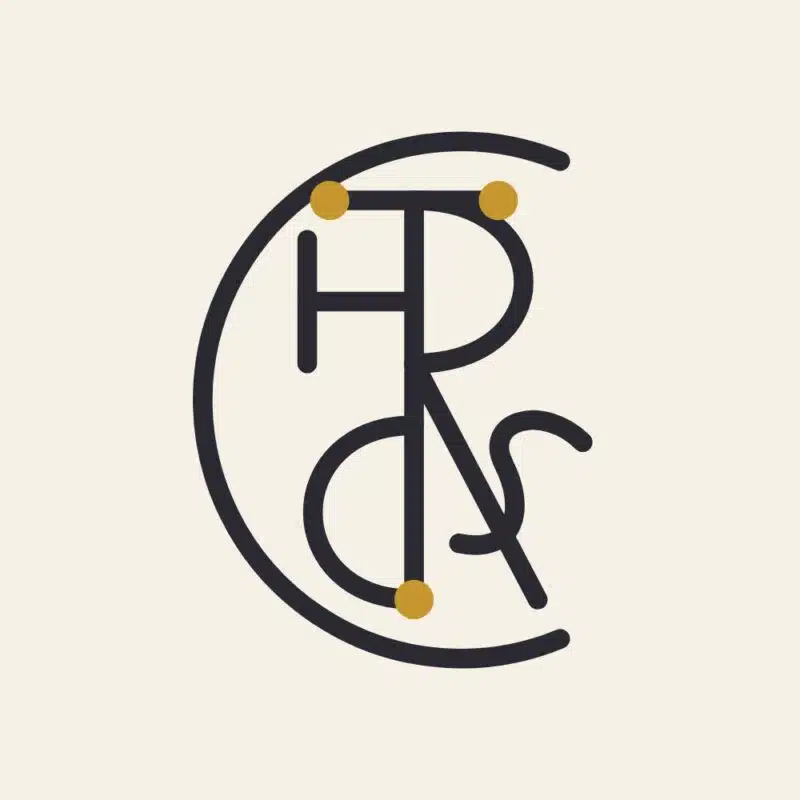
A sigil is a symbol you make yourself by compressing a written intention into a single shape, and a protection sigil is one whose intention is safety. Unlike the inherited symbols above, a sigil carries only your own meaning. Nobody else can read it, so nobody can argue with it, doubt it, or turn it. A sigil for protection can guard a home, a person, a car, or anything else you name in the intention.
How to Make a Protection Sigil
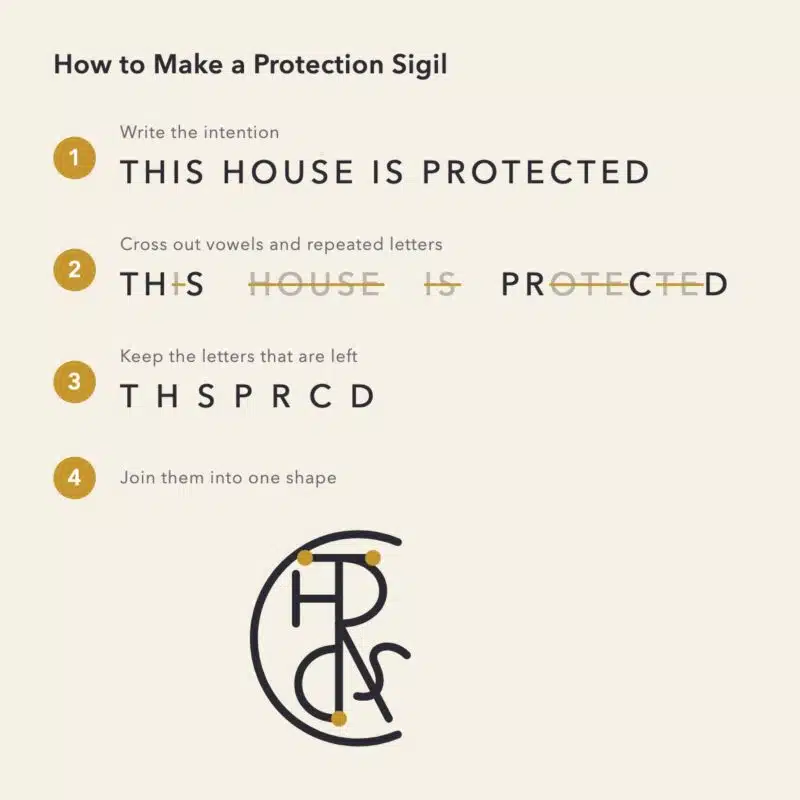
To make a protection sigil, you write your intention as a short sentence, strike out the repeated letters, and combine the letters that remain into one glyph.
- Write the intention in the present tense, short and plain. I am safe. This house is protected. My child is guarded. Keep it to one line.
- Cross out the vowels, then cross out any consonant that appears more than once, keeping its first appearance. THIS HOUSE IS PROTECTED leaves you with T, H, S, P, R, C, D.
- Arrange the remaining letters into one shape. Overlap them, stack them, turn them sideways, and let them lose their letter-ness. Simplify until you like the look of it and could draw it again from memory.
- Charge it. Charging a sigil means pushing a moment of real focus into it. Hold the drawing, breathe until your attention narrows to the shape, and say the intention once out loud. Some practitioners charge a sigil by staring at it until it blurs, some by drawing it while the candle burns, some in the last moment before sleep. Pick the one that gets you to the narrow place and stop there.
- Put it where the protection is needed. The sigil goes on the thing or the threshold: the underside of the doormat, the inside of the window frame, the back of a pendant, the sole of a shoe, the last page of a journal. Draw it in ink, carve it in a candle, or trace it invisibly with your finger or a drop of oil. It does not need to be seen to work.
You can also build a protection sigil on the Witch's Wheel, where each letter has its own fixed spot and the line runs from letter to letter. Our free sigil maker draws one from any phrase you type, such as "This house is protected."
The shop's chime candles are the usual carrying surface for a carved sigil, and the full word-sigil walkthrough is in the sigil how-to.
How to Charge or Activate a Protection Sigil
To charge a sigil, you focus on it hard for a short time while holding the intention, and to activate it, you place it where it will do its work. Charging is the moment of attention; activating is the placement. Some practitioners add a third step, forgetting: once the sigil is placed, they stop thinking about it so the conscious mind can't pick at it. That step is optional and, for protection work, I skip it. I want to remember where my guards are.
Recharge a sigil whenever it feels faded, and many people do it on the full moon. Redraw it entirely if the thing it protects changes.
How to Use Any Protection Symbol
To use a protection symbol, you choose it, charge it once with your intention, put it where the protection is needed, and renew it when it feels faded. That is the same four steps whether it is a rune, a hamsa, or a sigil you drew this morning.
- Choose the one that fits the danger. A nazar for envy. Algiz for unseen harm. Brigid's cross for the house. Michael for something that frightens you.
- Charge it once. Hold it, name what it is for, and see it doing the job. Thirty seconds of real attention is enough.
- Place it. Wear it, hang it at the threshold, carve it in the candle, draw it under the mat.
- Renew it. On the full moon, on the sabbat that matches it, or when you notice it has gone quiet.

Free Spell Journal Page
Keep a record of every working on one page: the kind of spell, the moon phase and sign, your intention, what you used, what you did and said, and the signs that followed. A follow-up section has you check back later and mark whether it worked. Enter your email and we'll send you the fillable PDF.
Prefer not to sign up? Download it free from the shop.
Egg Cleanse, Salt, and Symbols Together
A protection symbol holds the line, and cleansing clears what has already crossed it, so the two are used together. If something has already gotten in, do the egg cleanse first, lay black salt at the thresholds, and then put the symbol up. Symbol first and cleanse second is like locking the door with the intruder inside.
Protection Symbols FAQ
What Is the Most Powerful Protection Symbol?
The most powerful protection symbol is the one you believe in and keep in front of you. A hamsa, a pentacle, and a sigil you drew yourself are equal in the hands of someone who means them. If you want a place to start, Algiz and the hamsa are the two broadest guards on this list.
What Is a Symbol of Protection?
A symbol of protection is a shape that people wear, hang, draw, or carve to keep harm away from a person, a home, or a family. The nazar, the hamsa, the pentacle, Algiz, and the cross are the ones most people recognize.
What Is the Rune for Protection?
The rune for protection is Algiz ᛉ, the fifteenth rune of the Elder Futhark, drawn as a vertical line with two branches rising from it. For a stronger working, combine it with Othala for home or Tiwaz for courage in a bind rune.
What Is the Viking Symbol for Protection?
The Viking-age symbol for protection was Thor's hammer, Mjölnir, worn as a pendant. The Helm of Awe and Vegvísir are Icelandic and come from later magic books, and they are still used for protection today.
What Is the Celtic Symbol for Protection?
The Celtic symbols for protection are the triquetra, the shield knot, and Brigid's cross. Brigid's cross is the one still made and hung every year in Irish homes.
What Is the Egyptian Symbol of Protection?
The Egyptian symbol of protection is the Eye of Horus, the wedjat, which was painted on boats and worn as an amulet for thousands of years. The ankh and the scarab are also worn for protection.
What Is the Symbol for Protection of Family?
The symbols most used for protecting a family are Brigid's cross over the door, a hamsa at the entrance, the Othala rune ᛟ for home and kin, and a horseshoe over the threshold. A house sigil written for the whole family works as well as any of them.
What Is the Difference Between a Protection Symbol and a Protection Sigil?
A protection symbol is an inherited shape that carries centuries of shared meaning, and a protection sigil is a shape you make yourself from your own written intention. The symbol borrows everyone's belief; the sigil uses only yours.
How Do You Activate a Protection Symbol?
You activate a protection symbol by charging it with a short moment of focused intention, saying what it is for out loud, and placing it where the protection is needed. Renew the charge on the full moon or whenever it feels faded.
Can You Wear Protection Symbols From Other Cultures?
You can wear open symbols like the nazar, the hamsa, the pentacle, the cross, and the runes, which have been shared across cultures for a very long time. Symbols from closed traditions, including many Indigenous ones, are best learned from people who practice within those traditions, and that is why this page doesn't list them. If one of those traditions is calling you, go to its keepers and ask.
Are Protection Symbols Good Tattoos?
Protection symbols are among the oldest tattoos there are, and the ones people choose most are Algiz, the Helm of Awe, the Vegvísir, the pentacle, the triquetra, and the Eye of Horus. Know what the symbol meant before it was yours, and for anything from a closed tradition, learn it from someone inside that tradition before it goes on your skin.
Which Symbols Are for Protection and Restoration Together?
The Eye of Horus is the symbol for protection and restoration together, because its story is an eye made whole again. The ankh, for life, and the hamsa, for well-being, are the other two people pair with it.
Which Symbols Are for Protection and Strength?
The symbols for protection and strength are the Helm of Awe, Thor's hammer, and the Tiwaz rune ᛏ, all of which are for facing something rather than hiding from it.
Pick one symbol from this page, charge it tonight, and put it where it belongs. Then go about your week and let it keep watch. That is all any of these were ever asked to do. For the full set of witch symbols beyond protection, the pentacle, the triple moon, the triquetra, and thirty more, see our guide to witch symbols and meanings.