The ankh (☥) is the ancient Egyptian hieroglyph for "life," drawn as a cross with a loop at the top. In Egyptian art, Deities hold the ankh to a king's nose to give him the breath of life, and the symbol stood for life in this world and in the afterlife. Today people wear the ankh as a symbol of life, of African heritage, and of their spiritual practice.
What Is the Ankh?
The ankh is a cross with a teardrop-shaped loop in place of its top arm. It was a working hieroglyph in ancient Egypt, a sign used to write the word for "life," as well as a sacred symbol. You'll also see it called the key of life, the ankh cross, or the crux ansata, Latin for "cross with a handle."
The ankh has its own character in Unicode, ☥, which is why it shows up in usernames, bios, and text messages.
What Does the Ankh Mean?
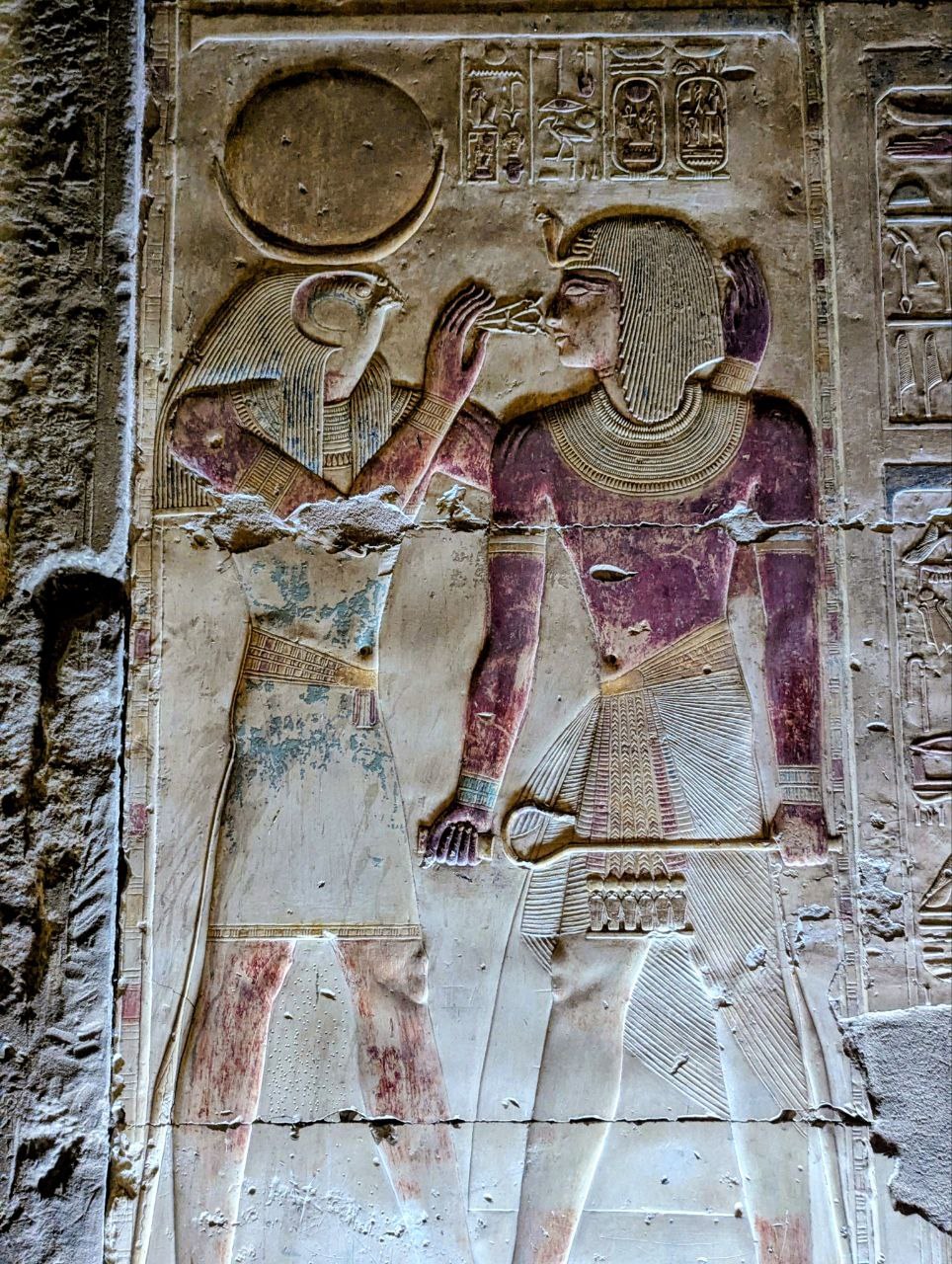
The ankh means life. In Egyptian temple carvings and tomb paintings, Deities such as Osiris, Isis, and Ra hold the ankh by its loop. They often hold it up to the pharaoh's nose, a gesture that gave him the breath of life, or pass it to him as a sign that they sustain his life on earth and after death.
The word for life in ancient Egyptian, ankh, sounded close to the words for "mirror" and for "bouquet of flowers," so the same sign could help write all three. That wordplay is why some Egyptian mirror cases were shaped like the ankh. A mirror case from Tutankhamun's tomb, now in the Egyptian Museum in Cairo, is shaped like the ankh sign.
Where Does the Ankh Come From?
The ankh is at least 5,000 years old. It appears in Egypt's First Dynasty, around 3000 BC, when Egyptian writing was still taking shape.
No one knows for certain what object the ankh first pictured. Britannica follows the long-standing view that the shape came from a sandal strap, with the loop going around the ankle. Other Egyptologists have suggested a knot tied as an amulet, similar to the tyet knot of the goddess Isis, and still others a mirror or parts of a bull's spine. As Wikipedia's ankh article lays out, none of these theories is settled. The National Park Service also calls the symbol's origins "somewhat unclear."
The Ankh in Ancient Egypt
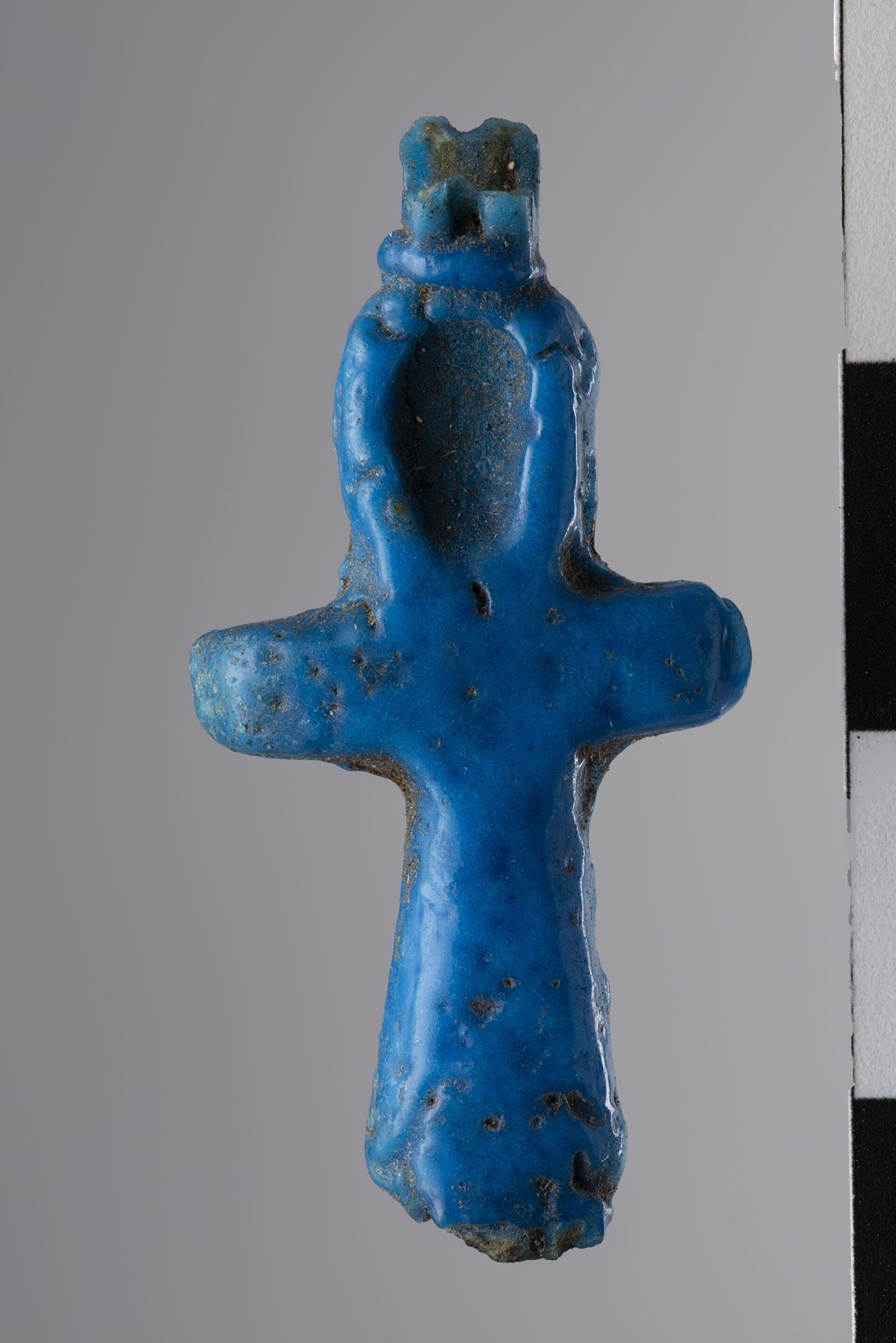
The ankh was everywhere in ancient Egyptian religious life. Here's where it turned up:
- In the hands of Deities. Egyptian Deities carry the ankh in temple reliefs and tomb paintings, often alongside two other sacred signs, the was scepter and the djed pillar.
- On the pharaoh. Kings received the ankh from the Deities and carried it as a sign that their life was sustained by them.
- As amulets. Ankh amulets appear late in the Old Kingdom, about 2700 to 2200 BC. The earliest were made of gold or electrum. Later ones were more often made of faience, a glazed ceramic whose blue-green color was linked to life and renewal.
- In tombs. Ankhs were placed with the dead to carry the promise of life into the afterlife, and the NPS notes they were placed in sarcophagi.
- On mirrors and jewelry. Mirror cases like Tutankhamun's took the ankh's shape, and the sign appears in Egyptian jewelry.
Is the Ankh a Christian Cross?
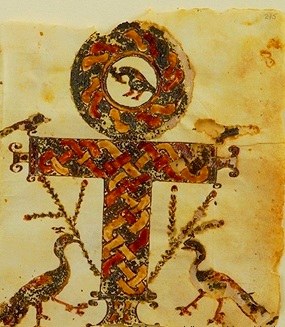
Yes. Coptic Christians in Egypt adopted the ankh as a form of the cross, the crux ansata, by the 3rd or 4th century AD. The earliest known Christian example appears in a copy of the Gospel of Judas from that period, and Britannica notes the ankh has been widely used in the symbolism of the Coptic Orthodox Church.
For Egypt's early Christians, the step was a short one: a sign that already meant life fit the Christian message of eternal life. This is why many Christians wear the ankh today, especially in the Coptic tradition.
The Ankh Today
The ankh has taken on new meanings in the past century while keeping its old one. Here are the main ways people use it now:
- African heritage. Many people of African descent in the United States and Europe wear the ankh as a symbol of African cultural identity.
- Kemetism. Kemetism is a group of modern religions based on ancient Egyptian religion that emerged in the 1970s, and the ankh is one of its main symbols. If you're drawn to working with Egyptian Deities, that work is best learned from practitioners within the tradition.
- Goth style. The ankh became a goth staple partly because of the 1983 vampire film The Hunger, which featured an ankh pendant, and partly because of Death of the Endless, Neil Gaiman's character in The Sandman comics from 1989, who wears a silver ankh on a chain.
- Modern witchcraft and Paganism. Many witches and Pagans use the ankh as a symbol of life and vitality on altars and in jewelry, and the 1960s counterculture helped bring it into wider spiritual use.
How to Use the Ankh in Your Practice
Here are some common ways practitioners work with the ankh:
- Set one on your altar. A standing ankh on your altar keeps the idea of life at the center of your practice.
- Carve it into a candle. Before a working for vitality, fresh starts, or a new chapter, carve the ankh into the side of a candle and let it burn while you focus on what you want to grow.
- Add it to an ancestor altar. The ankh's tie to life after death makes it a fitting symbol for honoring those who came before you.
- Wear it. An ankh pendant works as a daily reminder of life and as a charm you carry with you.
- Draw it on petition paper. Draw the ankh on a petition or in your journal next to an intention about new life, such as a garden, a home, or a project. Our sigil maker can help you combine it with other marks.
Ankh Tattoos and Necklaces
The ankh is one of the most popular symbols for tattoos and jewelry, because its meaning travels well. People choose it to mark their heritage, their faith, a loved one's memory, or their spiritual path.
Our Sterling Silver Ankh Pendant is a 1½-inch ankh for everyday wear. For an altar, our Brass Egyptian Ankh is 4 inches tall. Our witch symbols guide covers 40 more symbols.
Ankh FAQ
What is the ☥ symbol?
☥ is the ankh, the ancient Egyptian hieroglyph for "life." It's a cross with a loop at the top, and it has its own Unicode character, U+2625.
Is it good to wear an ankh?
Yes. The ankh stands for life, and people of many faiths and backgrounds wear it. It helps to know what it means and to respect its roots as an ancient African symbol that is still sacred to many people today.
Should Christians wear an ankh cross?
Many do. Coptic Christians in Egypt have used the ankh as a form of the cross since the 3rd or 4th century, and it still appears in Coptic Orthodox symbolism.
Why do goths wear ankhs?
The ankh became part of goth style partly through the 1983 film The Hunger and the character Death in Neil Gaiman's The Sandman comics, who wears a silver ankh. Its tie to life and the afterlife fits goth culture's interest in death and what comes after.
What's the difference between an ankh and a cross?
An ankh has a loop in place of the top arm of a cross. It's also much older: the ankh dates to about 3000 BC in Egypt, and Christians adopted it as a cross only in the 3rd or 4th century AD.
Is the ankh a protection symbol?
The ankh is mainly a symbol of life, but ancient Egyptians wore ankh amulets to carry that life with them, and many practitioners today wear it as a protective charm. Our protection symbols guide covers it alongside other protective marks.
Sources
- Ankh, Wikipedia
- Ankh, Encyclopaedia Britannica
- Ankh: Egyptian Symbol of Life, National Park Service
- Mirror case in the form of the ankh sign (object 269b), Griffith Institute, University of Oxford
- Kemetism, Wikipedia
- Death of the Endless, Wikipedia