Egyptian symbols are the signs ancient Egyptians carved, painted and wore to stand for life, protection, kingship and their Deities. The best known are the ankh, the Eye of Horus, the scarab and the djed pillar, and you'll find them on temple walls, in royal tombs and on amulets that people wore every day for thousands of years. Many of them were also hieroglyphs, so a single sign could spell a word and carry a sacred meaning at the same time.
These symbols come from ancient Egyptian religion, which had its own priests, temples and magic, and no "witches" in the modern sense. This guide explains each symbol in its Egyptian context first, then covers how people use them today.
Egyptian Symbols at a Glance
| Symbol | What it stood for | Where it appears |
|---|---|---|
| Ankh | Life | Held by Deities, amulets, mirrors |
| Shen ring | Eternity and protection | Held by Horus and Nekhbet |
| Cartouche | A protected royal name | Around pharaohs' names |
| Ouroboros | Endless renewal | Tutankhamun's shrine |
| Eye of Horus | Protection and wholeness | Amulets, coffins |
| Eye of Ra | The sun's fierce power | Temple art, the sun disk |
| Tyet | Protection of Isis | Amulets |
| Uraeus | Royal and divine authority | Crowns and headdresses |
| Bes | Protection of homes and births | Household objects |
| Taweret | Protection in childbirth | Amulets |
| Crook and flail | Kingship and the land's fertility | Royal regalia |
| Was scepter | Power and dominion | Held by Deities |
| Feather of Ma'at | Truth and cosmic order | Judgment scenes |
| Winged sun | The sun and royal protection | Above temple doorways |
| Nekhbet | Protection of the king and Upper Egypt | Crowns, ceilings |
| Scarab | Rebirth and the rising sun | Amulets and seals |
| Djed | Stability | Amulets, coffins |
| Lotus | Creation and rebirth | Temple columns, art |
| Ba | A part of the soul that could travel | Tomb paintings |
| Ka | Life force | Statues, hieroglyphs |
| Menat | Hathor's blessing | Necklaces, offerings |
| Sistrum | Hathor's music and joy | Temple rituals |
Symbols of Life and Eternity
These symbols are about life that lasts: in this world, in the afterlife, and for a royal name that should never be forgotten.
Ankh. The ankh is the Egyptian symbol of life. It's a cross with a loop at the top, and it was the hieroglyph for the word "life," so Deities are often shown holding it to a pharaoh's nose to give the breath of life. It's sometimes called the Egyptian cross or the key of life. Our ankh guide covers its history and modern use in full.
Shen ring. The shen ring is a circle of rope with a straight bar at its base, and it stands for eternity and eternal protection. The word shen means "encircling." Horus, in his falcon form, and the vulture goddess Nekhbet are often shown holding one in their talons.
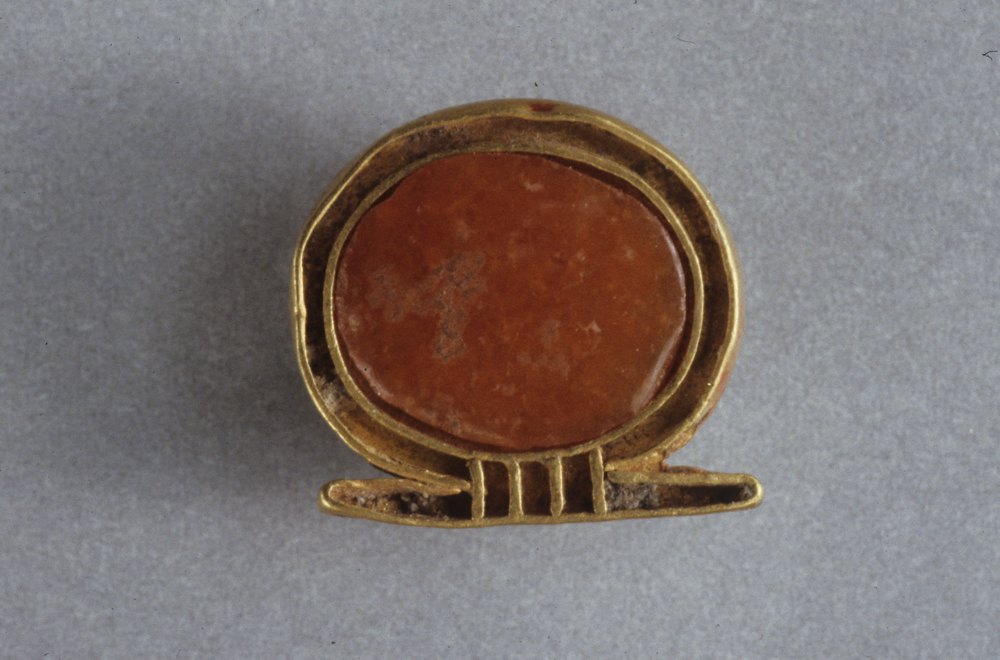
Cartouche. The cartouche is the oval drawn around a pharaoh's name in hieroglyphs. It grew out of the shen ring, stretched long enough to hold a name, so it wrapped the king's name in that same protection. The first cartouches appear at the end of the Third Dynasty.
Ouroboros. The ouroboros is a snake eating its own tail, a picture of endless renewal. The earliest known example is in an Egyptian funerary text on a shrine from the tomb of Tutankhamun. The symbol later passed into Greek magic, Gnosticism and alchemy, which is why it shows up in so much Western occult art.
Egyptian Protection Symbols
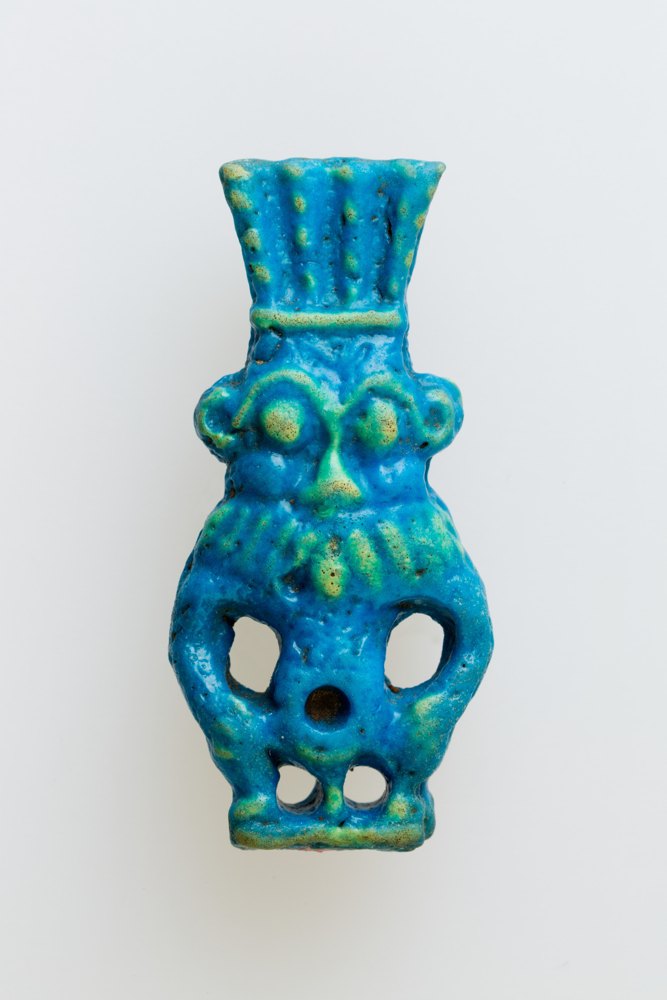
Egyptians wore protection amulets in life and were buried with them, and these are the symbols they relied on most.
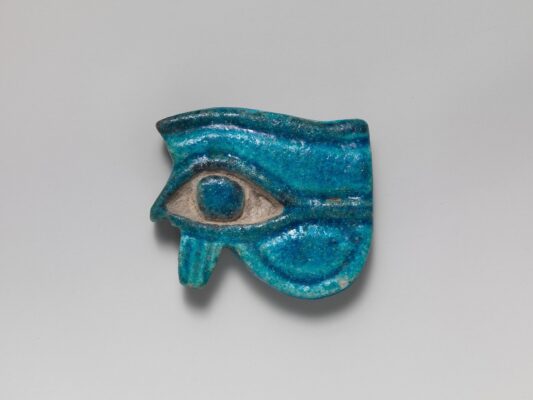
Eye of Horus. The Eye of Horus, called the wedjat, is a symbol of protection and of being made whole. In myth, Horus's eye was torn out in his fight with Set and then restored, so the eye stood for anything restored to its full state. It was one of the most common amulets in Egypt. Our Eye of Horus guide tells the whole story.
Eye of Ra. The Eye of Ra is the sun's fierce, protective power, imagined as a goddess in her own right, sometimes Hathor or the lion goddess Sekhmet. It looks almost the same as the Eye of Horus. The Eye of Horus is usually the left eye and linked to the moon, and the Eye of Ra is usually the right eye and linked to the sun.
Tyet. The tyet, also called the knot of Isis or girdle of Isis, looks like an ankh with its arms folded down. It came to be connected with the goddess Isis and was placed with the dead for her protection, often carved in red stone.
Uraeus. The uraeus is the rearing cobra on the front of a pharaoh's crown, a symbol of royal and divine authority. It stood for the cobra goddess Wadjet, who was believed to spit fire at the king's enemies.
Bes. Bes is a short, bearded, lion-maned god who protected homes, mothers, children and childbirth. His face appears on beds, mirrors and headrests, because he was believed to scare away anything harmful, especially at night.
Taweret. Taweret, whose name means "the great one," is the protective goddess of childbirth and fertility. She's shown as an upright hippopotamus with a lion's paws and a crocodile's back. Together with Bes, she's the closest thing Egypt had to a fertility symbol.
Symbols of Kingship and Order
These symbols belonged to the Deities and the pharaoh, and they stood for the right to rule and the order that kept the world running.
Crook and flail. The crook and flail were first the emblems of the god Osiris and then became the pharaoh's regalia. The shepherd's crook stood for kingship, and the flail stood for the fertility of the land. Tutankhamun was buried holding a gold pair.
Was scepter. The was scepter is a long staff topped with a stylized animal head and forked at the bottom. Deities hold it as a symbol of power and dominion.
Feather of Ma'at. The feather of Ma'at stands for truth, balance and cosmic order. Ma'at was both the idea of right order and the goddess who embodied it. In the judgment of the dead, a person's heart was weighed against her feather to see whether they had lived rightly.
Winged sun. The winged sun is a sun disk with outstretched falcon wings, often with two cobras at its sides. It stood for the sun, divinity and royal power, and it was carved above temple doorways to guard the way in.
Nekhbet. Nekhbet is the vulture goddess of Upper Egypt. With the cobra goddess Wadjet of Lower Egypt, she formed the "Two Ladies" who protected the king of a united Egypt, and her outspread wings cover many temple ceilings.
Symbols of Rebirth and Creation
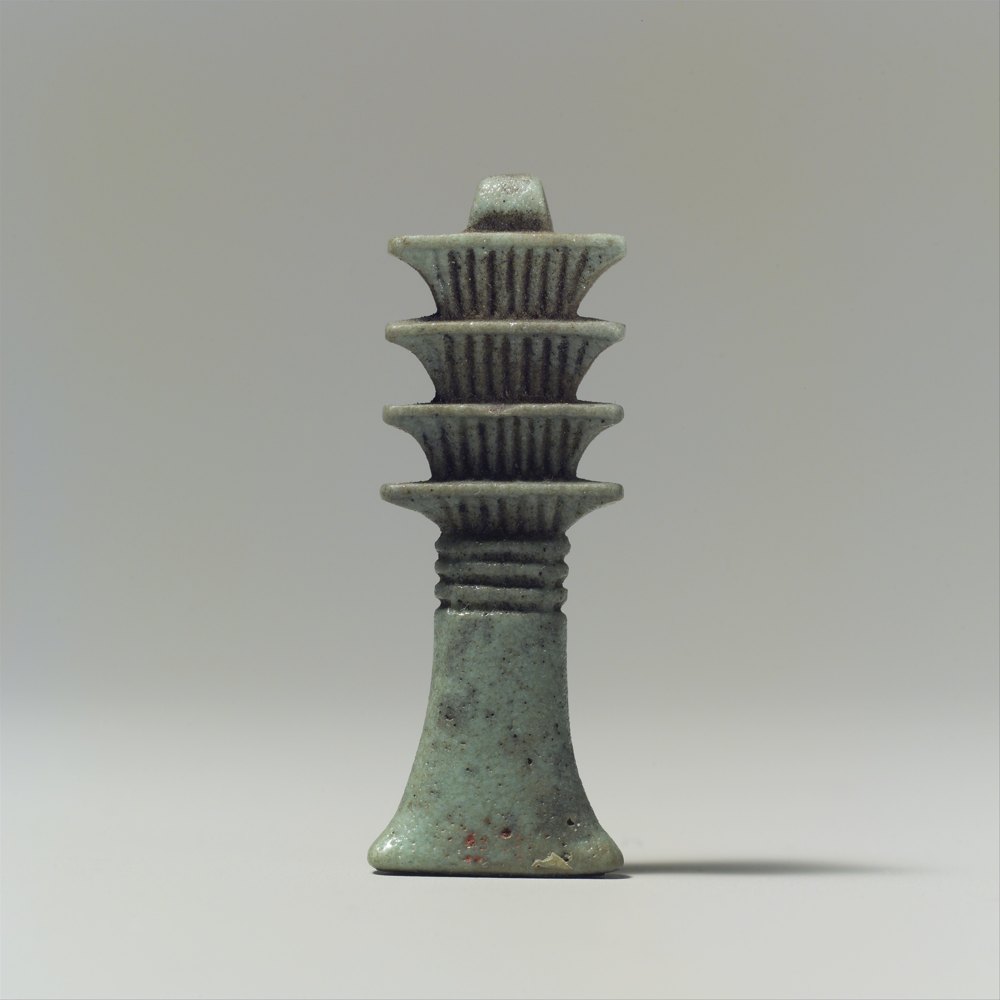
The sun's daily rising, the yearly flood and the hope of life after death made rebirth one of Egypt's great themes.
Scarab. The scarab is the dung beetle, sacred to the god Khepri, who was imagined rolling the sun across the sky the way the beetle rolls its ball of dung. It stood for the rising sun and for rebirth, and scarab amulets and seals were so popular that they survive in huge numbers. Our Scarab Prayer poster shows the scarab with its wings spread.
Djed. The djed is a pillar with crossbars at the top, and it stands for stability. It's linked with the creator god Ptah and with Osiris, and it's commonly read as Osiris's backbone. Djed amulets were placed with the dead so they could rise again.
Lotus. The blue lotus, a water lily that opens in the morning and closes at night, stood for creation and rebirth. In one Egyptian creation story, the sun rose from a lotus floating on the first waters, and lotus flowers top many temple columns.
Ba. The ba is one part of the soul, drawn as a bird with a human head. Egyptians believed the person was made of several parts, and the ba was the part that could fly out of the tomb by day and return at night.
Ka. The ka is the life force, drawn as two raised arms. It was another part of the soul, and offerings of food and drink were left for the ka of the dead so it would be sustained.
Goddess and Temple Symbols
Two of Egypt's best-loved symbols belong to Hathor, the goddess of love, music and joy.
Menat. The menat is a heavy beaded necklace with a counterweight at the back, closely tied to Hathor. Priestesses carried it in rituals, and it was offered to bring her blessing.
Sistrum. The sistrum is a rattle with metal bars that jingle when it's shaken. It was sacred to Hathor, and its sound was part of temple music and celebration.
Egyptian Deities and Their Symbols
Most Egyptian Deities can be recognized by an animal, an object or a crown. Here are the most common:
| Deity | Main symbols | Known as |
|---|---|---|
| Ra | Sun disk, falcon head | God of the sun |
| Osiris | Crook and flail, atef crown, djed | God of the afterlife and rebirth |
| Isis | Throne headdress, tyet | Great goddess and protector of Horus |
| Horus | Falcon, Eye of Horus | God of kingship and the sky |
| Set | The Set animal, was scepter | God of storms, deserts and disorder |
| Anubis | Jackal | God of funerary rites and guide of the dead |
| Thoth | Ibis, baboon | God of wisdom, writing and magic |
| Hathor | Cow horns with sun disk, menat, sistrum | Goddess of love, music and joy |
| Bastet | Cat | Goddess of home and protection |
| Ma'at | Feather | Goddess of truth and order |
Are Egyptian Symbols the Same as Hieroglyphs?
Many Egyptian symbols are also hieroglyphs, but hieroglyphs are a full writing system with hundreds of signs. The ankh spelled the word for "life," the djed spelled "stability" and the was spelled "power," so these signs could appear in a sentence and stand alone as sacred symbols. Most hieroglyphs, though, are ordinary letters and words with no special meaning on their own.
How Egyptian Symbols Are Used Today
Ancient Egyptian symbols are still in use, and how they're used depends on who's using them.
- In Kemetism. Kemetism is a modern religion, which began in the 1970s, that rebuilds the worship of the Egyptian Deities. For Kemetics, these are living sacred symbols, and the tradition is best learned from practitioners within it.
- As heritage. Many people wear the ankh or the Eye of Horus to honor Egyptian or African heritage.
- In Western occultism and witchcraft. Groups like the Hermetic Order of the Golden Dawn drew on Egyptian imagery, and so did Aleister Crowley's Thoth tarot. Many modern witches and Pagans borrow the ankh and Eye of Horus too. If you use one, it helps to learn its Egyptian meaning first and to name where it comes from.
For a deeper look at how Egyptians practiced magic, Ancient Egyptian Magic by Eleanor L. Harris and Normandi Ellis is a good place to start. For symbols that come from witch traditions themselves, see our witch symbols guide.
Egyptian Symbols FAQ
What is the most famous Egyptian symbol?
The ankh is the most famous Egyptian symbol, closely followed by the Eye of Horus. Both were worn as amulets in ancient Egypt, and both are still widely worn today.
What is the Egyptian symbol of life?
The ankh is the Egyptian symbol of life. It was the hieroglyph for the word "life," and Deities are shown offering it to the pharaoh.
What is the Egyptian symbol of death?
There's no single Egyptian symbol of death. Anubis, the jackal god of funerary rites, and the djed of Osiris belong to the afterlife, and many funeral symbols, like the scarab, stood for rebirth instead of death.
What are the Egyptian protection symbols?
The main Egyptian protection symbols are the Eye of Horus, the tyet, the scarab, the uraeus, and the household Deities Bes and Taweret. People wore them as amulets in life and were buried with them.
What is the Egyptian fertility symbol?
The closest things to Egyptian fertility symbols are Bes and Taweret, the protectors of mothers and childbirth. Osiris was also a god of fertility and agriculture, and his flail stood for the fertility of the land.
Are the helicopter hieroglyphs real?
The carving is real. It's in the Temple of Seti I at Abydos, where the titles of Ramesses II were carved over the titles of his father, Seti I. Egyptologists explain the "helicopter" as the two overlapping inscriptions, a palimpsest, though some people still read it as a picture of advanced technology.
Are Egyptian symbols witch symbols?
No. Egyptian symbols come from ancient Egyptian religion, which had no witches in the modern sense. Some modern witches borrow them, but they're Egyptian sacred symbols first.
What is the difference between the Eye of Horus and the Eye of Ra?
The Eye of Horus is usually the left eye, tied to the moon, protection and being made whole. The Eye of Ra is usually the right eye, tied to the sun's fierce power and imagined as a goddess.
Sources
- Ancient Egyptian religion, Ankh, Eye of Horus, Eye of Ra, Wikipedia
- Shen ring, Cartouche, Ouroboros, Tyet, Uraeus, Wadjet, Wikipedia
- Bes, Taweret, Crook and flail, Was-sceptre, Maat, Winged sun, Nekhbet, Wikipedia
- Scarab (artifact), Djed, Nymphaea caerulea, Ancient Egyptian conception of the soul, Menat, Sistrum, Wikipedia
- Kemetism, Helicopter hieroglyphs, Wikipedia