Rue, called ruda in Spanish and arruda in Portuguese, is a strong-smelling Mediterranean herb that folk practitioners have used for centuries to turn away the evil eye, clear bad luck, and protect the home. Its old English name is herb of grace. You'll find it hung over Italian doorways, swept over the body in Mexican limpias, and potted by front doors in Brazil. The raw plant is toxic: fresh rue sap can blister skin in sunlight and the herb isn't safe to eat or drink, so this guide also covers how to work with it safely.
What Is Rue?
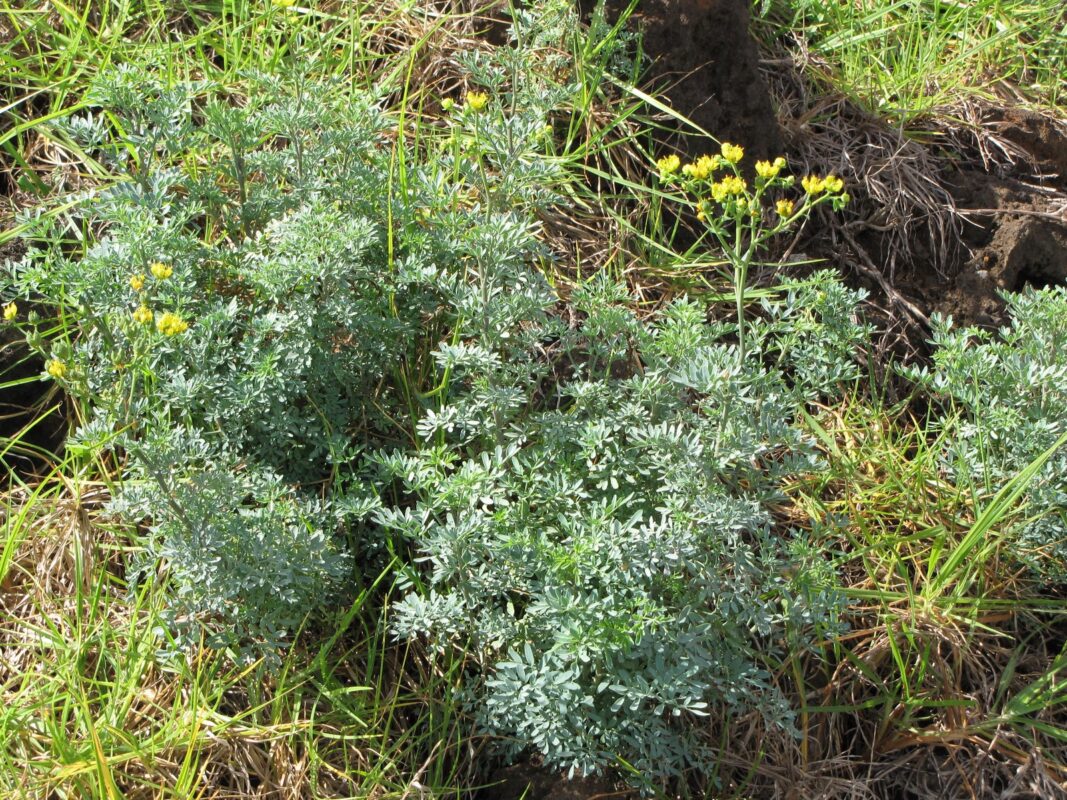
Rue is a small, woody perennial herb with lacy, blue-green leaves, clusters of small yellow flowers in summer, and a sharp, bitter smell when you brush against it. Its botanical name is Ruta graveolens, and graveolens is Latin for "strong-smelling" (Wikipedia). It's native to the Mediterranean and the Balkans, and today it grows in gardens around the world. It belongs to the same plant family as citrus.
Rue grows two to three feet tall and wide, stays evergreen where winters are mild, and has a long list of folk names: herb of grace, herb-grace, common rue, and garden rue.
Ruda in English
Ruda is the Spanish name for rue, Ruta graveolens. In Portuguese it's arruda, and in Italian it's ruta. If you see "ruda" on a botanica shelf, a bottle of agua de ruda, or a bundle at a market, it's the same plant.
A few unrelated plants share the name: goat's rue and meadow rue are different species, and Syrian rue is a different plant altogether. When this guide says rue, it means Ruta graveolens.
What Does Rue Mean Spiritually?
Rue stands for protection, purification, and breaking bad luck. Above all, it's the herb practitioners reach for against the evil eye, the harm that envy or a jealous look is believed to cause. Folk tradition holds that rue's bitter smell drives off ill will the same way it drives off insects, and that a rue plant by the door keeps envy from crossing the threshold. Another well-known charm against the evil eye is the blue nazar bead of Turkey and Greece.
Its English name, herb of grace, ties it to blessing and mercy. Shakespeare used rue several times, and in Hamlet Ophelia hands out rue and calls it "herb-grace o' Sundays." The plant's name has nothing to do with the verb "rue," meaning to regret, but poets have enjoyed pairing the two for centuries, so rue also carries a quiet note of sorrow and remembrance.
Rue in History and Folklore
Rue has been part of Mediterranean life for at least 2,000 years. Roman cooks used it as a bitter seasoning, and the Roman writers Pliny the Elder and Dioscorides both wrote about it. A few of the stories that followed it through history:
- The basilisk. Old European lore held that rue was the one plant a basilisk's deadly breath couldn't wither, and that weasels ate rue to recover from a basilisk's bite.
- The Bible. The Gospel of Luke (11:42) names rue among the garden herbs the Pharisees tithed.
- Sephardic Jewish tradition. Sephardic families have long kept rue near newborns and mothers against the evil eye, and in some Sephardic synagogues ruda is passed among the congregation on Yom Kippur.
- Lithuania. Rue is Lithuania's national herb and the herb most often sung about in Lithuanian folk songs. Brides traditionally wore rue to stand for maidenhood.
- Shakespeare. Rue appears in Hamlet, Richard II, The Winter's Tale, and All's Well That Ends Well, almost always as a sign of grace or sorrow.
All of these come from the Wikipedia article on rue, which cites the original sources.
How Rue Is Used Around the World
Rue traveled with Mediterranean settlers to the Americas, and today it's one of the most widely used protection herbs in the world. Each tradition has its own ways of working with it.
Italy: The Cimaruta and the Malocchio
In Southern Italy, rue is a classic herb against the malocchio, the evil eye. Sprigs were hung over doorways and cradles, and the old Neapolitan cimaruta charm takes its name from it: cima di ruta means "sprig of rue." The cimaruta is a silver charm shaped like a branching sprig of rue, with tiny symbols such as a crescent moon, a rose, and a hand at the tips of its branches, and it was worn around the neck or hung over a baby's bed for protection. It belongs to the same family of Southern Italian charms as the Italian horn.
If Italian folk magic is your path, Mary-Grace Fahrun's Italian Folk Magic: Rue's Kitchen Witchery is built around an Italian-American family's practice.
Mexico and Latin America: Ruda in Limpias
In Mexican and Latin American folk healing, ruda is one of the main herbs in a limpia, a spiritual cleansing. A curandera sweeps a bundle of fresh herbs, often ruda with rosemary and basil, over a person's body to draw off envy, bad luck, and mal de ojo, and the same work is sometimes done with an egg, as in our egg cleanse guide. Agua de ruda, a rue water, is sprinkled in doorways and corners and added to floor washes. These practices are taught within families and by curanderas, and the deeper work is best learned from practitioners within the tradition.
In Argentina, August 1 is the Día de la Pachamama, honoring Mother Earth, and many families keep a custom called caña con ruda: sprigs of rue soaked in cane liquor, taken in a few sips that morning for protection through the winter (Argentina.travel). It's a beloved tradition, but rue is toxic, so we don't recommend drinking it.
Brazil: Arruda by the Door
In Brazil, arruda is one of the best-known protection plants. Many households keep a pot of arruda near the front door or plant it in the yard, believing it shields the home from envy and bad energy, and folk lore says a plant that suddenly wilts has taken a hit meant for the household (Correio Braziliense).
Hoodoo and American Folk Magic
In hoodoo and American folk magic, rue is used for uncrossing, which means breaking a jinx or a run of bad luck someone else put on you. It goes into floor washes, protection sachets, and condition oils for dressing candles.
Rue Magical Properties and Correspondences
| Correspondence | Rue |
|---|---|
| Main uses | Protection, uncrossing, turning away the evil eye, purification |
| Planet | Mars |
| Element | Fire |
| Day | Tuesday (Mars's day) |
| Pairs well with | Rosemary, basil, garlic, salt, and black or red candles |
Rue's Mars and Fire associations come from its sharp, defensive character, and they make it a natural fit for Tuesday protection work. For more protection herbs, see our guide to garlic's magical properties, or try the Spell Ingredients Finder.
How to Use Rue in Your Practice
Here are the most common ways practitioners work with rue. None of them involve eating or drinking it. Our Rue (Ruda) collection holds the oils, waters, washes, dried rue, and incense used in these steps.
- Grow a plant by the door. A potted rue plant by the front door or a rue hedge along the walk is the oldest form of rue protection in Italy, Brazil, and much of Latin America.
- Hang a dried sprig. Tie a sprig of dried rue with red thread and hang it over the front door or a baby's crib, out of reach.
- Sew a sachet. Sew a pinch of dried rue into a small cloth pouch with a pinch of salt and carry it in a pocket or bag.
- Sprinkle rue water. Sprinkle rue water across a threshold or into the corners of a room, or add rue wash to a bucket of floor-wash water and mop from the back of the house toward the front door.
- Take a limpia bath. Prepared rue washes are made for the bath. Dilute about a quarter cup of rue wash in a warm tub, soak while you focus on what you're releasing, and air dry afterward.
- Dress a candle. Rub a few drops of rue oil onto a black or red candle for protection or uncrossing work.
- Burn rue incense. Ruda incense is an easy way to bring rue's scent into a room for cleansing.
A Simple Rue Doorway Charm
This charm uses a dried sprig of rue, about 12 inches of red thread, and a small nail or tack.
- On a Tuesday, wrap the red thread three times around the stem of the rue sprig and tie it with three knots.
- Hold the sprig at your front door and say, "Herb of grace above my door, keep envy out forevermore."
- Hang the sprig above the inside of the door frame, out of reach of children and pets.
- Replace it when it crumbles or once a year, and bury or compost the old sprig.
Is Rue Safe?
Rue is a powerful plant, and it isn't safe to eat, drink, or use carelessly on skin. A few things to know before you work with it:
- The fresh plant can burn your skin in sunlight. Rue sap contains furocoumarins that react with sunlight and can cause phytophotodermatitis, painful, burn-like blisters that may leave dark marks for months (Wikipedia). Wear gloves when you cut or handle fresh rue, and wash your hands afterward.
- Prepared rue products are made for the skin. Rue waters and washes are prepared for ritual use on the body and in the bath, so you can use them the way the label describes. Follow the directions, dilute washes as directed, and if you steep your own bath from the dried herb, which is the raw plant, patch test first and skip strong sun on treated skin for a few hours.
- Don't drink it. Rue tea and rue extracts can cause serious liver damage, and large amounts have caused organ failure. Searches for rue tea benefits are common, but we don't recommend taking rue internally in any form.
- Avoid it entirely during pregnancy. Ancient writers recorded rue as a way to cause miscarriage, and pregnant people should stay away from it.
- Keep it away from pets and children. Plant rue where pets and kids won't chew it, and hang dried sprigs out of reach.
This is spiritual practice, not medical advice. If you or a pet may have swallowed rue, call a doctor, a vet, or Poison Control.
How to Grow Rue
Rue is an easy, low-care herb for a sunny spot. According to NC State Extension:
- Hardiness: USDA zones 4 to 10.
- Sun: full sun to part shade.
- Soil: well-drained soil; it tolerates dry, rocky ground and drought but dislikes wet soil.
- Size: two to three feet tall and wide.
- Bonus: deer usually leave it alone.
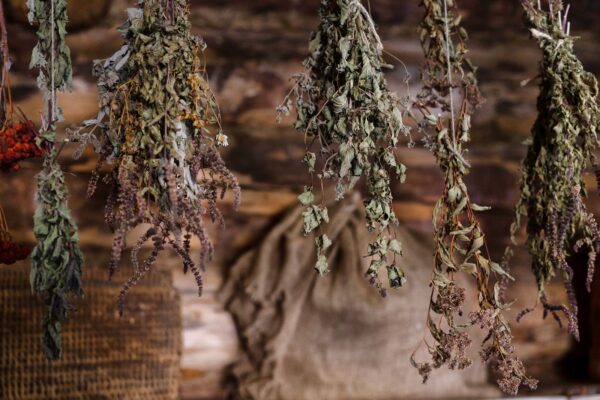
Always wear gloves and long sleeves when you prune or harvest rue, and do it on a cloudy day or in the evening to lower the risk of skin burns. Dry sprigs by hanging them upside down in a shaded, airy spot.
For other herbs used alongside rue, see our guide to herbs for protection.
Rue FAQ
What is ruda in English?
Ruda is the Spanish name for rue, Ruta graveolens, a strong-smelling Mediterranean herb also called herb of grace. In Portuguese it's arruda.
What is rue used for spiritually?
Rue is used for protection, breaking bad luck, and turning away the evil eye. Practitioners grow it by the door, hang dried sprigs, sprinkle rue water, and add it to floor washes and sachets.
Is the rue plant toxic?
Yes. Rue isn't safe to eat or drink, its sap can cause burn-like blisters on skin exposed to sunlight, and pregnant people should avoid it completely. Wear gloves when you handle it.
Can you drink rue tea?
We don't recommend it. Rue can cause serious liver damage, and it's especially dangerous during pregnancy. Work with rue outside the body instead, through plants, sprigs, rue water and washes, oils, and incense.
Why is rue called the herb of grace?
Rue has been linked to grace and blessing in Christian Europe for centuries. Shakespeare used the name in Hamlet, where Ophelia calls rue "herb-grace o' Sundays."
What is the cimaruta?
The cimaruta is a Southern Italian silver charm shaped like a sprig of rue, with small symbols at the tips of its branches. Its name comes from cima di ruta, "sprig of rue," and it was worn against the evil eye.
Where should I put rue in my house?
The traditional spot is at the front door: a potted plant beside it or a dried sprig hung above it. Keep both out of reach of children and pets.
Is goat's rue the same as rue?
No. Goat's rue, meadow rue, and Syrian rue are different plants. The rue used in folk magic is common rue, Ruta graveolens.
Featured photo: flowering rue by Agnieszka Kwiecień (Nova), CC BY-SA 4.0, via Wikimedia Commons.