A witch's cauldron is a small cast iron pot, usually standing on three legs, that holds fire, smoke, and water on the altar. Practitioners use it to burn incense and written petitions, hold a candle, scry, mix herbs, and leave offerings. It stands for transformation, because whatever goes into a cauldron comes out changed. The big bubbling witches' cauldron of Halloween was a cooking pot; most altar cauldrons today fit in the palm of your hand.
What Is a Cauldron?
A cauldron is a large, deep metal pot made to cook over an open fire, either hung from a hook or set on its own legs in the coals. The word came into English in the 1200s from the Norman French caudron, which grew out of the Latin caldarium, a hot bath, from calidus, hot. The older English word for the same pot was kettle, borrowed from the Old Norse ketill.
For most of history the cauldron was the kitchen. One pot over one fire cooked the stew, heated the wash water, brewed the ale, and boiled the dye. That is the root of its magic: it was the one object in the house where raw things became something new, every single day.
What Does a Cauldron Symbolize?
A cauldron symbolizes transformation. Grain, water, and fire go in, and bread, beer, and medicine come out, so the pot became the image of change itself. Other meanings grew from that one:
- Rebirth. In Welsh and Irish myth, cauldrons restore the dead and remake the living.
- Abundance. A full cauldron fed a household, and the Irish god the Dagda owned one that never ran empty.
- Inspiration and wisdom. The Welsh goddess Ceridwen brewed poetic inspiration in hers.
- The womb of the Goddess. In Wicca the cauldron is a feminine vessel, the container in which life forms. Some practitioners set it with the element of water because it holds; others set it with earth because it is a working tool made from the ground.
The Cauldron in Myth and History
The witch at the cauldron is a young image. The magic cauldron is far older, and it belongs to heroes, gods, and poets before it ever belonged to witches.
| Cauldron | Tradition | What it does |
|---|---|---|
| Gundestrup cauldron | Iron Age Europe, found in Denmark | A silver ritual vessel covered in gods and animals |
| Cauldron of the Dagda | Irish | Never runs empty; no company leaves it hungry |
| Ceridwen's cauldron | Welsh | Brews Awen, the spirit of poetic inspiration |
| Pair Dadeni | Welsh | Brings dead warriors back to life |
| Óðrerir | Norse | Holds the mead of poetry |
| The Weird Sisters' cauldron | Shakespeare's Macbeth | Brews the visions that doom a king |
The Gundestrup Cauldron
The Gundestrup cauldron is a silver bowl 27 inches across, made sometime between 150 BC and 1 BC. It is the largest known piece of European Iron Age silver work. Farmers cutting peat near the hamlet of Gundestrup in Denmark found it in 1891, taken apart with its panels stacked inside the base, most likely laid in the bog as an offering. Its plates show gods, warriors, and animals, including an antlered figure seated cross-legged and holding a torc and a serpent. It is on display at the National Museum of Denmark in Copenhagen.
The Dagda's Cauldron of Plenty
The Irish god the Dagda owned a cauldron called the coire ansic, the undry cauldron. It was one of the Four Treasures of the Tuatha Dé Danann, and the old texts say no company ever went away from it unsatisfied. It is the cauldron of abundance, and it is why many practitioners work with a cauldron for prosperity and hospitality.
Ceridwen and the Cauldron of Inspiration
The Welsh goddess Ceridwen brewed a potion in her cauldron for a year and a day, to give her son all the wisdom in the world. She set a boy named Gwion Bach to stir it. At the end, three hot drops splashed onto his thumb, he put it in his mouth, and all the knowledge meant for her son was his. Ceridwen chased him through a string of shapeshifts until he became a grain of wheat and she, a hen, swallowed him. Nine months later she gave birth to him again, and he grew up to be the great poet Taliesin. Her cauldron holds Awen, the flowing spirit of inspiration, and many modern pagans honor Ceridwen as a goddess of rebirth, transformation, and inspiration.
The Cauldron of Rebirth
In Branwen ferch Llŷr, the second branch of the Welsh Mabinogion, the giant king Brân gives the Irish king a cauldron called the Pair Dadeni. Dead warriors placed in it rise again and return to battle, though they come back unable to speak. The Irish nearly win the war with it, until the Welsh prince Efnysien hides among the dead, is thrown in, and stretches out inside until the cauldron bursts into four pieces.
Óðrerir and the Mead of Poetry
In Norse myth, Óðrerir is one of the vessels that hold the mead of poetry. The Icelandic writer Snorri Sturluson calls it the kettle in which the blood of the wise being Kvasir was mixed with honey, making a drink that turns anyone who tastes it into a poet or a scholar.
How the Cauldron Became the Witch's Tool
The cauldron became the witch's pot on the English stage. Shakespeare's Macbeth opens its fourth act with the three witches circling a boiling cauldron, dropping in eye of newt and toe of frog, and chanting "Double, double toil and trouble; Fire burn and cauldron bubble." Thomas Middleton's The Witch and Christopher Marlowe's The Jew of Malta used the same image, and between them these plays fixed the cauldron to the witch in the popular imagination for four hundred years.
The Greek goddess Hecate, goddess of crossroads, night, magic, witchcraft, and the moon, appears in Macbeth too, scolding the witches in a scene most scholars believe someone other than Shakespeare wrote. Modern devotees of Hekate often work with a cauldron in her honor.
In modern Wicca, the cauldron sits on the altar with the athame, wand, pentacle, chalice, and besom. Most Wiccan cauldrons are small cast iron pots used for incense, petitions, and candles, and the cooking pot of the old stories has become a working vessel for fire and smoke.
What Is a Cauldron Used for in Witchcraft?
A cauldron is used for anything that involves fire, smoke, or water on the altar. These are the most common uses:
- Burning loose incense and resin. Set a lit charcoal tablet on a bed of sand in the cauldron and sprinkle frankincense, copal, myrrh, or a loose herb blend onto it a pinch at a time. The iron holds the heat, and the sand keeps it off the bottom. Our resin, incense powders, and charcoal collection has tablets and resins that work well in a small cauldron.
- Burning petitions. Write a wish, an intention, or something you are ready to let go of on a small slip of paper, light it from a candle, and drop it into the cauldron. Many practitioners burn bay leaves the same way, with a wish written on the leaf.
- Holding a candle. Pack sand into the cauldron and set a chime candle upright in it. The iron walls catch dripping wax and shelter the flame.
- Scrying. Fill the cauldron with water and gaze into the dark surface by candlelight. The black iron gives your eyes nothing to hold, much like a scrying bowl. Our guide to how to use a crystal ball walks through water scrying step by step. Dry the iron right after.
- Mixing herbs and powders. A cauldron is a good bowl for blending loose incense, sachet herbs, or powders before a working.
- Making black salt. The ash left in the cauldron after a burn is one of the traditional ingredients in black salt, used for protection and banishing.
- Offerings. Many practitioners leave food, drink, or herbs in a cauldron on an ancestor altar, especially at Samhain; see our list of Samhain offerings.
- Sabbat fires. A large cauldron can hold a small fire outdoors at Beltane or Yule, when indoor space or weather rules out a bonfire.
Can You Cook in a Witch's Cauldron?
No, not in an altar cauldron. Our cauldrons, and most sold for ritual, are made as ritual vessels, not cookware, and they are not prepared as food-safe seasoned iron. Once a cauldron has held charcoal, ash, and resin, keep it for ritual. For kitchen witchery, such as an autumn simmer pot or a brewed tea, use a pot made for the stove; our kitchen witch's toolkit covers the kitchen side of the craft. Food-grade cast iron cauldrons do exist, and they are sold as cookware, pre-seasoned for food.
How to Use a Cauldron Safely
To use a cauldron safely, set it on a heat-proof surface, put a layer of sand or salt in the bottom, and never leave anything burning in it unattended. Cast iron gets hot enough to scorch wood and cloth right through its legs.
- Set it on a heat-proof surface. Stand the cauldron on a stone or ceramic tile, a metal trivet, or a tray of sand, never directly on wood, an altar cloth, or a plastic tray. An altar tile does this job well. Keep it well away from curtains, dried herbs, and anything hanging above it.
- Add a base layer. Pour in half an inch to an inch of sand or salt. It spreads the heat, protects the iron, and gives charcoal, candles, and paper something steady to sit on.
- Light charcoal with tongs. Hold a charcoal tablet with metal tongs over a lighter or candle flame until sparks run across it, about 20 to 30 seconds, then set it on the sand. Wait about five minutes, until the top turns ash gray, before adding any resin or herbs.
- Add small amounts. Sprinkle incense on a pinch at a time. For petitions, fold the paper small, light one corner from a candle while holding it with tongs, and drop it in. Burn one slip at a time rather than a pile.
- Keep the lid within reach. If a flame climbs too high, set the lid on the cauldron to smother it. Do not pour cold water into a hot cauldron, because a sudden temperature change can crack cast iron.
- Open a window. Burning charcoal gives off carbon monoxide. A crack of fresh air is enough for a tablet or two, and a smoke detector nearby is worth having.
- Let it cool completely. Charcoal stays hot for an hour or more after it looks dead. Wait until the iron is cool to the touch before you empty it, then tip out the ash and sand. Many practitioners bury the ash, scatter it outdoors, or save it for black salt.
What Not to Burn in a Cauldron
- Alcohol fires indoors. The rubbing alcohol and Epsom salt "cauldron flame" is popular online, but its flame is hard to see, and alcohol poured into a warm cauldron can flash back up the stream to the bottle. We do not recommend it indoors, or anywhere near the altar.
- Big bundles of paper. A pile of burning paper throws up flaming scraps. Burn small slips one at a time.
- Plastic, glitter, foil, or glossy paper. These give off toxic smoke.
- Anything in a cauldron that is too small for it. A 40 mm charcoal tablet needs a cauldron at least 4 inches across, with room around it for resin.
How to Choose a Cauldron
Choose a cauldron by what you plan to burn in it. Size matters most, then the lid, the legs, and the symbol on the side.
| Size | Good for | From our shop |
|---|---|---|
| Under 3 inches | One incense cone, a pinch of herbs, a travel altar | Small oval cauldron, 1 3/4 inches tall |
| 3 to 3 1/2 inches | A 33 mm charcoal tablet, small petitions, a chime candle | 3 inch pentagram cauldron with lid, 3 inch wide-rim cauldron |
| 4 1/2 to 5 inches | A 40 mm charcoal tablet with room for resin, several petitions, scrying | Triple moon cauldron with lid, 4 1/2 inches, triquetra cauldron |
| 6 to 8 inches | Group ritual, larger burnings, a small outdoor sabbat fire | 8 inch cauldron with lid |
- A lid smothers flames, keeps dust and moisture out between rituals, and closes a working. If you plan to burn petitions, get one with a lid.
- Three legs lift the hot bottom off the surface and let air flow underneath. Most cast iron cauldrons have them, and they are the traditional form.
- A handle lets you carry a hot cauldron by something other than its body. Use a pot holder anyway; handles heat up too.
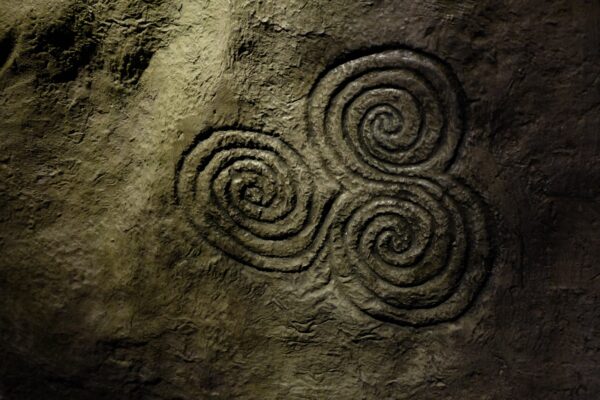
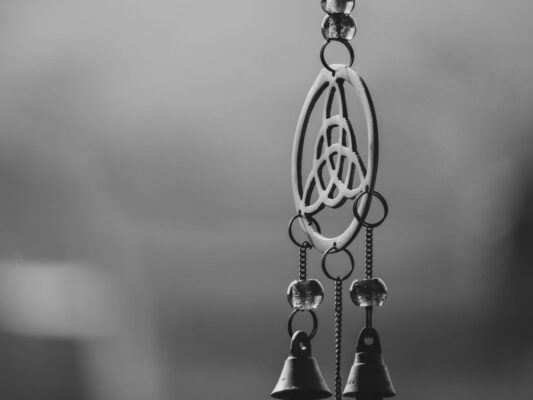
- The symbol is a matter of your path. A pentacle marks the elements and protection, and our guide to pentagram vs pentacle explains the difference. The triple moon honors the Maiden, Mother, and Crone. The triquetra is a Celtic knot of three, and the Tree of Life links the roots below with the branches above. Our guide to witch symbols covers each one. A plain cauldron works for every tradition and leaves room for your own markings.
How to Cleanse and Care for a Cast Iron Cauldron
Cast iron has one enemy, and it is water. Keep a cauldron dry and lightly oiled and it will last for generations.
Before the First Use
- Wipe it out. Wipe the new cauldron inside and out with a dry cloth to lift casting dust.
- Oil it. Rub a thin coat of vegetable oil over the iron, inside and out, then buff off everything you can with a clean cloth. A heavy coat turns sticky.
- Burn it in. The first time you light charcoal in it, the oil and any factory coating may smoke and smell. Do that first burn outdoors or beside an open window.
- Cleanse it. Pass the cauldron through incense or palo santo smoke, ring a bell over it, or leave it on a dry windowsill under the full moon. Many practitioners make the first burn in a new cauldron a cleansing resin such as frankincense, and state aloud what the cauldron is for.
After Each Use
- Empty it once it is cold. Tip out the ash and sand, and wipe the inside with a dry cloth or a stiff brush.
- Dry it at once after water. After scrying or washing, dry the cauldron with a towel, then warm it over a low stove burner or in a low oven for a few minutes so no damp stays in the pores of the iron.
- Do not leave salt in it. Dry salt is a fine base layer during a ritual, but salt pulls moisture from the air and rusts iron, so empty it afterward.
- Oil it now and then. A drop of oil on a cloth, rubbed in and buffed off every few weeks, keeps the surface black and sealed.
- Store it with the lid on. Keep it somewhere dry, not in a damp basement or under a sink.
How to Remove Rust From a Cauldron
To remove rust from a cast iron cauldron, scrub the rusty patch with steel wool until the bare gray iron shows, rinse, dry it at once with a towel, warm it until it is fully dry, and rub in a thin coat of oil. Rust on cast iron is only on the surface and comes off with a little work, so a rusty cauldron is not ruined.
Where to Find a Cauldron
Every cauldron in our cauldrons collection is cast iron, from a 1 3/4 inch oval pot to an 8 inch working cauldron with a 6 1/2 inch deep bowl. Several have fitted lids, most stand on three legs, and they come plain or cast with a pentacle, triple moon, triquetra, or Tree of Life. For fuel, our resin, powder, and granular incense for charcoal has frankincense, copal, and blends made to burn on a tablet. If you like the look of a cauldron on the altar but prefer a flame to charcoal, our sage candle in a cast iron cauldron burns for about 12 hours and leaves you a small cauldron to reuse.
For reading, Entering Hekate's Cauldron by Cyndi Brannen is built around the cauldron as a tool for devotion to Hekate, and The Book of Celtic Magic by Kristoffer Hughes teaches from Ceridwen's cauldron of Awen. Keep notes on what you burn and why in your spell journal or Book of Shadows.
Witch's Cauldron FAQ
What is a cauldron?
A cauldron is a large, deep metal pot made to cook over an open fire. In witchcraft it is usually a small cast iron pot on three legs, used on the altar to hold fire, smoke, and water.
What does a cauldron symbolize?
A cauldron symbolizes transformation, because what goes into it comes out changed. It also stands for rebirth, abundance, inspiration, and, in Wicca, the womb of the Goddess.
What does a witch use a cauldron for?
Witches use a cauldron to burn loose incense and resin on charcoal, burn written petitions and bay leaves, hold a candle, scry with water, mix herbs, and hold offerings. A large one can hold a small outdoor fire at the sabbats.
Are witch cauldrons still used today?
Yes. Cauldrons are among the most common tools on modern pagan and Wiccan altars, though most are small cast iron pots used for incense and candles rather than big kettles for cooking.
What is in a witch's cauldron?
In modern practice, a layer of sand or salt, a charcoal tablet, and incense, herbs, or a burning petition. The eye of newt and toe of frog come from the witches' brew in Shakespeare's Macbeth.
What do witches say around a cauldron?
The famous chant is from Macbeth: "Double, double toil and trouble; Fire burn and cauldron bubble." In real practice, people usually state their intention in their own words as they light the charcoal or drop in a petition.
What do you put in the bottom of a cauldron?
Put half an inch to an inch of sand or salt in the bottom before you burn anything. It spreads the heat, protects the iron, and gives charcoal and candles a steady base. Empty salt out afterward, because it draws moisture and rusts the iron.
Can you cook in a witch's cauldron?
Not in an altar cauldron. Ritual cauldrons are not prepared as food-safe cookware, and once one has held charcoal and ash it should stay a ritual tool. Use a pot made for the stove for simmer pots and brews.
How do you keep a cast iron cauldron from rusting?
Keep it dry, empty ash and salt after each use, dry it at once after any water, and rub in a thin coat of oil every few weeks. If rust appears, scrub it off with steel wool, dry the iron, and oil it again.
What size cauldron should I get?
A 3 to 3 1/2 inch cauldron holds a small charcoal tablet, a chime candle, and small petitions, which covers most solo work. Choose 4 1/2 to 5 inches for larger tablets and scrying, and 6 inches or more for group ritual.
Which goddess is associated with the cauldron?
Ceridwen, the Welsh goddess who brewed the potion of inspiration that made the poet Taliesin, is the goddess most tied to the cauldron. Many devotees of Hekate also work with one, and in Irish myth the god the Dagda owns a cauldron that never runs empty.
Is it safe to burn paper in a cauldron?
Yes, if you burn small slips one at a time on a bed of sand, with the cauldron on a heat-proof surface and the lid within reach. Keep a window open, never leave it burning, and let it cool fully before emptying.