A triskelion, or triskele, is a symbol of three spirals or three bent legs turning out from one center. It's one of the oldest symbols in Europe, carved into Irish stone more than 5,000 years ago, and today it's used for motion, cycles, and the three realms of land, sea, and sky. It also flies on the flags of Sicily and the Isle of Man.
What Does the Triskelion Mean?
The triskelion stands for motion and things that come in threes. Because its three arms all turn the same way, it looks like it's spinning, so people read it as progress, cycles, and life moving forward.
Common meanings today include:
- Land, sea, and sky, the three realms of Celtic cosmology, which is how Celtic Reconstructionist Pagans most often use it.
- Birth, life, and death, or past, present, and future.
- Mind, body, and spirit.
- The sea god Manannán mac Lir, whom many Celtic Pagans connect with the triskelion.
The name comes from the Greek triskelḗs, meaning "three-legged." Using it as a name for the symbol is surprisingly recent: a French scholar, the Duke of Luynes, introduced "triskèle" in 1835, and "triskelion" came into English through coin collecting in the late 1800s. Both spellings, triskele and triskelion, are correct.
The ancient Greeks didn't record what the symbol meant to them. The Duke of Luynes noticed it often appeared alongside moons and grain and suggested it stood for the goddess Hecate, but that was his theory, not something the Greeks wrote down.
Triple Spiral or Three Legs: The Two Kinds of Triskelion
There are two kinds of triskelion, and they come from different places:
- The triple spiral is the older form, three curling spirals joined at the center. It goes back to the Neolithic, the late Stone Age, and it's the form most people mean by a Celtic triskele.
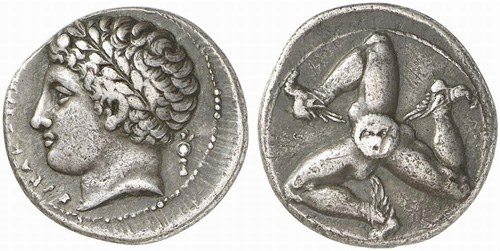
- The three legs form shows three bent human legs running in a circle. It comes from ancient Greece, where it decorated pottery, warriors' shields, and coins, and it's the form on the flags of Sicily and the Isle of Man.
Newgrange and the Celtic Spiral
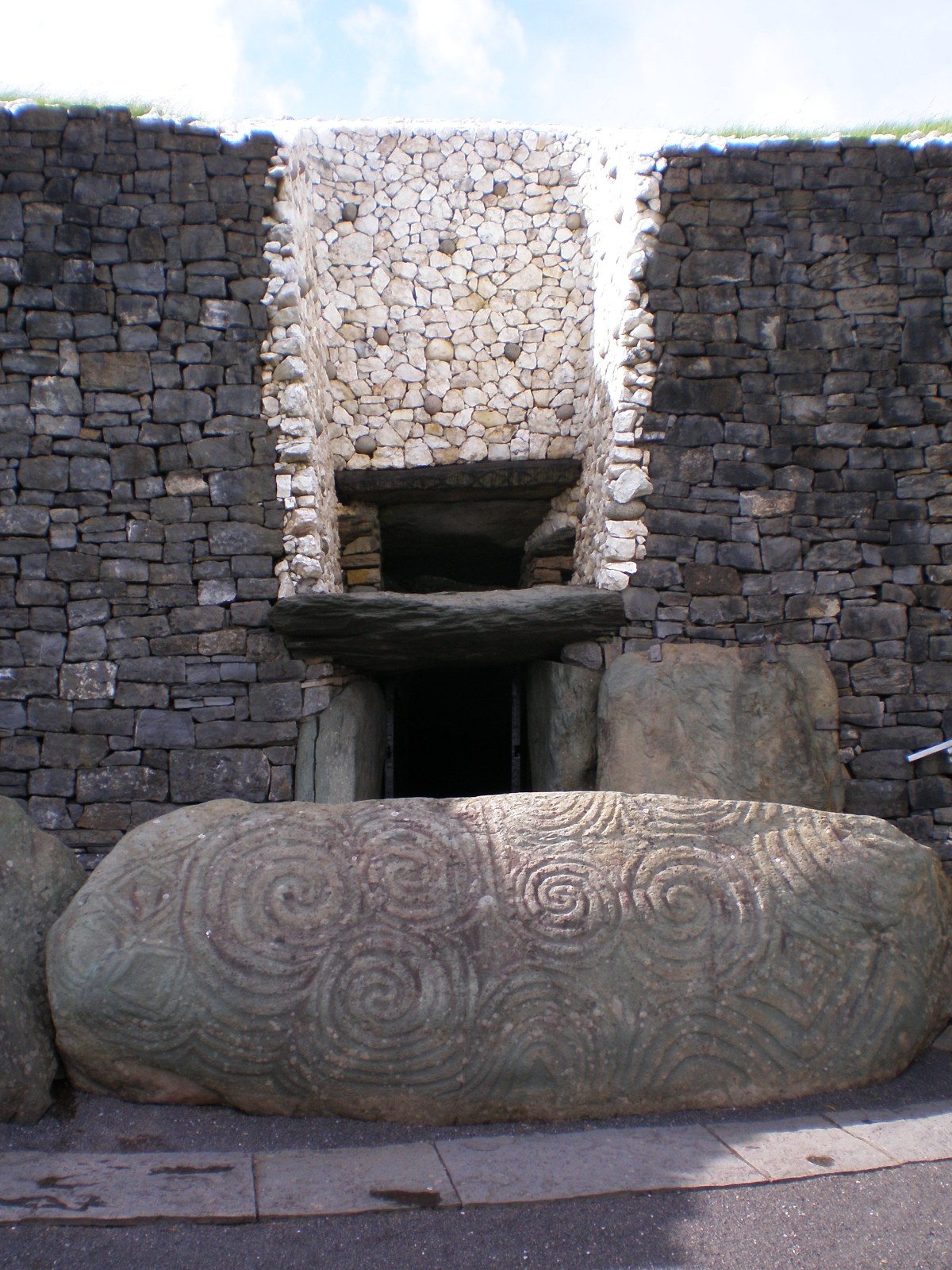
The most famous triple spiral is at Newgrange, a huge Neolithic passage tomb in County Meath, Ireland, built around 3100 BCE, which makes it older than Stonehenge and the Egyptian pyramids. Spirals cover its great entrance stone, and a triple spiral is carved inside the inner chamber, where the sunrise lights it up for about 17 minutes around the winter solstice. Triple spirals also appear in Neolithic Malta, dated between 4400 and 3600 BCE.
The design carried on into the Iron Age, especially in the art of the La Tène Celts, and it's carved into the rock of Iron Age hill settlements in Galicia, Asturias, and northern Portugal. Before the 5th century CE, Irish Christians had also begun using the triple spiral as a symbol of the Trinity.
The Triskelion on the Flags of Sicily and the Isle of Man
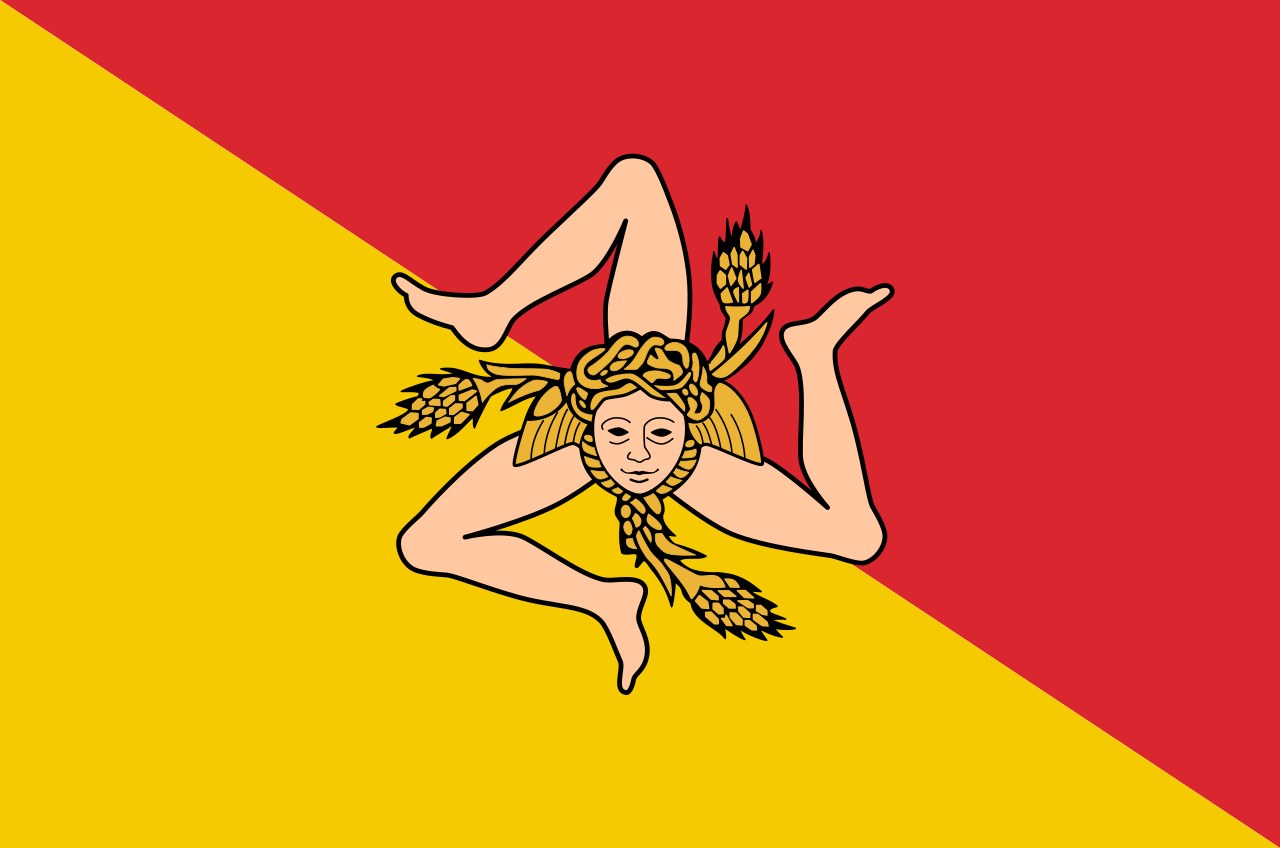
Sicily. The three-legged triskelion has stood for Sicily since ancient times. The rulers of Syracuse put it on their coins from about 382 BCE, possibly because of the island's Greek name, Trinacria, meaning "having three headlands." The Sicilian version, the Trinacria, has the head of Medusa at its center. It returned to Sicilian flags in 1848 and has been on the official flag since 2000.
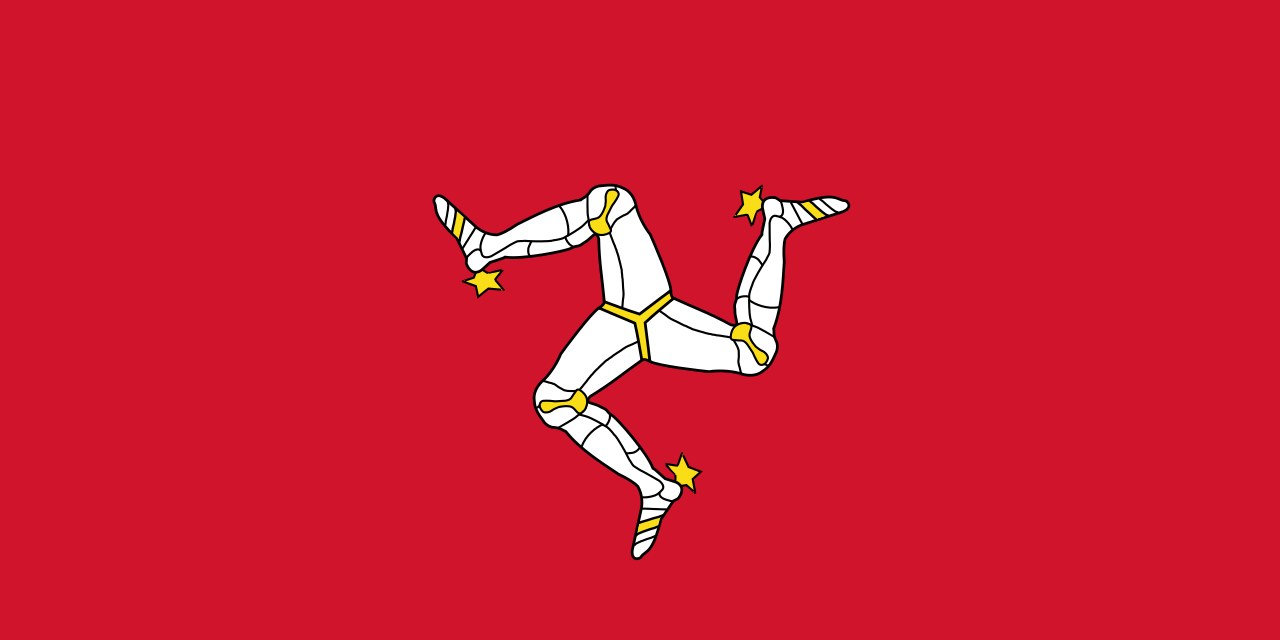
Isle of Man. The Isle of Man's three-legs symbol, ny tree cassyn in the Manx language, appears in the arms of the King of Mann by around 1280. The island's flag, adopted in 1932, shows three legs in armor.
The Triskelion in Paganism and Witchcraft Today
The spiral triskelion is one of the main symbols of Celtic Reconstructionist Paganism, where it stands for land, sea, and sky. Eclectic witches and other modern Pagans use it too, often for progress, for balance between three forces, or as a Celtic alternative to the triple moon.
Here are some ways practitioners work with it:
- Wearing it as an amulet when starting something new or moving through a big change.
- Drawing or carving it on a candle for spells about growth, momentum, or getting unstuck.
- Placing it on an altar for land, sea, and sky, sometimes with a stone, a shell, and a feather to stand for each realm.
One thing to know before you use it as decor: in the Republic of Ireland, the triskelion is displayed in hospitals and care homes to show that a patient is dying or has died. It's used there as a non-religious symbol of birth, life, and death.
How the Triskele Has Been Misused by Hate Groups
One specific form of the triskele is a white supremacist symbol. It's different from the curved Celtic spiral, and it's worth knowing so you can tell them apart.
According to the ADL's Hate on Display database, the hate-group version is a triskele that looks like three interlocking sevens. The South African white supremacist group Afrikaner Weerstandsbeweging (AWB), formed in the 1970s, uses it on its flag in place of a swastika, and the racist skinhead network Blood & Honour uses it in its logo. In Nazi Germany, a triskele was also the shoulder-strap emblem of an SS volunteer division, and in Germany today, displaying a triskele can be a prosecutable offense depending on the context.
The ADL also says that curved triskeles are used by far more people who have nothing to do with extremism, so a triskele should be judged by its form and its context. A curved Celtic triple spiral, like the one at Newgrange, is not a hate symbol.
Triskelion vs. Triquetra
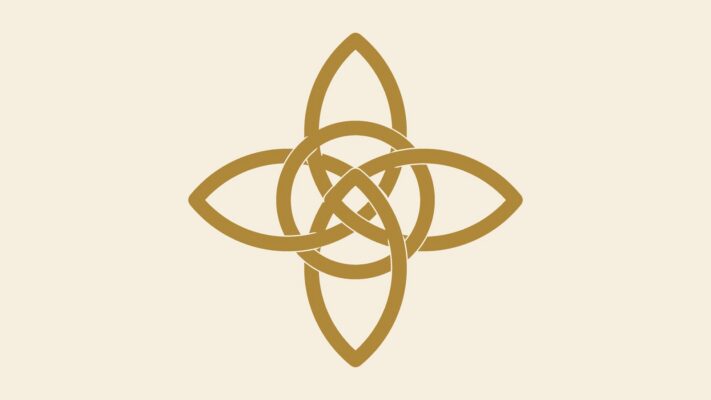
The triskelion and the triquetra are both Celtic three-part symbols, but they look different. A triskelion has three spirals or legs turning out from a center, so it looks like it's moving. A triquetra is three pointed loops woven into one knot, so it looks closed and joined. People often choose the triskelion for motion and change, and the triquetra for unity and protection.
Triskelion Tattoos and Jewelry
The triskelion is a popular Celtic tattoo and jewelry design, often chosen to mark a new chapter, a journey, or a family of three. If you're choosing a design, the curved spiral form is the traditional Celtic one.
We carry a Triskele Shield Amulet, a curved Celtic triple spiral on a round pewter shield. Our witch symbols guide covers 40 more symbols.
Triskelion FAQ
What does a triskelion symbolize?
A triskelion stands for motion, cycles, and things that come in threes, such as land, sea, and sky or birth, life, and death. Its three arms turn the same way, so it looks like it's always moving forward.
Is the triskele a pagan symbol?
It's older than any of today's religions. It was carved at Newgrange around 3100 BCE, used by Celtic and Greek artists, later used by Irish Christians for the Trinity, and is a main symbol of Celtic Reconstructionist Paganism today.
What is a Greek triskelion?
A Greek triskelion shows three bent human legs instead of spirals. It decorated Greek pottery, shields, and coins, and it became the emblem of Sicily.
Is the triskelion a hate symbol?
Not in general. One specific form, a triskele that looks like three interlocking sevens, is used by white supremacist groups, according to the ADL. Curved Celtic triskeles are used by far more people who have nothing to do with extremism.
Is it triskele or triskelion?
Both are correct. "Triskele" came first, from French in 1835, and "triskelion" came into English in the late 1800s. "Triskeles" is another accepted spelling.
Why is there a triskelion on the Isle of Man flag?
The three legs have been the island's emblem since at least the 1200s, when they appear in the arms of the King of Mann. The flag adopted in 1932 shows them in armor.
Sources
- Triskelion, Wikipedia
- Newgrange, Wikipedia
- Triskele, ADL Hate on Display database
- Blood & Honour, ADL Hate on Display database