The triquetra is a three-cornered knot made of three interlaced arcs, and it's also called the trinity knot or Celtic trinity knot. People use it today for any three-in-one: the Triple Goddess, the realms of land, sea, and sky, or the Christian Trinity. It's one of the oldest knot designs in European art, and one of the most common symbols on a witch's Book of Shadows.
What Does the Triquetra Mean?
The triquetra means "three-cornered." The name comes from the Latin triquetrus, and the design is three pointed loops woven from what looks like one continuous line, sometimes with a circle running through them. Because it has three equal parts that can't be pulled apart, people read it as a symbol of three things joined into one.
What it stands for depends on who is using it:
- Celtic Reconstructionist Pagans use it for the three realms of land, sea, and sky, or for a Celtic triple goddess such as the Morrígan.
- Wiccans and many modern witches use it for the Triple Goddess (maiden, mother, and crone) and as a protective symbol.
- Many Christians use it for the Holy Trinity of Father, Son, and Holy Spirit.
- Others use it for past, present, and future, or for mind, body, and spirit.
One honest note: according to Wikipedia's history of the triquetra, nobody knows what the early medieval artists who carved and painted it meant by it. Every meaning above is real and in use today, but none of them can be traced back with certainty to the people who first drew it.
Where Does the Triquetra Come From?
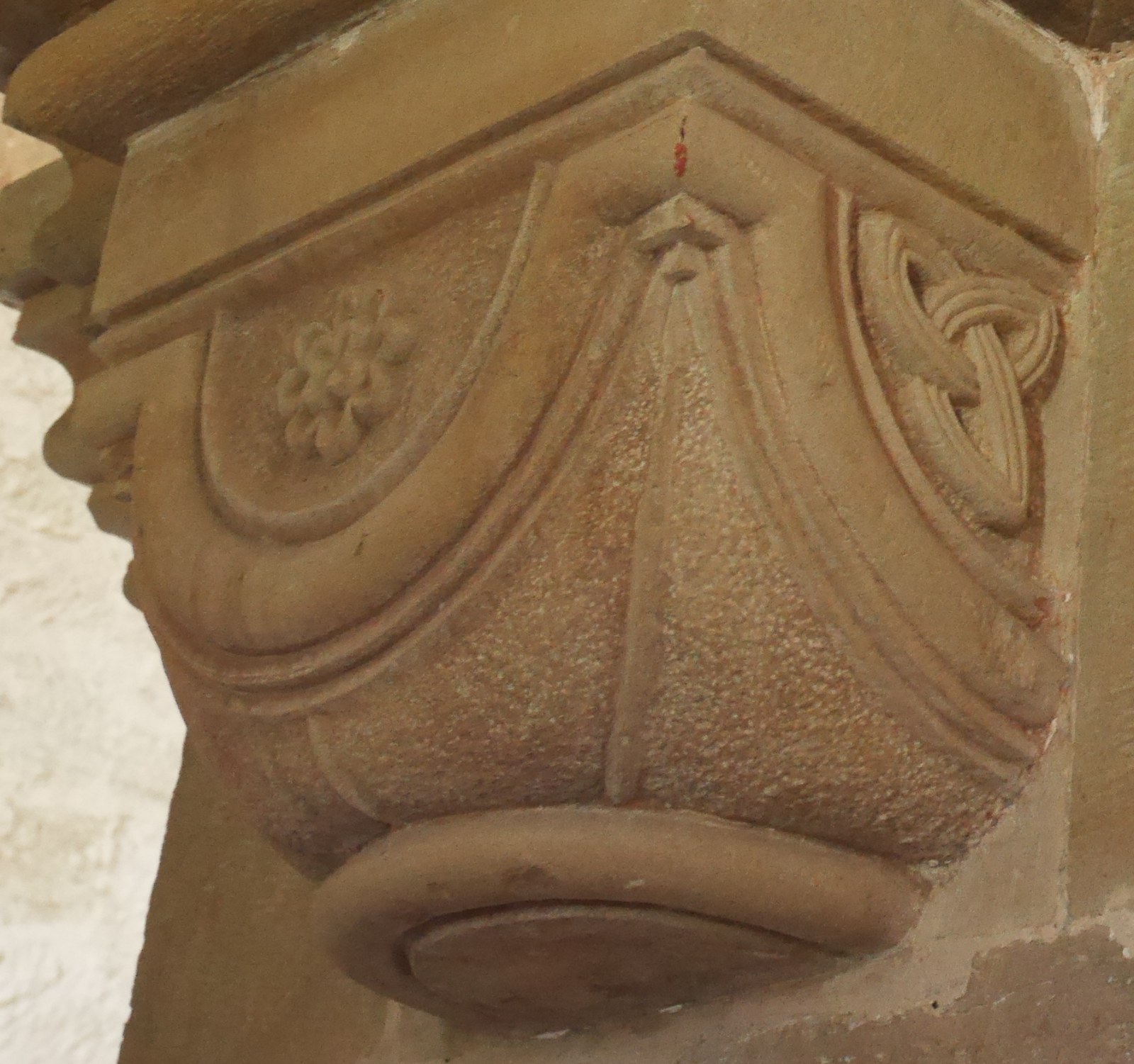
The triquetra is older than Christianity in Europe. Three-arc figures appear from about the 4th century BCE on decorated pottery from Anatolia and Persia and on early coins from Lycia, in what is now Turkey.
The interlaced knot form became common in Insular art, the art of early medieval Britain and Ireland, from about the 7th century. It appears in illuminated manuscripts like the Book of Kells, on Anglo-Saxon silver coins made around 710–760, on Christian high crosses and carved stone slabs, and on the stone frith stool, a sanctuary seat, at Hexham Abbey in England. The same shape turns up as far away as Japan, where it's known as Musubi Mitsugashiwa.
The name "trinity knot" is much newer. In the 1800s, the Celtic Revival brought old Irish and Scottish art back into fashion, and writers began reading the triquetra as a symbol of the Trinity. The antiquarian George Petrie described it that way in 1845, while the scholar J. Romilly Allen doubted that reading in 1905. Today the triquetra is a favorite in Irish jewelry, where it's often called the Irish trinity knot, and it appears on wedding and engagement rings.
Is the Triquetra Celtic, Christian, or Pagan?
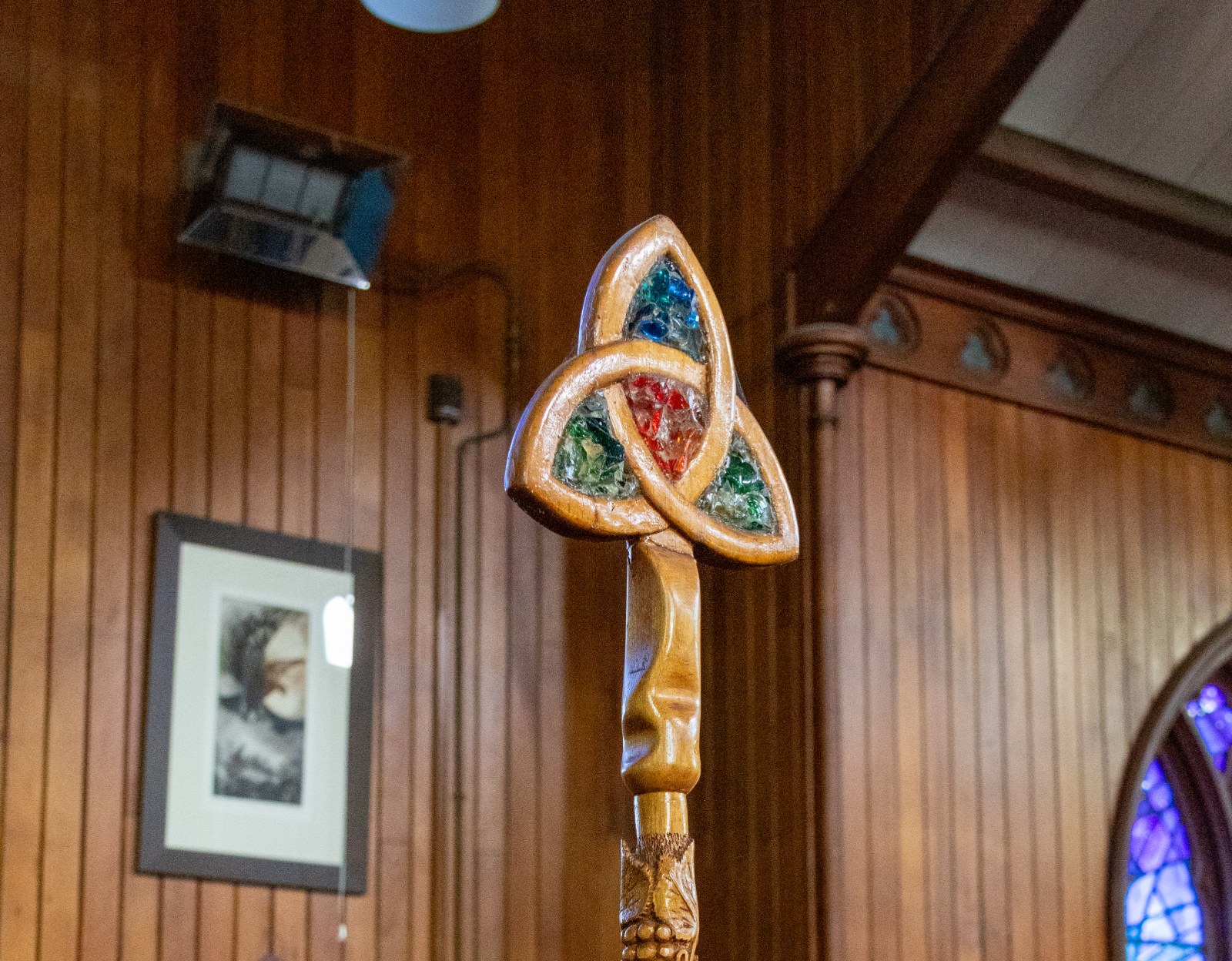
The triquetra is all three. The shape is older than Christianity, it was used by Christian artists in early medieval Britain and Ireland, and it was later read as the Trinity. Modern Pagans and witches use it too, and so do people who simply love Celtic design.
That's why the same symbol shows up on a church cross and on a Wiccan altar. If you're a Christian wondering whether you can wear one, the triquetra is regularly used in Catholic art as a Trinity symbol today. If you're wondering whether it's an occult symbol, it can be, depending on who is using it and why, but the shape itself belongs to no single faith.
The Triquetra in Witchcraft and Wicca
In witchcraft, the triquetra most often stands for the Triple Goddess: the maiden, mother, and crone who reflect the waxing, full, and waning moon. Many witches also use it for protection, since a line that loops back on itself without a break leaves no gap for harm to slip through.
It's the classic design for the cover of a Book of Shadows, and the TV series Charmed (1998–2006) helped make it famous by putting it on the Halliwell sisters' Book of Shadows as the symbol of their "Power of Three."
Here are some common ways practitioners work with the triquetra:
- Wearing it as a pendant or amulet for protection or to honor the Triple Goddess.
- Carving it into a candle before a spell that involves three people, three goals, or three phases of the moon.
- Drawing it over a door, on a jar lid, or on the first page of a journal as a protective mark.
- Placing it on the altar, on a cauldron, candle holder, or altar tile, as a focus for Triple Goddess work. Our guide to the witch's cauldron covers cauldrons with the triquetra cast into the side.
Triquetra vs. Triskelion vs. Valknut
These three-part symbols are easy to confuse. Here's how to tell them apart:
| Symbol | What it looks like | Where it comes from |
|---|---|---|
| Triquetra | Three pointed loops woven into one knot | Iron Age designs, then Insular Celtic and Anglo-Saxon art |
| Triskelion | Three spirals or three bent legs turning out from one center | Neolithic Ireland and Malta, Celtic art, and ancient Greece and Sicily |
| Valknut | Three interlocking triangles | Viking Age and earlier Germanic art, often linked to Odin |
The valknut is the one to know about if you're shopping for Norse designs. The ADL notes that some white supremacists have taken up the valknot as a racist symbol, while also stating that many non-racist Pagans use it, so context matters.
If the knot you're looking at has four loops instead of three, it's a witch's knot, which our witch's knot guide covers.
Triquetra Tattoos and Jewelry
The triquetra is one of the most popular Celtic tattoo and jewelry designs, because the meaning travels well: it can stand for a faith, a family of three, a marriage, or a spiritual path. Many people add a circle around it or work it into other knotwork.
If you'd like to wear or work with the symbol, we carry a Triquetra Symbol Amulet, a Triquetra Sterling Pendant, and a Moss Agate Triquetra Bracelet. For the altar or home, there's a Triquetra Cast Iron Chime Candle Holder and a Brass Triquetra Wind Chime. Our witch symbols guide covers 40 more symbols.
Triquetra FAQ
What does a triquetra symbol mean?
The triquetra stands for three things joined into one. Wiccans and many witches use it for the Triple Goddess, Celtic Pagans for land, sea, and sky, and Christians for the Holy Trinity.
Is the triquetra an occult symbol?
It can be, but it isn't only one. The shape is older than Christianity, it appears in early Christian art, and modern Pagans and witches use it too. Its meaning depends on who is using it.
Can Christians wear the triquetra?
Yes. Many Christians wear it as a symbol of the Holy Trinity, and it's regularly used in Catholic art today.
Is a triquetra the same as a trinity knot?
Yes. "Trinity knot" and "Celtic trinity knot" are other names for the triquetra. The name came into use in the 1800s, when the symbol was first widely read as the Trinity.
Is the triquetra Irish or Norse?
It's best known from the Insular art of Ireland and Britain, like the Book of Kells, and it also appears in Anglo-Saxon art. It isn't the same as the Norse valknut, though the two look alike and appear in some of the same settings.
Why is the triquetra on the Book of Shadows in Charmed?
In Charmed, the triquetra stood for the "Power of Three," the bond between the three Halliwell sisters. It was drawn on the cover of their Book of Shadows and shown in the opening credits.