Winter magic is spellwork that uses what the cold season offers: snow for cleansing and fresh starts, ice for stopping and holding things in place, frost for reading signs, and long nights for rest, reflection, and dreaming. It runs from the first hard frost to the first signs of spring, and its themes are stillness, preservation, protection, and patient change. You don't need anything rare to practice it. If it snows where you live, a jar and an open window give you a lot to work with.
What Is Winter Magic?
Winter magic is any practice that takes its materials and timing from winter itself. Where summer spells lean on growth and sunlight, winter spells lean on what the cold does well: it slows things down, it preserves, it covers the ground, and it clears the way for what comes next.
Most winter work falls into a few themes:
- Cleansing and fresh starts. Fresh snow covers everything in one even layer, so many practitioners use it to wipe the slate clean.
- Stopping and binding. Ice holds things still, which makes it the classic material for spells that stop gossip, harm, or a bad habit in its tracks.
- Preservation and protection. Evergreens stay green when everything else goes bare, so pine, cedar, juniper, and holly have long been hung over doors for protection.
- Rest and inner work. The long nights are suited to divination, dreamwork, journaling, and ancestor work.
- Slow release. A thaw happens drop by drop, so melting snow and ice suits spells for letting something go gently.
On the calendar, winter is often counted from the winter solstice around December 21 to the spring equinox in March. The old Gaelic calendar counted it from Samhain on November 1, and in Scottish and Irish lore that's the night the winter hag, the Cailleach, takes over the year. Either way, you can start whenever winter actually arrives where you live.
What Is a Winter Witch?
A winter witch is a practitioner whose craft follows the cold season and works with snow, ice, frost, evergreens, and the long dark. It isn't a formal tradition with its own lineage. It's a way of describing someone who feels most at home in their practice between the first frost and the thaw. It sits alongside the other kinds described in our guide to types of witches, and plenty of people blend it with green, hearth, or kitchen witchcraft.
Folklore has its own winter witches, too. In Italy, La Befana is an old woman on a broomstick who visits homes on the night of January 5 with sweets for good children and coal for naughty ones, and many say she sweeps the floor before she leaves, sweeping away the old year's troubles. In German folklore, Frau Holle makes the snow fall by shaking out her featherbed. You'll meet both of them again further down.
Snow Magic
Snow magic uses fresh snow, and the water it melts into, for cleansing, blessing, and fresh starts. Snow arrives clean, covers everything in one smooth layer, and then leaves on its own schedule. That makes it a natural fit for wiping the slate clean, for quiet protection, and for letting things go.
What Snow Is Used For in Spells
Snow is used most for cleansing, new beginnings, peace, and release. Here's how it shows up in practice:
- Cleansing: Many practitioners add snow water to a floor wash or use it to rinse tools and doorsteps.
- Fresh starts: Some people write a goal in fresh snow on the first snowfall of the year or on New Year's morning.
- Peace and quiet: A bowl of snow on the altar, left to melt during meditation, is a simple way to bring the hush of a snowfall indoors.
- Release: Snow melts away by itself, so it suits spells for letting go of a habit, a grudge, or a hard season.
- Protection: Snow covers and hides, so some practitioners bury a protection charm in a snowbank by the door and let the thaw carry it into the ground.
How to Make Snow Water
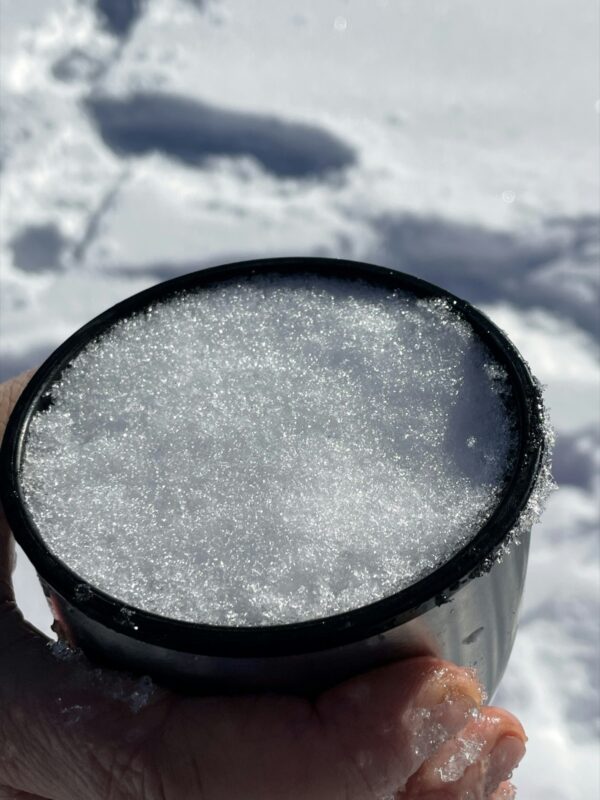
Snow water is melted fresh snow collected for spellwork, much like moon water. You gather clean snow in a glass jar, let it melt indoors, strain it, preserve it with alcohol or vegetable glycerin, and label it with the date and the kind of snow it came from.
- Choose a spot where the snow is untouched, away from roads, rooftops, gutters, trees that drop debris, and anywhere animals walk.
- Skim the top few inches of fresh snow into a clean glass jar or bowl with a wooden or glass scoop. Leave the bottom layer, which picks up dirt from the ground.
- Say your intention as you gather it, such as cleansing, peace, or a fresh start.
- Bring the jar inside and let the snow melt at room temperature. A full jar of snow melts down to a small amount of water, so gather more than you think you need.
- Strain the water through a coffee filter or a clean cloth to remove grit.
- Label the jar with the date and anything special about the snow, such as "first snow," "solstice snow," or "full moon snow."
- Preserve the water so it stays fresh, the same way herbalists preserve tinctures. Mix it with an equal amount of 80-proof vodka, which brings the jar to about 20 percent alcohol. If you'd rather avoid alcohol, use 3 parts vegetable glycerin to 1 part snow water instead.
- Cap the jar tightly, add "preserved with vodka" or "preserved with glycerin" to the label, and store it somewhere cool and dark. If it ever turns cloudy or smells off, pour it out at the base of a tree and make a fresh batch.
What to do with snow water: add a splash to a floor wash or a spiritual bath, use it to anoint doorways and windowsills, rinse altar tools, or sprinkle a circle of it around a candle holder for a fresh-start spell. The vodka version suits floor washes and anointing best, because glycerin can leave a slippery film. If you'd like to give your houseplants a winter blessing, use a little fresh snow water before you preserve it, since alcohol and glycerin aren't good for plants.
Snow water is for spellwork, not for drinking. Snow collects dust, soot, and whatever is in the air as it falls, so even clean-looking snow isn't safe to drink without treatment, and preserving it doesn't change that. Keep preserved jars away from children and pets, and let any water with vodka in it dry before you light a candle near it. Keep it away from water-sensitive stones, too: selenite is a soft form of gypsum, and water dulls and dissolves it.
First Snow Traditions
The first snow of the year is the snow many practitioners save for their most important snow water of the season, since it marks the true start of winter where you live.
If you keep a magical journal, the first snow is a good moment to write down what you want the winter to hold. Gather a jar of first snow water, label it, and keep a little of it back for spring. That way, the season's first fresh start is still on your shelf when you're ready for the next one.
A Simple Snow Spell for Letting Go
This snow spell uses melting snow to release something you're ready to put down. It works best on a day when the snow is fresh and a thaw is on the way.
You'll need: fresh snow, a stick or your finger, and a few quiet minutes outside. A white candle is optional if you'd like to finish the spell indoors.
- Find a patch of untouched snow where the sun will reach it.
- Write one word in the snow that names what you're letting go, such as a habit, a worry, or a name for a hard season. Keep it to one word or a simple symbol.
- Stand over it and say these words:
Snow that settles, snow that goes,
take this weight where the meltwater flows.
When the sun comes up and the drifts grow thin,
I let it go and I let the new in.
- Walk away without looking back, and let the sun and the thaw do the rest.
- If you like, light a white candle when you get inside and let it burn for a few minutes while you warm up.
If you can't get outside, write the word on a slip of paper, set it in a bowl of snow, and recite the same words. Once the snow has melted, pour the water out at the base of a tree.
Snow Day Superstitions
Snow day superstitions are the little rituals kids do the night before a storm to try to make school close for snow. The best known are sleeping with a spoon under your pillow, wearing your pajamas inside out, and flushing ice cubes down the toilet. They're strongest on the East Coast and in Canada. A Connecticut teacher told NPR in 2008 that the routine seemed to be followed all over the East Coast, and the USC Digital Folklore Archives have collected the same rituals from students who learned them as kids. Nobody knows exactly where they started.
These are the ones that come up again and again:
- A spoon under your pillow. This is the most widely reported ritual, and some families use a whole handful of spoons.
- Pajamas inside out. Some kids wear them backward too, which is meant to turn the next day upside down.
- Ice cubes down the toilet. Some kids flush one cube for every inch of snow they're hoping for.
- A white crayon in the freezer. Some kids put it on a windowsill instead, so the white crayon can turn the ground outside white, according to Mental Floss.
Kids often talk each other into doing them, on the theory that the more people who do the ritual, the better the odds. The USC archive also notes that the magic tends to fade once kids start following weather forecasts, though plenty of grown-ups still slip a spoon under the pillow for old times' sake.
Every one of these is a small piece of sympathetic magic, the idea that like attracts like. Cold things, white things, and things turned the "wrong" way are meant to bring cold, white, upside-down weather. It's the same principle behind a lot of grown-up folk magic, which is a nice thing to point out to a kid who's flushing ice cubes on a school night.
Ice Magic
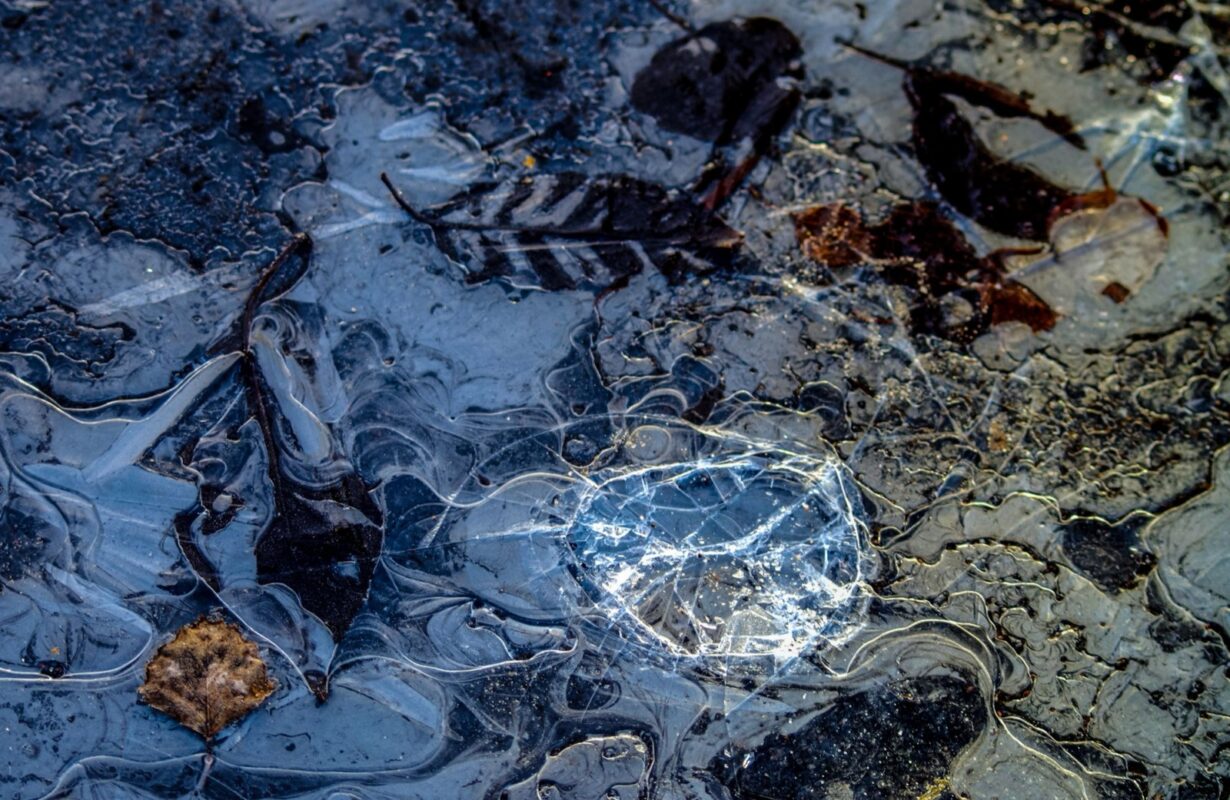
Ice magic uses frozen water to stop, hold, or preserve something, and the thaw to release it slowly. Water is the element of feeling and flow. When it freezes, it stops moving, so ice is the natural material for spells that halt gossip, freeze a situation in place, or hold a wish safe until it's ready.
The Isa rune, a single straight line whose name means "ice," carries the same meaning in the Elder Futhark: stillness, a pause, and things held in place. Many practitioners carve Isa onto a candle or draw it on paper for ice spells.
How Freezer Spells Work
A freezer spell is the best-known kind of ice magic. You write a name or a situation on paper, cover it with water in a container, and freeze it to stop that person's harmful behavior or to hold the situation still. Most people use freezer spells to stop gossip, harassment, or meddling.
The ethical way to cast one is to freeze the harm, not the person's whole life. Write the behavior you want stopped ("her gossip about me," "the calls"), not just a name. These words keep the focus there:
Cold and still, cold and slow,
the harm you do can no longer grow.
Locked in ice, held fast and tight,
it stops right here, by day and by night.
To end a freezer spell, take the container out, let it thaw, and pour the water away from your home, ideally into running water or at a crossroads. Our full freezer spell guide covers each step, the ethics, and which jars are safe in the freezer.
Icicle Meaning
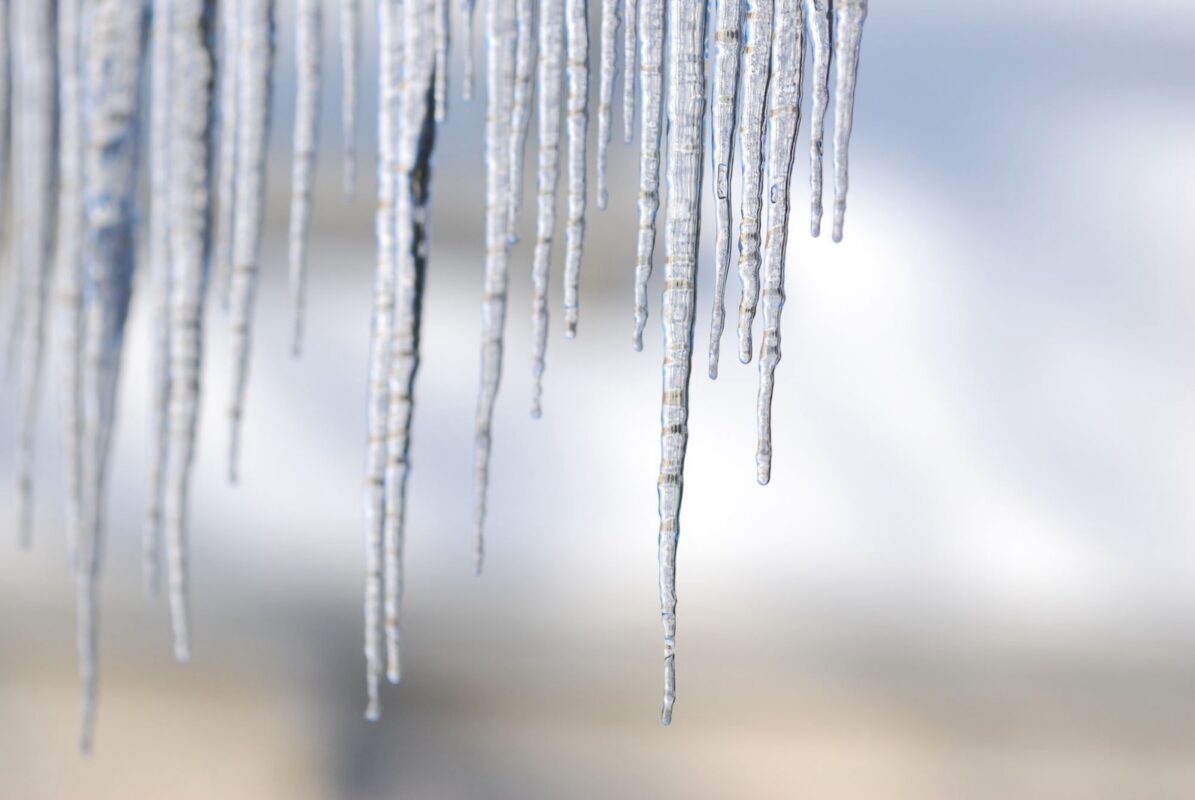
Icicles stand for patience and slow, steady change, because they grow one drop at a time and melt the same way. They don't have a large folklore of their own. In modern practice, they're used as temporary wands for ice and water work. When the spell is over, the wand turns back into water, and there's nothing left to cleanse or store.
Pick small icicles you can reach easily, and never stand under or knock down large ones hanging from a roof.
If you'd like a lasting icicle for your altar, our selenite iceberg point is a stepped, frosty-white tower that won't melt. Just keep it dry.
Frost Magic and Jack Frost
Frost magic works with the first hard frost as a turning point and with frost patterns as a surface for divination. In English folklore, Jack Frost is the spirit who paints the fern-like patterns on cold windows and nips at fingers and toes.
The first frost marks the end of the growing season. Many gardeners and green witches harvest their last tender herbs the day before it's forecast, and some save a sprig as a thank-you offering to the garden.
You can also read the shapes in window frost the way you'd read tea leaves. Our guide to frost reading explains where the idea comes from, how to set your question by a window or a piece of glass overnight, and how to read the frost in the morning.
Winter Spirits and Goddesses
The best-known winter goddesses and spirits come from European folklore: the Cailleach in Scotland and Ireland, Frau Holle and Perchta in German-speaking lands, La Befana in Italy, Skaði in Norse myth, and Morana in Slavic tradition. Each one shows a different side of the season.
- The Cailleach is the divine hag of Gaelic myth who brings storms and winter, and in Scotland she's known as Beira, Queen of Winter. Legend says she gathers her firewood on Imbolc, February 1. If that day is bright and sunny, she's collecting plenty because she plans a long winter. If it's stormy, she's asleep, and spring is close. Our Imbolc correspondences pick up the story from there.
- Frau Holle, also called Mother Hulda, is a German winter figure who oversees spinning and the home. When she shakes out her featherbed, it snows on the world below. In Hesse, people still say "Hulda is making her bed" when snow falls.
- Perchta is said to roam the Alpine countryside during the twelve nights between Christmas and Epiphany, checking that homes are tidy and spinning is done. Masked Perchten processions still run through Austrian villages every winter.
- La Befana flies over Italy on her broom on the night of January 5. In some tellings she sweeps the floor of each house she visits, sweeping away the year's problems, so a good sweep with a besom on January 5 makes a nice cleansing ritual of its own.
- Skaði is the Norse giantess and goddess of winter, mountains, skiing, and bowhunting.
- Morana is the Slavic figure of winter and death. At the end of winter, people in parts of Central and Eastern Europe still carry a straw effigy of her to a river, sometimes setting it on fire first, and throw it into the water to send winter away.
If you'd like to honor one of them, simple offerings suit the season: a candle in the window, bread, a sprig of evergreen, or a clean, swept home.
Winter Correspondences
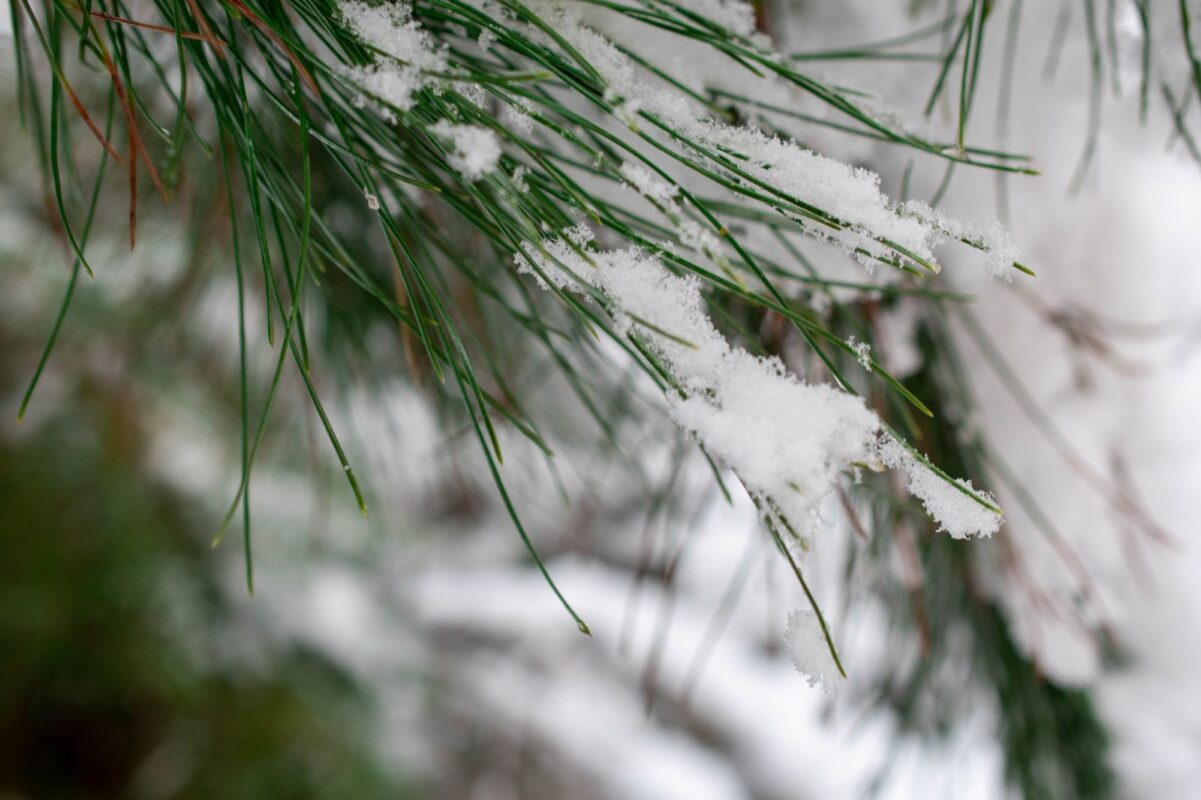
Winter's colors, crystals, herbs, and symbols all reflect the season: white and silver for snow and ice, deep green for evergreens, and red for the warmth of the hearth. Use whatever you have on hand.
- Colors: White stands for snow, cleansing, and new beginnings, and silver and pale blue stand for ice, the moon, and stillness. Deep green brings in the evergreens, and red stands for the hearth's warmth.
- Crystals: Snowflake obsidian is black volcanic glass flecked with white, like snow falling at night, and it's the classic winter grounding stone. Clear quartz looks like ice and amplifies any spell, and selenite and moonstone carry the white glow of a snowy night. Garnet brings warmth and steady energy to the darkest weeks.
- Herbs and woods: Pine, cedar, juniper, and holly are the evergreens of protection and endurance, and white pine bark is easy to add to sachets and incense blends. Rosemary and bay stay green through the cold, while cinnamon and cloves bring warmth and prosperity.
- Resins: Frankincense is the classic winter resin for blessing, protection, and the return of the light.
- Rune: Isa is the ice rune, used for stillness, pauses, and holding things in place.
- Animals: The wolf gives the January full moon its name, and the owl, the deer, and the cardinal are all common winter symbols.
- Moons: The Cold Moon, the Wolf Moon, and the Snow Moon are the three full moons of winter.
The Winter Solstice
The winter solstice is the longest night of the year and the turning point of winter, when the days start growing longer again. In 2026, it falls on Monday, December 21, at 3:50 PM Eastern Time. Pagans and many witches celebrate it as Yule, the return of the sun.
We have a whole set of solstice guides. Start with what Yule is, then the Yule correspondences, how to decorate a solstice altar, winter solstice traditions, choosing your Yule log wood, and the Yule milk bath ritual. Our Yule shop collects the candles, resins, and evergreen herbs for the season.
A simple solstice practice is to keep one candle burning through the longest night, or for as long as you can safely watch it, and to greet the sunrise the next morning.
The Winter Full Moons
The three full moons of winter are the Cold Moon in December, the Wolf Moon in January, and the Snow Moon in February. This season, all three are supermoons:
- The Cold Moon is full on Wednesday, December 23, 2026, at 8:28 PM Eastern Time, two nights after the solstice.
- The Wolf Moon is full on Friday, January 22, 2027, at 7:17 AM Eastern Time.
- The Snow Moon is full on Saturday, February 20, 2027, at 6:23 PM Eastern Time.
A full moon over snow is one of the brightest nights of the year, and it makes the best night to gather snow water. Our guide to full moon names explains where each name comes from, and the full moon ritual works in any season.
Simple Ways to Practice Winter Magic
The easiest way to start practicing winter magic is to pick one small thing to do each week and let the season guide the rest. Here are some ideas:
- Hang a sprig of pine, cedar, or juniper over your front door for protection, and replace it when it turns brown.
- Light a white candle in a window on the longest night, and keep an eye on it while it burns.
- Gather snow water from the first snowfall and save a little of it for spring.
- Try a frost reading on a cold morning, and write down what you see.
- Put out seed and suet for the birds as a winter offering.
- Keep a dream journal by the bed, since the long nights leave plenty of time for dreaming.
- Burn frankincense or a cedar candle on dark afternoons, and let the house fill with the scent.
- Treat rest as part of your practice. Winter is the season the land rests, too.
Winter Magic Safety
Most winter magic is gentle, but cold, fire, and snow come with a few real risks. Keep these in mind:
- Don't drink snow water. It's for spellwork only, since snow picks up pollutants from the air.
- Treat preserved water like any alcohol. Store vodka-preserved snow water out of reach of children and pets, and keep it away from open flames until it dries.
- Keep candles away from evergreens. Dried boughs, wreaths, and cut trees catch fire easily, so give every flame plenty of clear space, and never leave a candle burning unattended.
- Watch out for icicles. Never stand under large icicles or knock them down from a roof.
- Dress for the weather. Spells done outside in the cold should be short, and gloves are fine to wear.
- Keep water away from soft stones. Selenite, halite, and other soft or water-soluble stones should stay away from snow water and ice.
- Mind your pets. Holly berries and mistletoe are toxic to pets, so keep them out of reach.
Winter Magic FAQ
What is winter magic?
Winter magic is spellwork that takes its materials and timing from the cold season. It uses snow for cleansing and fresh starts, ice for stopping and holding things in place, frost for divination, evergreens for protection, and the long nights for rest, dreamwork, and reflection.
What is a winter witch?
A winter witch is a practitioner whose craft follows the cold season and works with snow, ice, frost, evergreens, and the long dark. It isn't a formal tradition, and many people blend it with green, hearth, or kitchen witchcraft.
What can you do with snow water?
You can add snow water to a floor wash or spiritual bath, use it to anoint doorways and windowsills, rinse altar tools, or sprinkle it around a candle holder in a fresh-start spell. Preserve it with an equal amount of 80-proof vodka, or 3 parts vegetable glycerin to 1 part water, and label each jar with the date and the kind of snow, such as first snow or full moon snow.
Can you drink snow water?
No, you shouldn't drink snow water you've collected for spellwork. Snow picks up dust, soot, and pollutants from the air as it falls, so even snow that looks clean isn't safe to drink without treatment.
What are snow day superstitions?
Snow day superstitions are rituals kids do the night before a storm to try to make school close for snow. The most common are sleeping with a spoon under your pillow, wearing your pajamas inside out, and flushing ice cubes down the toilet, and some kids also put a white crayon in the freezer. They're most popular on the East Coast and in Canada.
What is ice magic used for?
Ice magic is used to stop, hold, or preserve something. Freezing is used in spells to halt gossip, harm, or a bad habit, and a slow thaw is used to release something gently. The best-known ice spell is the freezer spell.
What does an icicle symbolize?
An icicle symbolizes patience and slow, steady change, because it grows one drop at a time and melts the same way. In modern practice, a small icicle can be used as a temporary wand for ice and water spells, since it turns back into water when the work is done.
Who is the goddess of winter?
The best-known winter goddess is the Cailleach, the divine hag of Scottish and Irish myth, who brings storms and rules the year from Samhain until spring. Other winter figures include Frau Holle, who makes it snow by shaking her featherbed, Perchta, La Befana, the Norse Skaði, and the Slavic Morana.
When does winter magic start?
Winter magic can start whenever winter arrives where you live, often with the first hard frost. Many practitioners mark the season from Samhain on November 1, following the old Gaelic calendar, or from the winter solstice around December 21.
Winter asks you to slow down, and the magic of the season is in that slowness: snow that settles overnight, ice that forms one degree at a time, a candle kept burning through the longest night. Let the cold do some of the work, and see what's waiting for you at the thaw.