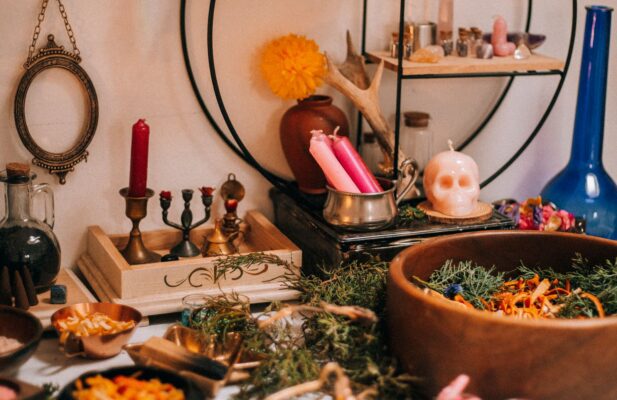
Winter solstice traditions celebrate the longest night of the year and the return of the sun, with fire, evergreens, feasting, and wishes for the year ahead. Some of these customs are centuries old, and some are new rituals you can do at home this Yule. Below are eight of the oldest Yule traditions, six winter solstice rituals to try, and ideas for celebrating with family and friends.
When Is the Winter Solstice in 2026?
The winter solstice is on Monday, December 21, 2026, at 3:50 PM Eastern Time, and you can see the sky at that moment. That night is the longest of the year in the Northern Hemisphere, and most solstice and Yule celebrations happen on the evening of the 21st or at sunrise the next morning. In the Southern Hemisphere, the winter solstice falls in June. For the history of the holiday itself, see our guide to what Yule is.
8 Old Yule and Winter Solstice Traditions
These are the winter solstice traditions with the longest history behind them. Each one comes from a real place and time, and each one is easy to bring into your own celebration.
1. Burning the Yule Log
The Yule log is a large log burned on the hearth to light the darkest nights of winter. The oldest solid record of the custom is a Christmas Eve log from 1184, and in England a piece of the log was burned each evening until Twelfth Night, January 6.
The folklore around the log is the best part. People counted its sparks to see their fortunes for the new year, and they kept a piece of it under the bed for luck and to guard the house from lightning and fire. In one Yorkshire custom, every other light in the house went out while the Yule log burned. The youngest person present lit the candles from the log, and everyone made a silent wish and kept it secret.
Our guide to choosing Yule log wood explains which wood suits which intention.
2. Bringing in the Evergreens
Bringing evergreens indoors is one of the oldest winter solstice traditions, because pine, fir, holly, and ivy stay green when everything else is bare. In Scandinavia, people decorated the house and barn with evergreens at the New Year to keep the devil away, and set up a tree outside for the birds. Some folklorists see the decorated holiday tree as a later form of this older "Yule tree."
A few branches on the mantel, a wreath on the door, or a bundle of pine on your Yule altar keeps the custom alive. A tree hung with seed and suet for the birds is a lovely one to bring back.
3. Hanging Mistletoe
Mistletoe has been sacred in winter for about two thousand years. The Roman writer Pliny the Elder described druids cutting mistletoe from an oak in a ritual, and the plant stayed tied to fertility and life through the Middle Ages, since it stays green and bears white berries in the dead of winter. Kissing under the mistletoe came much later; it was a popular custom among servants in 18th-century England before it became part of Christmas.
Mistletoe berries are poisonous to people and pets, so hang it high and sweep up any fallen berries.
4. Feasting, Toasts, and Oaths
Feasting is the heart of Yule, and the Norse took it seriously. An Old Norse poem from around 900 CE praises a king who "drinks Yule," and the sagas describe Yule-Eve oaths, solemn vows sworn over a toast for the year to come. Even after Norway became Christian, its early laws required households to brew ale for Yule and hallow it "for prosperity and peace."
You can keep this one easily: share a big meal on the solstice, raise a glass, and each say one promise you'll keep in the new year. It's the ancestor of the New Year's resolution, with better company. Traditional winter solstice foods include roasted meats, nuts, apples, oranges, and anything spiced with cinnamon, clove, and nutmeg.
5. The Yule Goat
The Yule goat is a straw goat that's been a Scandinavian Yule symbol for centuries. One popular theory ties it to the Norse god Thor, whose chariot was pulled by two goats. Another ties it to the harvest: the last sheaf of grain cut in autumn was believed to hold the spirit of the harvest, so it was saved for Yule and called the Yule goat.
A small straw goat tied with red ribbon is a classic Yule decoration, and it makes a nice harvest-to-solstice link if you saved a bundle of grain or straw from autumn. For another decoration to make by hand, see our salt dough ornaments.
6. Guising and Wassailing Door to Door
Going door to door in costume or with a song is an old midwinter custom across northern Europe. In Scandinavian julebukking, masked visitors go house to house between Christmas and New Year's Day, and their neighbors try to guess who's under the disguise before offering treats. In England, wassailers carried a bowl of spiced drink from door to door on Twelfth Night and sang for gifts, and in cider country they wassailed the apple trees to bless the next year's crop.
7. Watching the Solstice Sun
People have been watching the winter solstice sun for more than five thousand years. At Newgrange in Ireland, a passage tomb older than the pyramids, the rising sun on the winter solstice shines through a small "roofbox" over the entrance and floods the inner chamber with light. Stonehenge in England is aligned with the sunset on the winter solstice.
You don't need a monument to keep this tradition. Watching the sun set on the solstice, or rise the morning after, is one of the simplest and most moving ways to mark the day.
8. The Twelve Nights
In German-speaking Europe, the nights around midwinter are the Rauhnächte, a stretch of three to twelve nights when the spirit world was said to stand open and the Wild Hunt rode. They usually run from December 25 to January 6, and one of the four most important is Thomas Night, December 20 to 21, the longest night of the year.
People smoked their homes and stables with frankincense during these nights, a custom recorded as early as 1520, and read each night's weather as a forecast for one month of the coming year. It was also a favorite time for divination. To smoke your own home, burn frankincense resin tears on charcoal, or light frankincense incense sticks if you'd rather skip the charcoal, and carry the smoke through each room.
6 Winter Solstice Rituals to Try at Home
These winter solstice rituals are simple enough to do on your own and meaningful enough to share with a group. Pick one, or string several together across the longest night.
A Longest-Night Candle Ritual
A longest-night candle ritual welcomes the sun back by sitting in the dark and then bringing in the light. It takes about 20 minutes, and you'll need one candle, a lighter or matches, and a quiet room. A beeswax candle like this winter solstice altar candle is a lovely choice, but any gold, white, or red candle works.
- On the night of the solstice, set your candle on a heatproof dish where you can sit comfortably in front of it.
- Turn off every light in the room, and in the rest of the house if you can.
- Sit in the dark for a few minutes. Let your eyes adjust and notice how long and deep the night feels.
- Think back over the year. Name, out loud or silently, what you're ready to leave in the dark.
- Light the candle and say: "Longest night, I bid farewell; return, O sun, and all be well."
- Sit with the flame and name what you'd like to grow as the days get longer.
- Let the candle burn as long as you can stay with it, and snuff it out when you leave the room.
- If you can, relight the candle at sunrise the next morning to greet the returning sun.
If you would like a candle to light every evening on the way to the solstice, our winter solstice affirmations calendar adds one candle and one affirmation a night from December 1 to 21.
The 13 Wishes Ritual
The 13 Wishes ritual is a modern winter solstice ritual for the year ahead, built on the old twelve nights. You write 13 wishes, burn one each night for twelve nights, and the one left over is yours to make come true yourself. The old Rauhnächte customs are well documented, but the 13 wishes practice is new and spread mostly online, so think of it as a modern custom rather than an ancient one.
- Write 13 wishes for the coming year on 13 small slips of paper, one wish per slip, phrased as if they've already happened.
- Fold each slip the same way so you can't tell them apart, and keep them in a bowl or envelope.
- Each night for twelve nights, draw one slip without reading it and burn it in a fireproof dish, trusting the wish to the universe. Most people begin on December 25 and end on January 5; if you'd like to begin with the solstice, start on December 21 and end on January 1.
- On the last night, open the 13th slip. That wish is the one you'll work on yourself in the new year.
A Solstice Sunrise Ritual
A solstice sunrise ritual greets the first sunrise after the longest night. Check your local sunrise time, dress warmly, and find a spot with an eastern view. As the sun comes up, greet it out loud, ring a bell, or simply watch in silence. Many people bring a warm drink and toast the sun's return.
A Yule Log Intention Ritual
A Yule log intention ritual turns the log into a wish for the season ahead. Choose your wood by intention, then decorate the log with evergreen sprigs, dried orange slices, cinnamon sticks, and a ribbon in a color that matches your wish. Burn it in a fireplace or firepit on the solstice, or set three candles into a log on the table if you don't have a fire. Save a small piece of wood or a pinch of the cooled ash to start next year's fire.
A Release-and-Renew Journal
A release-and-renew journal is a quiet ritual for the longest night. Make two lists: what the dark half of the year taught you and what you're ready to release, and what you'd like to grow with the light. Burn the first list safely in a fireproof dish and keep the second on your altar until the spring equinox.
A Winter Nature Walk With Offerings
A winter nature walk honors the stillness of the shortest day. Walk slowly, notice what's still green, and listen to how quiet the woods are in December. If you'd like to leave an offering, choose something wildlife-safe like plain birdseed, unsalted nuts, or apple slices, and skip bread, which isn't good for birds.
Winter Solstice Celebration Ideas for Family and Friends
The best winter solstice celebrations mix a little ritual with a lot of warmth. Here are some ideas for a solstice party or a family night at home:
- Have a candlelit dinner. Eat by candlelight only, then turn the lights back on together at the end of the meal to welcome the sun back.
- Tell the story of the Holly King and the Oak King. In this modern Pagan story, the Oak King wins back the throne on the winter solstice, and the days begin to grow longer. Kids love acting it out with crowns of holly and oak leaves.
- Make sun crafts. Dried orange slices, gold paper suns, and pinecones rolled in birdseed are easy solstice activities for kids.
- Bake sun-shaped cookies or bread. Round, golden foods are a natural fit for a festival of the sun.
- Go on a lantern walk. Walk the neighborhood after dark with lanterns or flashlights to carry light through the longest night.
- Exchange small handmade gifts. A jar of spiced nuts, a beeswax candle, or a handwritten blessing fits the season.
- Stay up for the sunrise. Older kids and adults can make a sleepover of the longest night and greet the sun together in the morning.
For the colors, herbs, crystals, and foods that suit these celebrations, see our Yule correspondences, and for a warm ritual bath before the festivities, try our Yule spiritual bath.
Frequently Asked Questions About Winter Solstice Traditions
What Are Some Winter Solstice Traditions?
Some of the best-known winter solstice traditions are burning a Yule log, bringing evergreens indoors, hanging mistletoe, feasting and toasting the new year, watching the solstice sunrise or sunset, and smoking the house with frankincense during the twelve nights.
What Are Pagan Yule Traditions?
Pagan Yule traditions include the Yule log, evergreen decorations, the Yule goat, feasts with toasts and oaths, and rituals that welcome back the sun. Many modern Pagans also tell the story of the Holly King and the Oak King at Yule.
How Do You Celebrate the Winter Solstice at Home?
You can celebrate the winter solstice at home by turning off the lights and lighting a single candle on the longest night, sharing a candlelit meal, decorating with evergreens, and getting up to watch the sunrise the next morning.
What Is the 13 Wishes Ritual?
The 13 Wishes ritual is a modern winter solstice ritual. You write 13 wishes on slips of paper, burn one each night for twelve nights without reading it, and the 13th wish is the one you work toward yourself in the new year.
When Do You Start the 13 Wishes Ritual?
Most people start the 13 Wishes ritual on December 25 and finish on January 5, following the old twelve nights. Some start on the winter solstice, December 21, and finish on January 1.
What Is the Oldest Winter Solstice Tradition?
Watching the solstice sun may be the oldest winter solstice tradition. Newgrange in Ireland, built around 3100 BCE, was designed so the winter solstice sunrise lights up its inner chamber.
What Do You Eat on the Winter Solstice?
Traditional winter solstice foods include roasted meats, nuts, apples, oranges, spiced breads and cakes, and warm spiced drinks. Round, golden foods are popular because they look like the sun.