The birch tree stands for new beginnings, purification, renewal, and protection. It's one of the first trees to grow back after a forest fire or clearing, which is why the Celts saw it as a symbol of growth, renewal, and adaptability, and why the first letter of the Irish ogham alphabet, beith, means birch. With its bright white bark, the birch is also tied to light, purity, and the feminine: it's the national tree of Finland and Russia, a symbol of love and marriage in Russian folk songs, and the namesake of the Berkano rune.
What Is a Birch Tree?
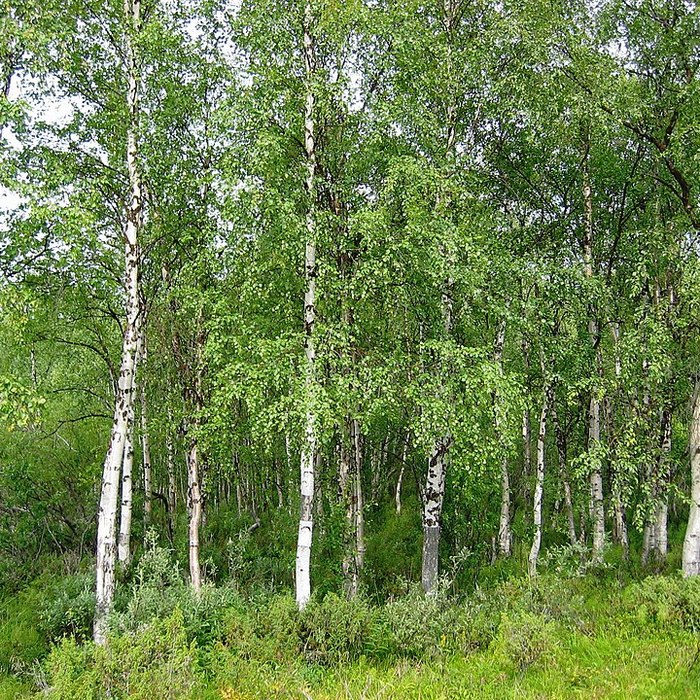
Birches are slender, fast-growing deciduous trees in the genus Betula, in the same family as alders, hazels, and hornbeams (Wikipedia). There are about 30 to 60 kinds, found across the Northern Hemisphere, especially in cool northern forests. Birches are pioneer trees: they're often the first to move into open or burned land, and they tend to live shorter lives than oaks or maples.
The word birch has deep roots. It comes from an ancient Indo-European word meaning "to shine" or "whiten," named for the tree's white bark, and the same root gave the Berkano rune its name.
How to Identify a Birch Tree
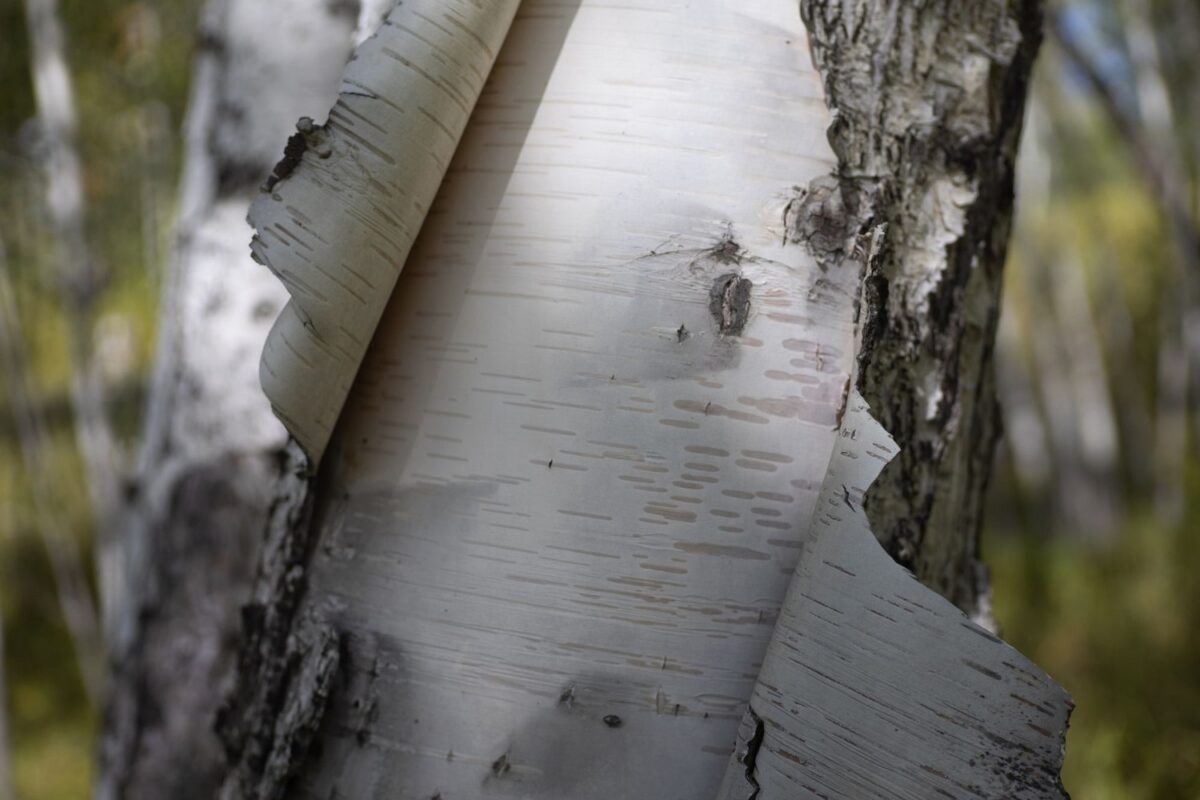
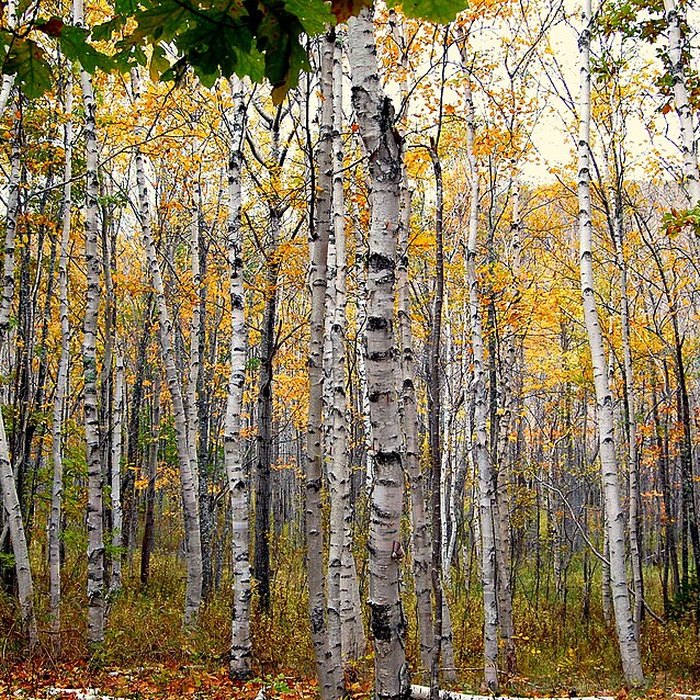
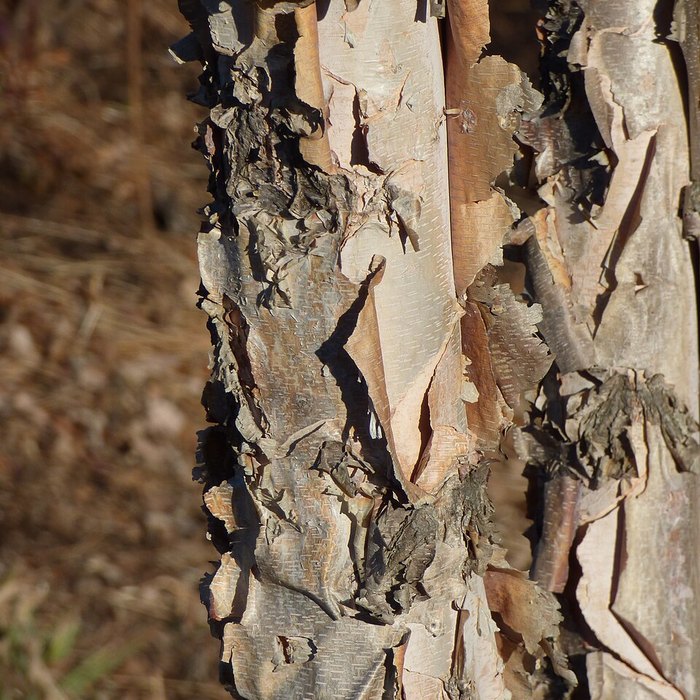
- Bark: smooth, often white, silver, or cream, with dark horizontal lines called lenticels. On many birches, the bark peels in thin, papery strips.
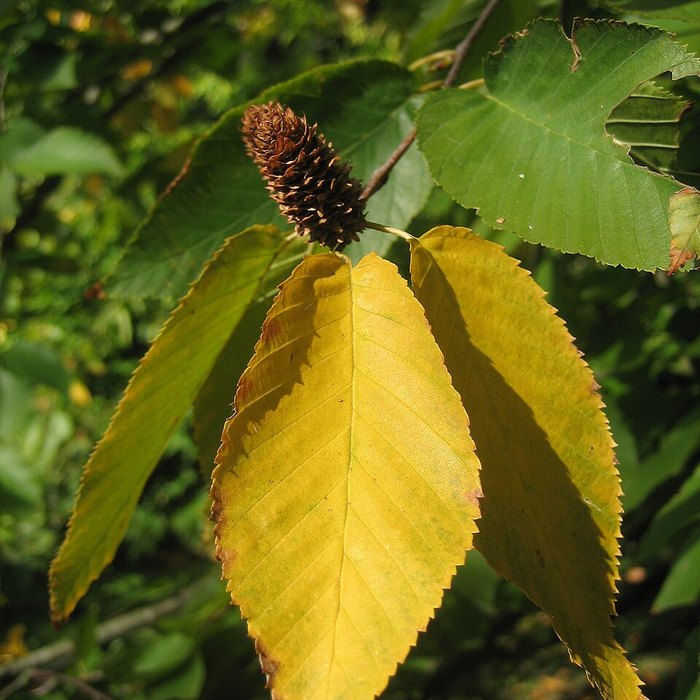
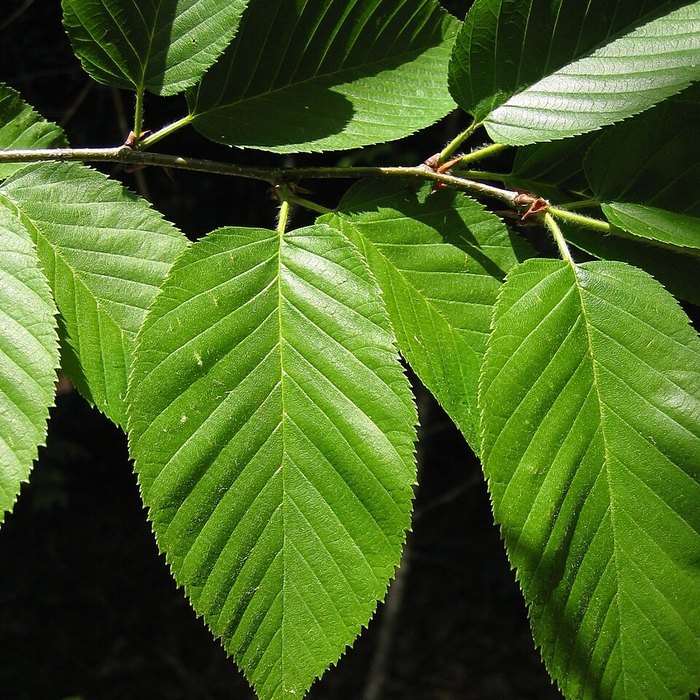
- Leaves: small, oval to triangular, with toothed edges and a pointed tip. They turn yellow in autumn.
- Flowers: drooping catkins in spring, with male and female catkins on the same tree.
- Shape: slim trunks, often growing in clumps, with light, airy branches.
Several other trees have white bark and get mistaken for birch, especially quaking aspen and sycamore. Aspen bark is smoother and doesn't peel in papery sheets, and sycamore bark flakes off in patches of white, tan, and green.
Types of Birch Trees
- Silver birch (Betula pendula): Europe's classic birch, with white bark, black diamond-shaped marks near the base, and gracefully drooping branches. It's Finland's national tree (Wikipedia).
- Paper birch or white birch (Betula papyrifera): North America's white birch, named for its thin bark that peels in paper-like layers. It's also called canoe birch (Wikipedia).
- River birch (Betula nigra): a birch of riverbanks, floodplains, and swamps in the eastern United States, with shaggy, peeling bark in shades of salmon, tan, and gray. It's one of the few birches that handles hot summers well (Wikipedia).
- Sweet or black birch (Betula lenta): an eastern North American birch with dark bark. Its scraped twigs smell strongly of wintergreen (Wikipedia).
- Yellow birch (Betula alleghaniensis): a birch with golden, shiny bark, and the official tree of Quebec.
What Does a Birch Tree Mean Spiritually?
The birch stands for new beginnings, renewal, and purification. Here's how many practitioners read it:
- New beginnings. As the first tree to return after fire or clearing, and the first letter of the ogham alphabet, birch is the tree of fresh starts.
- Renewal and resilience. In Celtic cultures, the birch symbolizes growth, renewal, stability, initiation, and adaptability, because it thrives in harsh conditions (Wikipedia).
- Purification. Its bright white bark makes birch a natural symbol of cleansing, and birch twigs are the classic material for sweeping brooms.
- Love and the feminine. In Russia, the birch represents grace, tenderness, and natural beauty, and it's tied to love and marriage in many folk songs.
- Protection. Birch boughs and twigs are traditionally used to drive away harm and clear a space.
- The threshold between worlds. In Gaelic folklore, birches are linked to Tír na nÓg and the fairy folk, and they often appear in Scottish, Irish, and English ballads about death, fairies, and the dead returning.
Birch Folklore Around the World
- Celtic lands: The first letter of the ogham alphabet is beith, birch. Irish legend says the first ogham message ever written was cut into birch, a warning from the god Ogma to Lugh (Wikipedia).
- Finland: The silver birch is the national tree. Bundles of fresh, leafy birch twigs called vihta or vasta are used to gently beat the skin in the sauna.
- Russia: The birch is the national tree and appears in countless folk songs, where it stands for love, marriage, grace, and the beauty of Russian women.
- Central and Eastern Europe and Siberia: Birch branches decorate churches and homes for the feast of Pentecost.
- Albania: Silver birch leaves are used in the festival of St. George in Novosej and nearby villages.
- Sweden: After a fire nearly destroyed the city of Umeå in 1888, the city lined wide new avenues with silver birches, which some say helped stop the fire's spread. Umeå still calls itself the City of the Birches.
- Czech Republic: The Czech word for March, březen, comes from bříza, birch, because birches flower in March there.
- The United States: The birch is New Hampshire's state tree, and swinging on young birches was a favorite children's game in the 1800s, remembered in Robert Frost's poem "Birches."
All of these come from the Wikipedia article on birch unless noted.
Birch Bark Through History
Birch bark is waterproof, flexible, and easy to peel, so people have used it for thousands of years:
- Writing: The oldest birch bark manuscripts are Gandhāran Buddhist texts from around the first century CE, from what is now Afghanistan. In Veliky Novgorod, Russia, archaeologists have found birch bark letters from the 11th to 15th centuries, and Himalayan birch bark is still used in India and Nepal for writing sacred mantras (Wikipedia).
- Canoes and crafts: Many Native American and First Nations peoples prize birch bark for canoes, baskets, and other crafts. In the Anishinaabe language, birch bark is called wiigwaas.
- Fire starting: Thin peels of birch bark hold a waxy resin that lights easily even when damp.
- Glue: Heated birch bark gives off a tar that people used as a waterproof glue for arrows and tools.
Birch Magical Properties and Correspondences
| Correspondence | Birch |
|---|---|
| Main uses | New beginnings, purification, protection, renewal, blessing |
| Planet | Venus (also the Moon in some traditions) |
| Element | Water |
| Sabbats | Imbolc, Ostara, and Beltane |
| Ogham letter | Beith (B) |
| Rune | Berkano |
| Pairs well with | Rowan, white candles, clear quartz, and moonstone |
Birch's rune, Berkano, is the rune of birth, growth, and new beginnings. Our Berkano rune guide covers it in depth.
How to Use Birch in Your Practice
- Make a birch besom. Birch twigs are the classic material for a witch's broom, used to sweep a space clean of stale energy. Our besom guide covers how to make and use one.
- Write on birch bark. Write an intention or a new-beginnings wish on a strip of naturally shed birch bark, then keep it on your altar or burn it safely.
- Start fresh at Imbolc or the new year. Birch's ties to beginnings make it a good tree for new-year workings, new moon rituals, and fresh starts.
- Add birch bark to a cleansing blend. A pinch of dried birch bark suits purification sachets and loose incense.
- Burn birch in the Yule fire. Birch is a traditional Yule log wood for new beginnings. Our guide to choosing Yule log wood covers what each wood brings.
- Gather only what the tree has shed. Peeling bark from a living birch can scar and harm it, so collect fallen bark and twigs.
A Simple Birch New Beginnings Charm
On a new moon, write one thing you're ready to begin on a strip of fallen birch bark or white paper. Hold it and say:
"Birch of white, first to grow, help my new beginning flow."
Fold it and keep it on your altar or under a white candle until the next full moon.
Is Birch Safe?
Birch is safe to handle and work with, with a few cautions:
- Pollen: Birch pollen is one of the most common spring allergy triggers in northern countries, and a single silver birch catkin can release well over a million pollen grains (Wikipedia).
- Wintergreen oil: Commercial oil of wintergreen, or methyl salicylate, was once made from sweet birch. Methyl salicylate is readily absorbed through the skin and can be dangerous when overused, so treat any sweet birch or wintergreen oil with care and keep it away from children (Wikipedia).
- Living trees: Don't strip bark from a living birch. Collect bark that has fallen naturally.
- Use our dried bark for spellwork. Talk to a doctor before taking any birch product internally.
This is spiritual practice, not medical advice.
Birch Tree FAQ
What does a birch tree symbolize?
A birch tree symbolizes new beginnings, renewal, purification, and protection. It's often one of the first trees to grow back after a fire or clearing.
What does a birch tree mean spiritually?
Spiritually, birch is the tree of fresh starts and cleansing. It's the first letter of the ogham alphabet and the namesake of the Berkano rune, the rune of birth and growth.
How do you identify a birch tree?
Look for smooth white, silver, or cream bark with dark horizontal lines, often peeling in thin papery strips, plus small toothed, oval leaves and drooping catkins in spring.
What's the difference between white birch and silver birch?
White or paper birch (Betula papyrifera) is North America's white birch, with bark that peels in papery layers. Silver birch (Betula pendula) is the European species, with drooping branches and dark diamond marks near the base.
What is a river birch?
River birch (Betula nigra) is an eastern U.S. birch that grows along rivers and in floodplains, with shaggy, peeling salmon and tan bark. It handles heat better than most birches.
What does a birch tree tattoo mean?
A birch tree tattoo usually stands for new beginnings, renewal, and resilience, and some people choose it to honor Finnish, Russian, or other Northern European heritage.
Why are brooms made of birch?
Birch twigs are thin, flexible, and plentiful, which makes them ideal for sweeping. In magic, birch's link to purification makes it the classic besom wood.
What rune is the birch?
The birch is Berkano, the rune of birth, growth, fertility, and new beginnings.
Featured photo: Teodor Buhl on Pexels.