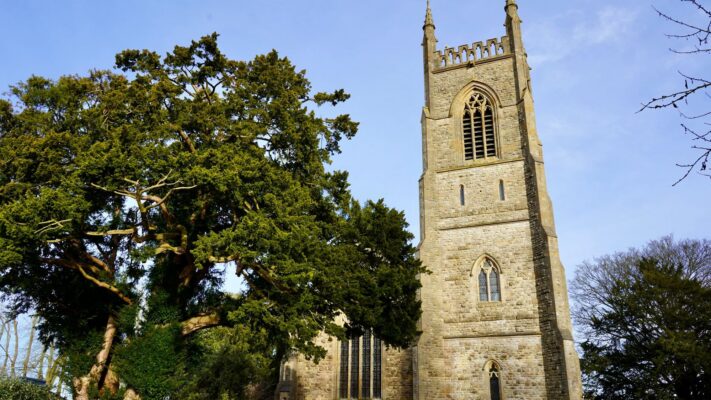
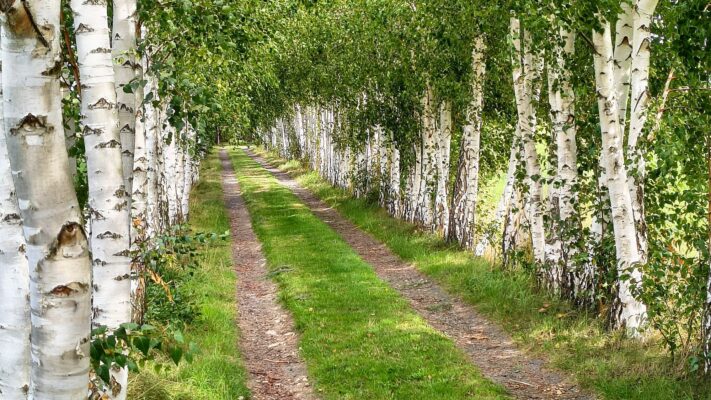
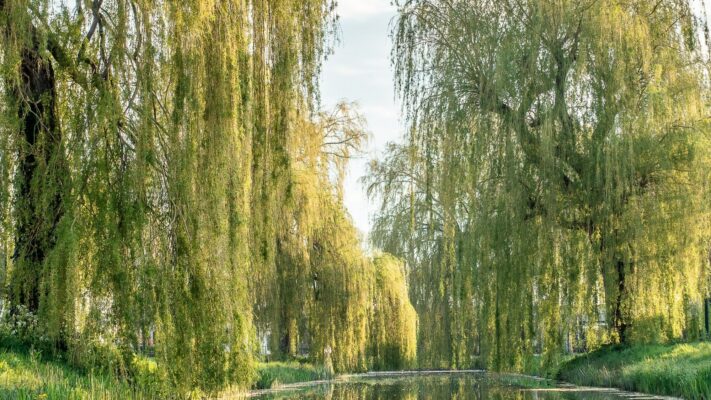
The oak tree symbolizes strength, endurance, wisdom, and protection, and the acorn symbolizes potential, growth, patience, and good luck: the idea that something small can become something mighty. Oaks were sacred to the thunder gods of ancient Europe, including Zeus, Thor, and the Baltic god Perkūnas, and the word druid is linked to an ancient word for oak. Today the oak is the national tree of the United States and many European countries, and many practitioners carry an acorn as a charm for luck, protection, and new beginnings.
What Is an Oak Tree?
Oaks are hardwood trees and shrubs in the genus Quercus, part of the beech family, with about 475 species across the Northern Hemisphere (Wikipedia). Most have lobed leaves and produce acorns, nuts that sit in a scaly cup. Oaks can live for centuries, and their wood is famously strong and hard, used for furniture, floors, timber frames, and ships.
The word oak comes from the Old English āc, which still shows up in English place names like Acton, "oak town." The Latin name Quercus is simply the Latin word for oak.
Oaks also support a huge web of life. More than 950 species of caterpillars feed on them, which makes oaks an important food source for birds.
Plants Called Oak That Aren't Oaks
Every true oak, the whole genus Quercus, belongs to the beech family, along with beeches and chestnuts (Wikipedia). But several plants share the name without being oaks at all:
- Poison oak (Toxicodendron) is in the sumac and cashew family, and like poison ivy it causes itchy, allergic rashes in most people (Wikipedia). Don't gather it for magic.
- Silky oak (Grevillea robusta), an Australian tree with golden-orange flowers, is in the protea family.
- She-oak (Casuarina) is in its own family, the Casuarinaceae.
- Tanoak (Notholithocarpus), a tree of California and Oregon, is in the beech family and grows acorn-like nuts, but it isn't a true oak.
The folklore in this guide belongs to true oaks.
What Does the Oak Tree Symbolize?
The oak is one of the most widely shared symbols in the world, standing for strength and endurance across many cultures (Wikipedia). Here's what it means to many practitioners:
- Strength and endurance. Oaks grow slowly, live for centuries, and stand through storms, so they're the classic symbol of steady, lasting strength.
- Wisdom. Ancient oaks have seen generations come and go, and many traditions treated them as places of counsel and judgment.
- Protection. Oaks were sacred to the gods of thunder and lightning, and their strong wood made them symbols of shelter and defense.
- Honor and courage. In ancient Rome, a crown of oak leaves, the Civic Crown, was awarded to anyone who saved a fellow citizen's life in battle.
- Connection to the divine. Oaks were treated as sacred trees and meeting places with the gods, from Greek oracles to Celtic groves.
- Family and roots. A single oak shelters countless living things, so it's often used as a symbol of family, heritage, and deep roots.
Oak Folklore and Mythology
The ancient Indo-European peoples worshipped the oak and linked it with a thunder god, and that connection carried into many later cultures (Wikipedia):
- Greece: The oak was sacred to Zeus. At his oracle at Dodona, one of the oldest in Greece, priests and priestesses interpreted the rustling of a sacred oak's leaves to hear the god's answers. The Greeks also believed spirits called hamadryads lived in oaks, and that anyone who destroyed one would be punished by the gods.
- Norse and Baltic lands: The oak was sacred to the thunder gods Thor and Perkūnas.
- The Celts: The word druid, for a Celtic priest, is connected to the ancient Indo-European root deru, meaning oak or tree.
- Serbia: Oak veneration lives on in Serbian Orthodox Christmas traditions, where a young oak branch called the badnjak is cut early on Christmas Eve and burned, much like a Yule log.
- Rome: Oak leaves crowned citizens who had saved a life in battle.
Famous Oak Trees
- The Royal Oak: In 1651, after losing the Battle of Worcester, the future King Charles II of England hid in an oak tree in Boscobel Wood while enemy soldiers searched below (Wikipedia). For centuries afterward, people celebrated Oak Apple Day on May 29, the day he returned to London as king in 1660, by wearing sprigs of oak leaves. Anyone caught without one might be pelted with bird's eggs or whipped with nettles (Wikipedia).
- The Major Oak: This ancient oak in Sherwood Forest, England, thought to be 800 to 1,200 years old, was said in local folklore to have sheltered Robin Hood and his Merry Men. In June 2026, the Royal Society for the Protection of Birds announced the tree had died after failing to leaf out (Wikipedia).
- The Charter Oak: In Hartford, Connecticut, colonists hid the colony's Royal Charter of 1662 inside a hollow white oak to keep it from being confiscated by the royal governor, Sir Edmund Andros. The tree became a symbol of American independence and appears on Connecticut's state quarter (Wikipedia).
- The Tree of Gernika: In the Basque Country, the oak of Gernika symbolizes the traditional freedoms of the Basque people, and the Basque president still takes the oath of office beneath it (Wikipedia).
The Acorn: Meaning and Symbolism
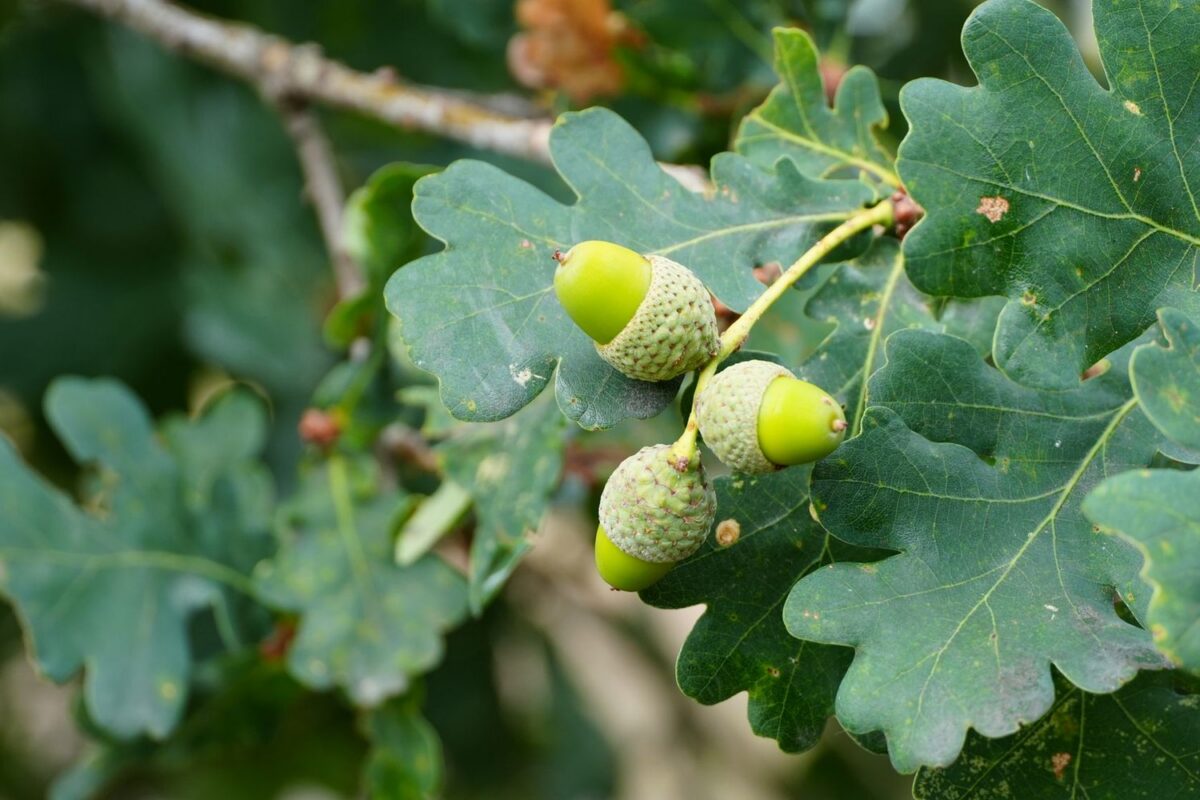
The acorn symbolizes potential, patience, growth, and good luck. It's the perfect picture of the old saying "mighty oaks from little acorns grow": a small seed holding everything it needs to become one of the strongest trees in the forest. Here's how many practitioners read the acorn:
- Potential and new beginnings. An acorn is a whole oak waiting to happen, so it's a symbol of fresh starts, ideas, and projects in their earliest stage.
- Patience. Acorns take anywhere from 5 to 24 months to mature, depending on the species (Wikipedia), and an oak takes decades to grow.
- Good luck and prosperity. Carrying an acorn is a well-loved folk charm for luck, long life, and abundance.
- Protection. Because the oak belonged to the thunder gods, acorns are traditionally kept as protection against lightning and harm.
- Fertility and abundance. In a mast year, a single oak can drop thousands of acorns, feeding squirrels, jays, deer, and other wildlife.
The acorn has been a decorative symbol for a very long time. It was a motif in Roman architecture and is popular in Celtic and Scandinavian art, and it appears on finials at Westminster Abbey. Today the acorn marks the National Trails of England and Wales.
Acorns and Lightning
A popular piece of folklore holds that an acorn kept on a windowsill protects a house from lightning, because the oak belonged to the thunder god. Many people say that's why the pulls on window blinds are often shaped like acorns.
Oak Magical Properties and Correspondences
| Correspondence | Oak and Acorn |
|---|---|
| Main uses | Strength, protection, luck, prosperity, fertility, wisdom, longevity |
| Planet | Jupiter (also the Sun in some traditions) |
| Element | Fire |
| Sabbats | Midsummer (Litha) and Yule |
| Ogham letter | Duir (D) |
| Day | Thursday |
| Pairs well with | Mistletoe, holly, gold or green candles |
Oak's link to Jupiter and Thursday comes from the thunder gods: Jupiter is the Roman counterpart of Zeus, and Thursday is named for Thor. Our guide to Jupiter correspondences and our magical days of the week guide go deeper.
How to Use Oak and Acorns in Your Practice
- Carry a lucky acorn. Pick up a fallen acorn with its cap on, dry it, and keep it in your pocket or bag for luck and protection.
- Guard your windows. Set an acorn on each windowsill as a traditional charm against lightning and harm.
- Plant your intention. Write a goal on a slip of paper, hold an acorn while you read it, and plant the acorn in a pot or in the ground. As it sprouts, let it remind you to tend your goal.
- Use oak bark in strength work. Add a pinch of white oak bark to a protection sachet or a charm bag for courage and endurance.
- Make an oak wand or staff. Oak is a classic wood for wands and staffs used for strength, protection, and leadership. Use fallen wood rather than cutting a living tree.
- Burn an oak Yule log. Oak is a traditional Yule log wood. Save a small piece to light next year's log, a custom for carrying protection through the year.
A Simple Acorn Luck Charm
On a Thursday, hold an acorn in your palm, picture the luck or growth you'd like to welcome, and say:
"Little acorn, strong and small, grow my luck and guard us all."
Carry the acorn with you, or set it on your altar until your wish takes root.
Is Oak Safe?
Oak is safe to handle, with a few things to know:
- Raw acorns are bitter and high in tannins. People have eaten acorns for thousands of years, but only after soaking or boiling them to leach out the tannins (Wikipedia). Don't eat raw acorns.
- Keep acorns away from pets and livestock. Oak leaves and acorns can be poisonous to cattle and horses in large amounts, and many vets warn that acorns can upset a dog's stomach.
- Use oak bark for spellwork only unless your doctor says otherwise.
This is spiritual practice, not medical advice.
Oak and Acorn Tattoo Meaning
An oak tree tattoo usually stands for strength, endurance, family, and deep roots, and many people choose one to honor their heritage or a parent or grandparent. An acorn tattoo stands for potential and new beginnings, and an oak leaf tattoo for courage and protection.
Oak Tree and Acorn FAQ
What does an acorn symbolize?
An acorn symbolizes potential, growth, patience, and good luck: the idea that something small can grow into something mighty.
What does an oak tree symbolize?
An oak tree symbolizes strength, endurance, wisdom, and protection. It's one of the most widely shared symbols in the world and the national tree of many countries, including the United States.
Is it lucky to carry an acorn?
Yes, in folk tradition. Carrying an acorn is an old charm for luck, protection, and long life.
Why is the oak sacred?
The oak was sacred to thunder gods across ancient Europe, including Zeus, Thor, and Perkūnas, and the word druid is linked to an ancient word for oak.
Why put an acorn on a windowsill?
Folklore says an acorn on the windowsill protects the house from lightning, because the oak belonged to the thunder god.
What does an oak tree tattoo mean?
An oak tree tattoo usually stands for strength, endurance, family, and deep roots.
What is Oak Apple Day?
Oak Apple Day, on May 29, was an English holiday celebrating the restoration of King Charles II, who once hid in an oak tree. People wore sprigs of oak leaves to mark it.
Can you eat acorns?
Only after preparing them. Acorns are high in bitter tannins, so they must be soaked or boiled to leach the tannins out first. Don't eat raw acorns.
Featured photo: David Allen on Pexels.