The willow tree stands for grief and healing, flexibility, intuition, and the moon. Its long, drooping branches made the weeping willow a symbol of mourning and tears in Western art and poetry, while in China willow branches are hung on doors to keep wandering spirits away. Willows grow beside water and bend in storms without breaking, so many practitioners see them as trees of emotional healing, resilience, and going with the flow. Willow wood is also one of the classic woods for magic wands, baskets, and the besom.
What Is a Willow Tree?
Willows are a group of about 350 species of trees and shrubs in the genus Salix, usually found on moist ground in cold and temperate parts of the world (Wikipedia). They're also called sallows and osiers. Willows love water: you'll often find them along riverbanks, ponds, and wet meadows. In spring, they bloom in soft, fuzzy flower spikes called catkins, often before the leaves appear.
Willow's flexible wood has a long history in baskets and wicker, and it's still used for cricket bats, brooms, furniture, flutes, and wands.
Where the Name Willow Comes From
The English word willow comes from the Old English welig. In the Irish ogham alphabet, the letter Saille (ᚄ) means willow, from the same root as the Latin salix (Wikipedia)). As a given name, Willow carries the tree's associations of grace, flexibility, and resilience.
The Weeping Willow
The weeping willow is the willow most people picture: a graceful tree with long branches that hang all the way to the ground or the water. The classic weeping willow, Salix babylonica, is native to northern China, Korea, Mongolia, Japan, and Siberia, and it has been grown for millennia and traded west along the Silk Road (Wikipedia). Most weeping willows planted today are a hybrid of that Chinese willow and the European white willow.
Its scientific name hides a mix-up. The botanist Carl Linnaeus named it babylonica because he believed it was the willow of Psalm 137: "By the rivers of Babylon, there we sat down, yea, we wept, when we remembered Zion. We hanged our harps upon the willows in the midst thereof" (KJV). The trees growing along the rivers of ancient Babylon were actually Euphrates poplars, a relative with similar drooping branches, but the name and the sorrow both stuck to the weeping willow.
What Does a Willow Tree Mean Spiritually?
The willow stands for grief and healing, flexibility, intuition, and the cycles of the moon and water. Here's how many practitioners read it:
- Grief and mourning. The weeping willow's drooping branches look like a figure bent in sorrow, and since Psalm 137 the tree has stood for tears, loss, and remembrance.
- Healing and renewal. Willows regrow quickly when cut and root easily from a single branch, so they're also symbols of recovery and starting again.
- Flexibility and resilience. A willow bends in a storm instead of breaking, a picture of strength through adapting.
- Intuition and the moon. As a tree of water and riverbanks, willow is tied to emotions, dreams, psychic ability, and the moon.
- Protection from spirits. In China, willow branches keep wandering spirits from the home.
- Love and longing. Willows have long stood for parting lovers, from Korean poetry to Shakespeare's willow songs.
Willow Folklore Around the World
The willow appears in the beliefs and stories of many cultures. These examples come from Wikipedia's article on willow:
- China: On the Qingming Festival, or Tomb-Sweeping Day, some people carry willow branches and hang them on gates and front doors. Legend says the ruler of the underworld lets the spirits of the dead return to earth on Qingming, and willow keeps unwanted spirits away.
- Buddhism: A willow branch is one of the main symbols of Guanyin, the bodhisattva of compassion, who is often shown seated with a willow branch in a vase of water beside her.
- Judaism: Willow is one of the four species of the festival of Sukkot (Leviticus 23:40), and willow branches are used in the synagogue service on Hoshana Rabbah, the seventh day of Sukkot.
- Eastern Orthodox Christianity: Many Orthodox churches use willow branches in place of palms on Palm Sunday.
- Japan: The willow is associated with ghosts, and it's popularly said that a ghost will appear where a willow grows. In the Japanese tale "Green Willow," a young samurai falls in love with a woman whose spirit is bound to a willow tree.
- Korea: In the Joseon dynasty, the poet Hongrang wrote "By the willow in the rain in the evening" for a departing lover, promising to be the willow by his bed.
- England: English folklore paints the willow as sinister, a tree able to uproot itself and follow travelers at night.
- The Osage Nation: In the story "Wisdom of the Willow Tree," a young man seeks answers from a willow and speaks to it as "Grandfather."
Pussy Willow and Palm Sunday
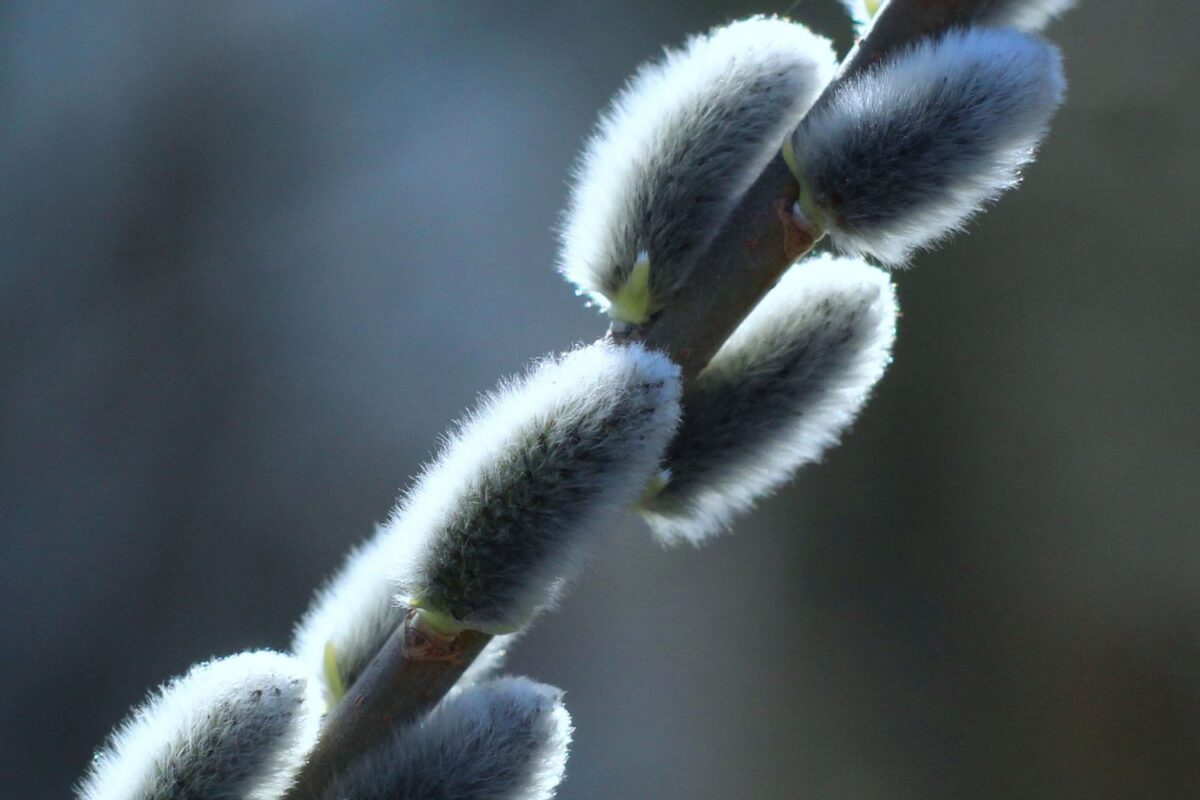
Pussy willow is the name for willows with especially soft, silvery catkins, like the goat willow of Europe and the American pussy willow. In Germany, Hungary, Poland, Ukraine, northern Slovakia, and much of Finland, freshly opened pussy willow branches are used in place of palm branches on Palm Sunday (Wikipedia). Because they bloom so early, pussy willows are a favorite symbol of the first days of spring, rebirth, and gentle new beginnings.
Willow Magical Properties and Correspondences
| Correspondence | Willow |
|---|---|
| Main uses | Healing, grief work, love, divination, intuition, protection |
| Planet | Moon |
| Element | Water |
| Ogham letter | Saille (S) |
| Day | Monday |
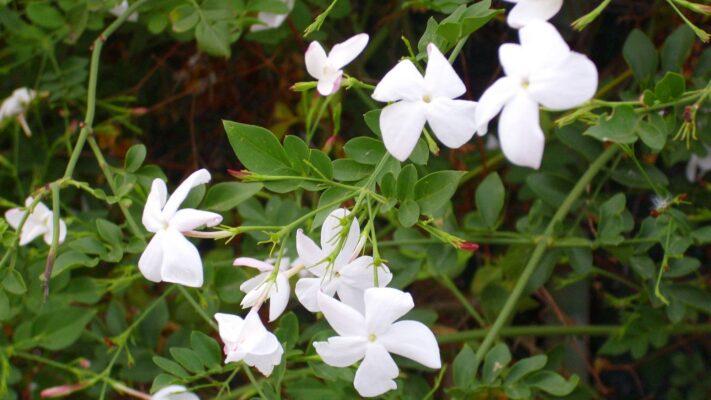
| Pairs well with | Moonstone, mugwort, jasmine, and silver or white candles |
Willow's riverbank home and its pull toward the moon make it a natural fit for Monday workings and full moon rituals. Our jasmine meaning guide covers another classic moon plant, and the Spell Ingredients Finder can help you build a working around willow.
How to Use Willow in Your Practice
- Work through grief. Sit beneath a willow, or hold a willow branch or a pinch of white willow bark, and let yourself feel what you're carrying.
- Tie a wish knot. A traditional folk custom is to tie a loose knot in a supple willow branch while making a wish, then untie it once the wish comes true.
- Make a willow wand. Willow is one of the classic wand woods for moon magic, healing, and intuition. Cut a fallen or freely given branch, peel the bark if you like, and let it dry.
- Add willow to a besom. Willow withies are the traditional binding for a witch's broom. Our besom guide covers how brooms are made and used.
- Bring it to divination. Willow is a traditional wood for dowsing rods. See our dowsing rods guide.
- Honor spring with pussy willow. Set a vase of pussy willow branches on your altar in early spring for new beginnings.
A Simple Willow Healing Charm
On a Monday or a full moon night, take a thin, flexible willow twig or a strip of willow bark and tie it loosely into a circle with white thread. Hold it to your heart and say:
"Willow bend and willow mend, let my sorrow find its end."
Keep the circle on your altar until you feel lighter, then return it to running water or bury it beneath a tree.
Is Willow Safe?
Willow is safe to handle and work with as a living tree or dried wood. Willow bark is a little different:
- Willow bark contains salicin. Salicin is a natural compound named after willow, and it's related to the chemistry behind aspirin, though aspirin itself was first made from salicin found in meadowsweet (Wikipedia).
- It isn't for people with aspirin allergies. Like aspirin, willow bark isn't suitable for anyone allergic to aspirin (Wikipedia), and salicin can cause allergic skin reactions in some people.
- Talk to a doctor before taking it. Willow bark is sold as an herbal supplement, so check with your doctor before taking it internally, especially if you take blood thinners, are pregnant, or are giving it to a child.
Our dried willow bark is sold for spellwork, charms, and incense blends.
This is spiritual practice, not medical advice.
Willow Tree Meaning FAQ
What does a willow tree symbolize?
A willow tree symbolizes grief and healing, flexibility, resilience, intuition, and the moon. Its ability to bend without breaking makes it a symbol of strength through adapting.
What does a weeping willow symbolize?
A weeping willow symbolizes mourning, tears, and remembrance, largely because of its drooping branches and its link to Psalm 137. It also stands for healing and letting go.
Why is it called a weeping willow?
Its long branches hang down like tears or a figure bent in sorrow. Its scientific name, Salix babylonica, comes from Linnaeus mistaking it for the willow of Psalm 137, where the exiles "wept" by the rivers of Babylon.
What does the name Willow mean?
The name comes from the willow tree, from the Old English welig. It carries the tree's associations of grace, flexibility, and resilience.
What does a pussy willow symbolize?
Pussy willow symbolizes spring, rebirth, and new beginnings, and in much of Eastern and Central Europe it's used in place of palms on Palm Sunday.
What does a weeping willow tattoo mean?
A weeping willow tattoo usually stands for grief and remembrance of a loved one, or for resilience and the ability to bend without breaking.
Is willow a good wood for a wand?
Yes. Willow is one of the classic wand woods, especially for moon magic, healing, intuition, and divination.
Why is willow linked to the moon?
Willows grow beside water, and in Western magic both water and the moon rule emotions, dreams, and intuition, so willow is traditionally a moon tree.
Featured photo: Mike van Schoonderwalt on Pexels.