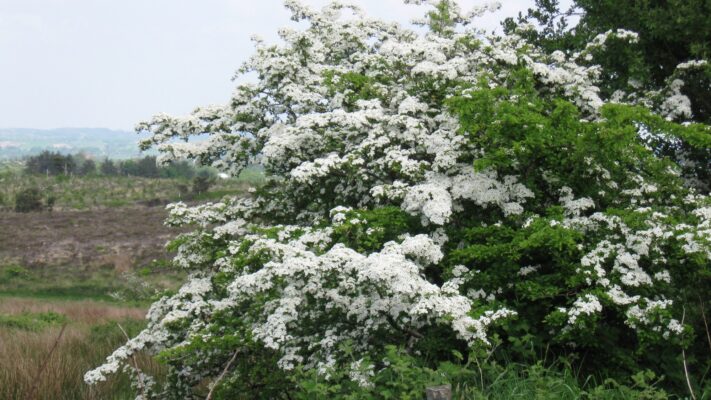
Jasmine is a fragrant white flower that stands for love, sensuality, purity, and devotion, and in magic it's tied to the moon, the night, and dreams. Many jasmines open or release their scent at dusk, which is part of why the flower feels so connected to nighttime, romance, and the unseen. Jasmine is also one of the most sacred and celebrated flowers in the world: it's strung into wedding garlands in India and Indonesia, offered at temples across South and Southeast Asia, and chosen as the national flower of Pakistan, the Philippines, Indonesia, and Tunisia.
What Is Jasmine?
Jasmine is a group of about 200 species of shrubs and climbing vines in the genus Jasminum, native to warm parts of Europe, Asia, Africa, and Oceania (Wikipedia). Most have small, starry white flowers with a sweet, heady scent, though a few species bloom yellow or pink. Two are the best known:
- Common jasmine (Jasminum officinale), a climbing vine with clusters of white, star-shaped flowers. Its flowers release their perfume at dusk, so they're traditionally picked at night for perfume (Wikipedia).
- Arabian jasmine (Jasminum sambac), with fuller, waxy white flowers that open in the evening and close by morning. It's the jasmine used in jasmine tea and in most of the jasmine garlands of Asia (Wikipedia).
The village of Shubra Beloula in Egypt grows most of the jasmine used by the world's perfume industry.
Where the Name Jasmine Comes From
The word jasmine comes from the Persian yāsaman or yāsamin, which passed into Arabic as yāsamīn and into Old French as jessemin before reaching English in the 16th century. The same Persian word gave the plant its botanical name, Jasminum. Jasmine is also a popular given name, and it carries the flower's associations of beauty and sweetness.
Plants Called Jasmine That Aren't Jasmine
Several unrelated plants share the name, and some of them are toxic:
- Star jasmine or confederate jasmine (Trachelospermum jasminoides) has jasmine-like white flowers and a sweet scent, but it's a different plant.
- Night-blooming jasmine (Cestrum nocturnum), also called lady of the night, is in the potato family. Reports on the toxicity of its leaves and berries are mixed.
- Carolina jessamine (Gelsemium sempervirens), a yellow-flowered vine common in the American South, is poisonous in every part. Children have been poisoned by sucking the nectar from its flowers, mistaking it for honeysuckle (Wikipedia).
If you're growing or gathering "jasmine" for magic, check the botanical name first.
What Does Jasmine Mean Spiritually?
Jasmine stands for love, devotion, purity, and the sacred feminine. It's one of the flowers most often linked to the moon, because it opens and pours out its scent in the evening, and that night-blooming habit ties it to dreams, intuition, and mysteries that unfold in the dark. Here's how many practitioners read jasmine:
- Love and romance. Jasmine's scent has long been linked to sensuality and attraction, and jasmine is a classic love spell ingredient.
- Purity and devotion. White jasmine is offered to deities and strung into garlands for temples, shrines, and religious images.
- Dreams and intuition. As a night-blooming flower, jasmine is used for prophetic dreams and psychic work.
- The moon and the night. Jasmine is one of the classic moon flowers in magic, suited to full moon rituals.
- New beginnings and marriage. Jasmine's place in wedding garlands across Asia ties it to commitment and new life together.
- Motherhood and family. In Thailand, jasmine is a symbol of motherhood.
Jasmine Symbolism Around the World
Few flowers are as woven into daily life and ceremony as jasmine. These examples come from Wikipedia's articles on jasmine and Arabian jasmine:
- India: Jasmine is considered a sacred flower in Hinduism. Brides often wear garlands of mogra jasmine in their hair, and jasmine garlands and bunches are sold outside temples and in markets.
- The Philippines: Arabian jasmine, called sampaguita, has been the national flower since 1935. It's strung into garlands to adorn religious images, honor guests, and decorate weddings and state occasions.
- Indonesia: Called melati putih, "white jasmine," it's one of the country's three national flowers and is used in weddings, especially on Java. In Bali, jasmine is offered to spirits and deities and is often present at funerals.
- Pakistan: Common jasmine, known as chambeli, is the national flower.
- Hawaii: Arabian jasmine is called pīkake, from the Hawaiian word for peacock, because Princess Kaʻiulani loved both the flower and peacocks. It's used to make fragrant leis.
- China: Jasmine flowers scent jasmine tea, and the flower is the subject of the beloved folk song "Mo Li Hua."
- Thailand and Cambodia: Jasmine garlands and buds are offered to the Buddha, and jasmine is a symbol of motherhood in Thailand.
- Sri Lanka: Jasmine is used in Buddhist temples and ceremonial garlands.
- Syria: Damascus is known as the City of Jasmine.
- Tunisia: Jasmine is the national flower, and the 2011 Tunisian Revolution became known as the Jasmine Revolution.
- Iran: In Shia Islam, jasmine is considered a symbol of Fatimah, the daughter of the Prophet Muhammad.
Jasmine Magical Properties and Correspondences
| Correspondence | Jasmine |
|---|---|
| Main uses | Love, attraction, prophetic dreams, intuition, spiritual devotion |
| Planet | Moon |
| Element | Water |
| Day | Monday (the moon's day) |
| Color | White |
| Pairs well with | Rose, vanilla, lavender, moonstone, and white or pink candles |
Jasmine's moon and Water associations make it a natural fit for Monday workings, full moon rituals, and anything to do with feelings, dreams, and love. Our Spell Ingredients Finder can help you build a working around it, and our guide to love spell ingredients covers more herbs for love.
How to Use Jasmine in Your Practice
Here are a few easy ways to bring jasmine into your practice:
- Burn jasmine incense. Light jasmine incense during a love spell, a full moon ritual, or before bed to set a dreamy, devotional mood.
- Dress a candle. Rub a few drops of jasmine oil onto a pink or white candle for love and attraction work. Our guide on how to dress a candle safely walks through it.
- Make a dream pillow. Sew a pinch of dried jasmine flowers into a small cloth pouch with lavender and tuck it inside your pillowcase for vivid or prophetic dreams.
- Add it to a love bath. Float a handful of fresh or dried jasmine flowers in a warm bath before a date or a self-love ritual. Our spiritual bath guide has full recipes.
- Set it on a moon altar. Place fresh jasmine flowers or a jasmine candle on your altar during a full moon ritual.
- Wear it. A dab of white jasmine perfume oil on your wrists carries jasmine's loving energy with you through the day.
A Simple Jasmine Dream Spell
On a Monday night or a full moon, place a few jasmine flowers or a drop of jasmine oil on a small square of white cloth. Hold it, think of the question you'd like answered in your dreams, and say:
"Jasmine white beneath the moon, bring me answers, bring them soon."
Fold the cloth around the jasmine, tuck it under your pillow, and keep a notebook by your bed to write down your dreams as soon as you wake.
Is Jasmine Safe?
True jasmine is gentle. Common jasmine is "generally recognized as safe" as a food ingredient by the U.S. Food and Drug Administration, and jasmine flowers are used to scent tea, though allergic reactions can happen (Wikipedia). A few things to keep in mind:
- Check the plant. Carolina jessamine is poisonous, and night-blooming jasmine's safety is unclear, so make sure you're working with a true Jasminum.
- Dilute oils. Jasmine essential oil and absolute are very concentrated, so dilute them in a carrier oil before they touch your skin.
- Watch for allergies. If you're sensitive to strong floral scents, try a small amount first.
Jasmine Meaning FAQ
What does jasmine mean spiritually?
Jasmine stands for love, devotion, purity, and the sacred feminine. Because it blooms and releases its scent at night, it's also tied to the moon, dreams, and intuition.
What does the name Jasmine mean?
The name comes from the Persian yāsaman, the word for the jasmine flower, which passed through Arabic and French into English. It carries the flower's associations of beauty, sweetness, and love.
What does a jasmine flower symbolize?
Jasmine symbolizes love, purity, devotion, and new beginnings. It's used in weddings and temple offerings across Asia, and it's a symbol of motherhood in Thailand.
What is jasmine used for in magic?
Jasmine is used for love and attraction spells, prophetic dreams, intuition, and moon rituals, as incense, oil, dried flowers, or fresh blossoms on the altar.
What planet and element is jasmine?
Jasmine is ruled by the Moon and the element of Water, which makes Monday and full moon nights traditional times to work with it.
Which countries have jasmine as their national flower?
Pakistan, the Philippines (where it's called sampaguita), Indonesia (melati putih), and Tunisia all count jasmine as a national flower.
What does a jasmine tattoo mean?
A jasmine tattoo usually stands for love, beauty, purity, and grace, and some people choose it to honor their heritage in countries where jasmine is a national flower.
Is night-blooming jasmine real jasmine?
No. Night-blooming jasmine (Cestrum nocturnum) belongs to the potato family, and star jasmine and Carolina jessamine are also unrelated. True jasmines are in the genus Jasminum.
Featured photo: common jasmine in Torrevieja, Spain, by Javier martin, public domain, via Wikimedia Commons.