Turquoise is a sky-blue to green stone that practitioners have used for thousands of years for protection, friendship, honest speech, and safe travel. It's a copper mineral, prized by ancient Egyptians, Persians, Aztecs, and the peoples of the American Southwest, and it's the traditional December birthstone. Turquoise is also one of the most faked and treated stones on the market, so this guide covers how to tell real turquoise from dyed imitations, along with the other crystals most often dyed or made in a lab.
What Is Turquoise?
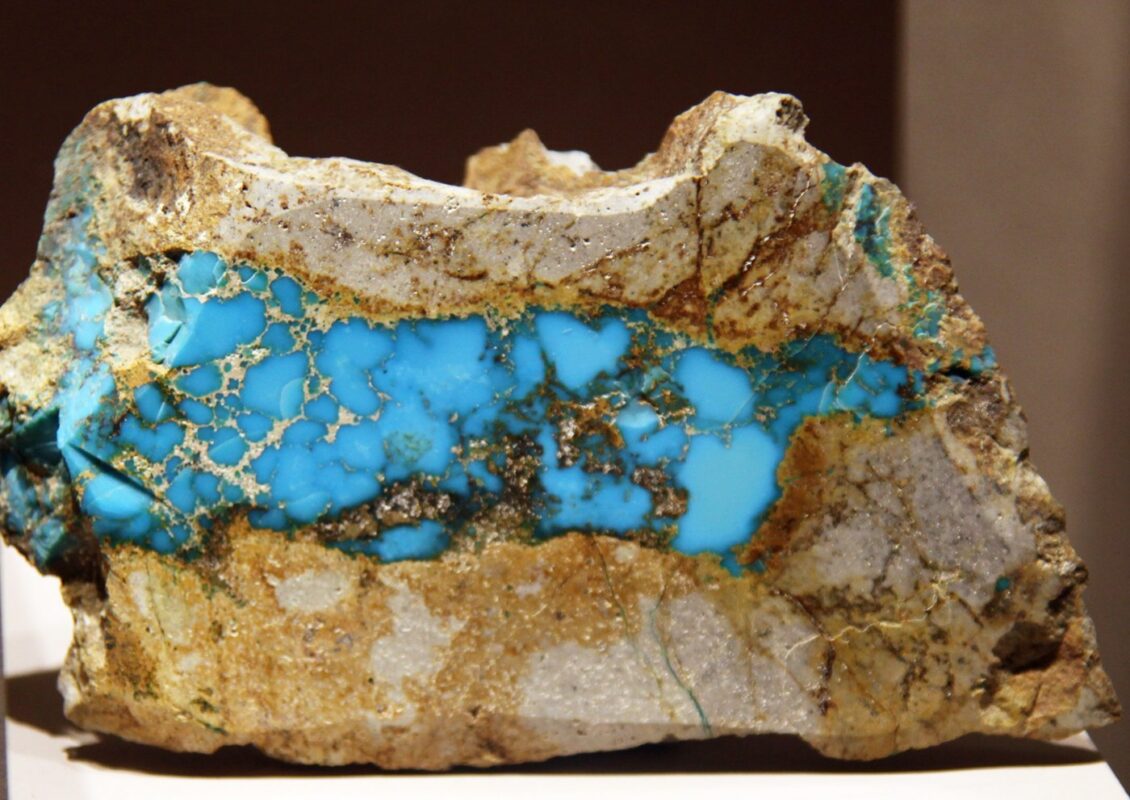
Turquoise is an opaque mineral made of copper, aluminum, and phosphate (Wikipedia). Copper gives it its blue, and iron shifts it toward green, so turquoise ranges from robin's egg blue to apple green, often with brown or black veins of the rock it formed in, called matrix. Turquoise almost never forms visible crystals. It grows in veins and nuggets inside other rock.
At 5 to 6 on the Mohs scale, turquoise is fairly soft and porous, which is why so much of it is treated, and why it needs gentle care.
Where the Name Comes From
The word "turquoise" comes from the Old French for "Turkish," because the stone reached Europe through Ottoman Turkey, even though it was mined in Persia. In Persian it was called pērōzah, "victory," and the Aztecs called it chalchihuitl.
Where Turquoise Is Found
Iran has produced turquoise for at least 2,000 years, and the sky blue stone from near Nishapur is the standard all other turquoise is judged by. Ancient Egyptians mined it in the Sinai, and the American Southwest, especially Arizona, Nevada, and New Mexico, has turquoise mines worked by Native peoples long before European contact. Today much of the turquoise on the market also comes from China.
Turquoise in History and Culture
Turquoise is one of the oldest stones used for adornment and protection:
- Egypt: the goddess Hathor was called "Lady of Turquoise" and watched over the Sinai turquoise mines.
- Persia: turquoise tiles covered the domes of palaces and mosques.
- The Aztecs set turquoise into ceremonial masks, shields, and knives.
- The American Southwest: turquoise is sacred to the Navajo, Zuni, and Pueblo peoples, among others, and in Navajo tradition it's used for spiritual protection and blessing. These are living traditions, best learned from practitioners within them, and from Native artists.
- Many cultures believed turquoise changed color with its wearer's health and shielded them from harm.
Turquoise Spiritual Meaning
Turquoise is a stone of protection, friendship, and honest speech. Many practitioners carry it as a travel charm, wear it to speak clearly and kindly, and give it to friends as a token of loyalty. Its sky color ties it to calm, clarity, and the open air, and its long history as an amulet across so many cultures makes it one of the most trusted protection stones of all.
What turquoise symbolizes:
- Protection, especially on journeys.
- Friendship and loyalty. An old belief holds that turquoise is luckiest when it's given as a gift.
- Clear, honest communication, through its tie to the throat chakra.
- Calm and balance, from its sky-and-water color.
- Good fortune and victory, echoing its Persian name.
If you've seen turquoise in your aura, our guide to aura colors covers what blue-green auras are read as.
Turquoise Properties and Correspondences
| Correspondence | Turquoise |
|---|---|
| Color | Sky blue to green, often with matrix |
| Chakra | Throat |
| Element | Earth |
| Planet | Venus |
| Day | Friday |
| Zodiac | Sagittarius, Scorpio |
| Birthstone | December |
| Intentions | Protection, friendship, wisdom, communication, travel |
| Mohs hardness | 5 to 6 |
Turquoise Chakra
Turquoise is the classic stone for the throat chakra, the center of speech and self-expression, and its green-tinged pieces are also used for the heart. Our chakra crystals list has stones for every chakra.
Turquoise Zodiac Signs
Turquoise is linked with Sagittarius and Scorpio, and as the December birthstone it's often given to people born in early Sagittarius and late Capricorn season.
How to Use Turquoise
- Carry it when you travel, in a pocket, bag, or car.
- Wear it near the throat before a hard conversation, an interview, or a performance.
- Give it as a gift to a friend, an old custom for loyalty and luck.
- Place it on your altar for protection work, especially on Friday, Venus's day.
- Hold a raw piece while journaling or meditating on what you need to say.
Our turquoise tumbled stones are stabilized, as nearly all tumbled turquoise is, and our raw turquoise is sold to us as natural Peruvian stone.
How to Cleanse and Charge Turquoise
Keep turquoise away from water, salt, and long sun. It's porous, and water, salt, and heat can discolor or dry it out. Cleanse it with incense or herb smoke, sound like a bell or singing bowl, or a few hours on a selenite plate, and charge it briefly in moonlight. Our Crystal Care Checker shows which stones are safe in water, salt, and sun. Because turquoise contains copper, it should never go in drinking water or gem elixirs.
Turquoise Colors and Stones Sold as "Turquoise"
Real turquoise ranges from pale blue to deep sky blue to green. "Spiderweb" turquoise has a fine network of dark matrix lines, and it's especially valued in the American Southwest.
Several stones are sold with "turquoise" in their name but aren't turquoise at all:
- African turquoise is a speckled teal jasper from Africa, named for its color. It's a lovely stone in its own right, nicknamed the "evolution stone" in modern practice, like our African turquoise palm stone.
- Yellow turquoise is usually a yellow jasper or serpentine.
- White turquoise or "white buffalo" is usually howlite, a white stone with gray veins. A rare chalky white turquoise from Arizona and Nevada exists, but it's soft and needs stabilizing.
- Turquoise howlite and turquoise magnesite are dyed stones, covered below.
Natural, Stabilized, and Reconstituted Turquoise
Most turquoise sold today has been treated in some way, and the treatment changes what it's worth:
- Natural: untreated except, sometimes, a light wax. It's the rarest and most expensive.
- Stabilized: soft, chalky turquoise soaked with clear resin so it can be polished and worn. This is standard for affordable turquoise, and it's still real turquoise.
- Enhanced or Zachery-treated: a proprietary process that improves color and durability.
- Backed: a thin slice glued onto a sturdier base, standard practice in Southwestern jewelry.
- Dyed: color added to darken or even out the stone or its veins. Some dyes fade or rub off.
- Reconstituted ("block"): turquoise powder, or sometimes no turquoise at all, pressed with resin and dye into a solid block, then cut.
In the U.S., the Federal Trade Commission's Jewelry Guides say sellers should disclose treatments that aren't permanent, need special care, or change a stone's value, including in online product descriptions. A stone also can't be called "turquoise" unless it's mined turquoise. Imitations should be labeled "imitation" or "simulated." Ask any seller whether their turquoise is natural, stabilized, reconstituted, or imitation, and expect a straight answer.
How to Tell If Turquoise Is Real
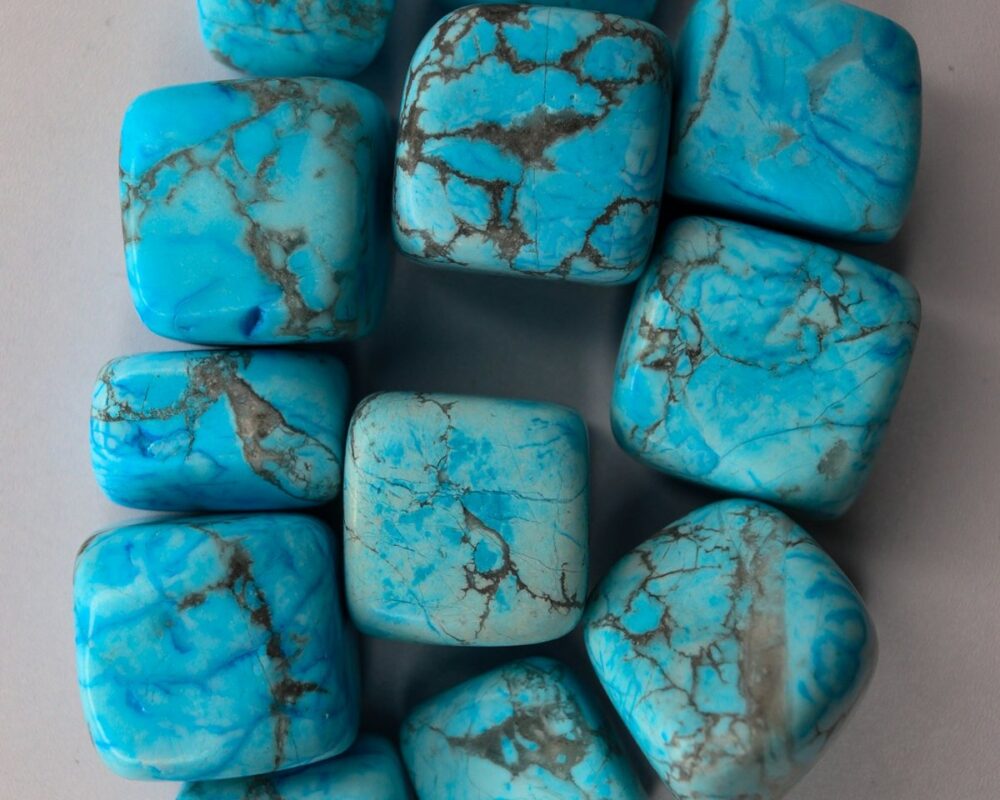
Fake turquoise is usually dyed howlite or dyed magnesite, two cheap white stones that soak up dye easily. Glass, plastic, and resin "block" are common too. These signs give fakes away:
- The color is too even and too bright. Natural turquoise shows soft shifts in tone and small whitish flecks. Fakes are often one flat, deep blue or green.
- Dye collects in the cracks. On dyed howlite and magnesite, the color is darker in the veins and pits, and the "matrix" can look painted on or sunken.
- The inside is white. Look inside a bead's drill hole or at a chip. A white or pale core under blue skin is a sign of dye.
- It looks glassy or feels light and warm. Glass and plastic are more see-through at the edges, may show tiny bubbles or swirl lines, and plastic feels lighter and warmer in the hand.
- The price is too good. A strand of bright "genuine turquoise" for a few dollars is almost always dyed howlite or reconstituted block.
- The cotton swab test. Rub a cotton swab dampened with a little nail polish remover on a hidden spot. Blue on the swab is surface dye. Don't do this on stabilized or valuable pieces, since solvents can damage the finish.
Jewelers and gemologists can confirm a stone with magnification and lab tests. Some of those tests, like a hot needle that melts plastic, damage the stone, so leave them to the professionals. When in doubt, buy from a seller who tells you plainly what the stone is.
Common Dyed and Fake Crystals to Watch For
Turquoise isn't the only stone that gets dyed, heated, or imitated. A dyed or man-made stone isn't worthless, and many practitioners happily use them, but you deserve to know what you're buying and pay a fair price for it.
| Sold as | Usually is | How to spot it |
|---|---|---|
| Blue "turquoise" beads | Dyed howlite or magnesite | White core, dye in cracks, very low price |
| Citrine (deep orange or brown, or geode clusters) | Heat-treated amethyst or smoky quartz | Natural citrine is pale yellow; heated stones are darker orange with white bases on clusters (Wikipedia) |
| Neon pink, purple, or electric blue agate | Dyed agate | Colors that don't occur in nature, dye concentrated in the bands, fading in sunlight |
| Lapis lazuli (cheap, very even blue) | Dyed jasper or howlite, or sodalite | Real lapis lazuli often has gold flecks of pyrite; dyed stones may have white spots and dye in cracks |
| Opalite | Man-made glass | Glows blue on a dark background, may have bubbles (Wikipedia) |
| Goldstone | Man-made glass with copper sparkles | Perfectly even glitter throughout (Wikipedia) |
| Bright green jade | Dyed jade, called "Type C," or a dyed look-alike stone | Uneven color pooling, unusually vivid green, very low price |
| Aqua aura and other "aura" quartz | Quartz coated with metal vapor in a lab | Rainbow or electric metallic sheen; the coating can scratch |
Opalite and goldstone are honest names for man-made glass, and many people love them. The trouble starts only when they're sold as natural stones.
Turquoise Care
Turquoise is soft and sensitive, so a little care keeps its color:
- Put it on last, after lotion, perfume, sunscreen, and hairspray, since cosmetics and skin oils can stain it.
- Keep it out of water, chemicals, and jewelry cleaners, and take it off before swimming or washing up.
- Avoid long sun and heat, which can dry it out or change its color.
- Wipe it with a soft, dry cloth after wearing.
- Store it on its own, in a soft pouch, so harder stones don't scratch it. Don't seal it in an airtight container.
Turquoise Price
Turquoise is priced by size, color, hardness, and treatment. Untreated, hard, deep sky-blue turquoise from a named mine is the most expensive. Stabilized turquoise is affordable and fine for everyday wear, and reconstituted "block" turquoise and dyed howlite are the cheapest. For a natural pendant, our turquoise pendant in a sterling silver bezel is a genuine turquoise cabochon.
Turquoise FAQ
What does turquoise mean spiritually?
Turquoise is a stone of protection, friendship, and honest speech. Practitioners carry it for safe travel, wear it for clear communication, and give it as a gift of loyalty and luck.
What is turquoise good for?
Turquoise is used for protection, especially while traveling, for speaking clearly and kindly, for friendship, and for calm. It's also the traditional December birthstone.
What chakra is turquoise?
Turquoise is the classic throat chakra stone, and green turquoise is also used for the heart chakra.
What zodiac sign is turquoise good for?
Turquoise is linked with Sagittarius and Scorpio, and as the December birthstone it's popular with Sagittarius and Capricorn.
Can turquoise go in water?
No. Turquoise is porous and often treated with wax, oil, or resin, so water can discolor it. Cleanse it with smoke, sound, or selenite instead, and never put it in drinking water.
How can you tell if turquoise is real?
Real turquoise has soft variations in color and small whitish flecks. Fakes are often one flat, bright color, with dye collected in cracks and a white core inside the drill hole. A price that seems too good is another warning sign.
What is fake turquoise made of?
Most fake turquoise is dyed howlite or dyed magnesite, both white stones that absorb dye. Glass, plastic, and reconstituted resin "block" are also common.
What is African turquoise?
African turquoise isn't turquoise. It's a speckled teal jasper from Africa that's named for its color, and it's used in modern practice as a stone of growth and change.
What is stabilized turquoise?
Stabilized turquoise is real turquoise that's been soaked with clear resin to harden it so it can be polished and worn. Most affordable turquoise is stabilized.
Is dyed or stabilized turquoise bad?
No, as long as it's sold honestly and priced fairly. Stabilized turquoise is still real turquoise. Dyed howlite is a different stone, so it should be labeled and priced as what it is.