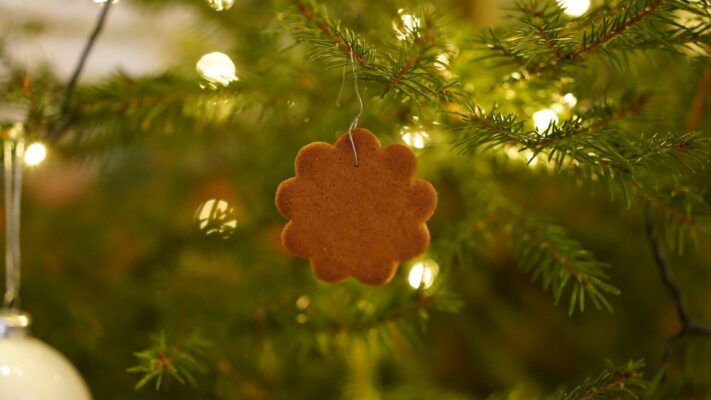
A bird seed ornament is a small offering of food for the birds: seed held together with unflavored gelatin, pressed into a cookie cutter shape, and hung outside on a branch.
Two questions come up before most people start. Are birdseed ornaments safe for birds, and can you make them without gelatin? Yes to both. Plain, unflavored gelatin is what both Audubon recipes use, and the versions without gelatin are even simpler.
In Scandinavia, people set up a tree outside for the birds at the New Year, and our guide to winter solstice traditions tells that story. Bird seed ornaments are an easy way to do the same.
Bird Seed Ornament Recipe
This recipe fills about a dozen cookie cutters. It's the one both Maine Audubon and Audubon magazine publish.
- 1 tablespoon unflavored powdered gelatin
- 2 tablespoons cold water
- ⅓ cup boiling water
- 2 cups birdseed
- About 12 cookie cutters
- A tray lined with parchment paper
- A needle and thread, or twine
If You or Someone in Your Home Has a Food Allergy
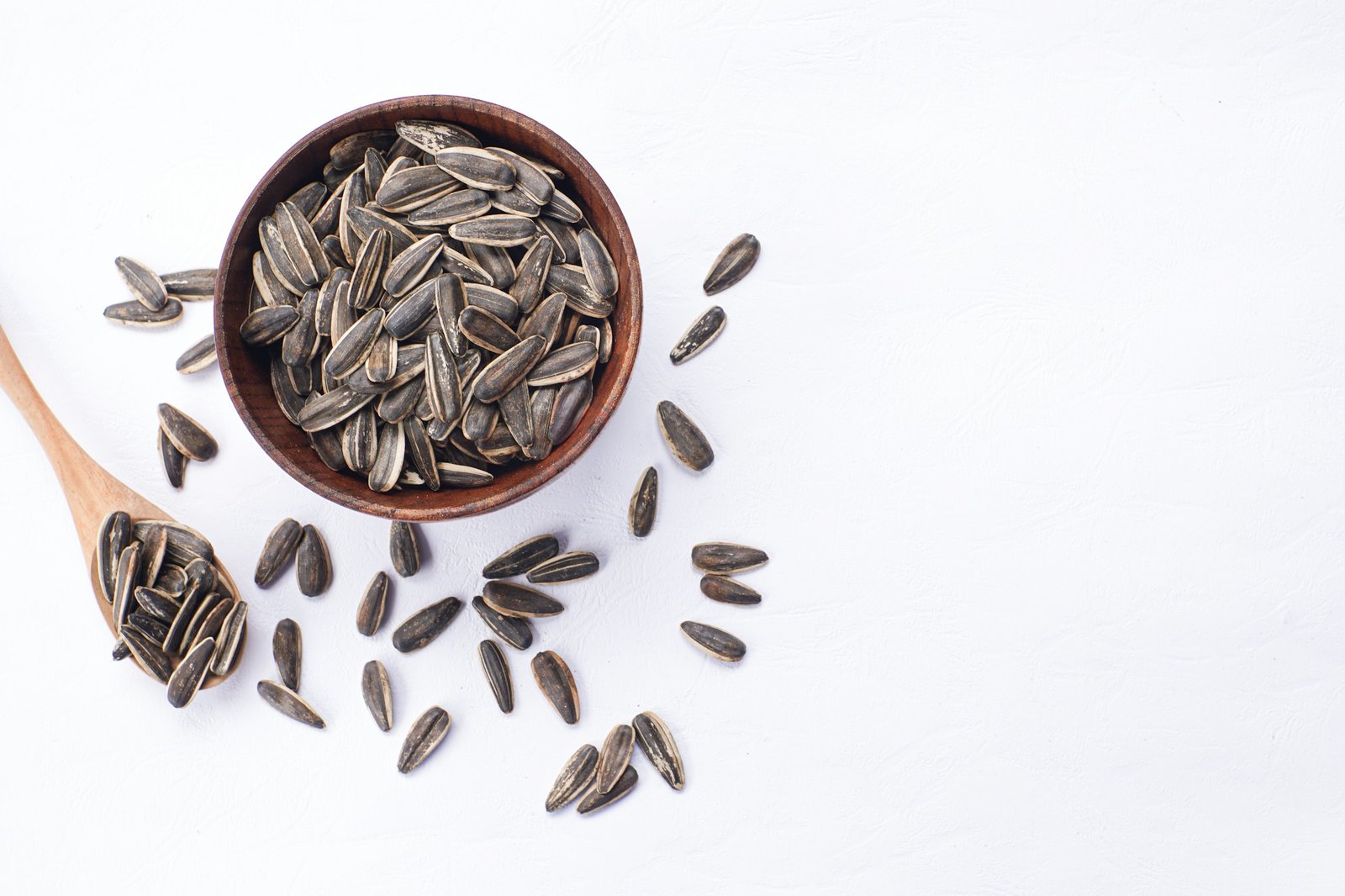
You don't have to use bagged birdseed. Wild Birds Unlimited says the factories that make its bird food use the same equipment for products with and without peanuts and tree nuts, so it treats all of its seed products as unsafe for people with those allergies, according to its allergen statement. Seeds from the grocery store are a different choice, because packaged human food carries an allergen label. In the United States, the label of most packaged foods must name any of the nine major food allergens used in the food, including peanuts, tree nuts, and sesame, according to the FDA.
Plain sunflower seeds are an easy place to start. Black-oil sunflower seed is the most common seed offered at feeders in North America, according to Project FeederWatch, and hulled sunflower seeds, millet, and oats are bird foods too. Hulled sunflower seeds are often sold in the grocery store as sunflower kernels. Choose plain, unsalted seeds without flavoring, and keep hulled seeds dry, because they spoil faster than seeds in the shell. You can mix your own blend from seeds like these. The pine cone in the no-gelatin versions below uses sunflower seed butter. According to its FAQ, SunButter is free of peanuts and tree nuts, and the company has never processed either in its facilities, but it also advises readers to check labels carefully.
A label doesn't tell you everything. Manufacturers add "may contain" and "produced in a facility" statements voluntarily, and the FDA suggests asking store staff about foods that aren't packaged, such as bulk bins. If the allergy is serious, ask the manufacturer or your allergist before you buy.
How to Make Bird Seed Ornaments
The ornaments set overnight, so start the day before you want to hang them.
- Bloom the gelatin. Stir 1 tablespoon of unflavored powdered gelatin into 2 tablespoons of cold water, and let it sit for a minute.
- Dissolve the gelatin. Add ⅓ cup of boiling water and stir until the gelatin has dissolved.
- Add the seed. Pour in 2 cups of birdseed and stir until every seed is coated.
- Fill the cookie cutters. Set the cutters on the parchment-lined tray and press the seed mix firmly into each one, all the way to the edges.
- Chill until set. Put the tray in the refrigerator overnight.
- Unmold. Let the ornaments come to room temperature, then push them gently out of the cutters.
- Thread them. Use a needle to pull thread through each ornament, at least half an inch from the edge, and tie a knot.
- Hang them outside. Tie them to tree branches where birds can reach them.
Words for an Offering
If you'd like to say something as you hang them, here's a short rhyme.
Seed for sparrow, seed for jay,
A winter gift I give away.
Take your fill and travel light,
And see us through the longest night.
Are Birdseed Ornaments Safe for Birds?
Yes, when they're made from plain ingredients and looked after. Maine Audubon gives these cautions:
- Use plain, unflavored gelatin. That's what both Audubon recipes call for.
- Watch for spoiling. On warm days, check that the ornaments aren't going bad. Bacteria and mold can cause serious problems for wildlife, so take down any ornament that has spoiled.
- Keep an eye on who's visiting. If the ornaments hang near your home, make sure they aren't attracting wildlife you don't want close by.
- Give the birds cover. Hang ornaments on a tree that's near evergreens or bushes, so visiting birds have shelter from hawks and owls.
- Skip decorated pine cones. If you make a pine cone feeder, the National Park Service says not to use scented, glittered, or painted pine cones, because they can harm birds.
Bird Seed Ornaments Without Gelatin
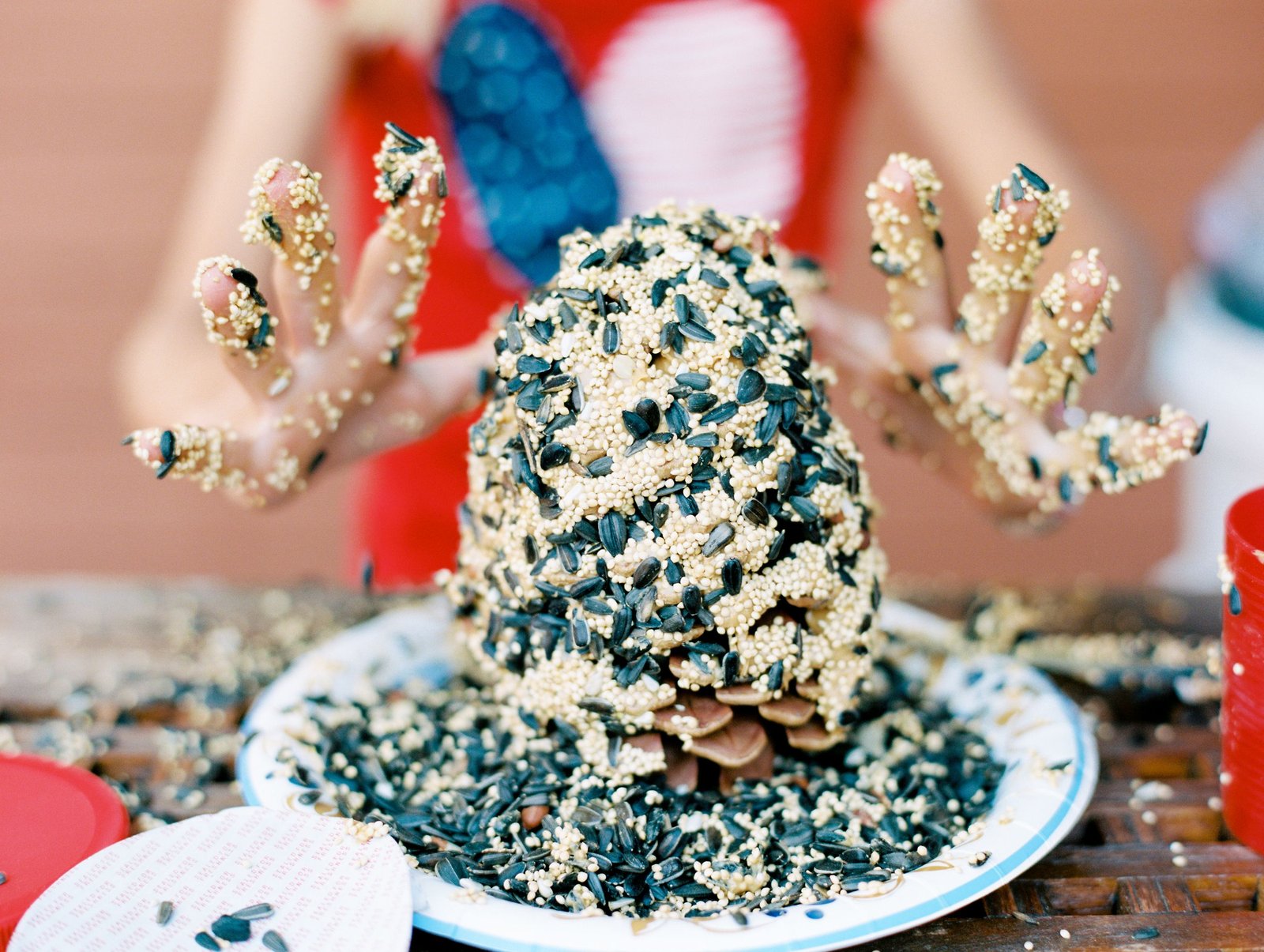
You can skip the gelatin entirely. Maine Audubon suggests three simple ornaments, and the first one works with sunflower seed butter in place of peanut butter:
- A sunflower seed butter pine cone. Mix birdseed into unsalted sunflower seed butter and spread it onto a plain pine cone. Maine Audubon's version uses unsalted peanut butter, and the National Park Service coats the cone with peanut butter, SunButter, or another nut or seed butter before rolling it in birdseed. Look for a sunflower seed butter with no added salt: SunButter says all of its varieties contain plain salt except its Organic one, which has no salt and no sugar.
- A fruit garland. String dried apple slices, orange chunks, raisins, and dried cranberries.
- An orange cup. Halve an orange and scoop out the flesh. Thread string through the rind to make a handle, and fill the cup with suet and birdseed.
Popcorn can go on a garland too, as long as it's air-popped, unsalted, and unbuttered. Maine Audubon notes that it doesn't offer wildlife much nutrition, so use it in moderation.
Where to Hang Them
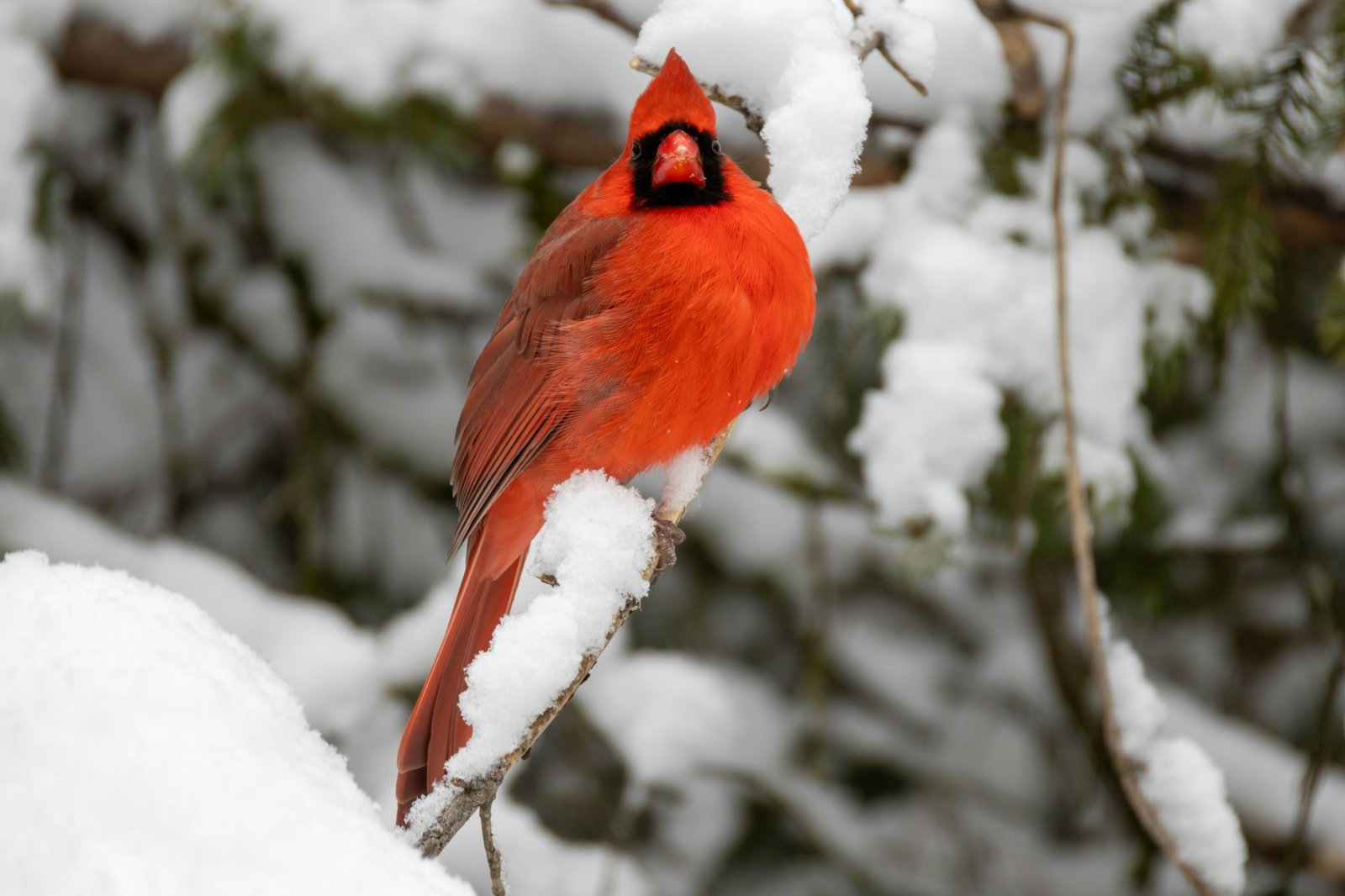
Hang birdseed ornaments outdoors, on tree branches near evergreens or bushes. A balcony or a fire escape works too, if hanging things there is allowed.
Keep them separate from your indoor decorations. A dried orange garland is for the mantel, and salt dough ornaments are for indoors only, because that much salt isn't safe for animals.
Then watch who comes. If a cardinal turns up, our guide to the red cardinal's meaning is a good place to start, and our animal symbolism page covers many more visitors.
A Gift That Lasts Longer
Ornaments feed the birds for a few days. Maine Audubon says the best thing you can do is plant a native plant that becomes a permanent food source. It also suggests leaving leaf litter, seed heads, and plant stalks through the winter, because birds find seeds and insects there.
Bird Seed Ornaments FAQ
What Is the Recipe for Bird Seed Ornaments?
The recipe is 1 tablespoon of unflavored powdered gelatin, 2 tablespoons of cold water, ⅓ cup of boiling water, and 2 cups of birdseed. Press the mix into cookie cutters and refrigerate it overnight.
Are Birdseed Ornaments Safe for Birds?
Yes, when they're made with plain, unflavored gelatin and birdseed. Check them on warm days and take down any that have spoiled, because bacteria and mold can harm wildlife.
Can You Make Birdseed Ornaments Without Gelatin?
Yes. You can spread unsalted sunflower seed butter mixed with birdseed onto a pine cone, string a garland of dried fruit, or fill a hollowed orange half with suet and birdseed.
Can You Use Sunflower Seed Butter or Peanut Butter in Birdseed Ornaments?
Yes. Maine Audubon mixes birdseed into unsalted peanut butter, and the National Park Service also lists SunButter and other nut and seed butters. If anyone in your home has a peanut allergy, use sunflower seed butter, and choose one with no added salt.
How Long Do Bird Seed Ornaments Take to Set?
Bird seed ornaments set overnight in the refrigerator. Let them come to room temperature before you take them out of the cookie cutters.
Where Should You Hang Bird Seed Ornaments?
Hang them outdoors on a tree that's near evergreens or bushes. The nearby cover gives birds shelter from hawks and owls.
Can You Put Popcorn on a Garland for Birds?
Yes, if the popcorn is air-popped, unsalted, and unbuttered. It doesn't give wildlife much nutrition, so use only a little.