Tituba was an enslaved woman in the Salem Village household of Reverend Samuel Parris, and she was one of the first three people accused of witchcraft in the Salem witch trials of 1692. Her confession, given after Parris beat her, convinced the magistrates that a band of witches was at work in the village. She was jailed for more than a year, never tried, and then sold to pay her jail fees. After 1693, she disappears from the record.
Almost everything people "know" about Tituba comes from plays and novels written long after her death. This guide sticks to the court records and the accounts written by people who were there, and it points out where the legend parts ways with them.
Who Was Tituba?
Tituba was a woman enslaved by Samuel Parris, the minister of Salem Village in Massachusetts Bay Colony. Every court document of 1692 describes her the same way, as an "Indian Woman, servant" of Parris, according to the University of Virginia's Salem Witch Trials archive. She was married to another man enslaved in the household, recorded as John Indian.
That's nearly all the records tell us. Because she was enslaved, no one wrote down her birth, her family, or her own account of her life before Salem. Her recorded words survive only in the questions magistrates asked her and the answers they chose to write down.
Where Was Tituba From?
No one knows for sure where Tituba was from. The only early source for her birthplace is Thomas Hutchinson, who wrote in 1764, more than 70 years after the trials, that she had been brought from "New Spain," according to the history of Tituba. Historians have read that as the Caribbean, and the long-told story is that Parris brought her and John from Barbados, where he had lived and traded before becoming a minister.
- The Barbados theory: in the 1990s, historian Elaine Breslaw linked her to a girl named "Tattuba" listed on a Barbados plantation in 1674, and proposed that she was an Indigenous woman from South America, taken to Barbados as a child.
- The African theory: other historians, including Peter Charles Hoffer, have suggested she was of African descent.
- The skeptics: historian Bernard Rosenthal argued that both ideas pile guess on guess. He pointed out that Puritan sources call her "Indian" every time.
Was Tituba Black?
The 1692 records never describe Tituba as Black. They call her "Indian" every time. Over the next two centuries, writers began describing her as "Negro," "half-breed," or "half-Indian, half-Negro," as the UVA archive essay on Tituba traces. The essay argues that these changing labels say more about the racial assumptions of later writers than about the woman herself.
Why Was Tituba Accused of Witchcraft?
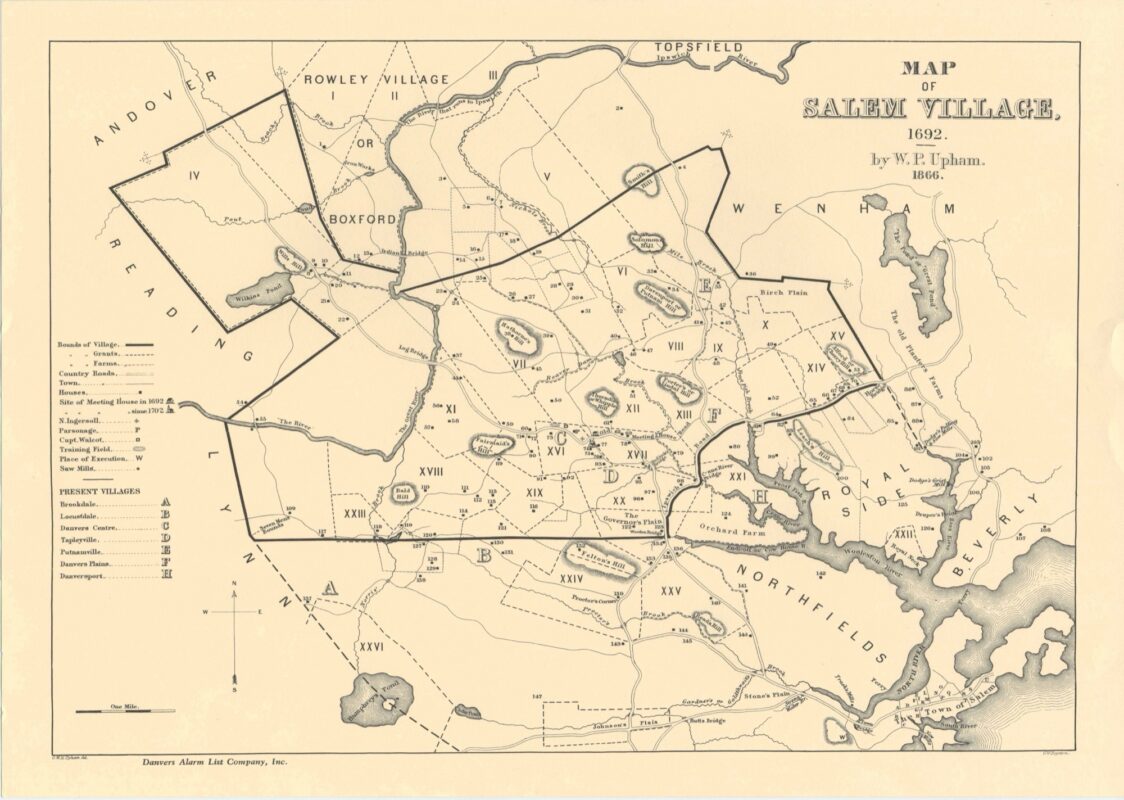
Tituba was accused because the girls in her household named her. In early 1692, Parris's nine-year-old daughter, Betty Parris, and his niece, Abigail Williams, began having fits that a doctor blamed on "an Evil Hand," the minister John Hale wrote in 1702. Soon the girls "cryed out of the Indian Woman, named Tituba, that she did pinch, prick, and grievously torment them," in Hale's words, reprinted in Narratives of the Witchcraft Cases.
On February 29, 1692, four men of the village filed a complaint against Tituba and Sarah Osborne, and the magistrates issued a warrant for their arrest. A second warrant that day named Sarah Good. All three women were outsiders in some way. Calef described Good as a woman who had "long been counted a Melancholy or Distracted Woman" and Osborne as "an Old Bed-rid Woman," two people "so ill thought of, that the accusation was the more readily believed." Tituba was enslaved and foreign.
The Witch Cake
Before the arrests, a "witch cake" was baked in the Parris house. It was an English folk test for witchcraft: rye meal was mixed with the afflicted girls' urine, baked in the ashes, and fed to a dog. According to the 1692 account of minister Deodat Lawson, "Mr. Parris's Indian Man and Woman made a Cake of Rye Meal" this way, and soon after, the girls began naming the people they said they saw tormenting them.
The idea didn't come from Tituba. It came from Mary Sibley, an English neighbor and church member. Parris scolded Sibley in front of the congregation on March 27, 1692, and in his own church record book he blamed the outbreak on "the making of a cake by my Indian man, who had his direction from this our sister Mary Sibly."
Tituba's Confession
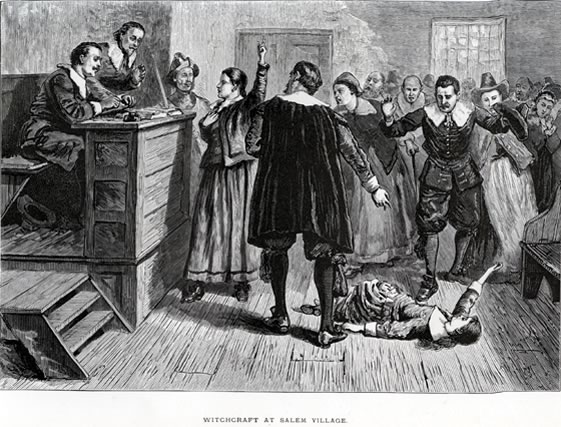
Tituba confessed on March 1, 1692, after first denying everything. Her examination was written down by three different men, and all three records survive in the Salem Witchcraft Papers. When the magistrates first asked why she hurt the children, she answered, "I doe not hurt them." Then her story changed. She told them:
- The Devil came to her. A tall man in black clothes with white hair told her to "serve him" and hurt the children.
- He showed her animals. She described a hog, a great black dog, a red cat and a black cat, and a yellow bird.
- She rode on a pole. She said she rode "upon a stick or poale" with Good and Osborne behind her.
- She signed a book. The next day, she said she had made a mark in the Devil's book, "w'th red like Bloud," and that she saw nine marks in it.
- She named others. She named Sarah Good and Sarah Osborne, plus other women from Boston whose names she said she didn't know.
Her confession also holds a moment of tenderness. She said the spirits forced her to pinch the children, but "I would nott hurt Betty, I loved Betty."
Why Did Tituba Confess?
Tituba later said she confessed because Parris beat her. The Boston merchant Robert Calef, who collected accounts of the trials, wrote in 1700 that "her Master did beat her and otherways abuse her, to make her confess and accuse (such as he call'd) her Sister-Witches." Calef added that Parris refused to pay her jail fees unless she stood by her confession, as reprinted in Narratives of the Witchcraft Cases.
The details of her confession also point away from the legend. As the UVA archive essay notes, everything Tituba described, from the Devil's book to familiars to riding a pole, came from European witch belief, not from African or Caribbean practice. She told the magistrates what English Puritans already believed witches did.
Who Did Tituba Accuse?
Tituba accused Sarah Good and Sarah Osborne, the two women arrested with her. Her confession gave the magistrates what they wanted, an admission that witches were real and working together in Salem Village. Two of the girls testified that Tituba's specter stopped tormenting them "as soon as she began to confess," according to their depositions.
Sarah Osborne died in a Boston jail on May 10, 1692, and Sarah Good was hanged on July 19, 1692, according to the Salem Witchcraft Papers. By the time the trials ended in May 1693, more than 200 people had been accused, 19 had been hanged, and Giles Corey had been pressed to death for refusing to enter a plea, according to the history of the Salem witch trials.
Was Tituba a Witch?
The records don't show that Tituba practiced witchcraft. When the magistrates asked whether she had practiced witchcraft "in your owne Country," she answered "noe Never before now," according to the examination record. John Hale wrote in 1702 that she said her mistress in her own country had taught her ways to find a witch and to keep from being bewitched, "but said that she her self was not a Witch," as reprinted in Narratives of the Witchcraft Cases.
What the records do show is a frightened, enslaved woman, beaten by the man who owned her, telling a room full of powerful men the story they expected to hear. Her confession may also have been a way to survive. People who confessed at Salem were taken back into the community rather than hanged, and historians think some confessed to save their lives, according to the history of the Salem witch trials. Tituba did survive.
What Happened to Tituba After the Trials?
Tituba spent more than a year in jail and was never tried. On March 7, 1692, she was sent to the jail in Boston with Good and Osborne. On May 9, 1693, a grand jury at Ipswich heard an indictment charging her with making "a Covenant with the Devill," and returned it marked "Ignoramus," meaning it refused to send her case to trial, according to the indictment record.
She still couldn't go free, because she owed fees for her time in jail and Parris refused to pay them. Calef wrote that she "lay there till Sold for her Fees." She was sold to an unknown buyer for the price of her jail fees, according to the history of Tituba.
How Did Tituba Die?
No one knows how or when Tituba died. There's no record of her or John after 1693. When Massachusetts paid compensation to victims of the trials in 1711, Tituba wasn't on the list, and she may have died by then. An "Indian woman" named Violet appears in Parris's will in 1720 and may have been her daughter, but nothing more is known about her, according to the history of Tituba.
Tituba in The Crucible and Later Fiction
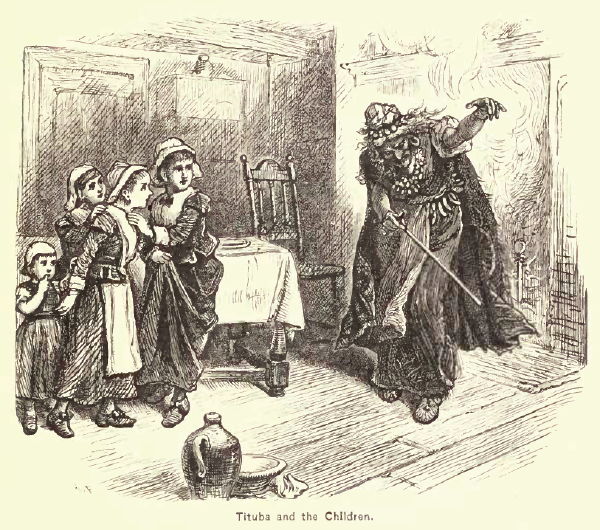
In Arthur Miller's 1953 play The Crucible, Tituba is a woman from Barbados who leads the girls in conjuring spirits in the woods. None of that appears in the 1692 records. The girls did try fortune telling with an egg white dropped in a glass of water, a common New England practice that John Hale reported, but no court record or eyewitness account says Tituba taught it to them, as the UVA archive essay points out. As the history of Tituba traces, the image of Tituba as the spark of Salem grew over more than a century of fiction:
- 1828: John Neal's novel Rachel Dyer describes her as a "female Indian."
- 1868: Henry Wadsworth Longfellow's play Giles Corey of the Salem Farms makes her the daughter of an Obeah man.
- 1949: Marion Starkey's history The Devil in Massachusetts opens with invented scenes of Tituba telling the girls stories of magic. Starkey admitted she had invented them, and Miller's play drew heavily on her book.
- 1953: The Crucible fixes the image of Tituba as the woman who started it all.
- 1986: Maryse Condé's novel I, Tituba, Black Witch of Salem tells the story in Tituba's own voice, which the records never did.
- 2013–2017: in American Horror Story: Coven, a young witch claims descent from Tituba, and the series Salem shows her making a deal with the Devil.
Each version says more about its own time than about hers. The real Tituba left behind a handful of court transcripts, and they show a woman who confessed under a beating and outlived the panic she was blamed for starting.
To learn how witchcraft was understood in Tituba's time and how it's practiced today, see our guides to what witchcraft is and whether witchcraft is real.
Why Tituba's Story Still Matters
Tituba's story still matters because the Salem panic followed a pattern that witch hunts have followed ever since: it began with the people who had the least protection. The first three women accused were an enslaved woman from somewhere else, a poor woman her neighbors already distrusted, and an elderly woman too sick to leave her bed. Once fear took hold, the court accepted the girls' visions as spectral evidence, spared the people who confessed and named others, and hanged the people who insisted they were innocent. The trials ended only when leading ministers began to doubt that evidence, after 19 people had been hanged.
Today, when people are singled out, detained, or labeled dangerous because of where they come from or who they are, the same pattern is at work. Salem shows how quickly fear can turn neighbors into suspects, and how long it takes to undo the harm.
Tituba FAQ
Who was Tituba?
Tituba was an enslaved woman in the household of Reverend Samuel Parris of Salem Village. In 1692 she was one of the first three people accused of witchcraft in the Salem witch trials, and her confession helped set the trials in motion.
Was Tituba a real person?
Yes, Tituba was a real person. Her arrest warrant, three records of her examination, and her 1693 indictment survive in the Salem Witchcraft Papers.
Why was Tituba accused of witchcraft?
Tituba was accused because Betty Parris and Abigail Williams, the girls in her household, said she was pinching and tormenting them during their fits. As an enslaved, foreign woman, she was an easy target.
Why did Tituba confess to witchcraft?
Tituba later said Samuel Parris beat her to make her confess and accuse others, according to Robert Calef's 1700 account. Confessing may also have saved her life, since people who confessed at Salem were generally taken back into the community rather than hanged.
Who did Tituba accuse?
Tituba accused Sarah Good and Sarah Osborne, the two women arrested with her on February 29, 1692. She also described other women from Boston whose names she said she didn't know.
Was Tituba a witch?
The records don't show that Tituba practiced witchcraft. She told the magistrates she had never practiced it, and John Hale wrote that she said she was not a witch.
Where was Tituba from?
No one knows for certain. The court records call her "Indian," and a 1764 history says she came from "New Spain." Historians have proposed Barbados, South America, and Africa.
Was Tituba Black?
The 1692 records describe Tituba as "Indian," not Black. Later writers began describing her as Black or part Black in the 1800s, and her origins are still debated.
How did Tituba die?
No one knows. After a grand jury refused to indict her in May 1693, she was sold to pay her jail fees, and there's no record of her after that.
Who is Tituba in The Crucible?
In Arthur Miller's The Crucible, Tituba is an enslaved woman from Barbados who leads the girls in conjuring spirits. That role is fiction; the court records never connect her to the girls' fortune telling or to any spells in the woods.
Tituba's name has outlived almost everyone else's at Salem, yet her real life fits on a few pages of court records. Reading those records closely is the best way to honor her: as a real woman, enslaved and accused, who survived the trials.
Featured image: the Salem Village parsonage site, Danvers, Massachusetts, by Fletcher6, CC BY-SA 3.0, via Wikimedia Commons.