A woodpecker is most often read as a sign of determination, resourcefulness, and opportunity knocking. It spends its days chiseling into hard wood, one strike after another, until it reaches what it needs, so a sighting is read as a nudge to keep going, work with what you have, and listen for the chance that's tapping at your door.
I spotted a female woodpecker in Massachusetts this fall, and what stayed with me was how steady she was. She worked her way around the trunk without hurrying and without giving up. That's the heart of what this little bird teaches.
What Does a Woodpecker Symbolize?
A woodpecker symbolizes determination, resourcefulness, rhythm, communication, and opportunity. Its meanings come straight from how a woodpecker lives.
The main readings practitioners give a woodpecker are:
- Determination. A woodpecker strikes the same spot again and again until the wood gives way. It's read as a sign that steady effort will get you through.
- Resourcefulness. Woodpeckers find food other birds can't reach. Their long, sticky tongues wrap around insects deep inside the bark and pull them out. A woodpecker is read as a reminder that what you need is often closer than it looks.
- Opportunity knocking. The knocking sound is read as a door being tapped, a sign that a chance is arriving and you should answer it.
- Rhythm and communication. Woodpeckers drum to claim territory and call to mates, and every species keeps its own beat. A woodpecker is read as a sign to speak up and find your own rhythm.
- Protection of your mind. A woodpecker's tongue bone is so long that it wraps around the outside of its skull, and its spongy skull bones cushion the brain from all that pounding. Many practitioners read the woodpecker as a guardian against stress and a reminder to protect your peace while you work hard.
- Home and shelter. Old woodpecker holes become homes for other birds and small animals that can't dig their own. The woodpecker is read as a builder whose work shelters others.
Seeing a Woodpecker: What It Means
Seeing a woodpecker is read as a sign to stay with what you've started. Many people read the details of the sighting, too:
- A woodpecker at your house is read as a sign of new opportunities coming to your home or family.
- A woodpecker at your feeder in winter is read as a sign that you'll be provided for in lean times. Downy woodpeckers often visit backyard suet and peanut feeders in winter.
- A woodpecker flying in front of you is read as a message to move forward on a plan you've been putting off.
- A woodpecker circling a tree trunk is read as a reminder to look at a problem from every side before you strike.
- A dead woodpecker is read as a sign to rest, or to stop pushing at something that won't give. Don't touch dead birds with bare hands.
Woodpecker Pecking on Your House: What It Means
A woodpecker pecking on your house is read as a message that someone or something is trying to get your attention. Spiritually, many people treat it as opportunity knocking at the door.
Practically, there are three reasons a woodpecker pecks on a house:
- Drumming. Woodpeckers drum on loud surfaces like gutters, downspouts, chimneys, vents, and metal siding to claim territory and attract a mate. It's a gentler kind of pecking that doesn't dig holes.
- Looking for a home. Wood shingles and wood siding near big trees can look like a good place to dig a nest or roosting hole.
- Looking for food. A woodpecker may drill into siding to reach insect larvae hiding behind the wood.
If the pecking leaves holes, check for insects behind the siding, since the woodpecker may be pointing you to a problem you couldn't see.
Woodpecker Drumming and Knocking: What It Means
Woodpecker drumming is read as a call to listen. Drumming is how woodpeckers talk. Each species has its own pattern of beats, pauses, and speed, and mates can recognize each other by their drumming alone.
Many people read the number of knocks too:
- A single knock is read as a gentle nudge to pay attention.
- A steady drumroll is read as a sign that your efforts are building toward something.
- Knocking that stops and starts again is read as a reminder to rest between pushes, the way a woodpecker pauses between rolls.
Female Woodpecker Spiritual Meaning
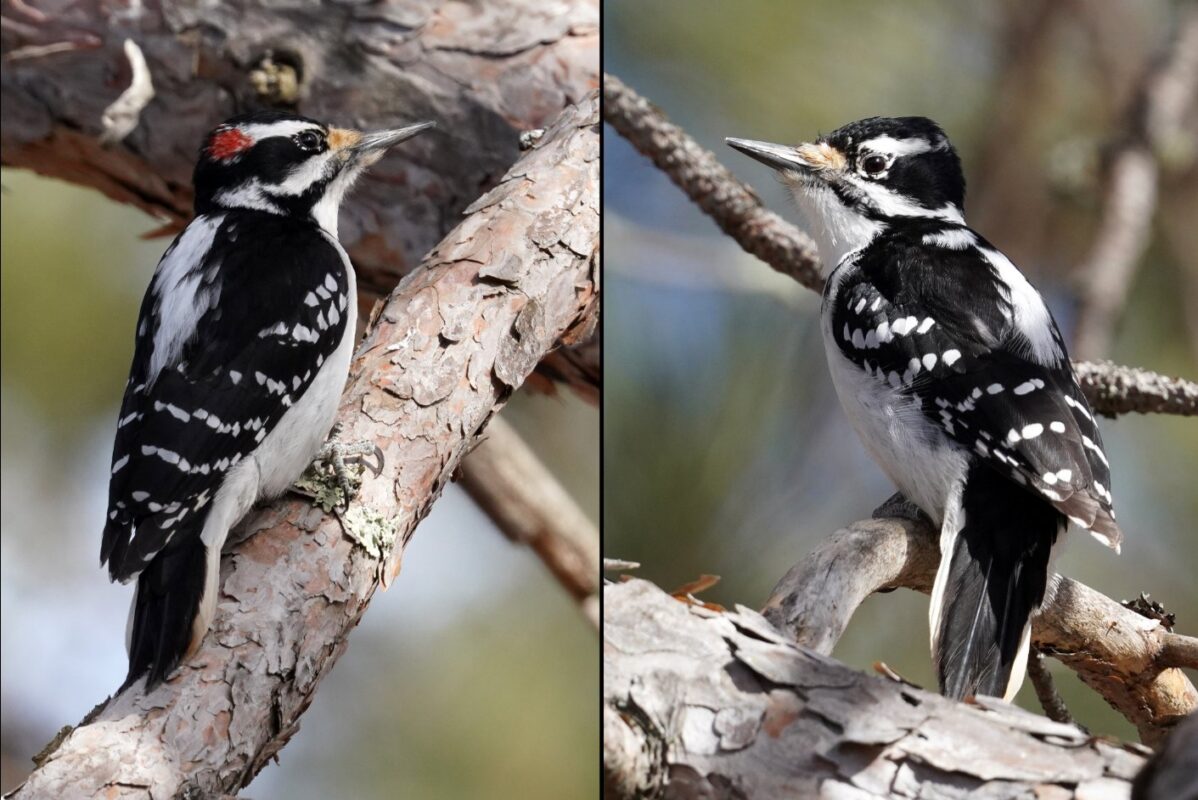
A female woodpecker is read as a sign of quiet determination and nurturing strength. In many North American woodpeckers, the female has no red on her head, so she's easy to overlook. She is read as a reminder that steady, unseen work still counts.
Female woodpeckers dig nest holes, sit on eggs, and feed their young alongside the males, so a female woodpecker is also read as a sign of partnership and of building a safe home.
How to tell a female woodpecker from a male in common backyard species:
- Downy and hairy woodpeckers: Males have a small red patch on the back of the head. Females have none.
- Red-bellied woodpecker: Males have red from the bill to the back of the neck. Females have red only on the back of the neck.
- Pileated woodpecker: Males have a red stripe, often called a mustache, at the base of the bill. Females have a black one.
Downy vs. Hairy Woodpecker: How to Tell Them Apart
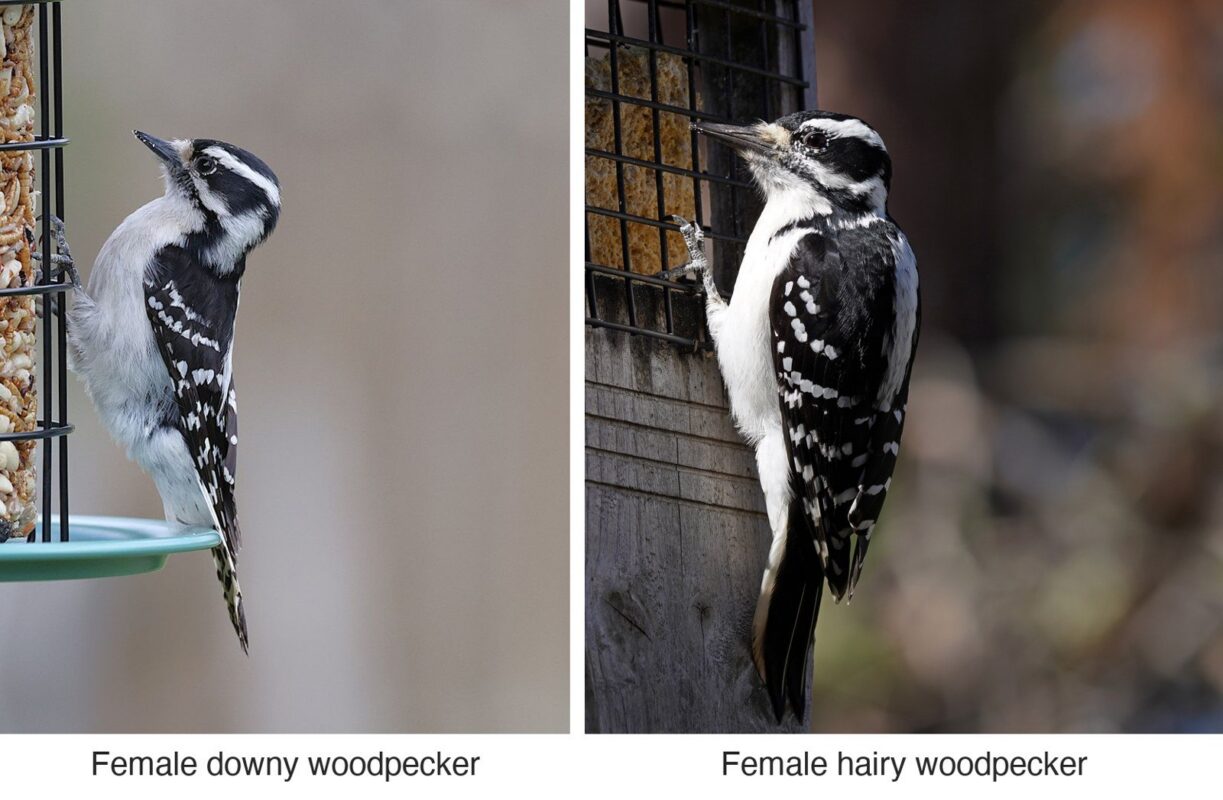
The fastest way to tell a downy from a hairy woodpecker is the bill. A downy woodpecker's bill is much shorter than its head, while a hairy woodpecker's bill is about as long as its head. If you couldn't see the bill, you can still tell them apart by size, tail feathers, and sound.
| Clue | Downy woodpecker | Hairy woodpecker |
|---|---|---|
| Size | 5.5 to 7 inches, about the size of a sparrow | 7 to 10 inches, about the size of a robin |
| Bill | Much shorter than the head | About as long as the head |
| Outer tail feathers | White with black spots or bars | Clean white, no spots |
| Call | A short, soft "pik" | A louder, sharper "peek" |
| Female | No red on the head | No red on the head |
Both birds live year-round across most of the United States, including New England, and both visit backyard feeders. Despite how alike they look, they aren't close relatives. Their resemblance is an example of convergent evolution, where unrelated animals come to look alike.
Spiritually, many people read the small downy as a sign that small, steady efforts add up, and the larger hairy as a sign to take on a bigger task with confidence.
Woodpecker Species and Their Meanings
Different woodpeckers carry slightly different readings.
Downy Woodpecker
The downy woodpecker is the smallest woodpecker in North America. It's read as a sign that you don't need to be the biggest to make progress.
Hairy Woodpecker
The hairy woodpecker is read as a sign of strength and confidence. It looks like a downy but works with a longer, stronger bill, so it's read as a reminder to use the tools you've grown into.
Pileated Woodpecker
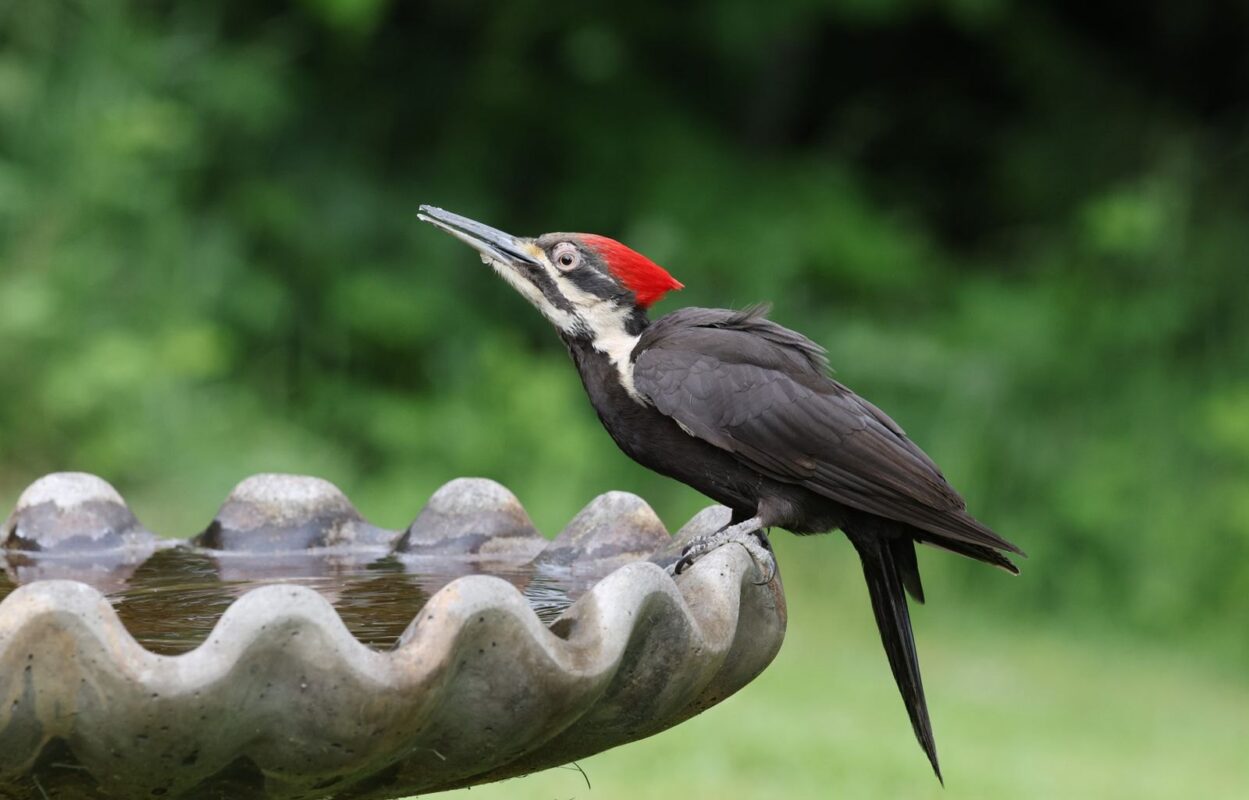
The pileated woodpecker is the largest woodpecker most people in North America will ever see, nearly the size of a crow, with a flaming red crest. It's read as a sign of bold transformation. Its loud, wild, laughing call is read as a wake-up call, a message to stop waiting and act. Its big rectangular holes in dead trees are read as a sign that something old is making room for something new.
Red-Bellied Woodpecker
The red-bellied woodpecker is named for a faint blush of red on its belly that's hard to see. It's read as a reminder that not every gift is obvious at first glance.
Northern Flicker
The northern flicker often feeds on the ground, eating ants, instead of in the trees. It's read as a sign to stay grounded and look for answers in unexpected places.
Woodpeckers in Myth and Folklore
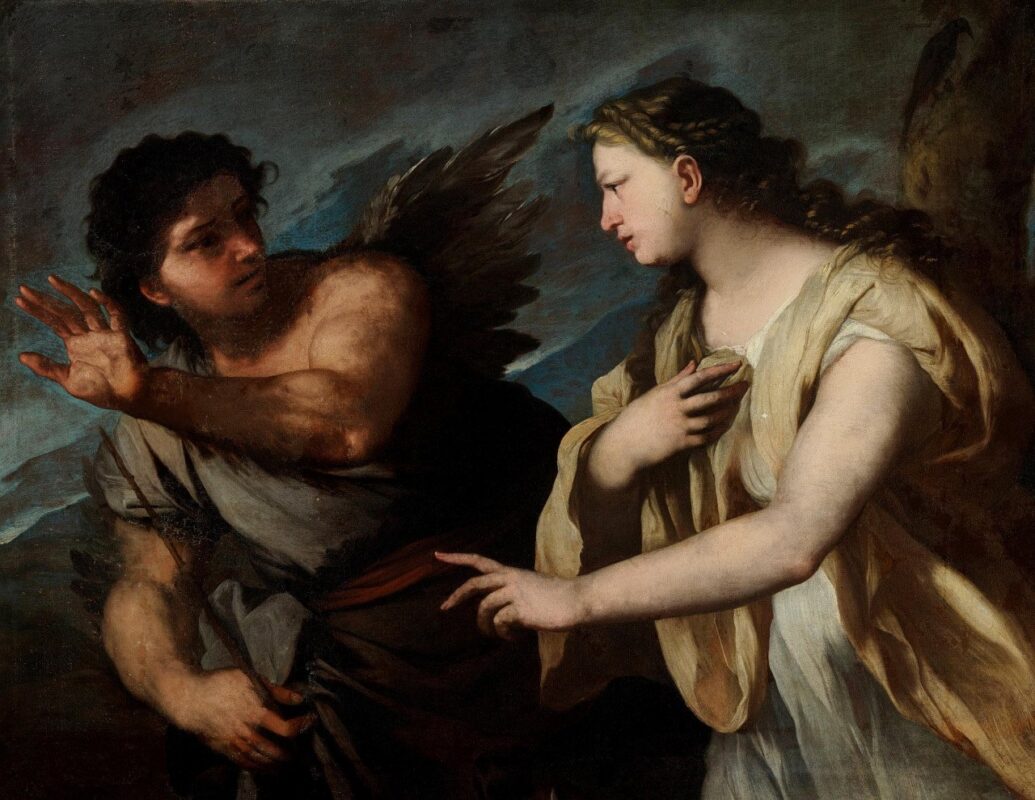
Woodpeckers have been read as messengers for thousands of years, especially in Italy.
- Picus, the king who became a woodpecker. In Roman myth, Picus was the first king of Latium, known for his skill at reading bird omens. The witch Circe fell for him, and when he rejected her for his wife, the nymph Canens, Circe turned him into a woodpecker. Ovid tells the story in his Metamorphoses. Picus's name is the Latin word for woodpecker, and one ancient writer said he got the name because he relied on a woodpecker for divination.
- The bird of Mars. Some Italic peoples believed Picus was a son of Mars, the god of war, and the woodpecker became one of Mars's sacred birds in Roman augury, the practice of reading omens from birds.
- The woodpecker that fed Rome's founders. One account of the founding of Rome says a woodpecker brought food to the abandoned twins Romulus and Remus, helping them survive.
- The woodpecker that led the way. A legend says a woodpecker led the people who became the Picentes to their new home on Italy's Adriatic coast, during a spring migration ritual called the ver sacrum. That's why the green woodpecker is still the emblem of the Marche region today.
- The rain bird. In England, the European green woodpecker has folk names like rain-bird, wet bird, and weather cock, because its laughing call was thought to bring on rain.
- Native American traditions. Woodpeckers appear in the stories and ceremonies of many Native nations, and their feathers have deep ceremonial meaning in some of them. These teachings are best learned from people who practice within those traditions.
Woodpecker Dreams: What They Mean
Dreaming of a woodpecker is read as a sign that an opportunity or message is trying to reach you. Many people read the details:
- A woodpecker pecking a tree is read as hard work that's about to pay off.
- A woodpecker pecking at your house or door is read as news or a visitor on the way.
- A woodpecker flying away is read as a missed chance, or a reminder to act sooner next time.
- A dead woodpecker is read as burnout, a sign to rest before you push again.
The Woodpecker as a Spirit Animal
As a spirit animal or animal guide, the woodpecker is read as a teacher of persistence, rhythm, and resourcefulness. People who feel close to woodpeckers are often steady workers, problem-solvers, and people who keep going when others quit. The term "spirit animal" comes partly from Indigenous traditions, so many people today say "animal guide" or "animal ally" instead.
If you'd like to work with woodpecker energy:
- Hang a suet feeder in winter and keep a note in your spell journal of which woodpeckers come and when.
- Before starting a hard task, knock three times on a wooden surface, like your altar or a tree, and recite: "Steady beak and patient wood, open the way to what is good."
- Break a big goal into small daily strikes, and do one every day.
- Draw a card from an animal oracle like the Spirit of the Animals Oracle when you need a message from your animal guides.
One practical note: in the United States, woodpeckers, including downy, hairy, pileated, and red-bellied woodpeckers and northern flickers, are federally protected migratory birds. Under the Migratory Bird Treaty Act, it's illegal to keep their feathers, even ones you find on the ground, or to disturb an active nest without a permit. If you'd like feathers for your altar, turkey, goose, and guinea hen feathers are legal to own.
Wondering which animal guide matches you? Take our spirit animal quiz. You can also browse every animal on our animal symbolism page. For more birds, see the spiritual meaning of the crow, the owl, the hawk, and the mockingbird.
Woodpecker Spiritual Meaning FAQ
What does it mean when you see a woodpecker?
Seeing a woodpecker is read as a sign of determination and opportunity. It's a nudge to keep working steadily at your goals and to answer when a chance comes knocking.
What does a woodpecker symbolize?
A woodpecker symbolizes determination, resourcefulness, rhythm, communication, and opportunity knocking.
What does it mean when a woodpecker pecks on your house?
Spiritually, a woodpecker pecking on your house is read as something trying to get your attention, or opportunity knocking. Practically, it's drumming to claim territory, looking for a nest site, or hunting insects behind the siding.
What does a female woodpecker mean spiritually?
A female woodpecker is read as a sign of quiet determination, partnership, and nurturing strength. In downy and hairy woodpeckers, she has no red on her head.
How can you tell a downy woodpecker from a hairy woodpecker?
Look at the bill: a downy's bill is much shorter than its head, while a hairy's bill is about as long as its head. Downies are sparrow-sized with black spots on their white outer tail feathers. Hairies are robin-sized with clean white outer tail feathers.
What does a pileated woodpecker mean spiritually?
A pileated woodpecker is read as a sign of bold transformation. Its loud, laughing call is read as a wake-up call to stop waiting and act.
Is a woodpecker good luck?
Many people read a woodpecker as good luck, especially as a sign that hard work is about to pay off. In ancient Rome, woodpeckers were sacred to Mars and were watched closely as omens.
Can I keep a woodpecker feather I found?
No. In the United States, woodpeckers are protected under the Migratory Bird Treaty Act, so keeping their feathers is illegal without a permit, even feathers you find on the ground.