Wunjo is the eighth rune of the Elder Futhark, and it is the rune of joy. Not the loud, fleeting kind, but the settled joy of belonging: a warm house, good company, enough to go around, and the feeling that you are exactly where you are meant to be. It closes the first aett, and after seven runes of wealth, strength, force, speech, travel, fire, and gifts, it arrives like the moment everyone finally sits down to eat together.
If Wunjo turned up in your cast, this page will tell you what it is pointing at, what it means reversed, and how to work with it. If you are here because you keep seeing the symbol, or weighing it as a tattoo, everything is below.
What Is the Wunjo Rune?
Wunjo (ᚹ) is the eighth rune of the Elder Futhark. Its name means joy, and it represents harmony, contentment, belonging, and fulfillment. It carries the sound W, and it is pronounced WOON-yoh.
The joy Wunjo names is social and grounded. It is the well-being of a person who has what they need and people to share it with. The Old English name for the rune, Wynn, meant joy or delight, and the same shape lived on as a letter in written Old English for centuries, standing for the W sound until scribes replaced it with the W we use now.
So Wunjo is the rune of the good life in the plainest sense: harmony at home, fellowship, pleasure in your work, and the quiet satisfaction of things going right.
The Wunjo Symbol
Wunjo is drawn as a vertical stave with a small closed triangle at the upper right, like a pennant or flag flying from a pole. It looks similar to the letter P, but with a pointed bowl instead of a rounded one.
- Sound value: W
- Pronunciation: WOON-yoh
- Position: 8th rune, last of the first aett (Freyr’s Aett)
- Literal meaning: Joy
- Also called: Wynn (Old English)
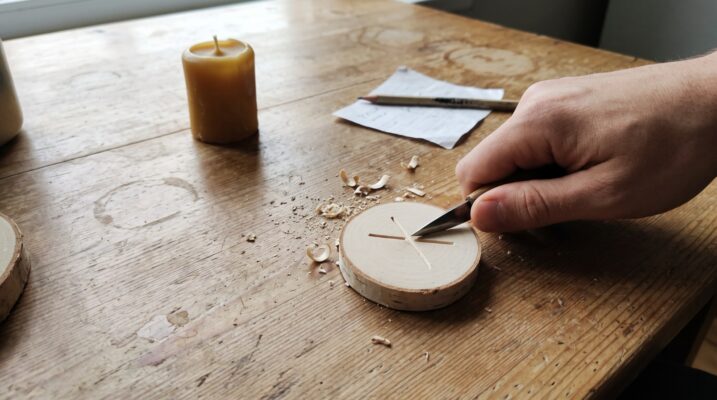
Cut the vertical stave first, then the triangle. Many readers see a banner in the shape, the kind raised over a gathering or a victory, which suits the meaning well.
Wunjo Meaning in a Reading
Upright, Wunjo points at harmony, contentment, and a good outcome. A relationship at ease. A home that feels like home. A group or team that works well together. A goal reached, a celebration earned, or simply a stretch of life where things are going well and you can let yourself enjoy it.
Wunjo often arrives after effort. Coming at the end of the first aett, it can be read as the reward for the work the earlier runes describe: the wealth of Fehu, the strength of Uruz, the gift and exchange of Gebo, all settling into a life that feels right. When Wunjo shows up, it frequently says that something you have been working toward is ready to be enjoyed.
It is also a rune of belonging. Wunjo’s joy is rarely a solitary thing. It points at the people you share your life with, and asks whether you are letting yourself be part of something.
When Wunjo comes up, ask:
- What is going well right now that I have not stopped to appreciate?
- Where do I feel most at home, and with whom?
- Is there something to celebrate that I keep putting off?
- Am I letting myself belong, or holding myself apart?
Wunjo Reversed
Reversed, Wunjo points at discord, alienation, or joy that is performed rather than felt. Tension at home. A group where you do not quite fit. A success that looks good from the outside but does not satisfy you. Smiling through a situation that is not actually working.
It can also mean a harmony that has not arrived yet: a good thing still on its way, or a contentment that depends on something else settling first. Where upright Wunjo is the table already set, reversed Wunjo is the gathering that has not quite come together.
Reversed Wunjo is rarely a catastrophe. It usually asks for honesty about a contentment that is not really there, and for the small, practical steps that let real joy back in.
Wunjo Meaning by Question: Love, Work, and the Rest of It
You did not draw this rune in a vacuum. You drew it holding a question. Here is what Wunjo is saying depending on what you asked.
Love and Relationships
UprightA relationship at ease and a bond where you feel genuinely at home. Wunjo is one of the warmest runes to draw in a love reading: contentment, shared pleasure, and a partnership where both people feel they belong. It can also mean a happy development, like moving in together or making it official.
ReversedDiscord, distance, or a relationship that looks fine but does not feel fine. Reversed here often points to unspoken unhappiness, or to one person keeping the peace at the cost of their own joy.
Work and Money
UprightSuccess and satisfaction. Wunjo favors good teamwork, recognition for your efforts, and work you actually enjoy. If you asked about a project or a job, it says the outcome is likely to be a good one.
ReversedFriction with colleagues, or success that feels hollow. A job that pays but drains you, or a team pulling in different directions. Reversed Wunjo asks whether the work is giving you anything besides a paycheck.
Inner Life
UprightContentment and self-acceptance. Wunjo is a sign that you are at peace with where you are, or close to it. It invites you to enjoy the present rather than always reaching for the next thing.
ReversedRestlessness, loneliness, or a sense of not fitting in your own life. Reversed Wunjo asks what small change would help you feel at home again.
Yes or No
UprightYes. Wunjo is one of the most favorable runes in the set, and a strong yes for most direct questions.
ReversedNot as things stand. Something needs to be set right before this can bring you the joy you are hoping for.
The Action to Take
Let yourself enjoy it. Whatever you asked about, Wunjo is telling you that joy is part of the answer. Notice what is already good, share it with the people who make it good, and mark it: a meal, a toast, a small celebration. If the joy is missing, be honest about it, and take one concrete step toward the company and the home that would bring it back.
Wunjo in Rune Lore
Wunjo has a quieter mythic footprint than runes like Ansuz or Tiwaz, and that suits it. It is not a rune of gods and battles but of ordinary happiness, the kind a whole community shares when the harvest is in and the hall is warm.
Most of what we know comes from the Old English rune poem, which says that bliss belongs to the one who knows little of woe, sorrow, and pain, and who has prosperity, contentment, and a good enough dwelling of their own. It is a strikingly practical picture of joy: not ecstasy, but freedom from suffering and a secure place in the world.
Wunjo does not appear in the later Scandinavian rune row, the Younger Futhark, which dropped it along with several other runes, so there are no Norse or Icelandic rune poems for it. Its life continued in England instead, where the rune became the letter wynn and was written in Old English manuscripts for hundreds of years. Every time a scribe wrote a word with a W sound, they were, in a small way, writing joy.
How to Use Wunjo in Your Practice
Wunjo is a natural rune for harmony, celebration, belonging, and contentment. It is the rune of joy, so use it wherever you want a home, a group, or a stretch of life to feel good.
For a harmonious home
Draw or carve Wunjo over a doorway, on the underside of a kitchen table, or on a small stone kept where the household gathers. Name the kind of home you want: warm, peaceful, welcoming. It is a gentle rune for a new house or a household going through a rough patch.
For groups and gatherings
Before a celebration, a meeting, or a coven gathering, draw Wunjo in the air or on a card at the center of the table. Ask for good company and easy harmony. It suits any work where you want people to come together well.
In a bind rune
Wunjo pairs with Gebo for a joyful partnership, with Fehu for prosperity you can actually enjoy, and with Jera for the reward that comes at the end of patient work. Keep bind runes to two or three staves so the intention stays legible.
To mark a good moment
When something goes well, draw Wunjo in your journal next to it. Over time you build a record of what brings you joy, which is its own kind of magic, and a good thing to read back on harder days.
Wunjo Rune Tattoos
Wunjo is chosen as a tattoo by people who want to carry a reminder of joy, belonging, or a hard-won happy chapter. Two things worth knowing before you commit it to skin.
It means shared, settled joy. Wunjo is not about thrills. It is about contentment, home, and the people you belong with, which makes it a lovely choice to commemorate a family, a friendship, or a place you found yourself.
Check what you are getting. Runes have been co-opted by hate groups, and while Wunjo is not among the appropriated symbols, it is worth knowing the landscape and being able to speak to the rune’s real meaning. Learning the genuine history is the best answer to anyone who has tried to steal these symbols, and a good reason to get the rune right rather than pulling it from a random source.
Common Questions About Wunjo
What does the Wunjo rune mean?
Wunjo means joy, and by extension harmony, contentment, belonging, and fulfillment. It is the eighth rune of the Elder Futhark, the last of the first aett, and carries the sound W. Its joy is the settled, social kind: the well-being of having enough and belonging somewhere.
Is Wunjo a good rune to draw?
Yes, one of the most favorable in the set. Upright, it signals harmony, success, contentment, and a good outcome, and it is a strong yes for most direct questions.
What does Wunjo reversed mean?
Discord, alienation, feeling out of place, or joy that is performed rather than felt. It can also mean a harmony not yet arrived. It usually asks for honesty about a contentment that is not really there.
How do you pronounce Wunjo?
WOON-yoh. It is also called Wynn in Old English, meaning joy or delight, a word that also survives as an Old English letter.
Is Wunjo a rune for love?
Yes. As a rune of harmony and belonging, Wunjo is very favorable in love readings, pointing to a relationship at ease and a bond where you feel genuinely at home.
Keep Going
Wunjo is one of twenty-four. For the full picture, our complete guide to the Elder Futhark runes lays out every rune, its meaning, and its reversal in one place you can pull up mid-reading.
When you’re ready to read with your own stones, our rune sets come in wood, bone, and a dozen kinds of crystal.
Before Wunjo comes Gebo, the gift and the bond that joy grows out of. After it comes Hagalaz, the hailstorm that opens the second aett and reminds us why good days are worth savoring.
Bliss, the old poem says, belongs to the one with little sorrow and a home of their own. Wunjo asks you to notice when that is you.