These Instant Pot black-eyed peas are the pot I make every New Year's Day. Dried peas, bacon, broth, and a bay leaf go into the pressure cooker with no soaking, and they come out tender and savory in about an hour. Southerners have eaten black-eyed peas on January 1 for generations to bring luck and prosperity into the year ahead. Below the recipe, you'll find where the custom comes from, what each ingredient brings magically, and how to set your New Year's table for abundance.
Why Eat Black-Eyed Peas on New Year's Day?
People eat black-eyed peas on New Year's Day for luck and prosperity in the year ahead. The small, round peas stand for coins, and the more you eat, the more money the year is said to bring. The custom is strongest in the American South, where it's part of a whole New Year's meal.
The black-eyed pea came to the Americas from West Africa, and the New Year's custom carries that history. In one Southern tradition, black-eyed peas became a symbol of emancipation for African Americans, who were officially freed on New Year's Day. In African American Hoodoo, eating black-eyed peas or Hoppin' John on New Year's Day is a practice for prosperity. Hoodoo is a living tradition best learned from practitioners within it.
Other explanations for the custom date to the Civil War, and every family seems to have its own version of the story. What they share is the hope that a humble pot of peas on the first day of the year leads to plenty all year long.
The Rest of the Lucky New Year's Meal
Black-eyed peas are usually one part of a lucky New Year's plate. Each dish on the table carries its own wish:
- Black-eyed peas stand for coins.
- Greens, like collards, cabbage, turnip greens, or mustard greens, stand for paper money.
- Cornbread stands for gold because of its color.
- Pork, like the bacon in this recipe or a ham hock, rounds out the traditional meal.
Leftover peas eaten on January 2 even have a name in the South: "Skippin' Jenny," which carries the luck forward one more day.
Magical Properties of the Ingredients
Every ingredient in this pot leans toward prosperity, protection, and a fresh start. Here is what each one brings.
- Black-eyed peas are the luck and money in the pot. Like most seeds and beans, they also carry the energy of growth and new beginnings.
- Bay leaf is for success, protection, and wishes. Many practitioners write a wish for the new year on the bay leaf before it goes in.
- Bacon comes from pork, part of the traditional New Year's meal across the South. It brings richness and comfort to the pot.
- Onion is for protection, keeping harm away from the household in the year ahead.
- Salt is protection and purification, a clean start for a new year.
- Black pepper is a fire spice that practitioners use for protection and to clear away what you don't want to carry into the new year.
- Chicken broth is nourishment, the base that carries everything else.
How to Make Black-Eyed Peas in the Instant Pot
To make black-eyed peas in the Instant Pot, brown bacon on the sauté setting, add the dried peas, water, broth, onion powder, and a bay leaf, then pressure cook for 30 minutes and let the pressure release naturally for 15. There's no need to soak the peas.
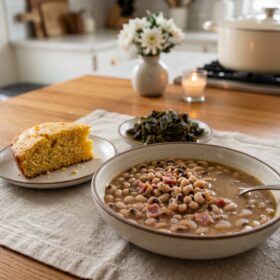
Instant Pot Black-Eyed Peas
Ingredients
- 1 pound dried black-eyed peas
- 1 pound bacon diced
- 3 cups water
- 3 cups chicken broth
- 1 tablespoon onion powder
- 1 bay leaf
- salt to taste (leave it out if you use chicken bouillon or a salted broth)
- black pepper to taste
- cornbread for serving

Instructions
- Brown the bacon on the high Sauté setting.
- Add everything else to the pot. Scrape up the browned bacon bits from the bottom so the Instant Pot doesn't show a burn warning.
- Close the lid, lock it, and set the valve to sealing.
- Cook on Manual (high pressure) for 30 minutes.
- Let the pressure release naturally for 15 minutes.
- Release the remaining pressure manually.
- Remove the bay leaf and season with salt and pepper. Serve with cornbread.
Notes
- There's no need to soak the peas. The pressure cooker makes them tender straight from dry.
- Taste before salting. Bacon and broth both add salt.
- The peas keep for 4 days in the fridge and up to 3 months in the freezer.
- Homemade Instant Pot bone broth works anywhere this recipe calls for broth.
How to Set a New Year's Table for Abundance
You can turn your New Year's meal into a small abundance ritual by cooking with intention and setting the table with the old customs. Here's how.
- Write a wish for the year on the bay leaf before it goes into the pot. Keep it to a word or two, like "steady work" or "a full pantry."
- Stir the peas clockwise once they're done. Practitioners stir clockwise to draw something in. While you stir, recite:
Peas for coins and greens for bills,
bring us plenty, fill our tills.
- Tuck a coin under each bowl before you serve, a Southern custom for prosperity in the year ahead.
- Eat at least a spoonful of everything on the lucky plate: peas, greens, and cornbread.
- Save some for January 2. Eating the leftovers the next day carries the luck forward.
Frequently Asked Questions
Do You Have to Soak Black-Eyed Peas Before Pressure Cooking?
No, you don't have to soak black-eyed peas before pressure cooking. Dried black-eyed peas cook tender in 30 minutes at high pressure with a 15-minute natural release.
Why Do People Eat Black-Eyed Peas on New Year's?
People eat black-eyed peas on New Year's for luck and prosperity. The peas stand for coins, and eating them on January 1 is said to bring money in the year ahead. The custom is strongest in the American South and has roots in African American foodways.
What Do You Eat With Black-Eyed Peas on New Year's Day?
On New Year's Day, black-eyed peas are usually served with collard greens, cornbread, and pork. The greens stand for paper money and the cornbread for gold.
Can I Use Canned Black-Eyed Peas?
Yes, you can use canned black-eyed peas. Brown the bacon in a pot on the stove, add two drained 15-ounce cans of peas, 1 1/2 cups of broth, the onion powder, and the bay leaf, and simmer for 15 to 20 minutes.
What Is Hoppin' John?
Hoppin' John is a Southern dish of black-eyed peas cooked with rice and pork, often eaten on New Year's Day for luck. You can turn these peas into Hoppin' John by serving them over rice.
However your family tells the story, a pot of peas on the first day of the year is a wish for plenty, made the old way.