A Ouija board is a talking board: a flat board printed with the alphabet, the numbers 0 through 9, the words yes and no, and usually goodbye, used with a small heart-shaped pointer called a planchette. Two or more people rest their fingertips on the planchette, ask a question, and watch it slide from letter to letter to spell out an answer. Ouija is a trademark owned by Hasbro, and the general names are spirit board, talking board, and witch board. The board grew out of American Spiritualism in the 1880s, sold as a parlor game from 1890, and is still the best-known tool for trying to speak with spirits, and the most argued about.
What Is a Ouija Board?
A Ouija board is a divination tool for asking questions of spirits or of your own intuition, depending on whom you ask. The classic layout puts the alphabet in two arcs across the middle, the numbers in a row below, yes and no in the top corners, and goodbye along the bottom. Some boards add hello, and many modern designs replace the letters with symbols of their own.
Ouija Board vs. Spirit Board
A Ouija board and a spirit board are the same kind of tool. Ouija is a brand name, owned today by Hasbro, and it has come to stand for every board of its kind. Spirit board, talking board, and witch board are the general terms. The boards and cloths we carry are spirit boards in the classic style.
What Is a Planchette?
A planchette is the heart-shaped pointer that moves across a spirit board, usually with a clear window or a point to mark each letter. The name is French for "little plank." The first planchettes, popular in Europe from 1853, were small boards on two caster wheels with a pencil through the tip, and the sitters' hands pushed them across paper to write out messages. The talking board makers of 1890 dropped the pencil and paired the board with a plain pointer, and that is the planchette most people know today.
Where Did the Ouija Board Come From?
The Ouija board came from the Spiritualist movement in the United States, but the idea of a spirit speaking through a moving pointer is much older.
Spirit Writing Before the Board
In Song dynasty China, around the year 1100, practitioners of fuji), or spirit writing, held a stylus over a tray of sand or incense ash and let a deity or ancestor guide it to write characters. In the United States, Spiritualism, the belief that the living can speak with the dead, swept the country in the mid-1800s, and after the Civil War mediums did steady business helping grieving families reach their lost sons. Spelling out messages by calling the alphabet and waiting for knocks was slow. The planchette sped things up, and by 1886 newspapers reported that talking boards were taking over the Spiritualist camps in Ohio.
How the Ouija Board Got Its Name
The board named itself, according to its makers. In 1890 in Baltimore, the medium Helen Peters Nosworthy asked a talking board what it should be called, and it spelled out O-U-I-J-A. When she asked what that meant, the answer was "good luck." She later admitted she was wearing a locket with a picture of the English novelist Ouida at the time. The popular idea that the name joins the French oui and the German ja, both meaning yes, is a later invention.
The Patent and the Parlor Game
Nosworthy's brother-in-law, the lawyer Elijah Bond, filed the patent for the Kennard Novelty Company of Baltimore. The story goes that the patent office refused it until Bond and Nosworthy traveled to Washington, where the chief patent officer asked the board to spell his name, and it did. The patent was granted on February 10, 1891. A foreman at the company, William Fuld, soon took over production, stamped "Original Ouija Board" and "Inventor" on the back of his boards, and sold them for decades as a family game. Fuld died in 1927 after falling from the roof of his own factory. Parker Brothers bought the business in 1966, and the name passed to Hasbro with Parker Brothers.
From Parlor Game to Spirit Tool
The board sold as harmless fun until Pearl Curran, a St. Louis woman, announced in 1913 that a long-dead Englishwoman named Patience Worth was dictating novels and poems to her through it. Her books and the grief of World War I turned the board into a serious divination tool. The poets William Butler Yeats and James Merrill both used one, and Merrill's Ouija poems won the Pulitzer Prize in 1977. The occultist Aleister Crowley recommended using it only inside a consecrated circle. Then in 1973 the film The Exorcist, based on a real 1949 case, showed a girl who makes contact through a Ouija board and becomes possessed, and the board has carried a darker reputation ever since.
How Does a Ouija Board Work?
How a Ouija board works is still an open question, and the answer depends on whom you ask. Mediums, practitioners, and paranormal investigators hold that spirits move the planchette, using the sitters' hands to spell out their messages. Scientists attribute the movement to the ideomotor effect: tiny muscle movements your hands make without your deciding to and without your noticing.
The physiologist William Benjamin Carpenter named the ideomotor effect in 1852, and in 1853 the scientist Michael Faraday used it to explain table-turning, the séance craze of the day. The planchette glides so easily that the small, unconscious pushes of several people add up to a clear movement, and each person feels sure someone else is doing it. When the sitters are blindfolded, the planchette stops spelling sensible words. Yet a 2012 study found that people using a board answered yes-or-no questions more accurately than when they simply guessed, and many practitioners see that as a sign the board reaches past ordinary knowing.
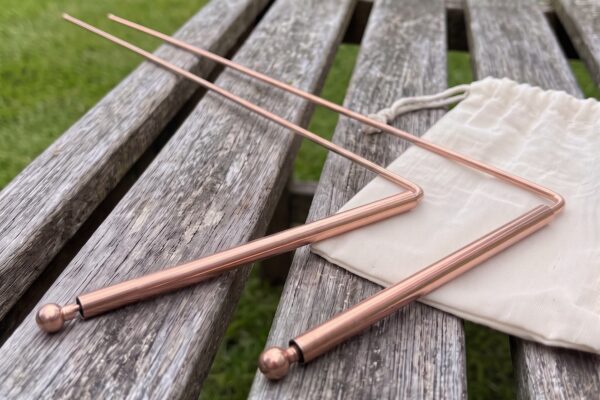
The science describes how hands can move a planchette. It does not settle where the messages come from for the many people who have sat at a board and received something they could not explain. Many practitioners treat the board as a line to the spirit world, and others as a way to hear their own intuition. The same small movements guide dowsing rods and a pendulum.
Reported Cases: The Warrens, Roland Doe, and Patience Worth
Some of the most serious accounts of Ouija boards come from people who investigated hauntings for a living. Ed and Lorraine Warren, the Connecticut couple whose case files inspired The Conjuring films, founded the New England Society for Psychic Research in 1952 and said they investigated more than 10,000 cases. Ed was a self-taught demonologist, and Lorraine was a clairvoyant and trance medium. For decades they warned that the board opens doors that ordinary people do not know how to close. Deliver Us from Evil, a 1973 book drawn from Ed Warren's files, reports that five of its fourteen cases began with contact through a Ouija board. At a 2011 lecture at Monmouth University, Lorraine Warren told her audience that Ouija boards play the biggest role in opening doors, that some of her worst cases had come from them, and that a board should be disposed of and buried rather than kept.
The best-documented case is older. In the late 1940s, a 14-year-old Maryland boy known by the pseudonym Roland Doe was introduced to the Ouija board by his aunt, a Spiritualist. After her death, his family reported strange noises, furniture moving on its own, and vases and other objects flying or rising into the air. Catholic priests performed a series of exorcisms on him in Washington, D.C., and St. Louis in 1949, and the attending priest kept a diary of the events. The case became the basis for William Peter Blatty's 1971 novel The Exorcist.
For Pearl Curran, the board opened a gentler door. From 1913 she said the spirit of Patience Worth dictated novels, poems, and prose to her through it, until by 1919 she no longer needed the board to hear her. Their partnership lasted more than twenty years.
Are Ouija Boards Dangerous?
Many experienced practitioners and paranormal investigators believe Ouija boards can be dangerous. The Warrens saw the board as one of the most common ways ordinary people open a door to something harmful, and the Catholic Church and many Protestant churches warn their members against it for the same reason. Skeptics hold that a board cannot act on its own. Whichever view you hold, the risks worth taking seriously are the same: a session played as a dare, a sitter who is frightened or grieving, and a door opened with no plan for closing it.
Treat the board as a serious tool, not a game. Work with a partner, protect the space, close every session with goodbye, and if anyone at the table is frightened, grieving hard, or not in a clear state of mind, put the board away for another night. If a board ever feels wrong in your home, many practitioners follow Lorraine Warren's advice and get rid of it rather than keep it.
What Does the Bible Say About Ouija Boards?
The Bible does not mention Ouija boards, which were invented in 1890. Christians who oppose them point to Deuteronomy 18:10-12, which forbids divination, mediums, and consulting the dead. The Catechism of the Catholic Church forbids all divination, and the Catholic Church and some Protestant churches tell their members not to use the boards. It is a question for your own faith.
How to Use a Ouija Board
To use a Ouija board, sit with a partner in a quiet room, rest your fingertips lightly on the planchette, open with a greeting, ask one clear question at a time, and always close by moving the planchette to goodbye together. Plan on thirty minutes for a first session.
- Choose your time and your partner. Pick a calm evening and one or two people you trust. Everyone should be sober, rested, and there because they want to be, not to scare someone.
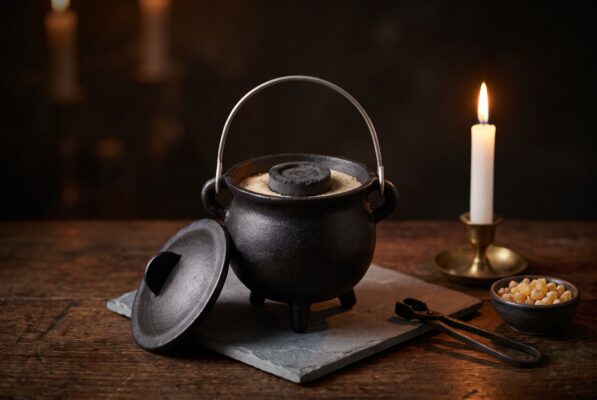
- Prepare the room. Choose a quiet room, dim the lights but keep enough light to read the letters, and light a white candle. Many practitioners cleanse the space first with incense or palo santo, set a protective stone such as black tourmaline beside the board, or cast a circle; our guide to protection crystals covers the stones.
- Set up the board. Rest the board on your knees between you or on a small table, with the planchette in the center. Decide who will ask the questions and keep a notebook open to write down every letter.
- Place your fingertips. Each person rests two or three fingertips of each hand on the planchette as lightly as possible. Do not press or push.
- Open the session. Slide the planchette in a few slow circles to warm up, then greet whoever may be listening: "Is there anyone here who would like to speak with us?" Wait. The first movement often takes a few minutes.
- Ask one question at a time. Speak each question aloud and wait for the planchette to settle on each letter before the next. Keep questions simple, and thank the board when an answer ends.
- Stop if the session turns. If the planchette circles the corners over and over, counts down through the numbers or the alphabet, or spells anything cruel, or if anyone feels uneasy, end the session.
- Close and put the board away. Say "Goodbye," move the planchette to goodbye together, and lift your hands. Take the planchette off the board, wrap or box the board, and write down what came through while it is fresh.
How Different Traditions Open and Close a Session
Every tradition that speaks through a moving pointer has its own way of opening the door to the spirits and closing it again. These are the best known.
- Knocking (Spiritualist séances). Knocks are the oldest spirit code in the West. Modern Spiritualism began in 1848 with the Fox sisters of New York, who said spirits answered their questions in coded raps, and séance sitters went on to ask for numbered knocks as answers. Many practitioners today knock on the board or the table before a session to announce themselves and ask permission to begin, and knock again after goodbye to mark the door as closed.
- Dim light and a circle of sitters (Spiritualist séances). Victorian sitters gathered around a table in a dark or half-dark room, because spirits were thought to dwell in shadow. A single candle and a closed circle of people who trust each other keep that tradition alive at the board.
- A consecrated circle (ceremonial magic). Aleister Crowley advised using the board only inside a consecrated circle, with an invocation that invites the one spirit you want and keeps others out. Many witches and pagans cast a circle, call the quarters, and cleanse the space with smoke before they touch the planchette.
- An open window and a gate (Japan). Players of kokkuri draw a torii, the gate of a Shinto shrine, at the top of the paper as the spirit's place on the board. They prop open a door or window so the spirit can enter and close it once the spirit has gone. Within 24 hours the paper is burned, the ink in the pen is used up, and the coin used as the pointer is spent, so nothing from the session stays in the house.
- An altar and an invited deity (China). In fuji) spirit writing, the session takes place at an altar before a particular deity, who is invited to descend and write in a tray of sand or incense ash. The deity is named and honored rather than left open to anyone who answers.
- Asking permission (Latin America). The Charlie Charlie game grew from an older Spanish pencil game, and players open by asking the spirit, "Can we play?" or "Are you there?" before any other question.
Whatever tradition you follow, the pattern is the same: prepare and protect the space, invite with intention, ask permission, and close the door clearly when you are done.
The Three Rules of Ouija
The three rules of Ouija that folklore repeats most are these: never use the board alone, never use it in a graveyard, and always say goodbye at the end. Other rules often added are never ask when someone will die, never ask for a physical sign, never burn a board, and never leave the planchette sitting on the board. These rules come from the experience of Spiritualist mediums and paranormal investigators rather than from any rulebook, and most practitioners keep them.
What to Ask a Ouija Board
Good questions are simple and open:
- "Is anyone here with us?"
- "What is your name?"
- "Did you live in this house?"
- "Do you have a message for anyone at this table?"
- "Is there something you would like us to know?"
Leave these alone: when anyone will die, lottery numbers, questions about someone who is not there, and anything you would be frightened to hear answered.
How to Cleanse a Spirit Board
Cleanse a spirit board before its first use and after any session that felt heavy. Pass it through incense or palo santo smoke, ring a bell over it, or leave it on a dry windowsill under the full moon. Store it wrapped in cloth or in its box, with the planchette off the board.
How to Make a Ouija Board
To make a Ouija board, write or paint the alphabet in two rows across a piece of cardboard or wood, add the numbers 0 through 9 below, yes and no in the top corners, and goodbye along the bottom. Use an upturned drinking glass as the planchette. A homemade board works the same way as a store-bought one.
Talking Boards Around the World
Other cultures have their own talking tools, all built on the same idea of a pointer moved by several hands. Fuji) spirit writing is still an important part of Chinese religious life in Taiwan, Hong Kong, Malaysia, and the Chinese diaspora. In Japan, kokkuri, a game popular in the Meiji era and partly based on Western table-turning, asks the spirits questions through a small nodding pointer; its name imitates the nodding. In 2015, the Charlie Charlie challenge went viral: two crossed pencils balanced over a grid of yes and no, asked to answer on their own.
Where to Find Spirit Boards
Our spirit boards collection holds the boards, cloths, and books. The Talking Board spirit board set is a classic vintage-style board, 12 1/4 by 15 1/4 inches. Tabula Mortem, designed by Judas Knight for U.S. Games Systems, uses rune-styled symbols instead of the alphabet and comes with a planchette that doubles as a pendulum and an 84-page guidebook. For a board that rolls up, the black spirit board mat is 24 inches square with a planchette, and the spirit board altar cloth is 24 by 30 inches and works as a pendulum board or a wall hanging.
Record every session in the planchette leather journal or your Book of Shadows, and for a deeper study of mediumship, talking boards, and table tipping, read Buckland's Book of Spirit Communications by Raymond Buckland. For other ways to reach across, see our guides to scrying and the Samhain dumb supper.
Ouija Board FAQ
What is a Ouija board?
A Ouija board is a talking board printed with the alphabet, numbers, yes, no, and goodbye, used with a heart-shaped pointer called a planchette. Participants rest their fingertips on the planchette, ask questions, and read the letters it moves to.
Is a spirit board the same as a Ouija board?
Yes. Ouija is Hasbro's brand name for a talking board, and it has come to stand for all of them. Spirit board, talking board, and witch board are the general names for the same tool.
What are Ouija boards used for?
Ouija boards are used to try to communicate with spirits, to ask questions of one's own intuition, and as a party game. Many practitioners bring them out at Samhain to speak with the dead.
How does a Ouija board work?
It is still an open question. Mediums and practitioners hold that spirits move the planchette through the sitters' hands, and scientists attribute the movement to the ideomotor effect, small muscle movements made without noticing. A 2012 study found board answers more accurate than guessing.
Are Ouija boards dangerous?
Many practitioners and paranormal investigators believe they can be, and Ed and Lorraine Warren said some of their worst cases began with a board. Skeptics say a board cannot act on its own. Either way, work with a partner, protect the space, and always close with goodbye.
What are the three rules of Ouija?
The three rules folklore repeats most are never use the board alone, never use it in a graveyard, and always say goodbye at the end. Many people add never asking when someone will die and never leaving the planchette on the board.
What does the Bible say about Ouija boards?
The Bible does not name Ouija boards, which date from 1890. Christians who oppose them cite Deuteronomy 18:10-12, which forbids divination and consulting the dead, and the Catholic Church forbids all divination.
Who invented the Ouija board?
The Ouija board was patented in 1891 by Elijah Bond for the Kennard Novelty Company of Baltimore, and William Fuld made it famous as a family game. Talking boards were already in use at Spiritualist camps by 1886.
What does Ouija mean?
The name was spelled out by the board itself, according to medium Helen Peters Nosworthy, who was told it meant "good luck." She was wearing a locket with a picture of the author Ouida at the time. It does not come from the French and German words for yes.
Can you use a Ouija board alone?
You can, but tradition says not to, and most practitioners prefer two people so the planchette moves freely and a partner keeps the session grounded. If you work alone, keep sessions short and always close with goodbye.
How do you close a Ouija board session?
Say goodbye aloud and move the planchette to goodbye on the board together, then lift your hands. Take the planchette off the board and put the board away.
What is a planchette?
A planchette is the small heart-shaped pointer that moves across a spirit board. The name is French for "little plank," and the first planchettes held a pencil to write out messages on paper.