Mannaz is the twentieth rune of the Elder Futhark, and it is the rune that looks in the mirror. It means the human being: you, everyone, the whole of humankind and each single person within it. After Ehwaz's bond between two, Mannaz widens to the self and to the entire human community, and asks the oldest question there is. Who are you, and who are we to each other?
If Mannaz turned up in your cast, this page will tell you what it is pointing at, what it means reversed, and how to work with it. If you are here because you keep seeing the symbol, or weighing it as a tattoo, everything is below.
What Is the Mannaz Rune?
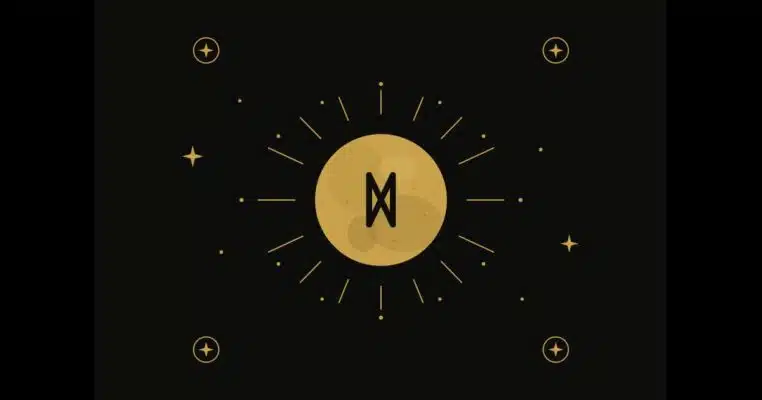
Mannaz (ᛗ) is the twentieth rune of the Elder Futhark. Its name means human, or humankind, and it represents the self, humanity, community, and our shared nature. It carries the sound M, and it is pronounced MAH-nahz.
The name is the ancestor of the English word man in its old, inclusive sense: not male, but human, the whole of humankind. Mannaz is the rune of the human being in every dimension, the individual self and the entire human family at once. It holds both the "I" and the "we," the person you are and the humanity you be
long to, and it insists those two are inseparable.So Mannaz is the rune of self-knowledge, intelligence, and our social nature. It governs the mind and the awareness that makes us human, the relationships and community that hold us together, and the honest work of seeing yourself clearly. Where Ehwaz is the bond between two, Mannaz is the wider web: the self among others, the individual within the whole, the recognition that to be human is to be part of humankind.
The Mannaz Symbol
Mannaz is drawn as two vertical staves joined by crossing diagonal strokes between them, essentially the Ehwaz shape with an X linking the two figures, often read as two people joined or the interlinked structure of a community.
- Sound value: M
- Pronunciation: MAH-nahz
- Position: 20th rune, third aett (Tyr's Aett)
- Literal meaning: Human, humankind, person
- Also called: Man (Old English), Madr or Mannr (Old Norse)
The two figures bound together by crossing strokes are widely read as human beings joined in mutual support, or as the self and its reflection, the "I" meeting the "we." The rune closely resembles Ehwaz, and the two are studied as a pair: Ehwaz the bond of trust between two, Mannaz the wider human connection and the self within it.
Mannaz Meaning in a Reading
Upright, Mannaz points at you, or at people: the self, your mind, your community, and your place among others. Self-awareness. A need to see yourself honestly. The support of your community, or your role within it. The human element in a situation, intelligence, cooperation, and shared humanity.
Mannaz often turns a reading inward. If you asked about an external situation, it may be pointing you back to yourself, to your own mind, attitude, and self-understanding as the real subject. It is the rune of knowing yourself, of intelligence and rational thought, and of the honest self-appraisal that is the beginning of any real change. Sometimes the answer Mannaz gives is simply: look at yourself first.
Just as often, it points to community and our social nature. Mannaz can mean the support available from others, the importance of your relationships and your place among people, or a call to remember that you are part of a human whole. It favors cooperation, shared humanity, and the intelligence to work with others well. When it appears, the human element, in you and around you, is the key.
When Mannaz comes up, ask:
- What do I need to see about myself, honestly?
- Is this really about the situation, or about my own mind and attitude?
- What support is available from my community if I let it in?
- Where does my shared humanity with others hold the answer?
Mannaz Reversed
Reversed, Mannaz points at self-deception, isolation, or being your own worst enemy. A blind spot about yourself. Cutting yourself off from others. An inflated or a diminished sense of self. The mind working against you rather than for you, through denial, self-sabotage, or a refusal to see clearly.
It can also mean discord with your community, feeling alienated, misunderstanding others, or a breakdown in the cooperation and shared understanding that Mannaz upright provides. Where upright Mannaz is honest self-knowledge and healthy connection, reversed Mannaz is the self obscured, isolated, or turned against itself.
Reversed Mannaz often points to the ways we get in our own way. Sometimes it is self-deception, a story about yourself that is not true. Sometimes it is isolation, a cutting-off from the human support you need. And sometimes it is the enemy within, the self-sabotage that no external force could manage. The reading usually calls for honest self-examination and a reconnection with others.
Mannaz Meaning by Question: Love, Work, and the Rest of It
You did not draw this rune in a vacuum. You drew it holding a question. Here is what Mannaz is saying depending on what you asked.
Love and Relationships
UprightKnow yourself, and meet the other as fully human. Mannaz in a love reading often points to self-awareness as the key: understanding your own needs and patterns, and seeing your partner clearly as a whole person. It favors relationships built on mutual understanding, intelligence, and genuine humanity rather than projection.
ReversedSelf-deception or disconnection. Reversed here can mean a blind spot about yourself in the relationship, isolating from your partner, or failing to see the other person truly. It asks for honest self-examination.
Work and Money
UprightIntelligence, self-knowledge, and working well with others. Mannaz favors using your mind, knowing your own strengths honestly, and drawing on your community or colleagues. If you asked about a challenge, it may point to your own attitude and clarity as the deciding factor, and to cooperation as the way forward.
ReversedGetting in your own way. Reversed here can mean self-sabotage, a blind spot, isolating instead of collaborating, or misjudging yourself or others. It asks you to look honestly at your own role in the difficulty.
Inner Life
UprightSelf-knowledge itself. Mannaz is the rune of seeing yourself clearly, of the mind, the self, and honest self-understanding. It often shows up when the real work is inner: knowing who you are, accepting your own humanity, and thinking clearly about your own life.
ReversedThe enemy within. Reversed Mannaz can mean self-deception, self-sabotage, an inflated or collapsed sense of self, or isolation from the humanity that would steady you. It calls for honesty and reconnection.
Yes or No
UprightYes, if you know yourself and work with others. Mannaz is favorable, especially where clear thinking, self-awareness, or cooperation is involved. The answer runs through the human element.
ReversedNo, or not while you are in your own way. Self-deception or isolation is blocking the path. Look honestly at yourself and reconnect before you proceed.
The Action to Take
Look at yourself honestly, and remember you are not alone. Whatever you asked about, Mannaz is pointing at the human element: your own mind, self-knowledge, and attitude, and your place among other people. Name what you need to see about yourself without flinching, because that clear-eyed self-appraisal is where real change begins. Then reach for your community: Mannaz says the human web around you holds support you may not be letting in. If a reversal, look first at how you might be getting in your own way.
Mannaz in Norse Lore
Mannaz reaches back to the Norse story of the origin of humanity itself. In the myth, the first humans were made from two pieces of driftwood found on a shore, lifeless until the gods gave them what they lacked. Odin gave them breath and spirit, and his companions gave them understanding, movement, and the senses, warmth, and speech. Ask, the first man, and Embla, the first woman, became human when the gods breathed mind and life into wood. Mannaz, the rune of the human being, carries the memory of that gift: to be human is to have been given a mind and a soul.
The rune connects to the figure of the divine ancestor of humankind found across the Germanic traditions, the mythic first human from whom the tribes traced their descent. To bear the rune of Mannaz was to claim kinship with all of humanity, a shared origin and a shared nature. The rune holds that sense of the human family as one, descended from a common source, bound by a common humanity.
The Old English rune poem gives Mannaz a strikingly honest and bittersweet turn. It observes that each person is dear to their kin, and yet every one of them must one day fail and fall, for the lord will commit the flesh to the earth. To be human, the poem says, is to be beloved and to be mortal, cherished by those around us and destined to pass. That double truth, our worth to one another and our shared mortality, is the deep heart of Mannaz. It is the rune of what it means to be a person: mind and soul, community and self, precious and passing, human among humans.
How to Use Mannaz in Your Practice
Mannaz is a thoughtful rune for work involving self-knowledge, the mind, community, cooperation, and our shared humanity. It is the human rune, so it is worked wherever the self or human connection is the focus.
For self-knowledge and clear thinking
When you need to see yourself honestly or think clearly about your own life, Mannaz is a fitting focus for self-awareness and intelligence. Carve or draw it to support honest self-reflection and a clear mind, and name what you are seeking to understand about yourself. It favors the hard, valuable work of knowing who you are.
For community and cooperation
Because Mannaz is our social nature, it is well suited to work about relationships, community, and working well with others. Use it to strengthen your place among people, to invite support, or to foster the cooperation and mutual understanding that human life depends on.
In a bind rune
Mannaz pairs with Ehwaz for partnership rooted in shared humanity, with Ansuz for clear thought and honest communication, and with Wunjo for harmony and belonging within a community. Keep bind runes to two or three staves so the intention stays legible.
For intelligence and the mind
Because Mannaz governs the human mind, it is a fitting focus for study, clear reasoning, and mental clarity. Use it when you need to think well, learn deeply, or bring your full intelligence to a problem, honoring the mind as the gift that makes us human.
Mannaz Rune Tattoos
Mannaz is chosen as a tattoo for self-knowledge, humanity, community, and the mind, often by people who value honest self-understanding or a sense of shared human connection. Two things worth knowing before you commit it to skin.
It is the rune of being human. Mannaz signifies the self, the mind, and our shared humanity, which makes it a thoughtful, meaningful mark for someone drawn to self-knowledge or to the bond of common humanity. Its meaning is genuinely about what it is to be a person, both the individual self and the whole human family, richer than a simple identity symbol.
Check what you are getting. Runes have been co-opted by hate groups, and while Mannaz is not among the most heavily appropriated, it is worth knowing the landscape and being able to speak to the rune's real meaning. Learning the genuine history is the best answer to anyone who has tried to steal these symbols, and a good reason to get the rune right rather than pulling it from a random source.
Common Questions About Mannaz
What does the Mannaz rune mean?
Mannaz means human, or humankind, and by extension the self, humanity, community, and our shared nature. It is the twentieth rune of the Elder Futhark and carries the sound M. It holds both the individual self and the whole human family, the "I" and the "we" at once.
Is Mannaz about the self or about others?
Both, and that is the point. Mannaz is the rune of the individual self, self-knowledge, and the mind, and at the same time the rune of humanity, community, and our shared nature. It insists the two are inseparable: to know yourself is to know your place among others.
What does Mannaz reversed mean?
Self-deception, isolation, self-sabotage, or being your own worst enemy. It can mean a blind spot about yourself, cutting off from others, or a mind working against you. It usually calls for honest self-examination and reconnection with your community.
How do you pronounce Mannaz?
MAH-nahz. It is also called Man in Old English and Madr in Old Norse, all meaning human or person.
What is the difference between Mannaz and Ehwaz?
They are closely related runes, similar in shape and often studied together. Ehwaz is the horse, the bond of trust and partnership between two. Mannaz is the human, representing humanity, the self, and our shared nature. Ehwaz is the specific partnership; Mannaz is the wider human connection and the self within it.
Keep Going
Mannaz is one of twenty-four. For the full picture, our complete guide to the Elder Futhark runes lays out every rune, its meaning, and its reversal in one place you can pull up mid-reading.
Before Mannaz comes Ehwaz, the bond of trust between two; Mannaz widens that bond to the whole human web and the self within it. After it comes Laguz, water, the flow of intuition, emotion, and the deep unconscious.
Each person is dear to their kin, the old poem says, and yet each must one day pass. Mannaz asks whether you truly know yourself, and whether you remember that you are held within a wider human whole.